The Ship That Burned For 9 Hours and Somehow Lived D
HMS Illustrious was built around a single idea: survive the kind of attack that sinks every other carrier. Now she is heading into one, with her only fighter cover 50 miles away, rearming in Malta. On the bridge, Captain Denis Boyd watches the radar contacts multiply.
Dozens of Junkers Ju 87 Stukas, trained on a full-scale outline of her hull, are closing fast from 28 miles out. He had warned this would happen. Nobody had listened. Now the entire design was about to be tested. By January 1941, Malta was running out of everything—food, ammunition, and aircraft. And hope. To save it, the Royal Navy had to push a convoy through the Sicilian Narrows, 100 miles of open water wedged directly under Axis air power, carrying 4,000 tons of ammunition, seed potatoes, and 12 crated Hurricanes.
If it didn’t arrive, the island would fall. At the time, the only carrier they had in the Mediterranean was HMS Illustrious. Barely six months old and fresh off tearing through the Italian fleet at Taranto, she was also deeply controversial. Built with three inches of steel armoring her flight deck and a single enclosed hangar beneath it, this design cost only 33 aircraft. America’s Enterprise carried 70. Japan’s Akagi carried nearly 90.
Senior officers called it a catastrophic trade, and many doubted she could keep the convoy safe. Even her captain, Denis Boyd, along with the fleet’s air commander, Vice Admiral Lyster, had told Admiral Cunningham, Commander in Chief of the Mediterranean Fleet, that she needed to operate independently, 20 to 30 miles south of the main fleet, where she could maneuver freely and keep her fighters further from Sicilian air power. Cunningham overruled them both.
He wanted his famous new carrier at the heart of the fleet, a morale boost for every crew around her. Cunningham didn’t know that Germany’s X Fliegerkorps had just arrived in Sicily with one stated priority. Their commander, Oberstleutnant Karl Christ, issued a single order. [QUOTE] “Illustrious mussen sinken.” Sink illustrious, and Malta falls with her.
In the days before the convoy sailed, Stuka dive bomber crews laid buoys in the open ocean off Sicily in the exact shape of her hull and dove on them repeatedly. The Germans knew about the armored deck and believed four direct hits would be enough to sink one of the Royal Navy’s most prized assets.
The morning of January 10, 1941, broke clear and calm over the Mediterranean Ocean, with visibility that was good for convoys and better for bombers. The fleet was threading the Sicilian Narrows, 100 miles west of Malta, with the coastline of Sicily sitting just over the northern horizon.
Aboard HMS Illustrious, five Fairey Fulmar fighter aircraft were circling above the convoy on combat air patrol when, around 11:00am, Italian aircraft began probing the convoy one at a time, approaching from different directions. The Fulmars turned each away without breaking a sweat. Then two Savoia-Marchetti SM.79 torpedo bombers came in fast and low, forcing Illustrious into a hard emergency turn to present her narrowest profile. The Fulmars dived after them, chasing the bombers south at full speed.
By the time the pursuit ended, the fighters were 50 miles from the fleet, low on fuel and out of ammunition. With nowhere else to land, they set down at Malta to rearm. While below decks, stokers fed the boilers and mechanics worked around Swordfish biplane torpedo bombers in the hangar, Captain Denis Boyd stood on the bridge watching the radar.
Just past noon, contacts began appearing to the north. Too many to count cleanly, closing fast from 28 miles out. Boyd turned Illustrious into the wind and launched four replacement Fulmars. They were barely off the deck, still clawing for altitude, when the picture became clear. Dozens of Junkers Ju 87 Stuka dive bombers, Heinkel He 111 level bombers, and a fighter escort of Messerschmitt Bf 110s above it all. The Germans had not sent a raiding party. They had sent an entire air force.
The four Fulmars climbing above her were the only thing standing between the convoy and that incoming force. At their rate of climb, they would need at least ten minutes to reach an altitude from which they could intercept a diving attack. Illustrious had a fraction of that. Unknown to the British, this entire approach had been a diversion by X Fliegerkorps, carefully timed and precisely executed, designed to do exactly one thing: pull Illustrious’s only air cover out of position and leave the fleet completely exposed. It had worked perfectly. And now, the Germans could begin their attack. At 12:38pm, the first Junkers Ju 87 Stuka began its dive. From above, the Stukas had arranged themselves into cloverleaf formations, three aircraft to a leaf, each plane changing its height, speed, and position in relation to the others, the product of weeks of preparation. The formations were designed so that
no matter which way Illustrious turned, no matter how her gunners swung their barrels, there would always be aircraft attacking from an angle they were not pointing at. The first bomb struck just forward of the aft elevator, the large platform used to move aircraft between the flight deck and the hangar below.
A Fulmar fighter that had been sitting there with a failed engine was gone in an instant. The explosion tore upward through the lift well and sent a shockwave through the ship that men felt in their boots three decks down. In the hangar, mechanics working on Swordfish biplane torpedo bombers were thrown off their feet before they understood what was happening.
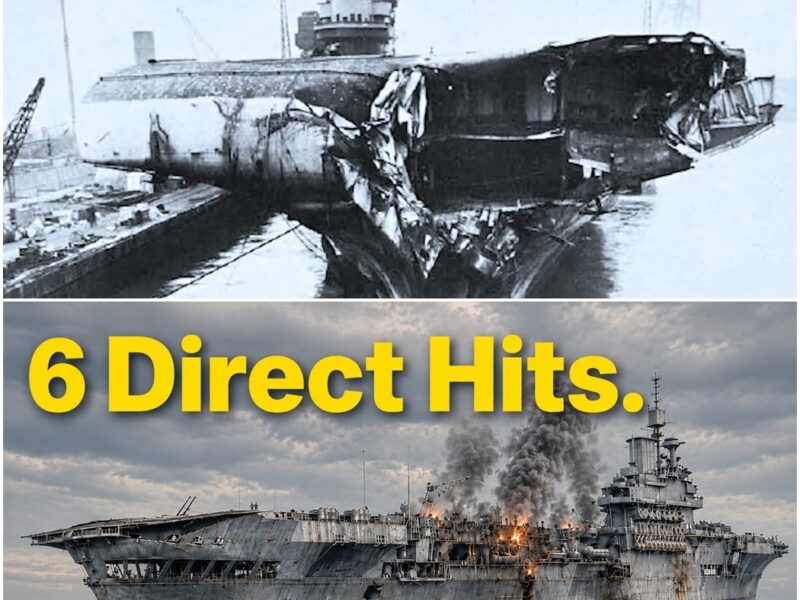
A second punched straight through the same lift and detonated beneath it, collapsing the entire structure and leaving a hole open to the sky with fire climbing through from below. A gun mount was destroyed outright, and another was left burning from a hit that passed clean through without detonating. Then the outer edge of the forward flight deck caught one, detonating mere feet above the waterline, riddling the hull and sending seawater pushing into compartments that had been dry only seconds before.
Before the men onboard HMS Illustrious even had a chance to catch their breath, a sixth armor-piercing bomb punched through the armored flight deck and detonated 10 feet above the hangar deck. The explosion destroyed the rear section of the fire sprinkler system, bent the forward elevator into the shape of a hoop, and shredded the fire curtains, the heavy dividing walls meant to contain any blaze, into spinning fragments of hot metal that tore through everything they touched. The force of it reached men four levels below who had no idea what had just happened above them. What had been a working hangar minutes before was now an inferno with nothing left to contain it. Two near misses just off the hull sent additional water into the compartments already flooding. The Stukas that had already dropped pulled out low over the water, some of them passing below the level of Illustrious’ funnel as they fled, close enough that men on deck could see the markings on their wings. At 12:55pm, the accumulated damage knocked out her steering gear entirely. Seven minutes after
the first bomb fell, the most advanced warship in the Royal Navy was locked in a straight line, fires burning from bow to stern. Miles away, from the bridge of his flagship HMS Warspite, Admiral Cunningham watched the consequences of his decision, his eyes wide with terror.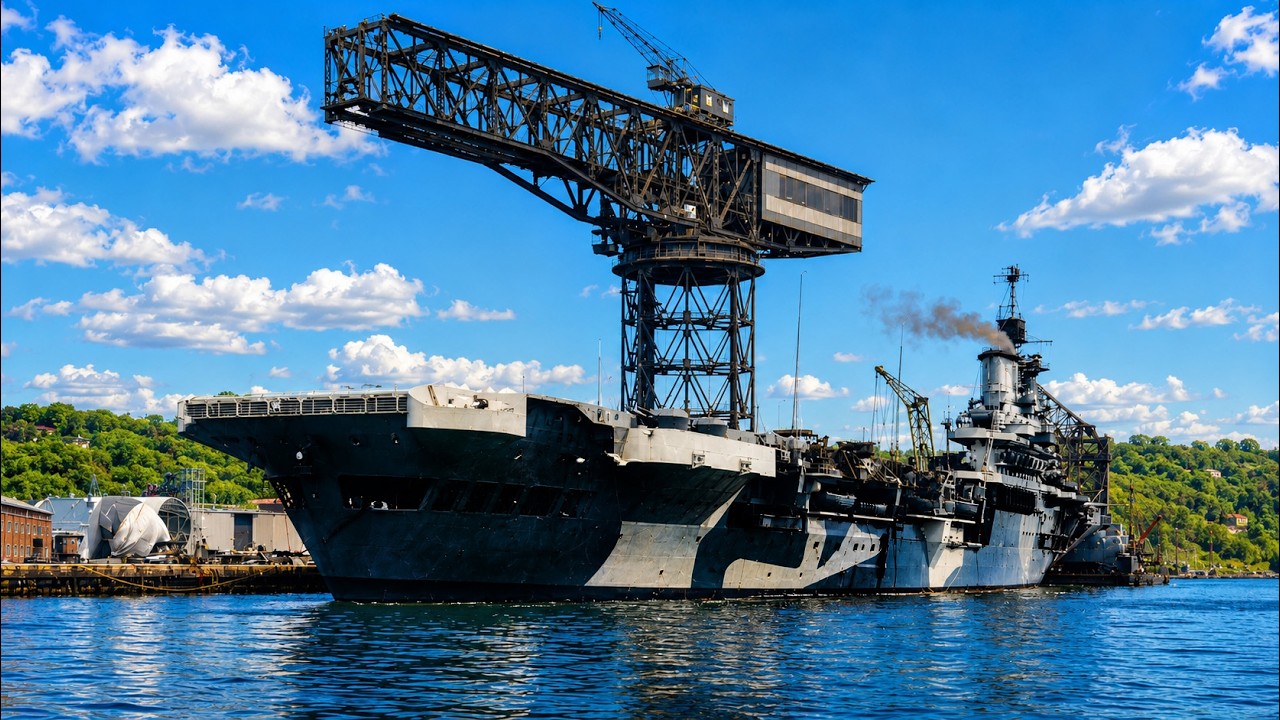
The attacks pressed home to point-blank range, Stukas pulling out of their dives so low that some of them flew along Illustrious’ flight deck below the level of her own funnel. He later wrote [QUOTE] “There was no doubt we were watching complete experts. We could not but admire the skill and precision of it all.” In Sicily, the returning Stuka crews were already radioing back their victory.
Illustrious was sunk, the mission complete. But she was not sunk. Not even close. Though the bombs had found her elevators, her gun mounts, her steering, her fire systems, what they had not found, through all six hits, was her engines. All thanks to her armored deck. On the bridge, instead of falling into despair, Captain Boyd was already moving and thinking of what to do.
All around him, the ship was in chaos, fire parties pushing through smoke, damage control teams working spaces that looked nothing like the ones they had trained in. Somewhere toward the stern, crew members were setting up a temporary sick bay, the only space left. With fires burning near the forward magazines, every damage control manual in the Royal Navy said to flood them. Boyd chose not to.
As long as those magazines were dry, he believed the guns above them could keep firing. However, the guns meant nothing if the ship couldn’t move. The rudder was unresponsive, the steering gear gone. Boyd had one option left. Illustrious had three propeller shafts, each driven independently, and by running them at different speeds, he could force the ship into a turn the way a rower uses uneven strokes.
Though agonizingly slow and imprecise, by 2:34pm, HMS Illustrious was steady at 17 knots, her bow pointed toward Malta. For the next hour and a half, she crawled toward her destination, still burning at the stern, listing slightly from the weight of water her fire parties were pouring on the flames, escorted by two destroyers that could do nothing except stay close. Below deck, the boilers kept running.
Above them, the fires kept being fought. And through it all, the guns stayed loaded. At 4:00pm, with 40 miles still to go until their destination, well over a dozen Junkers Ju 87s found her damaged and slow, expecting to finish what the morning had started.
The Fulmars that had rearmed at Malta flew directly into them, outnumbered four to one, disrupting the attack before it could find its rhythm. Most bombs fell wide, though one struck near the temporary sick bay. As darkness fell, with the coast of Malta close enough that men on deck said they could smell the island before they could see it, Italian torpedo planes, part of the same air force that had set the morning trap made one final attempt to close it, only to be driven off by anti aircraft fire from Illustrious and her escorts before they could get into position.
At 9:04pm, HMS Illustrious passed the breakwater of Grand Harbor, Malta, still on fire. Men who had been below decks since before noon came up through the hatches for the first time in hours. What they found was barely recognizable as the ship they had left that morning. Where there had been platforms and gun mounts, there were now holes and smoke venting into the night air.
The flight deck itself was scarred and holed but still there. Around them, the fires were still burning after nine straight hours. On the harbor walls, dockyard workers and Maltese civilians had gathered in the dark to watch her come in, cheering. It took another five hours to put the fires out completely.
When the last one was extinguished, it was nearly dawn. 126 officers and men had not survived the day. Another 91 had been wounded. But now, the Germans knew she was alive. They knew exactly where she was. And they were not done. For nine straight days, X Fliegerkorps sent waves of Junkers Ju 87 Stukas and Junkers Ju 88 medium bombers against Grand Harbor in what the Maltese came to call the Illustrious Blitz.
It was all to no avail. On January 23, Illustrious slipped out under the cover of bad weather and made for Alexandria, eventually sailing to Norfolk, Virginia, where US Navy engineers examined her and wrote detailed reports about what they found. A ship that had absorbed six direct hits from armor-piercing bombs designed specifically to sink her, fought off attacks across an entire day, and crawled 85 miles under her own power while on fire. The armored flight deck that senior officers had called a catastrophic trade, the three inches of hardened steel that critics said made her too defensive to be a proper fighting ship, was the only reason over 1,000 men were still alive. Admiral Cunningham later wrote: [QUOTE] “The bearing of the officers and men of Illustrious was exemplary and in accordance with the highest traditions of the Service.”