The ‘Simple’ French Carrier That Every Army Dismissed In 1974 And Every Army Still Uses Today D
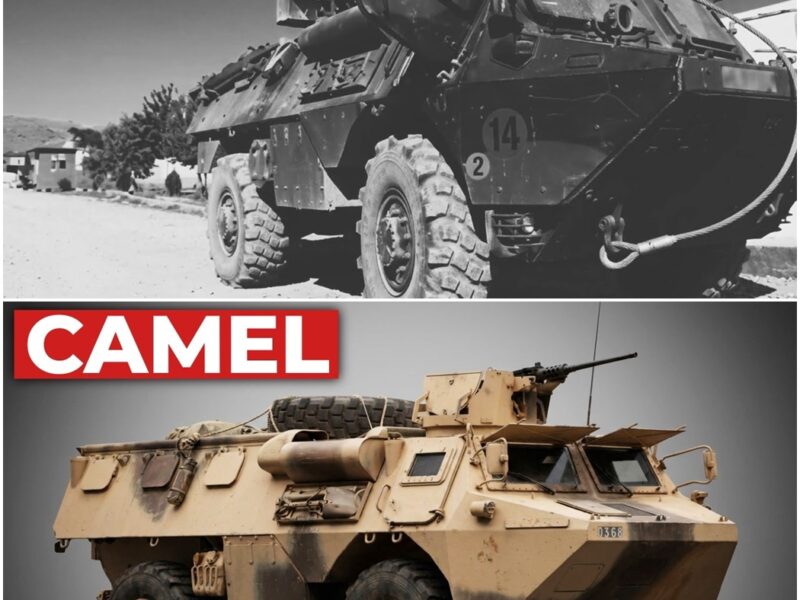
1976, the Creusot-Loire assembly plant at Saint-Chamond, Loire Valley, France. A vehicle rolls out of the factory doors and into the gray morning. It is boxy. It is upright. Its welded steel hull rises almost vertically from four wide-set commercial wheels. The whole thing stands barely 2 m tall.
A flat nose, narrow windscreen slits, a ring-mounted machine gun on the roof, no turret, no tracks, no sloped armor, no auto cannon. It looks less like a weapon of war than a delivery van that someone has welded shut and painted olive green. The French army officers watching had a word for it, a camel, le chameau, a beast of burden, not a warhorse.
They were right about the camel part. They were wrong about everything else. That vehicle would fight in Lebanon, Chad, the deserts of Saudi Arabia, the streets of Sarajevo, the mountains of Afghanistan, the open Sahel of Mali, and the trenches outside Pokrovsk in Ukraine.
It would be exported to over 40 nations. It would be built in approximately 5,000 examples. It would outlive the tracked vehicle designed to replace it, outlive every Western rival in its class, and in March of 2026, nearly 50 years after the first unit rolled off this line, the French government loaded 39 of them onto transport ships and handed them to the Lebanese armed forces at the port of Beirut.
Its designation was the Véhicule de l’Avant Blindé, the VAB, and it was the most combat-proven wheeled armored personnel carrier of the late 20th century. To understand why the VAB existed, you need to understand the problem France faced in 1970. The Warsaw Pact’s 1968 intervention in Czechoslovakia had put 250,000 Soviet and Allied troops across three national borders in under 4 days.
France’s planners looked at their own force and found a gap they could not ignore. The mechanized divisions had their tracked AMX-10P infantry fighting vehicles entering service in 1973, capable of fighting alongside tanks in a heavy armored battle, but the second echelon infantry, the Marines, the rapid reaction brigades, the support and command companies, all of them were still moving in unarmed trucks.
One burst of heavy machine-gun fire could wipe a section before the men ever reached their dismount point. In 1970, Defense Minister Robert Galley launched a competitive development program. The requirement was direct. The vehicle had to be fully amphibious because Western Germany and Eastern France were crossed by hundreds of rivers and canals, and the army could not rely on engineers being available at every crossing point.
It had to carry 10 fully equipped soldiers. It had to protect its passengers against small arms fire and artillery splinters. And it had to be simple enough to maintain with commercial spare parts because no expeditionary force can sustain a vehicle that requires factory specialists to repair a gearbox in the field. Berliet submitted a prototype.
Panhard submitted the M4. Saviem, the heavy vehicle subsidiary of Renault, submitted five prototypes, three in a four-wheel-drive configuration and two as six-wheelers. Comparative trials ran through 1973. Saviem was confirmed as prime contractor in May 1974 with Creusot-Loire at Saint-Chamond contracted to build and weld the armored hull.
First deliveries went to the 1st Régiment d’Infanterie in 1976. The Panhard M4 was rejected. The choice was wheeled, not tracked, simple, not sophisticated. The decision that critics called a shortcut would define the next 50 years of French military history. The vehicle itself was a masterpiece of deliberate restraint. At 13 tons combat loaded, it was light enough for a Transall transport aircraft to carry one and light enough for an A400M to carry two.
The hull measured just under 6 m in length and 2.49 m in width, narrow enough to navigate European roads without special movement permits, and small enough to reverse down an unlit Sahel track at speed without losing the road edge. The two-man crew, driver on the left and gunner on the right, sat up front behind heated bulletproof glass with armored shutters they could drop in under 2 seconds.
Behind the engine compartment, accessed through a pair of rear doors and lateral side hatches, the troop compartment seated 10 fully equipped soldiers on folding inward-facing benches, a full section ready to dismount fighting. Power came from a turbocharged inline six-cylinder diesel derived from the Saviem commercial truck range, initially producing 220 horsepower, later upgraded to 320 on modernized variants.
Road speed reached 92 to 110 km/h. Range reached 1,000 km on 310 L of fuel, meaning the VAB could drive itself to any potential battle in Western Europe without a resupply stop. In water, twin hydrojets pushed it at 8 km/h with no preparation required. The driver steered the vehicle into the river and the jets took over.
The crew did not stop, did not dismount, and did not wait for bridging equipment. Armament on the base variant was a 12.7 mm Browning M2 heavy machine gun capable of penetrating the side armor of any infantry carrier it was likely to encounter in the 1970s or ’80s, but the design was engineered for adaptation. The VAB Mephisto variant carried four HOT anti-tank missiles in a retractable launcher with eight reloads stored internally, giving a two-man crew a reach of 4,000 m against main battle tanks. Other configurations included twin 20-mm anti-aircraft cannon, an 81-mm mortar that fired through a roof hatch, surface-to-air Mistral missile launchers, full nuclear, biological, and chemical overpressure protection fitted as standard across every variant, and electronic warfare suites capable of jamming ground-to-air communications. The platform that looked like a delivery van carried anti-tank weapons that threatened any armored vehicle in Soviet inventory. The hull geometry held one final advantage, and it was one no
engineer in 1974 fully anticipated. The amphibious requirement forced the designers to give the VAB a rounded, boat-shaped underbelly angled outward at the base so that water pressure during river crossings would be shed sideways rather than lifted against the whole floor. In 1974, that was a river crossing feature.
In 2003, 2008, and 2013, when vehicles driving the packed tracks of Afghanistan and Mali hit pressure plate improvised explosive devices, that same rounded geometry scattered the blast energy upward and outward, rather than channeling it through the floor into the crew compartment. The shape that made it float also made it survive the wars no Cold War planner had imagined.
It was the right answer to a question that had not yet been asked. Now, before we move into where this vehicle actually fought and the men who crewed it through five decades of conflict, if you are finding this deep dive worthwhile, hit subscribe. It costs nothing and it keeps this channel producing content at this depth.
1983, West Beirut, Lebanon. France was part of the multinational force attempting to stabilize a capital that had been at war since 1975. VABs of the 1st and 9th parachute chasseur regiments were positioned throughout the city alongside contingents from the United States, Italy, and the United Kingdom.
On October 23, 1983, a truck bomb struck the Drakkar building and killed 58 French paratroopers, the single worst day for the French army since the Algerian War. VABs moved through streets under sniper fire to extract the wounded, secure the perimeter, and carry the dead back through a city where no vehicle without armor survived on the roads after dark.
The vehicles kept moving. Operation Épervier in Chad ran from 1986 until 2014, 28 consecutive years. France maintained armored presence against Libyan-backed incursions across a country larger than all of Western Europe combined. Temperatures in the Saharan north reached 45° C. Sand infiltrated fuel systems.
Distances between any two positions could be 500 km of open track with no road surface and no shade. The VAB ran it without breaking down in numbers that would have grounded a more complex vehicle. The commercial Renault drivetrain that critics had dismissed as beneath the dignity of a military program meant that any mechanic trained on a Renault civilian truck could repair it in the field with parts flown in on a standard cargo pallet.
1991, Saudi Arabia and Southern Iraq, the division Daguet, approximately 12,000 French soldiers deployed as the left flank of the coalition ground offensive. Approximately 376 VABs supported the advance alongside 44 AMX 30 B2 main battle tanks and 100 AMX 10 RC light armored vehicles. VAB Mephistos of the first regiment d’Spahis and the first regiment de Chars de Cavalerie fired approximately 60 HOT missiles against Iraqi armor and fortified positions during the ground offensive of February 24th to 26th, 1991. The division destroyed the Iraqi 45th Mechanized Infantry Division, took between 2,500 and 3,000 prisoners, and lost five soldiers. Not one of those losses occurred inside a VAB. The ground campaign lasted 100 hours for the French element. The camel had fought and won. May 27th, 1995, the Vrbanja Bridge,
Sarajevo, Bosnia. Bosnian Serb forces had seized a United Nations observation post, taken 12 French soldiers hostage, and fortified the position overnight with firing positions covering both bridge approaches. Captain François Lecointre of the 3rd Regiment d’Infanterie de Marine commanded the recovery force.
30 Marines in direct assault with 70 more in support. Armored cars of the Marine Infantry Tank Regiment providing flanking fire and VABs positioned to suppress the bridge approaches with their roof-mounted weapons. Lieutenant Bruno Heluin led the bayonet assault on foot through the door of the post.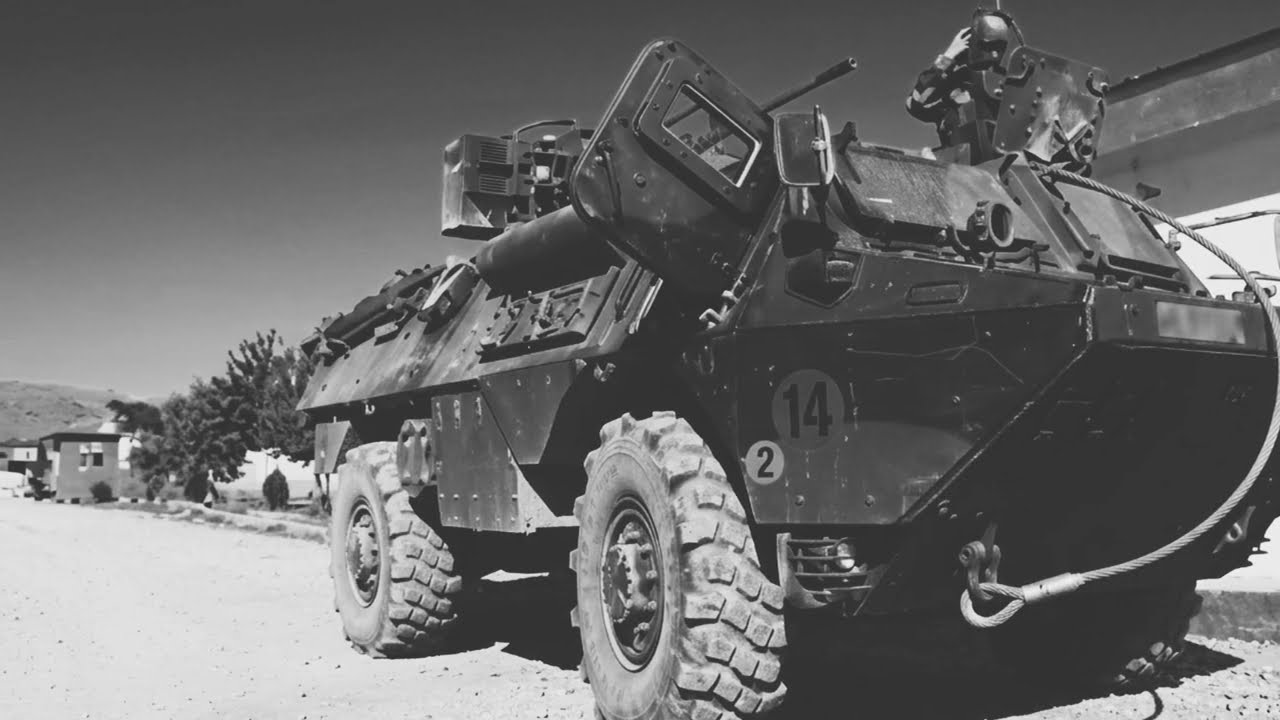
Two French Marines were killed. Private Jackie Humblet died at the post. Private Marcel Amaru was shot by a sniper while manning the roof gun of his VAB, covering the ground element below. All 12 hostages were recovered alive. Every prisoner was taken. Captain Le Quântro received the Legion of Honor.
He became Chief of the Defense Staff of France in 2017. The VAB that suppressed the bridge that night was still in French service. Afghanistan broke the confidence of the French Army and the VAB’s basic protection standard, and in doing so, forced an evolution that proved the platform’s fundamental soundness.
August 18th, 2008, Husban Valley, Adjutant Gaëtan Evrard commanded the Carmin 2 section of the 8th Parachute Infantry Marine Regiment, four VABs and 31 soldiers on a patrol from their forward operating base in the valley. The column drove into a prepared ambush set by approximately 140 fighters in terrain that commanded every escape route. 10 French soldiers were killed.
It was the worst single day French Army loss since the Drakkar bombing 25 years earlier. One VAB absorbed a direct rocket-propelled grenade strike. The crew survived. The platform had not failed. The threat level had exceeded what the armor specification of 1974 was ever designed to defeat.
The French Army’s response was to accelerate a modernization program rather than replace the vehicle. Within months, VAB top variants with Kongsberg remote weapon stations, stabilized sighting, acoustic sniper detection systems, and ceramic armor panels added to the hull sides were rushed into theater. A platform designed in 1970 was modified for digital counterinsurgency warfare within a single year.
No replacement was available and subsequent operations proved none was necessary. Mali confirmed it. January 2013, Operation Serval. Companies of the 21st Regiment d’Infanterie de Marine drove north from Bamako in VABs on the day France intervened to halt a jihadist advance toward the capital. The advance to Gao and Kidal covered hundreds of kilometers of Sahel track seeded with pressure plate devices. VABs hit mines.
The boat-shaped hull deflected the blast outward. Crew survived strikes that would have killed them in flat-bottomed vehicles. The French Army subsequently modernized 40 VAB ambulance variants specifically to defeat the improvised explosive device threat. A program delivered by Arquus in 2021, the amphibious geometry designed for a river crossing in Germany that never happened saved lives in a desert that no one in 1974 had imagined.
On paper, the VAB’s contemporaries looked more capable in every measurable category. The Soviet BTR-80 carried an closed turret with a 14.5 mm cannon and could suppress infantry positions that a ring-mounted machine gun could not reach. The American M113 had cross-country track mobility that four-wheels could not match in soft ground.
The German Transportpanzer 1 Fuchs was a six-wheel drive platform with heavier armor and greater internal volume. The British Saxon carried stronger frontal protection than any basic VAB configuration offered. In practice, none of those advantages translated to the conflicts that were actually fought. The BTR-80 was destroyed in large numbers in Chechnya, Afghanistan, and later in Ukraine.
Repeatedly lost to fire through its open wheel arches and rear hatches. The M113 was retired from most Western European armies by the 2000s. The Saxon was withdrawn from British service in 2007. The Transportpanzer was used primarily for nuclear, biological, and chemical reconnaissance, rather than general infantry roles, and was never exported at scale.
Every one of those vehicles solved a Cold War problem that was never tested in a Cold War battle. The VAB solved the problem France was actually going to fight. Morocco fielded approximately 400, using them in operations against Polisario forces in the Western Sahara for over three decades. Qatar, Oman, Cyprus, Kuwait, the United Arab Emirates, Indonesia, Tunisia, Benin, and Lebanon all operated variants of the same base platform, maintained with the same commercial Renault components, repaired by mechanics who trained on the same manual, over 40 nations in total. The export record of a vehicle dismissed in 1974 as too simple to be taken seriously. France delivered exactly 250 VABs to Ukraine between February 2022 and December 2023 with a further approximately 162 transferred during 2024, putting the documented total at over 400. Ukrainian air assault brigade crews operating them near Pokrovsk reported that the vehicle’s
mine blast survivability and the fire power of its M2 heavy machine gun were exceeding expectations against Russian infantry carriers. The design meant to cross the Rhine against the Red Army was now crewed by Ukrainians fighting the Red Army’s successor, and in March of 2026, 39 more were handed to Lebanon at the port of Beirut where the Drakkar building once stood.
1976, Saint-Chamond, a boxy, flat-nosed vehicle with four wheels and a machine gun rolled out of a factory and was called a camel. No integrated night vision, no composite armor in the base fit, no active protection system, no radar absorbing treatment, a commercial diesel engine, a welded steel box, a boat-shaped belly, and a 12.
7 mm gun on a ring mount. It went to every war France fought. In the rubble of Beirut, in the sand of Chad, on the bridge at Vrbanja where a future chief of the defense staff directed the assault, in the ambush choked valleys of Afghanistan, in the mine seeded tracks north of Bamako, in the trenches of eastern Ukraine.
The specification that critics in 1974 called beneath standards of a modern army was precisely the specification that 50 years of expeditionary warfare demanded. Light enough to be airlifted in numbers, simple enough to be repaired 500 km from the nearest depot, cheap enough to be built in the thousands and given away when the replacements finally came, and shaped by the accident of an amphibious requirement that was never tactically used to survive the mine and blast threats that no Cold War planner had put on a requirement sheet. 50 nations flew it. 50 years of war proved every critic wrong. That is not luck. That is engineering that understood what fighting actually looks like.