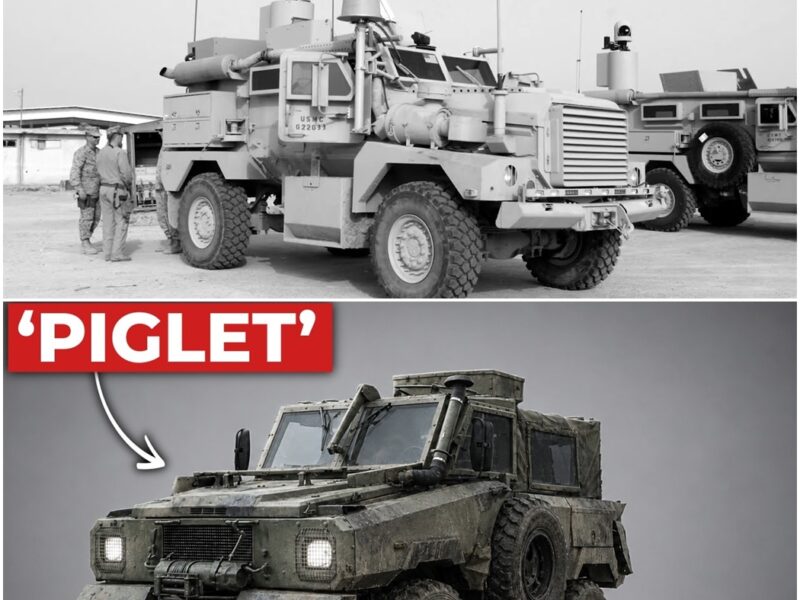
The ‘South African’ British MRAP Alvis Built Under Licence To Patrol Bosnia After Sarajevo D
February 29th, 1996. Sarajevo. The longest siege in modern European history had ended 3 days earlier. The streets were quiet for the first time in nearly 4 years. And the British soldiers rolling into the city under the new IFOR mandate had a problem nobody in Whitehall had properly solved. The ground beneath them was full of mines.
Bosnia was, by United States State Department estimates, one of the five most heavily mined countries in the world, between 600,000 and 1 million anti-tank and anti-personnel mines lay scattered across 30,000 recorded minefields. Yugoslav pattern stocks dominated. TMA-3s, TMA-4s, TMA-5s, TM-57s, and worst of all, the TMRP-6, a shaped charge mine that fired a self-forging fragment upward through whatever rolled over it.
The British Army had nothing that could stop it. The Saxon armored personnel carrier was a Bedford truck with bolt-on steel plate, flat hull. No engineered mine protection at all. The Snatch Land Rover, designed in 1992 for Belfast brick and petrol bomb work, had composite armor over a flat floor and zero underbelly protection.
The Warrior was tracked, heavy, and useless for liaison patrols on Bosnian mountain roads. In 1994, a Saxon had already struck a TMA-3 at Rama Lake. The lesson was written in steel. Britain needed a mine protected vehicle. Britain did not have one. So, Britain went shopping. What they found was South African.
To understand why a British defense procurement officer in 1996 was looking at Pretoria rather than Coventry, you have to go back 26 years. On February 11th, 1970, the Chief of the South African Defense Force issued a directive. Develop a vehicle that could survive a land mine. The Border War along the Angolan and Southwest African frontiers was producing more than 1,000 anti-vehicle detonations per year on patrol roads.
SWAPO and PLAN insurgents had effectively turned dirt tracks into kill zones. South Africa, isolated by international arms embargoes, had to build the answer itself. Over the next two decades, engineers at the Council for Scientific and Industrial Research, at Mechem, and at a series of state and private firms, built one of the most distinctive engineering traditions of the late 20th century.
The Hyena prototype of the early 1970s, the Bosvark and Hippo of 1974, the Buffel of 1978, around 2,400 built on Mercedes-Benz Unimog drive lines, the Casspir of 1979, the first true monocoque V-hulled armored personnel carrier. The principles they nailed down are now MRAP doctrine worldwide. A V-shaped monocoque hull deflects blast outward along its angled faces instead of absorbing it through a flat floor.
High ground clearance increases stand-off distance, weakening the blast before it reaches the crew capsule. The drivetrain is bolted on externally and treated as sacrificial. Four-point harnesses keep occupants from breaking their necks against the roof during the upward impulse.
The fuel cell is blast capped and external. The lead engineer behind much of this work was Dr. Vernon Joynt of the CSIR and Mechem. National Public Radio in 2007 would call him the world’s foremost expert on anti-mine technology. His name appears on patents underlying the American Buffalo and Cougar MRAPs that came years later.
His own analogy for V-hull geometry was nautical. “Two boats,” he said, “a flat hull jumps the wave, a V-hull slices through it.” In 1990, the lineage produced the Mamba Mark I, a 4×2 patrol vehicle on a Toyota Dyna chassis. It worked, but it had limitations. In 1993, after a royalty dispute between Mechem and the Mark I producer, engineers at Mechem and Sandock Austral did something extraordinary.
They built the first Mamba Mark II prototype in 28 days by mating a Buffel’s Unimog 416-162 drive line with a redesigned Mark I hull. According to Kemp and Heitman’s reference work Surviving the Ride, the standard text on South African mine protected vehicle development, 582 Buffel drivelines were stripped, reconditioned, and reused this way.
It was workshop scale recycling that produced a new mine protected vehicle from existing parts. Total Mark 2 production ran to 653 vehicles between 1993 and 1997. The Mark 2 had teeth, two crew and nine troops, combat weight 6,800 kg. A Mercedes-Benz OM 352 six-cylinder naturally aspirated diesel producing 123 horsepower.
Top speed 102 km/h, range 900 km, ground clearance 410 mm. Mine protection rated against a single TM-57, roughly 7 kg of TNT under the hull center, and a double TM-57, roughly 14 kg under any wheel station. It was by some distance the best mine protected wheeled vehicle a Western-aligned army could buy in 1996. And here the British connection begins.
If you’re finding this useful so far, a quick subscribe genuinely helps the channel grow. It costs nothing, and it tells the algorithm we’re worth showing to people who care about this kind of detail. Right, back to the procurement story. In late 1993, Mechem and the South African firm Reumech OMC shipped two prototype vehicles to Alvis Vehicles in the United Kingdom under a partnership and license arrangement.
One was an Iron Eagle scout car. The other was the first 4×4 Mamba. Alvis used these prototypes to develop two model number derivatives at their Coventry armor facility. The same site that built the CVR(T) family and the Stormer. The long wheelbase variant became the Alvis 8. The short wheelbase variant developed at Ministry of Defence request after a 1994 Bosnia trial became the Alvis 4.
When the urgent operational requirement landed in 1996, the British Ministry of Defence did not commission a new build production run. According to a Hansard parliamentary answer from Adam Ingram, Minister of State for the Armed Forces dated July 25th, 2006, Britain bought just 14 second-hand South African Mambas across three batches.
Six vehicles in 1996 for approximately 1.2 million pounds, three vehicles in 1999 for about 1 million pounds, five vehicles in 1999 for around 2.3 million pounds. Total program cost roughly 4.5 million pounds. Alvis’s role was modification, not full production. The Coventry facility added a plique belly armor specifically engineered to defeat the TMRP-6 shaped charge mine.
They fitted stretcher lashing points for the casualty evacuation primary role. They integrated Clansman radio wiring and battery charging systems to NATO standards. The vehicles were repainted, recertified, and shipped to the Balkans. The mission profile was specialist. According to the same Hansard answer, the Mambas were issued not to infantry battalions or to military police, but to Royal Engineers Explosive Ordnance Disposal Teams for reconnaissance, rescue, and recovery of casualties from mine-struck vehicles, plus route proving work. The total user community across the entire British service life was probably fewer than 50 trained operators drawn from rotating Royal Engineer squadrons supporting Multinational Division Southwest at Banja Luka. Three vehicles went to support operations in Macedonia in 1999. Five went into Kosovo for Operation Agricola the same year. The original six remained in Bosnia. Now, here’s where the script gets honest, because honesty is what
separates this channel from the recycled mythology you’ll find elsewhere. There is no documented British Mamba mine strike with named casualties or a celebrated V-hull saved my life survival story in the open record. The Royal Engineers Roll of Honor for the Balkans names every RE death in theater between 1992 and 2007.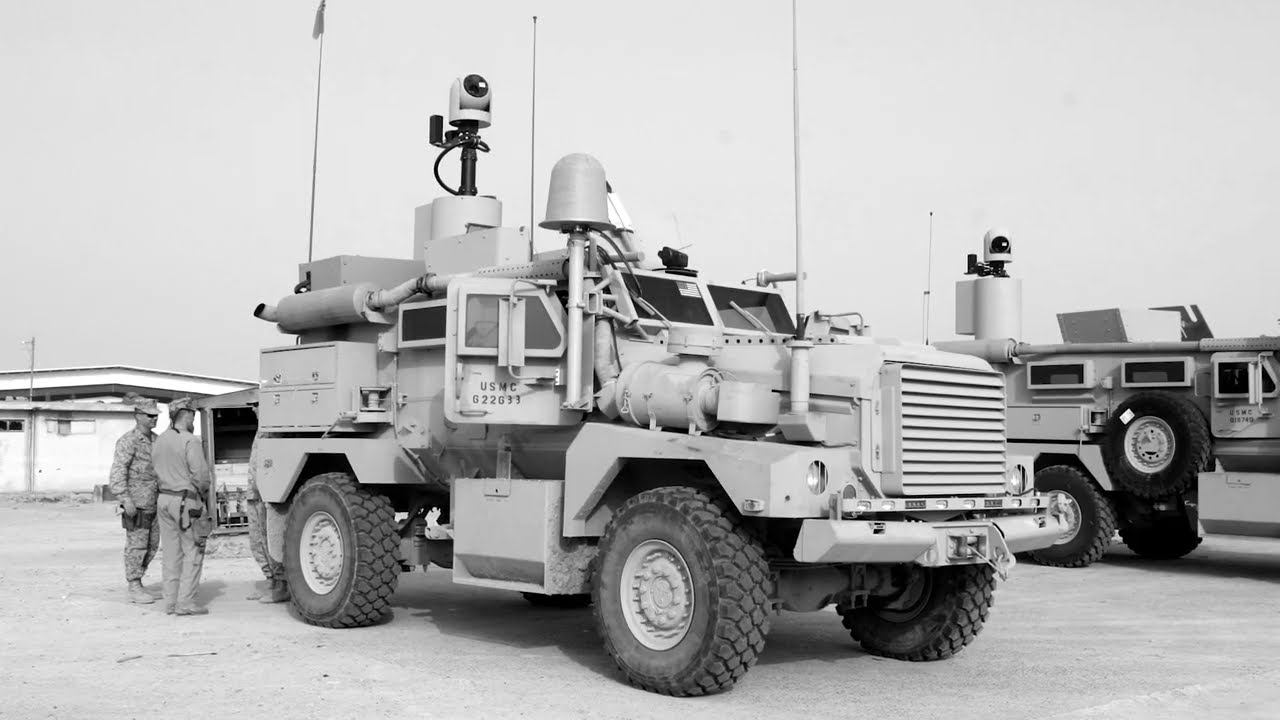
And none is attributed to a Mamba mine strike. The vehicle’s V-hull pedigree was real. The wider Casspir family had a documented mine protection record across thousands of detonations, but specific British incidents are not in the public domain. What is in the public domain is a different problem entirely. The Mamba in British service was undone not by the enemy, but by its own modifications.
The applique armor Alvis fitted to defeat the TMRP-6 pushed the vehicle’s gross weight beyond what the Baffle derived Unimog driveline had been designed to carry. The drivetrain, engineered for African bush, struggled with icy mountain switchbacks in Central Bosnia. Spares commonality across the three procurement batches was poor.
In May 2001, the Ministry of Defense formally restricted Mamba use to operations with significant mine strike threat. According to Adam Ingram’s parliamentary statement, reliability and safety problems with the previous mine protected vehicle, Mamba, led the department to consider refurbishment and modification or replacement.
Think Defense’s procurement history captures the consensus diagnosis. The Alvis fours were a great success, but the harsh climate and terrain of the Balkans, combined with the extra weight imposed by additional armor and old-fashioned mechanicals, exposed a number of reliability and safety limitations. By 2003, the Mambas were withdrawn from operations.
In 2004, all 14 vehicles were disposed of. Adam Ingram corrected the Hansard record on October 31, 2006 to clarify that the original disposal proceeds were 448,000 pounds, not the 44,000 he had previously reported. Either figure represented a fraction of the 4.5 million original outlay. Nine vehicles went to Estonia.
Several of those Estonian Mambas would later deploy to Afghanistan, and at least seven were donated to Ukraine in 2022, where one was captured and mistakenly displayed by Russian forces in May 2024 as a South African armored personnel carrier. four vehicles went to a United States private security company identified by Think Defence as Blackwater for use in Iraq.
One vehicle went to a Singapore-based firm. The replacement program was Project Tempest, won in November 2001 by Supercat with a Force Protection Cougar 4×4 derivative. Eight vehicles for 2.7 million pounds, the first British Cougar variant to enter service. And this is where the story becomes frankly a tragedy.
Britain entered Iraq in 2003 with no general purpose mine protected patrol vehicle. None. The Snatch Land Rover with its flat floor and composite armor was the standard patrol vehicle. The Royal Engineers had been operating Mambas for 7 years by that point. British defense industry, through the Vickers acquisition of Reumech OMC in 1999 and the Alvis acquisition of Vickers in 2002, literally owned the Mamba and RG-31 intellectual property.
Every other major Western military with operations in mine and improvised explosive device environments adopted a V-hull mine protected vehicle between 2000 and 2007. Germany fielded the KMW Dingo from 2000. Australia fielded the Bushmaster from 2004. Switzerland fielded the Eagle IV from 2004. Canada bought RG-31s in 2005.
The United States Marine Corps adopted the Cougar in 2004 and launched the full MRAP program in 2007. The United Kingdom ordered Mastiff, the Cougar 6×6 variant integrated by NP Aerospace, only in August 2006. Deliveries began in February 2007. The Cougar 4×4 Ridgeback entered British service in 2009.
In the gap, soldiers died. At least 37 British service personnel were killed in Snatch Land Rovers in Iraq and Afghanistan between 2003 and 2014. Among them was Corporal Sarah Bryant, the first British female soldier killed in Afghanistan in 2008. Troops gave the snatch a nickname. They called it the mobile coffin.
The Chilcot report published in 2016 explicitly criticized the delay in bringing into service alternative protected vehicles which could have saved lives. The Ministry of Defense formally apologized in 2017. Lord Drayson, speaking in the House of Lords on June 12th, 2006, captured the institutional rationalization in a single sentence.
According to the Lords Hansard, he said that the United Kingdom the 14 vehicles in Bosnia out of service some time ago due to difficulties with maintenance, that the department had looked at the RG-31 alongside alternatives, and that the size and profile did not meet British needs.
The reliability problems caused by the British applique fix, the very modification engineered to defeat the TMRP-6, had effectively delayed British MRAP adoption by half a decade. So, what was the Mamba in British service? It was not a triumph of British licensed mass production. The mass production was South African. 653 vehicles built in Pretoria.
14 sold second-hand to Britain. It was not a celebrated combat savior. The mine strike heroics belonged to its Casspir cousins and its RG-31 descendants, not to the British fleet. It was not the foundation of British protected mobility doctrine. That foundation had to be rebuilt painfully after snatch coffin started coming home.
What the Mamba was, precisely, was British procurement excellence in a narrow lane and a missed British learning opportunity at the level of the army as a whole. Alvis did exactly what a competent British defense integrator should do. They identified the best mine protected vehicle on the market, secured the license relationship, modified the buy to defeat a specific theater threat, and delivered it to the operators who needed it most.
The Royal Engineers got hands-on V-hull experience nearly a decade before British soldiers started dying in snatches in Basra, but the institutional learning never propagated. The 14 Mambas served their tiny Royal Engineers community, broke down under the weight of their own armor upgrades, were sold for less than 10% of their procurement cost, and the British Army went into Iraq in vehicles whose floor plate was, in engineering terms, a polite suggestion.
The Mamba’s V-hull is still out there. Estonian Mambas hunt mines in Ukraine. American MRAPs in storage trace their ancestry through Vernon Joynt’s patents back to a 1970 directive from the South African Defence Force. The Cougar family that Britain bought from 2006 onward, at scale and at far higher cost, was the same engineering paradigm Britain had first sampled with 14 second-hand vehicles in 1996, which leaves one question worth asking.
If the answer was sitting in Coventry from 1994 onward, and on Bosnian mountain roads from 1996 onward, why did it take Sarah Bryant’s death in 2008, the Chilcot Report in 2016, and a formal Ministry of Defence apology in 2017, for British soldiers to be issued vehicles built around a principle that South African engineers had nailed down before some of those soldiers were born? The technology worked.
The procurement worked in its narrow lane. The institution did not. That is the real story of the Alvis Mamba. Not strange, not feared, not the most anything. Just 14 second-hand vehicles, a quietly competent Coventry modification program, a Royal Engineers community that learned the right lesson, and a wider British Army that took the long way home.
British engineering in this case was the applique belly plate. The genius was South African. The lesson cost lives. We owe it to the dead to tell that part of the story straight.