The ‘Tiny’ British Gun From The Falklands That Now Fights Russians In Ukraine D
1974, the Royal Ordnance Factory, Nottingham, England. A gun carriage rolls off the production line and onto a concrete apron. Six men wheel it into position. They lower the trail, lock the platform, and step back. What they are looking at weighs less than a Land Rover. It has no armor, no engine, no self-propelled capability of any kind.
It is a steel tube bolted to a box trail on two rubber tires, and it looks like something the modern battlefield left behind 20 years ago. It looked too small. It looked too light. Senior officers in NATO called it a pop gun. Artillerymen trained on heavier systems questioned whether a weapon this size could survive a real war against a real enemy with real counter-battery fire.
Within a decade, this gun would be slung beneath helicopters and dropped onto frozen battlefields 8,000 mi from home, where it would fire more than 17,000 rounds in a single campaign without a single reported malfunction. It would be adopted by the United States Army. It would be purchased by more than 20 nations across five continents.
It would fight in the Falklands, in the Gulf, in the Balkans, in Iraq, in Afghanistan, and in Ukraine. And more than 50 years after it first rolled off that Nottingham production line, not one of those nations has found anything to replace it. Its designation was the L118 Light Gun, and it was the most successful Western artillery piece of its generation.
To understand why the L118 existed, you need to understand the problem Britain faced in the mid-1960s. The British Army’s light artillery at the time was the 105 mm Pack Howitzer L5, an Italian design built by OTO Melara. Originally intended for Alpine mountain troops, it was light enough to be broken into mule-portable loads and could be lifted by Wessex helicopters or towed behind Land Rovers.
On paper, it did everything a light gun needed to do. In practice, it was a disaster. It lacked range. It lacked lethality. Its sights were unreliable. Its construction was fragile, and the troops who crewed it openly despised it. Britain needed something better, and in April 1965, the General Staff issued requirement 3038.
The specification demanded a 105 mm gun capable of 360° traverse by a single man, a maximum weight of roughly 1500 kg, and the ability to be carried beneath the new generation of medium-lift helicopters, the Puma and the Westland Sea King. The Royal Armament Research and Development Establishment at Fort Halstead in Kent took the contract.
Their engineers made decisions that would define the weapon for the next half century. They built the barrel using auto-frettage, a process that pre-stresses the steel to withstand higher chamber pressures without adding weight. They designed the carriage from high-strength alloy steel, keeping the wheelbase so narrow that the barrel cannot physically rotate for towing unless one wheel is knocked off first, a crew drill that takes exactly 30 seconds.
They mounted the entire assembly on a circular firing platform that allows the gun to traverse a full 360° without repositioning the trail, and they chambered it for the same 105 mm field Mark 2 ammunition family used by the Abbot self-propelled gun, giving it access to high explosive, smoke, illumination, and armor-piercing rounds from the existing British supply chain.
The result weighed 1858 kg in action. It could fire six to eight rounds per minute. Its barrel could elevate from -5° to +70°, meaning it could engage targets on mountainsides, in valleys, and at ranges exceeding 17 km with standard high explosive shells. With modern base bleed ammunition, that range extends beyond 20 km.
A trained crew of six could bring it into action in under 30 seconds. In an emergency, three men could fire it. It was light enough to be slung beneath a Sea King, a Chinook, or a Puma. It was simple enough to be maintained in the field with basic tools, and it was tough enough to absorb the punishment of sustained firing at maximum charge for days without cracking.
The A that senior officers dismissed as too light to matter in a modern war was, by the time it entered full service in 1976, the most versatile towed howitzer in the Western arsenal. Now, before we get into where this gun actually fought and what it did when the shooting started, if you are enjoying this deep dive into British artillery, hit subscribe.
It takes a second, costs nothing, and helps the channel grow. April 1982, Argentina invaded the Falkland Islands. Britain assembled a naval task force and sailed 8,000 mi south to take them back. Among the forces embarked were five batteries of L118 light guns, 30 guns in total. Three batteries belonged to 29 Commando Regiment Royal Artillery, the gunners permanently attached to 3 Commando Brigade, 7 Sphinx Commando Battery under Major Gerald Ackhurst, 8 Alma Commando Battery, 79 Kirkee Commando Battery. Two more batteries came from 4th Field Regiment Royal Artillery, 29 Corunna Battery, and 97 Lawson’s Company Battery. The commanding officer of 29 Commando Regiment was Lieutenant Colonel Holroyd-Smith, later appointed OBE for his leadership during the campaign. The terrain they found was a nightmare for artillery. The Falklands are covered in wet, spongy peat bog with the water table sitting just inches
beneath the surface. Wheeled vehicles sank, tracked vehicles bogged down. The only way to move the guns was by helicopter. Moving a single six-gun battery with 500 rounds per gun required 85 Sea King helicopter sorties, 85 flights to position six guns and enough ammunition to fight for one day. 79 Kirkee Battery was the first fire unit ashore at San Carlos on May 21.
It was also the first battery to fire in anger at Goose Green on May 28. Helicopter scarcity, made far worse by the loss of the Atlantic Conveyor and the Chinooks aboard her, meant only three light guns and roughly 1,000 shells staged forward to support 2nd Battalion the Parachute Regiment.
Three guns and 1,000 rounds for an entire battalion assault against a dug-in garrison. The guns fired through the night at Mount Longdon on the night of June 11th. Six guns of 29 Commando Regiment Royal Artillery supported Third Battalion the Parachute Regiment alongside HMS Avenger’s 4.5-in naval gun. Captain William McCracken of 29 Commando Regiment commanded a forward observation party embedded with three para on the mountain.
Under sustained enemy bombardment and small arms fire, McCracken repeatedly called artillery and gun fire down within dangerously close range of his own advancing troops. He personally accounted for several enemy dead while directing fire that broke open Argentine defensive positions. For his actions that night and again at Wireless Ridge three days later, McCracken was awarded the Military Cross.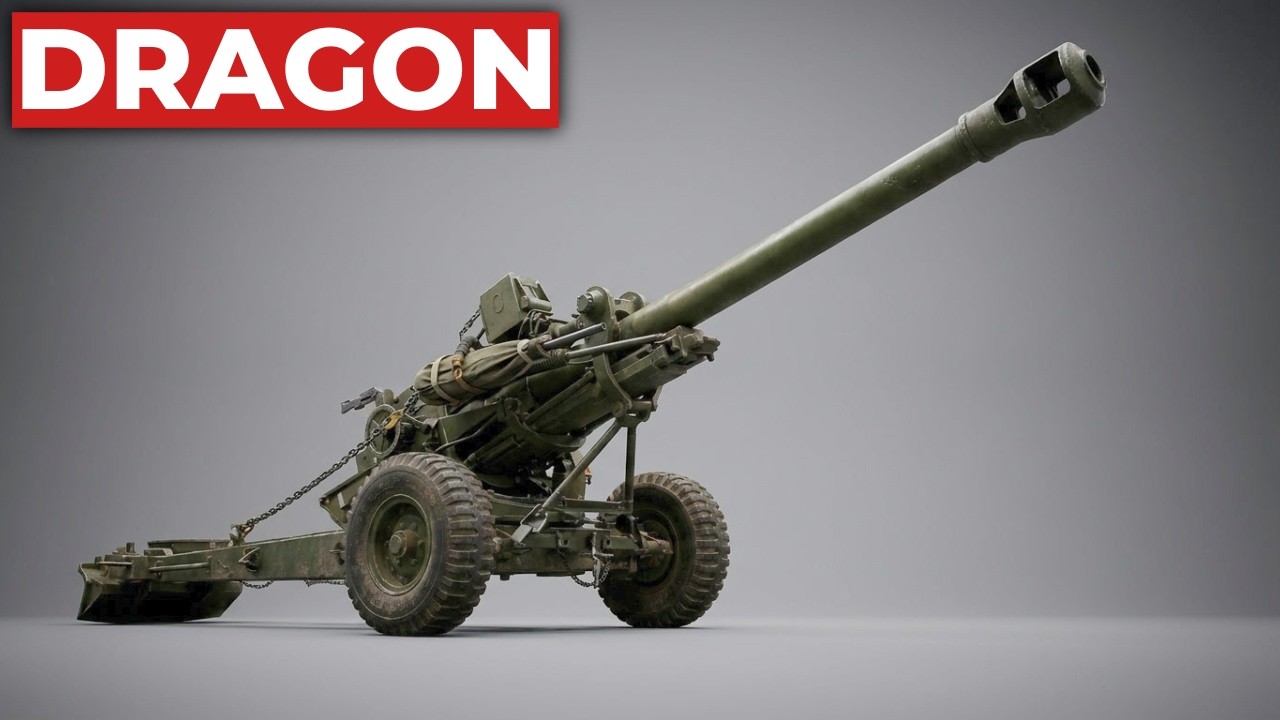
Gazetted on October 8th, 1982. On the same night at Two Sisters, 45 Commando Royal Marines fought their way up the ridge under heavy machine gun fire. Bombardier Edward Holt of 29 Commando Regiment was part of the forward observation team providing Holt took over the team. Under intense fire with rounds striking the rocks around his position, he continued to call in accurate 105-mm strikes with, according to his citation, coolness and skill far beyond those expected of his rank.
Holt was awarded the Military Medal. By the time the final assaults began on the mountains ringing Port Stanley, nearly 12,000 rounds of 105-mm ammunition had been brought forward by helicopter for the first phase alone. In the closing days of the war, the guns were firing up to 400 rounds per gun per day, mostly at charge super, the highest propellant charge the weapon was designed to absorb.
97 Battery reported that under sustained firing at maximum charge, the recoil was driving guns several feet backward through the sodden peat with every shot. Gunners repositioned them by hand and kept firing. According to multiple sources, the 30 L118 light guns fired roughly 17,000 rounds across the entire campaign without a single reported malfunction.
That figure, widely cited in defense literature and trade reporting, has not been confirmed by a primary Ministry of Defense document, but it appears consistently across authoritative secondary sources. For comparison, Royal Navy warships fired approximately 8,000 4.5-in shells during the same period.
The gun that was dismissed as too small had delivered more firepower than the fleet. There is a bitter irony buried in the Falklands record. The Argentine forces defending the islands were equipped with the very OTO Melara Pack Howitzers that the L118 had been designed to replace. Britain had sold those guns to Argentina in the late 1970s.
In 1982, the replacement fought the predecessor across the same frozen ground, and the result was never in doubt. The Falklands made the reputation. Everything that followed confirmed it. In Afghanistan, beginning in 2006, British gunners of 7 Parachute Regiment Royal Horse Artillery and 29 Commando Regiment ran 24-hour fire support operations from forward operating bases across Helmand Province.
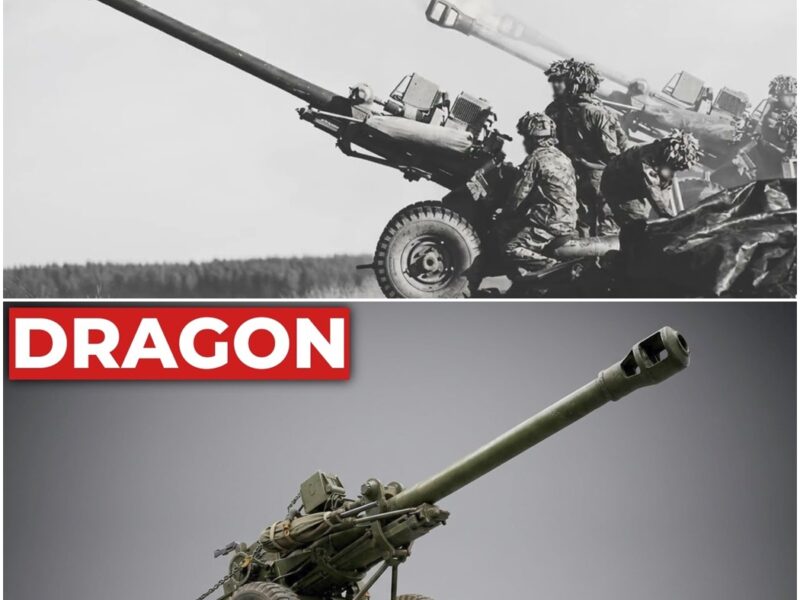
The troops nicknamed the gun the dragon. In 2009, men of 8 Alma Commando Battery dismantled a 2-ton light gun and manhandled it up a 400-m cliff track by night to a watchtower outpost, hauling 100-lb ammunition boxes up the same path under Gurkha protection. Major James Vean, the battery commander, said the effort required every available man on the clifftop outpost.
Major Ross Danes of the Royal Gurkha Rifles, describing the dragon gun’s effect, said simply that the enemy cannot run from a 105-mm shell. The United States Army, impressed by the gun’s Falklands performance, leased six examples in 1984 for trials with the 9th and 7th Infantry Divisions. By 1987, the Americans had purchased a license to produce the L119 variant as the M119, replacing the aging M102 Howitzer in airborne, air assault, and light infantry units.
Initial guns were built at the Royal Ordnance Factory in Nottingham. The rest were produced domestically with carriages manufactured at Rock Island Arsenal and cannon tubes at Watervliet Arsenal. The United States has fielded roughly 800 M119s in total. The gun first saw American combat in the 1991 Gulf War and has since served with the 82nd Airborne Division, the 101st Airborne Division, 10th Mountain Division, and the 173rd Airborne Brigade across Iraq and Afghanistan.
In April 2013, the M119A3 variant, fitted with digital fire control and GPS-aided navigation, entered service with Alpha Battery, 3rd Battalion, 319th Field Artillery Regiment at Fort Bragg, North Carolina. On paper, the L118 faces weapons that should have replaced it decades ago.
The Soviet-designed D-30 122-mm howitzer fires a heavier shell and with rocket-assisted ammunition can reach beyond 21 km, but with standard rounds, the L118 actually outranges it. The British gun fires faster, weighs significantly less, and is far easier to move by helicopter. Ukrainian crews operating donated L119s alongside inherited D-30s have reportedly described the British gun as producing better results than Soviet weapons twice its age.
The M777, the modern 155-mm lightweight howitzer, fires a shell nearly three times heavier with dramatically greater to destructive effect and can reach targets beyond 30 km, but it weighs more than 4,000 kg, roughly double the L118. It needs a larger crew, a heavier tow vehicle, and it roughly doubles the logistical burden to move the same number of rounds.
In the mountains of Afghanistan and the peat bogs of the Falklands, where helicopters are the only way to move guns and every kilogram of ammunition must be flown in by hand, that weight difference is not a statistic, it is the difference between having artillery and having none.
This is why more than 20 nations have tried and failed to replace the L118. The British Army’s own replacement program, the light fires platform, a 127 mm magazine fed concept developed by QinetiQ, built a technology demonstrator, but by 2024 had effectively stalled. The Army has committed to retaining the L118 in frontline service through at least 2030.
Since November 2001, an L118 has served as Edinburgh Castle’s famous 1:00 gun, fired daily from Mills Mount Battery. The first round was fired by Staff Sergeant Thomas McKay, the longest serving district gunner in the gun’s history. 1974, the Royal Ordnance Factory Nottingham, a steel tube on two rubber tires rolls off the production line.
It has no armor, no engine, no radar, no digital fire control, no protection for its crew. It weighs less than a family car. It is by every measure that matters to the generals and the procurement boards and the defense analysts who study war from offices, too small, too light, and too simple to survive on a modern battlefield, and yet it survived on the frozen peat of the Falklands, in the wadi floors of Oman, in the sand of the Gulf, on the mountain trails of Afghanistan, in the fields of Eastern Ukraine. It survived because it could go where heavier guns could not, fire when more sophisticated systems failed, and keep firing when the ammunition ran out everywhere else first. 20 nations bought it, not one has replaced it. That is not luck. That is British engineering solved the oldest problem in artillery, how to put the most firepower in the lightest package and move it to the place where it matters most.