The ‘Unarmoured’ British Vehicle That Survived More Ambushes Than Any Armoured Truck in Afghanistan D
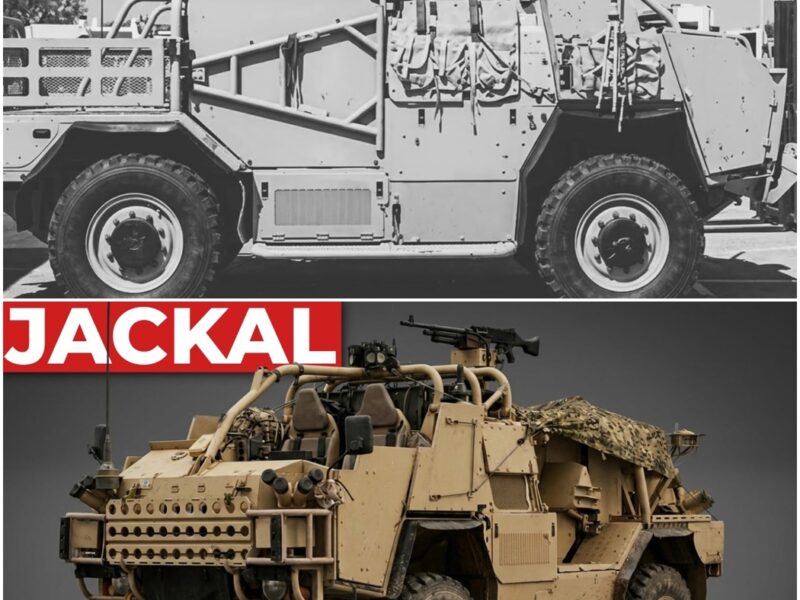
2007, a workshop floor in Dunkeswell, Devon, deep in the English countryside. A machine rolls out of the production bay on four fat off-road tires. It sits low on adjustable suspension. Its frame bare and skeletal against the gray morning light. No roof, no doors, no enclosed cabin of any kind, just a roll cage, a pair of weapon mounts, and enough exposed steel tubing to make it look like something built for a desert rally rather than a war zone.
It looked like a death sentence on wheels. Military officers stared at it. Politicians would call it reckless. Newspapers would call it a death trap. Bereaved families would demand to know why British soldiers were being sent into the most IED saturated battlefield on Earth in a vehicle with no roof and no armored shell.
And yet this machine would go on to become the single most requested patrol vehicle in Helmand Province. It would serve with the Parachute Regiment, the Royal Marines, the Household Cavalry, and British Special Forces. It would survive more ambushes, firefights, and open desert engagements than any armored truck in the British fleet.
Over 500 would be built within 3 years, and the platform would remain in frontline British service nearly two decades after it first rolled off the line. Its name was the Jackal, the MWMIK, Mobility Weapon Mounted Installation Kit. And it was the vehicle that proved the most dangerous idea in modern British warfare, that sometimes the best armor is no armor at all.
To understand why the Jackal existed, you need to understand the problem Britain faced in 2006, Helmand Province, Southern Afghanistan. British forces had deployed into some of the most violent territory on Earth. The roads, where roads existed at all, were laced with improvised explosive devices. The terrain beyond those roads was vast open desert cut by dry riverbeds called wadis, rocky valleys, and stretches of dust so fine it choked engines within weeks.
The vehicles Britain sent its soldiers into that landscape were failing. The Snatch Land Rover, originally designed for patrols in Northern Ireland, had become infamous. 37 British service personnel had been killed in snatch vehicles across Iraq and Afghanistan. It’s thin armor, built to stop bricks and bottles on the streets of Belfast, offered nothing against buried bombs packed with homemade explosive.
Soldiers called it the mobile coffin. Coroners called its use unacceptable. Parliament demanded answers. The WMIK Land Rover was marginally better. An open-topped weapons platform bolted onto a standard Land Rover chassis. It gave crews a heavy machine gun and a general-purpose machine gun, but it was slow. It was underpowered.
It lacked the range to operate independently across the vast distances Helmand demanded, and its suspension, designed for English farmland, could not survive the brutal terrain of southern Afghanistan at speed. Britain needed something entirely new. Not a heavier truck, not a thicker shell, something faster, something longer-ranged, something that could leave the road entirely and cross open desert at speeds no buried bomb could predict.
The answer came from a company that had never built a military vehicle for mass production. Supacat, based in Devon, was a specialist engineering firm known for building high mobility transporters for civilian use. Lightweight machines designed to cross terrain that defeated conventional vehicles.
The Ministry of Defense looked at their HMT 400 platform and saw something no other manufacturer was offering. A vehicle built from the ground up around a single idea. Do not get hit. The Jackal was not designed to absorb a blast. It was designed to avoid one entirely. Every element of its engineering served that principle.
The engine was a Cummins 5.9 L six-cylinder turbo diesel, producing 185 brake horsepower, mated to an Allison five-speed automatic gearbox. This gave the Jackal a top road speed of approximately 80 mph. Off-road, across open desert, it could sustain over 50. The suspension was the key. Independent double wishbone air springs, manufactured by Fox Racing, allowed the crew to raise or lower the ride height on the move.
Raised to maximum, the Jackal cleared nearly 400 mm of ground, enough to pass over rocks and ruts that would strand a conventional truck. Lowered onto its bump stops, the vehicle became a stable flat firing platform. Those weapons were substantial. The primary mount accepted either a 12.7 mm heavy machine gun or a 40 mm Heckler & Koch grenade machine gun.
A secondary mount carried a 7.62 mm general-purpose machine gun. Three crew members could lay while moving at speed across open ground. The vehicle weighed approximately 6,650 kg. It could carry a combat payload across a range of nearly 500 mi without resupply. It could ford a meter of water. It could climb a 60% gradient.
And it could be slung beneath a Chinook helicopter and dropped into a remote patrol base overnight. But the detail that defined the Jackal, the detail that made it either brilliant or insane, depending on who you asked, was what it deliberately did not have. No roof, no doors, no enclosed cabin, no mine-resistant hull of the kind the Americans were bolting onto every vehicle in Iraq.
The crew sat in blast-attenuating seats behind armored plate, protected from small arms fire and fragmentation. But from above and from the sides, they were open to the sky. The Ministry of Defense called this a feature. Critics called it a death warrant. Now, before we get into where the Jackal actually fought and what happened when it met the roads of Helmand, if you’re enjoying this deep dive into British military engineering, hit subscribe.
It takes a second, costs nothing, and helps this channel keep telling these stories. The Jackal made its operational debut on April 8, 2008, deployed with 16 Air Assault Brigade and 3 Commando Brigade Royal Marines into Helmand Province. The effect was immediate. Patrols that had been restricted to predictable routes in slow, vulnerable Land Rovers suddenly had range.
Jackal crews could leave the road entirely, cutting across open desert at speed, approaching objectives from directions the Taliban had never planned for. The vehicle’s off-road performance meant patrols could avoid the choke points, the culverts, the narrow tracks where IEDs were most commonly buried. The Household Cavalry Regiment was among the first units to take the Jackal into sustained operations, operating north of Lashkar Gah and around Musa Qala.
Their reconnaissance troops mixed Jackals with Simitar light tanks, pushing deep into contested terrain to locate and fix insurgent positions. The Jackal’s speed allowed these patrols to cover ground that heavier vehicles simply could not reach, and when contact came, its firepower meant crews could suppress the enemy and break clean rather than fighting from a standing position.
The Light Dragoons ran Jackals through central Helmand during Operation Panther’s Claw in the summer of 2009, the largest British military operation in Afghanistan. Their crews provided reconnaissance and fire support across a front stretching north of Lashkar Gah, probing Taliban defensive lines along canal networks and irrigation ditches.
The vehicle’s ability to reposition rapidly under fire became a defining tactical advantage. Crews could engage, displace to a new position, and re-engage from a different angle before the enemy could adjust. But the Jackal’s most dramatic moment came not on a desert patrol, but inside the wire.
September 14th, 2012, Camp Bastion, Helmand. Shortly after 2200 hours, approximately 15 insurgents breached the perimeter of the largest British base in Afghanistan. They were wearing American military uniforms. They carried automatic weapons, rocket-propelled grenades, and suicide vests. Within minutes, they had destroyed or damaged six United States Marine Corps Harrier jets and set fuel stores ablaze.
RAF Regiment Sergeant Roy Geddes was commanding a 12-man quick reaction force. He loaded his men into Jackals and drove directly into the breach. The scene was chaos. Burning aircraft illuminated the darkness. Explosions tore across the flight line. Geddes could see tracer of cutting through the smoke, but could not identify how many attackers had penetrated the perimeter.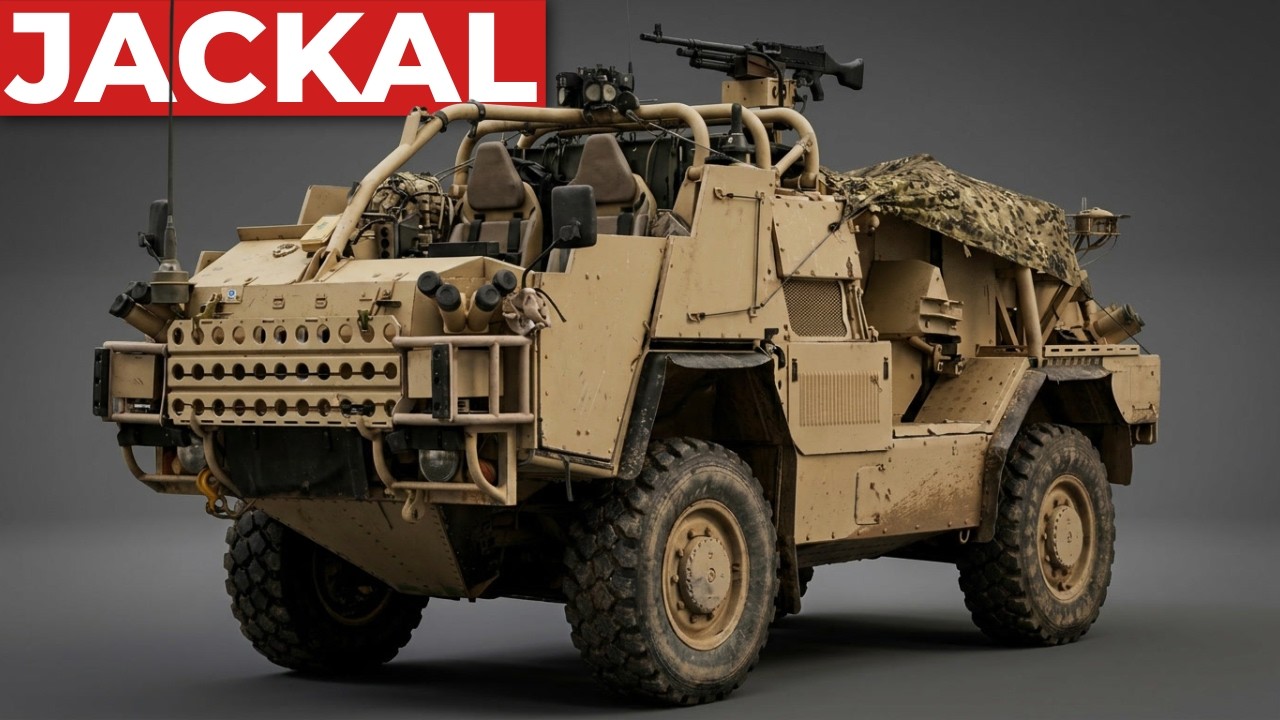
He pushed his Jackals forward anyway. One vehicle took a direct hit from a rocket-propelled grenade. The blast wounded the entire crew, including Geddes, who took shrapnel to the knee. He refused evacuation. He extracted his wounded men, reorganized what remained of his force, and re-engaged the attackers from a new firing position.
The battle lasted through the night. By dawn, every insurgent inside the wire was dead. Sergeant Geddes was awarded the Military Cross, only the second member of the RAF to receive the decoration for service in Afghanistan. Corporal Curtly received a mention in dispatches. The Jackal had proven beyond question what it could do in a firefight: fast, aggressive, mobile, lethal.
But, the vehicle’s record was not written only in victories. The roads of Helmand told a different story. On October 15th, 2008, Trooper James Munday, 21 years old, Household Cavalry Regiment, was driving a Jackal on patrol approximately 23 km north of Forward Operating Base Delhi. His vehicle detonated a contact-triggered IED buried in the track. Trooper Munday was killed.
He was among the first British soldiers to die in a Jackal. On March 15th, 2009, Corporal Graeme Stiff and Corporal Dean John, both Royal Electrical and Mechanical Engineers attached to First the Queen’s Dragoon Guards, were killed west of Gamsir when their Jackal struck a buried explosive device and was destroyed.
On June 19th, 2009, Major Sean Birchall of the 1st Battalion Welsh Guards was killed near Basharan when his Jackal detonated an IED during a patrol south of Lashkar Gah. He was 33 years old and the highest-ranking officer killed in a Jackal during the war. By August 2009, according to contemporary reporting, 13 British soldiers had been killed in Jackals. The media turned.
Newspapers called the vehicle a death trap. Members of Parliament demanded answers in the House of Commons. One member told the chamber that young soldiers love driving the Jackal until they or their mates are killed or maimed. The Ministry of Defense held its position. The Jackal was never designed to survive a direct IED strike.
It was designed to avoid one, and in the vast majority of patrols it did. But when the blast came, and on the roads of Helmand the blast always came, the open-topped cabin offered nothing. The loss was real. The grief was real. So, and yet the troops who drove it kept requesting more. The Americans chose a different answer to the same problem.
The MRAP program produced nearly 28,000 heavily armored vehicles for Iraq and Afghanistan. Massive V-shaped hulls designed to deflect blast energy away from the crew, thick armored cabins, sealed interiors. By 2011, nearly 15,000 MRAPs had been delivered to Afghanistan alone. The results were dramatic.
Casualty rates in MRAPs dropped to approximately 6% compared to roughly 22% in standard up-armored Humvees. The vehicles saved thousands of lives, but they came with a cost the terrain itself imposed. Many MRAPs deployed to Afghanistan were deemed too heavy for Afghan roads, and too large for Afghan bridges.
They lacked the cross-country mobility to operate off established routes. They were road-bound. And road-bound in a country where the enemy buried bombs in roads meant predictable. The Jackal was the opposite philosophy. Lighter, faster, unpredictable, its crews could cross open desert, ford waders, and climb gradients that no MRAP could attempt.
They could approach objectives from directions no buried bomb could anticipate. The British ran mixed fleets. Jackals for reconnaissance and strike, Mastiffs and Ridgebacks for protected route movement. Each vehicle matched to the task that suited its strengths, rather than forcing one platform to do everything.
The doctrinal difference was sharp. The Americans built vehicles to survive the blast. The British built a vehicle to never be where the blast was buried. Neither approach was wrong. Both saved lives. Both cost lives. The difference was which risk each nation chose to accept. The Jackal evolved continuously. Jackal 2 entered service in August 2009 with a larger 6.
7 L engine, a forward mounted 360° gun ring, capacity for four crew, and significantly improved blast protection beneath the hull. Jackal 2A followed in 2010 with an integrated mine blast cab. The 6×6 Coyote tactical support vehicle extended the family into logistics and resupply. Over 600 Jackal and Coyote vehicles were assembled at Babcock’s Devonport facility within 3 years.
After Afghanistan, the Jackal did not disappear. It became the backbone of Britain’s light cavalry reconnaissance force. The Light Dragoons deployed Jackals to Poland under NATO’s enhanced forward presence. First, the Queen’s Dragoon Guards took them to Mali for long-range desert patrols with the United Nations.
Vehicles were loaned to Estonia and donated to Ukraine. In 2023, the Ministry of Defense ordered 70 Jackal 3 vehicles at a cost of 90 million pounds with options for up to 240 more. Convertible between four-wheel and six-wheel drive, the Jackal 3 is designed to sustain the platform into the mid-2030s.
A vehicle the newspapers called a death trap is still being ordered, still being built, and still being deployed. 2007, a workshop floor in Devon, a machine with no roof, no doors, and no armored cabin rolled out of a small factory and into the most violent battlefield the British Army had faced in a generation.
It was not mine resistant. It was not blast proof. It could not protect its crew from a direct IED strike on a predictable road. It lacked the sealed pressurized hull that the Americans wrapped around their soldiers by the tens of thousands, and it was never supposed to. The Jackal was built on a bet. A bet that in a war where the enemy buried bombs in roads, the most dangerous thing a vehicle could do was stay on the road.
A bet that speed, range, and unpredictability could save more lives than steel. It was a bet that cost lives. 13 confirmed dead by the summer of 2009. More in the years that followed. families destroyed, a national debate about what a government owes the soldiers it sends to war. And yet, the parachute regiment requested more.
The Royal Marines requested more. The Household Cavalry, the Light Dragoons, the Queen’s Dragoon Guards, the RAF Regiment. Every unit that drove the Jackal into combat asked for it again. Over 600 were built. The platform is now in its third generation. It remains in frontline service from the Baltic to West Africa.
A new production line is running in Devon today. The Jackal was not comfortable. It was not safe. It was not the vehicle any politician wanted to defend on the floor of the House of Commons, but it was the vehicle that every soldier who drove it into Helmand wanted under them when the shooting started.
That is not a failure of engineering. That is a statement of trust. And in a war fought on roads laced with buried explosives, trust was the only armor that mattered.