The ‘Ungainly’ British Coyote That Fed And Armed Jackal Patrols For Days D
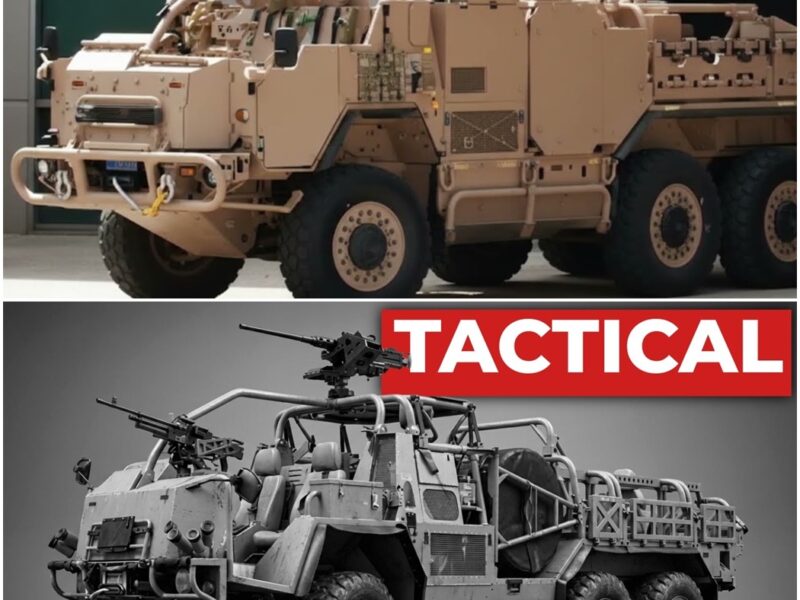
2009, a factory floor in Honiton, Devon. A vehicle rolls into the morning light on six wheels. Its frame is long, its flatbed is wide and stacked with cargo straps and weapon rings. It looks like something between a supply lorry and a gun truck, built for neither job with any particular elegance.
While the Jackal beside it is lean and predatory, this machine is blunt, tall and loaded with extra weight. It looked ungainly, it looked slow. To every officer who saw it for the first time alongside the Jackal, it looked like the weakest vehicle in the patrol. It would go on to sustain long-range patrols that no other vehicle in the British inventory could reach.
It would carry the ammunition, water and fuel that kept fighting formations in the field for 7 days at a time across terrain that stopped 26-ton armored trucks cold. It would operate at 55 mph across open desert while every conventional supply vehicle sank into the sand somewhere far behind. 72 of them remain in British service today.
More are being built. Its designation was the Coyote Tactical Support Vehicle and it was the ungainly six-wheeled machine that made the Jackal possible. To understand why the Coyote existed, you need to understand the problem Britain faced in Helmand province in 2008. The Jackal had just arrived in theater, built on the Supacat HMT 400 4×4 chassis and publicly announced in October 2007, it was a revelation.
An open-topped weapons platform capable of 80 mph across open desert, fitted with a .50 caliber heavy machine gun or a 40 mm grenade machine gun, crewed by three soldiers who could see in every direction and engage in any of them. It replaced the aging Weapons Mounted Installation Kit Land Rover, which crews had used since the earliest days of the campaign and it transformed what a British patrol could accomplish on open ground.
But the Jackal speed created an immediate and serious problem. Nothing in the British inventory could follow it. Conventional supply trucks bogged down in Helmand’s soft sand and could not cross the irrigation ditches that divided the agricultural land along the Helmand River. The Mastiff, a 26-ton mine resistant ambush vehicle, became stuck on the narrow tracks between compounds in the green zone and could only move on predictable routes.
Those predictable routes were exactly where the Taliban placed their improvised explosive devices. The Vector, a Pinzgauer based protected patrol vehicle procured as a stopgap solution, failed so comprehensively that the Defense Secretary publicly admitted it had mechanical and technical issues before withdrawing it from theater entirely in 2009. The fundamental problem was this.
Patrol endurance depended on resupply. Resupply depended on logistics convoys. Logistics convoys moved on predictable routes. Predictable routes were killing British soldiers. What the British Army needed was a vehicle that could carry the weight of a supply truck while moving with the freedom of the Jackal itself.
Supacat, the Devon-based firm that built the Jackal, had the answer already on the drawing board. The company’s engineers took the HMT 400 platform, the same 4×4 base as the Jackal, and added a third axle. A 6×6 configuration built on the same chassis architecture, sharing the same engine, the same transmission, the same suspension geometry and the same armor package.
Parts compatibility across the patrol group was a deliberate engineering decision. A Coyote mechanic could work on a Jackal. A Jackal spare could fit a Coyote. In a forward operating base 300 miles from a main supply depot in temperatures exceeding 50° C, that mattered enormously. In October 2008, the Defense Secretary announced the Protected Mobility Package, formally procuring the Coyote as part of a three-tier tactical support vehicle family alongside the Husky and Wolfhound.
In April 2009, a 74 million pound contract was awarded to Supacat as prime contractor with Babcock’s Devonport facility beginning production at a rate of one vehicle per day. 76 Coyotes entered British service from August 2009. The vehicle measured approximately 7 m in length and 2 m in width, stretched considerably longer than the Jackal’s 5.
39 m to accommodate the third axle module and a rear flatbed cargo area. Gross vehicle weight reached 10,500 kg when fully loaded. Maximum payload capacity was 3,900 kg, enough for extra ammunition, water canisters, diesel fuel, rations for multiple days, medical supplies, communications equipment and electronic counter-measures gear.
The power plant was a Cummins 6.7 L turbocharged diesel producing approximately 185 brake horsepower, routed through an Allison 2500 five-speed automatic gearbox and a two-speed transfer case giving high and low range. Road speed reached 75 to 80 mph. Cross-country speed reached 55 mph. Range on internal tanks was 800 to 1,000 km, extendable to 2,000 km with additional jerrycans stacked on the flatbed.
The suspension was the feature that made all of it possible. Independent double wishbone geometry at all six wheel stations with air-operated springs and external bypass dampers from Fox Racing Shox, a motorsport derived damping system running on each wheel station. Ride height adjusted between 280 mm and 530 mm using compressed air, allowing the crew to lower the vehicle onto its bump stops as a stable firing platform or raise it high enough to clear the deep irrigation bunds of the green zone.
Warrant Officer Nick Hartley, one of the first soldiers to evaluate the HMT platform publicly, described the heavily rutted test terrain as almost completely absorbed by the suspension. Weapon stations gave the Coyote genuine offensive and defensive firepower. A 360° traversing ring mount at the forward crew position accepted interchangeably the .
50 caliber heavy machine gun, the 40 mm grenade machine gun or a 7.62 mm general purpose machine gun. A second pintle mount at the front passenger position carried a further general purpose machine gun. With four crew aboard, two weapon systems could engage targets simultaneously. The Coyote was not a passive logistics truck.
It was a fighting vehicle that also carried supplies. Armor protection was designed and integrated by Jankel Armoring with blast plates under the crew compartment and composite panels on the sides, supplemented by blast attenuating seats to manage shock from mine detonation beneath the vehicle. Now, before the story of where the Coyote actually fought, if you are finding this breakdown of British military engineering useful, hit subscribe.
It takes 1 second, costs nothing and helps this channel continue producing this kind of deep dive. The Coyote reached Afghanistan operationally in late 2010, entering theater during Operation Herrick 13. Its timing placed it in the later, more complex phase of the British campaign after the major kinetic operations of 2009 and 2010 and into the years of persistent patrolling, mentoring and counterinsurgency across Helmand’s most contested districts.
The Light Dragoons were among the first formations to operate the Jackal and Coyote combination in Helmand, deploying across multiple Herrick rotations through the war’s middle years. Their light cavalry role gave them responsibility for the brigade reconnaissance force, conducting deep patrols that ventured far beyond the forward operating bases clustered around Lashkar Gah and the Helmand River corridor.
A typical patrol group consisted of three Jackal 2s and a single Coyote moving in formation across terrain that on a map looked like featureless desert, but on the ground presented constant obstacles of soft sand, concealed ditches and compound walls that narrowed usable routes to tracks barely wider than the vehicle itself.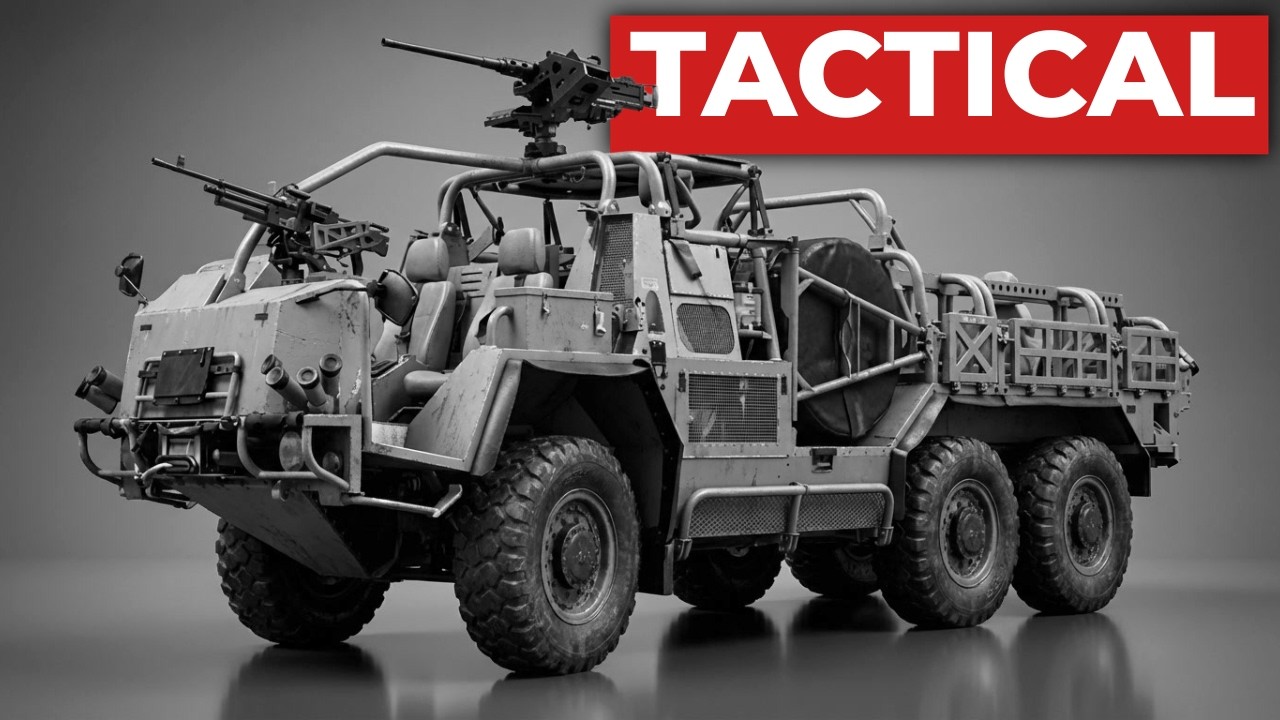
The Coyote’s payload solved the problem that no other vehicle in theater could address. Jackal patrols could generally last a full week in the field, traveling 700 to 800 km on main fuel tanks, extending to 2,000 km using additional jerrycans. But that endurance only held if every Jackal could count on resupply from within the formation itself rather than waiting for helicopters or road convoys.
The Coyote’s flatbed carried the extra ammunition belts for the .50 caliber guns, the water each crew member needed to survive in the heat, the diesel reserves, the rations and the electronic counter-measures equipment that jammed the signals used to trigger roadside bombs. It carried medical supplies sufficient for battle casualty management before evacuation.
Everything a patrol needed to stay out and keep fighting was loaded onto the Coyote before it left the wire. What this eliminated was the logistics convoy. Conventional resupply convoys on predictable routes had been the Taliban’s preferred target throughout the earlier years of the war. They moved slowly on identifiable tracks at times the enemy could anticipate and preempt.
The Jackal and Coyote formation moved off track at speeds no ambush party expected on routes chosen in the field rather than committed to a plan the night before. Supacat’s chief engineer explained the logic directly. If you can take the vehicle off track, you change the rules of engagement.
The Taliban knew where there would be traffic. The Coyote ensured there would be no traffic where the Taliban expected it. The Royal Scots Dragoon Guards made a permanent conversion to the Jackal and Coyote light cavalry configuration in November 2013, recognizing that the platform combination had redefined what armored reconnaissance could accomplish in the environments where Britain’s Army was actually fighting.
First, the Queen’s Dragoon Guards deployed on Operation Herrick 20, the final British combat rotation before withdrawal in 2014, operating Jackal and Coyote across Helmand in the campaign’s closing months. The RAF Regiment photographed operating Coyote Tactical Support Vehicles around Kandahar Airfield in August 2010 represented a further dimension of the vehicle’s reach.
Airfield protection in southern Afghanistan extended well beyond the perimeter wire, requiring rapid vehicle-mounted response to threats across open ground. The Coyote’s weapons fit and cross-country speed made it viable for that rapid reaction role alongside its primary logistics function.
On the 14th of September 2012, 15 armed insurgents breached the perimeter of Camp Bastion in the largest ground assault on a British military base since the Falklands War. Sergeant Roy Geddes of the RAF Regiment led a 12-man quick reaction force in Jackal vehicles through total darkness while Harrier jets burned on the flight line, his vehicle was struck by a rocket-propelled grenade.
All crew were wounded. Geddes kept fighting, rallied his men, and held the position until reinforcements arrived. He was awarded the Military Cross, only the second RAF serviceman to receive that decoration in Afghanistan. The platform that absorbed the rocket-propelled grenade strike and kept its crew in the fight was a Jackal.
The Coyote following it carried the ammunition those men continued firing. Corporal Harrison of the Household Cavalry Regiment achieved the world’s longest confirmed sniper engagement at 2,475 m in November 2009. While his patrol’s Jackal vehicles were under heavy Taliban machine gun fire in open terrain, he dismounted, engaged from a nearby building, and stopped the attack.
The patrol survived. A Coyote carrying the patrol’s resupply had made that extended operation possible. The contrast between the Coyote’s approach and the heavy protected vehicle programs running simultaneously reveals two fundamentally different philosophies of force protection in Helmand.
On paper, the Mastiff looked superior. A closed armored hull, a blast-deflecting undercarriage, all-round ballistic protection against small arms and heavy machine gun fire. In practice, by late 2009, only 134 of 271 delivered Mastiffs were described as fully fit for purpose, reflecting the maintenance burden of the extreme dust and heat.
More critically, the Mastiff could not access the terrain where the Jackal and Coyote operated. It was confined to predictable routes. Predictable routes in Helmand were where soldiers died. The Coyote’s protection philosophy rejected passive armor as the primary defense. Blast plates and composite panels covered the crew against small arms fire and mine blast, but the primary protection was the ability to leave any route at 55 mph and cross terrain when no one expected a patrol to be. Mobility was the armor.
After Afghanistan, the Coyote kept working. Operation Newcomer in Mali in 2021 sent Light Dragoons Jackals and Coyotes on long-range reconnaissance patrols, reaching 1,500 km from base across Sahelian terrain sharing the open sandy character of Helmand at its most demanding. Supacat and Aerospace prepared the vehicles to theater-ready standard under a 1.
7 million-pound integration contract, confirming the platform remained viable more than a decade after first entering service. 72 Coyotes remain in British service today. The successor platform, the Jackal 3 Extender, is a 6×6 vehicle convertible between 4×4 and 6×6 configurations in approximately 4 hours, folding the Jackal and Coyote’s separate roles into a single modular platform.
In February 2023, the Ministry of Defense ordered 70 Jackal 3s at 90 million pounds. In September 2024, 53 Jackal 3 Extender 6×6 variants were ordered with options extending to 240 total vehicles. The mothership concept, born in a Devon engineering office and proven in Helmand’s desert, is being expanded rather than retired.
Future variants under active consideration include a 105-mm howitzer mounted on the 6×6 platform. The additional payload of the Coyote configuration providing the capacity for the gun and its ammunition in a single vehicle. 2009, a factory floor in Honiton, Devon. A six-wheeled vehicle rolls into the morning light, and a first assessment finds nothing elegant about it. It was heavy.
It was wide. It was slower than the vehicle it existed to serve. It carried no overhead armor. It offered no enclosed protection of the kind that closed hulls provided. It was open to the sky, to the dust, and to whatever fired at it from the compounds and tree lines of Helmand province. And yet patrols that would have lasted 24 hours without it lasted 7 days with it.
Convoys that would have moved on predictable routes and died on predictable routes never needed to be sent. Jackals that would have turned back for fuel and ammunition stayed in the field, kept their positions, and kept fighting. In the desert of Helmand, on the open plains of Mali, through the dust and heat of the longest British land campaign in a generation, the Coyote was not glamorous.
It carried things. It followed the patrol and kept it alive. That is not logistics. That is the difference between a patrol that fights and one that does not.