The ‘Wrong’ American Gun That Charged Through A Chinese Ambush Instead Of Firing D
Pop one knee, Korea. Before dawn on the 24th of April, 1951, a column of 19-ton self-propelled howitzers grinds along a dirt road between flooded rice paddies, gunners standing in open compartments, the cold burning their hands through their gloves. The lead vehicle slows. Somebody in the village ahead is firing tracers.
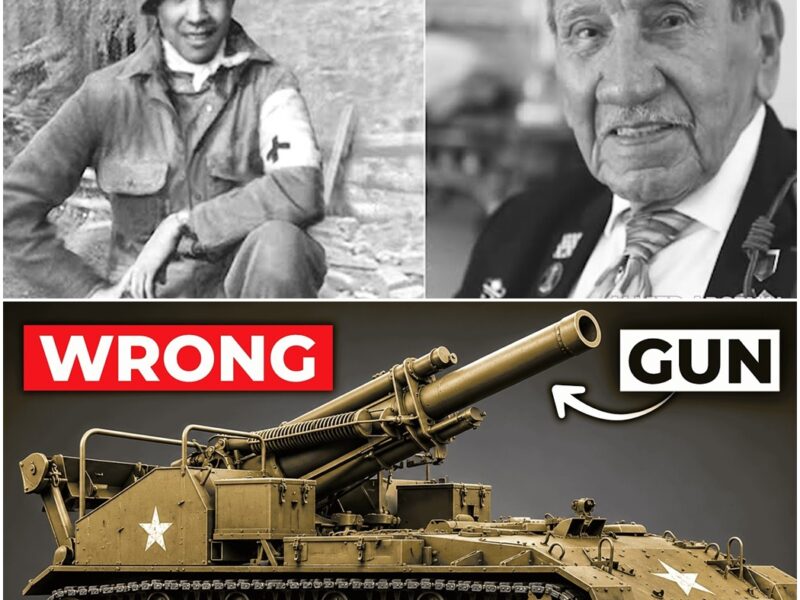
Then, from both sides of the road, six machine guns open up at once, and the tracers coming at them are green. The order that follows is the one no artilleryman will ever covered. Mount up. We’re going through them. This is the story of the M41 155-mm howitzer motor carriage, the weapon American crews called the gorilla.
Only 85 were ever built. It was designed to fire from 9 mi behind the line, not to charge through a kill zone with infantry hanging off its hull. But, on a Korean valley road in April 1951, an all-black battery did exactly that. And what happened next rewrote how the United States Army would build self-propelled artillery for the next 60 years.
To understand why the gorilla existed, you have to understand the problem American artillery commanders kept running into across Europe in 1943 and 44. The standard 155-mm towed howitzer was a beautiful piece of engineering, accurate, lethal, with a maximum range of nearly 9 mi. But, it weighed almost 6 tons.
It had to be hauled into position by a prime mover, unhitched, dug in, leveled, and sighted before it could fire a single round. And once it was in place, it was stuck. When the front line moved, and in mobile warfare the front line was always moving, the towed gun took hours to displace. By the time it set up again, the targets it was meant to hit had often disappeared.
And worse, enemy counterbattery fire might already be walking toward its old position. What commanders wanted was a 155-mm howitzer that could pick itself up, drive to a new firing position, and be shooting again in minutes. The Ordnance Department had built a heavy version on the Sherman chassis, the M40, but it was 81,000 lb of armored cannon, slow on bad roads, and overkill for divisional artillery.
What was missing was a medium-weight self-propelled howitzer light enough to keep up with armored columns and heavy enough to throw a 95-lb shell. The answer was the T64E1 project, authorized in January 1944. Cadillac would take the chassis of the M24 Chaffee light tank, relocate the engine from the rear to the center to free up space behind the driver, and bolt a full 155-mm howitzer onto the back.
A heavy steel spade at the rear would absorb the recoil. The crew would ride in an open compartment behind the gun. It was lighter than the M40, about 19 tons, and faster, with a top road speed of 35 mph. It was, on paper, exactly what the divisional artillery needed. There was only one problem.
The war it had been designed for was about to end. The contract to build the new howitzer carriage went to a company that had never built a tank in its life before the war began. Massey-Harris of Racine, Wisconsin, was a farm equipment manufacturer. They made tractors and combine harvesters. In January of 1942, they had taken over a former Nash-Kelvinator plant and converted it to build Stuarts, Chaffees, and tank destroyers for the army.
By May of 1945, the same assembly line that had once been laying out wheat threshers was producing the M41 155-mm howitzer motor carriage. The first 60 rolled off the line before Japan surrendered in September. The original order had been for 250 vehicles. By the end of December, after the war was over and the demobilization had begun, the count stood at 85.
The remainder was canceled. The engineering choice that defined the M41 and ultimately damned its crews was the open top. To save weight and to give the gunners room to work the long ramming stroke of a 155 mm shell, the entire rear fighting compartment was left exposed to the sky. The hull armor was 13 mm, half an inch of steel, just enough to stop rifle fire at distance.
The shielding around the gun compartment itself was only 6 and 1/2 mm, a quarter of an inch. There was no overhead protection at all. In firing position, the rear tailgate folded down to become a working platform for the crew. It made loading fast. It also meant that a single mortar round dropping anywhere in the vicinity could kill everyone in the compartment.
The crew carried only 22 rounds on the vehicle. The howitzer itself could fire four of them a minute. A battery of six gorillas could empty its onboard ammunition in about 5 minutes of sustained shooting, which meant the M41 was always tethered to a logistics tail of M39 utility vehicles hauling more shells forward.
The two Cadillac V8 engines, 220 horsepower combined, were widely criticized as underpowered for moving the extra weight of the artillery piece. And the official designation, 155 mm howitzer motor carriage M41, never appeared on a single crewman’s tongue. Somewhere in the peacetime army between 1946 and 1950, somebody looked at the hulking gun slumped on the small chassis hull with its hunched shoulders and its disproportionate fist and called it the gorilla.
The nickname stuck. It is not in any manual. No one ever wrote down who said it first. By the time the next war started, the M41 had been sitting in peacetime motor pools for 5 years waiting for a fight it had never been built to have. The gorillas went to Korea with two kinds of units.
The 92nd armored field artillery battalion, a regular army battalion from the Hell on Wheels second armored division lineage landed at Inchon on the 20th of September 1950 under Lieutenant Colonel Leon Lavoy. The other was the 999th armored field artillery battalion. The 999th had been a segregated unit since World War II, predominantly black enlisted men with white officers, and had earned the right to incorporate the arms of the French city of Colmar into its insignia for helping liberate the town in February of ’45. In Korea, its motto was two words, “Never die.” By the spring of 1951, the 999th was attached to the first Republic of Korea division, anchoring the western end of United States first core along the lower Imjin River directly north of Seoul. On the night of the 22nd of April, the largest communist offensive of the war, roughly 700,000 Chinese soldiers in three field armies, broke against the
line. The British 29th Brigade, including the Glosters, who would make their famous stand at Hill 235, was hit a few kilometers to the east. Battery B of the 999th was in the path of the western thrust. That evening, Warrant Officer David Reed climbed Hill 128 above the village of Techon with three American soldiers and a squad of Republic of Korea infantry.
He set up a forward observation post overlooking the Imjin. At about midnight, two Chinese machine guns opened fire from across the river. Reed called for a single white phosphorus spot round. The fire direction center radioed back the standard reply, “It’s on the way.” And the round fell 400 yd short.
Reed corrected the range and ordered fire for effect. “Battery gave me six rounds, one volley, all at one time.” He later told an army historian. It was a target hit, and the shells fell squarely on top of the machine gun. At 1:30 in the morning, he was ordered to abandon the hill. He refused.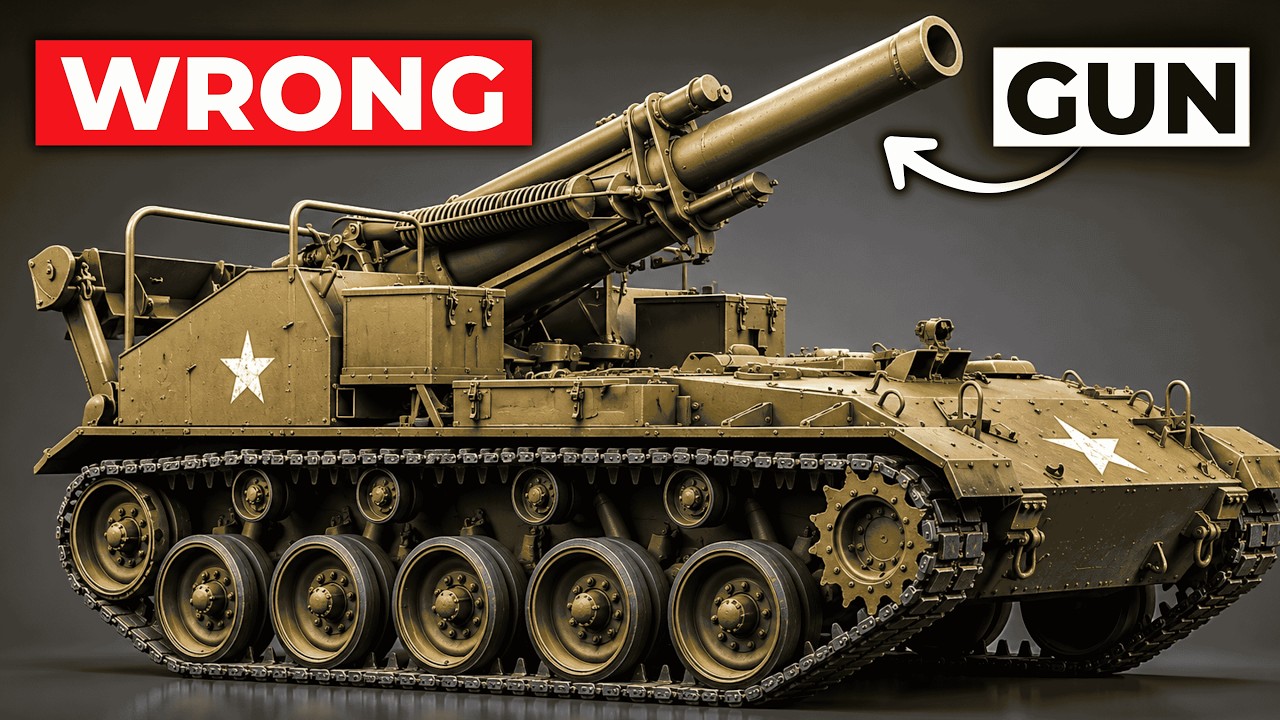
He sent the Republic of Korea squad to drive off Chinese infantry crawling up the western slope while he continued to direct fire on the eastern one. By 2:30 he had withdrawn his men intact to the main line of resistance. By dawn, Battery B’s six gorillas had been firing continuously for hours and Captain James Weldon was ordered to displace.
If you’re getting something out of this story, consider subscribing. A lot of these stories don’t get told anywhere else. Subscribing helps make sure we can keep telling them. Now, back to the road north of Popo-ri. By the night of the 23rd, friendly Republic of Korea armor was withdrawing past Battery B’s position.
Communication wires were found crushed under the tracks of pulling tanks. Private Lewis turned to a corporal beside him. “I don’t like it. They’re leaving us stranded.” Lieutenant Bonacorso took a jeep 2,000 yd west to scout and found one Republic of Korea soldier and a wave of approaching Chinese. Corporal Anthony Johnson looked across the open ground at the silhouettes coming through the dark.
“I looked across the field,” he later told the same Army historian, “and they were coming like flies.” Battalion ordered Battery B back to Popo-ri. The column rolled out in the small hours of the 24th, two M39 utility vehicles at the head, six M41 gorillas behind, ammunition trailers and trucks strung out for hundreds of yards.
They saw a firefight in the village ahead and slowed. Weldon climbed into the lead M39. That was when six Chinese machine guns and roughly 100 infantry opened up from both sides of the road and mortar shells began walking down the column. The second M39 exploded and blocked the road. Sergeant Bell, commanding one of the gorillas, was shot dead in his hatch.
Private Morris Henry climbed up to pull Bell’s body out and was killed himself. An ammunition trailer detonated and Corporal Spraglin, the gunner watching it from his open compartment, said it went up like Harlem, New York. Weldon gave the only order the situation allowed. “We received orders to mount on vehicles,” Spragling remembered, “that we were going through the ambush.
” The gorillas accelerated. The drivers swerved into the rice paddies to get around the burning truck, and the Chinese rose out of the wet ground to meet them. “While going through the rice field,” Spragling recorded, “Chinese were jumping up.” The driver ran over about four Chinese. “We were somewhat crowded on the vehicles. Bullets were hitting close.
” Private Anthony Jackson, on foot, grabbed the legs of a crewman on a passing M41 and was pulled aboard. Sergeant Henry Laws, the battery mechanic, dragged a man missing half his foot into the bed of an abandoned gorilla and drove it out himself. When the count was made, seven were dead and 31 wounded.
Two gorillas were damaged. Four of six had been reassembled by morning, and the battery was still combat effective. Welden estimated they had killed roughly 100 Chinese on the way through. To resume firing the next day, the battery had to put cooks, mechanics, surveyors, and firemen on the guns. They had been awake for 72 hours.
The hard truth about the M41 is that it should never have been in that ambush in the first place. The gorilla was designed in 1943 as a divisional fire support weapon. A gun that would sit 9 mi back and lob 95-lb shells over friendly heads. It had no defensive armament worth mentioning.
Its open top, which the engineers had accepted as a fair trade for crew working space, became a death sentence the moment enemy infantry got inside small arms range. In the freezing cold at the Chosin Reservoir 5 months earlier, crews of the same battalion had worked the howitzer in temperatures of 20 and 30° below zero with nothing overhead but their helmets.
Some of them had begun modifying their carbines to accept 30-cal machine gun belts, an improvised personal defense answer to a problem the designers had simply not anticipated. But the limitation is the point. The M41 was the first American attempt to give divisional artillery legs, and the lesson of Pop on Ni was not that self-propelled artillery had failed.
It was that self-propelled artillery worked, and that the next version of it had to put a roof over the crew. The Gorilla did the thing it was not designed for because when the moment came, it was the only thing on that road that could. Six days after the Popon Ni ambush, on the 30th of April 1951, the Army Ordnance Department issued a quiet reclassification.
Every howitzer motor carriage in the inventory was redesignated a self-propelled howitzer. The vocabulary changed in the middle of the battle. Lieutenant Colonel Lavoy, watching his own 92nd Battalion fight a parallel action that same week, sat down the following winter and wrote an article for the Army Combat Forces Journal.
He called it Make Mine SP, short for self-propelled. And he argued that in a war where the front line moved daily and enemy infantry sometimes infiltrated past the guns, the battlefield mobility, defensive firepower, and even the limited armor of the M41 was vastly preferable to anything towed. The article became the doctrinal hinge.
The 92nd’s own running count of artillery rounds fired in Korea would pass 300,000 before the war ended, and the unit is credited with firing both the 150,000th and the 300,000th milestone shells of the conflict. The M41 itself was retired in the mid-1950s, replaced by the M44, which Massey Harris also built.
The M44 went into service with a closed turret to solve the open-top problem. And the Army had to reopen it almost immediately because firing a 155 mm howitzer inside a sealed compartment poisoned the crew with cordite fumes. American self-propelled artillery stayed open-topped until 1963, when the M109 finally arrived with a proper ventilated turret, fully enclosed armor, and the doctrinal weight of every lesson Popon Ni had taught.
The M109 is still in service in 2026. Every one of them traces its design lineage back through the M44 to the Gorilla. Of the 85 M41s ever built, only two survive. One sits at the United States Army Field Artillery Museum at Fort Sill, Oklahoma. The other was captured by Chinese forces at the Battle of Maryang San in October of 1951 and stands today in the Military Museum of the Chinese People’s Revolution in Beijing.
One Gorilla on each side of the line the 999th fought across. The 999th was integrated. White enlisted men assigned in starting in the summer of 1951. Charles Day, one of the first, said he was probably the second white man in a battery. I said, “My lord, what have I got into?” He remembered. But after I learned some of their key words, everything smoothed out.
The unit moved to Japan in 1954 and was eventually deactivated. The number 999 was never resurrected. The motto outlasted the unit. Veterans signed reunion letters with one word for four decades, Never Die. Green tracers from both sides of the road. The Gorilla did the only thing left to do and the army has been building a roof onto it ever since.
That is the story of the M41 Gorilla, the all black battery that drove through a Chinese ambush and the one piece of self-propelled artillery that taught the United States Army what self-propelled artillery actually needed to be. Now we want to hear from you. If you had been the battalion commander that morning, would you have ordered Battery B to charge through the ambush or would you have ordered them to dismount and fight from the ditches? Tell us in the comments and don’t forget to subscribe.