What Happened to Albert Speer’s Wife and Children After WW2? D
Margarete Speer was forty-one years old when Albert Speer was sentenced to twenty years in Spandau Prison. She was sixty-one when he came back. In the years between, she raised six children alone, defended a man she could not visit, and watched her family scatter. Twenty years later, when the gates of Spandau opened, she stepped forward to greet her husband. They shook hands.
Heidelberg In the final weeks of April 1945, Margarete Speer was at the Berghof complex on Obersalzberg with five of her six children. Her husband was elsewhere — first in Berlin, then in northern Germany, where he had attached himself to Karl Dönitz’s short-lived Flensburg Government as Minister of Industry and Production.
Albert Speer Jr. was ten. Hilde was nine. Fritz was seven, Margret six, Arnold four, Ernst two. American forces reached the area on 4 May 1945. The family avoided internment as non-combatants, but the household they had known was finished. On 23 May 1945, British troops arrested Albert Speer at Glücksburg Castle near Flensburg, where he had been cooperating for a week with the US Strategic Bombing Survey.
The arrest ended Margarete’s eighteen years as the wife of a senior official of the Reich. With the Berghof under Allied control and the family villa in Berlin destroyed, she packed what could be carried and moved the children south to Heidelberg — her own birthplace, and the city where the Speer family had owned a home at Schloss-Wolfsbrunnenweg since 1918.
What waited for them was not the family villa they had imagined. The Speer house itself was occupied; Margarete and the six children settled into an outhouse on the grounds of her father-in-law’s estate, where they would live in cramped conditions for the next eight years. The transition was abrupt. They had grown up around Hitler and his entourage, with cooks and servants and chauffeured cars; they were now sharing a few rooms in an outbuilding in postwar Germany. Ten-year-old Albert Jr.
began developing a severe stutter in the months after his father’s arrest. Their father’s case dominated the next eighteen months. From November 1945 through October 1946, Albert Speer stood trial at Nuremberg as one of twenty-four major defendants. On 1 October 1946, the International Military Tribunal convicted him of war crimes and crimes against humanity for his use of forced labor and sentenced him to twenty years.
On 18 July 1947, he was transferred to Spandau Prison in Berlin and registered as Prisoner Number Five. Margarete was forty-one. The youngest of her children was five. Ahead of her stretched twenty years in which she would raise six children almost entirely alone, manage a household stripped of every privilege it had known, defend her husband’s reputation when she chose to and stay silent when she chose not to, and decide on her own terms what her family’s relationship with a man in a Berlin prison cell would look like.
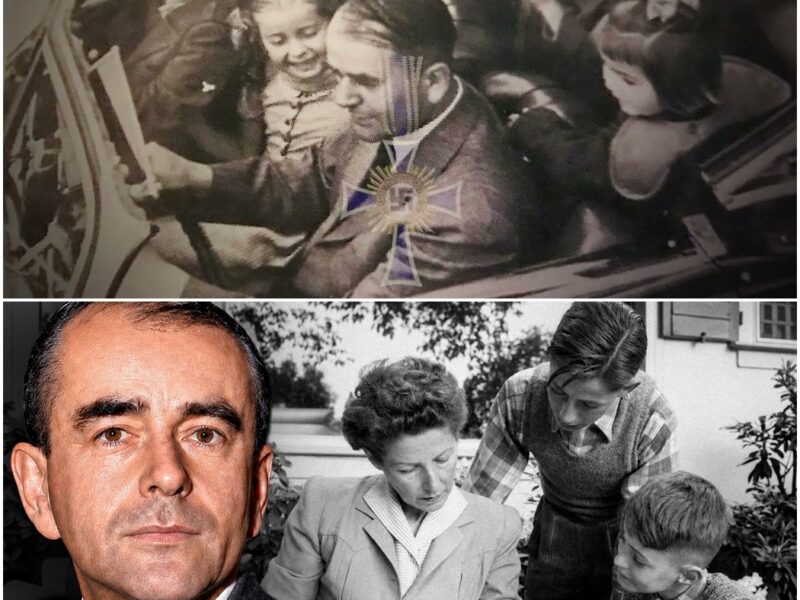
Of all the people Albert Speer left behind in 1945, no one’s life was reshaped more by his choices than hers. Seven years passed between the wedding and the first time Margarete was invited to stay at her in-laws’ home. She had married Albert Speer in Berlin on 28 August 1928 — the daughter of a Heidelberg master joiner who employed about fifty workers and served on the town council, marrying into a family whose mother considered the Webers socially inferior. Margarete had been born in Heidelberg on 8 September 1905 and met Speer in the summer of 1922, when both were teenagers. The seven-year wait for a welcome was the first lesson of her marriage in what she would and would not be allowed to expect. The Reich years made her the wife of one of the most powerful men in Germany and one of the most absent. Between 1934 and 1942 she had six children. The regime awarded her a Cross of Honour for her fertility. Hitler gave the family a villa on the Obersalzberg in 1935. None of it changed
the central fact of the marriage: Speer was almost never there. Margarete herself put it bluntly in interviews decades later — for all practical purposes, the children did not have a father. He visited Berchtesgaden rarely, mostly when Hitler was in residence. He took his holidays with Eva Braun and his ministry team, not his wife.
After 1945, she became the only parent the children had. The Maclean’s reporter who interviewed her in early 1954, with Speer eight years into his sentence, found her in the outhouse at Wolfsbrunnenweg, smartly dressed in a white blouse and grey skirt, defending her husband to a foreign journalist with measured restraint. She refused to argue the case at Nuremberg. She did not deny slave labor.
She asked instead, quietly, whether eight years was not already enough. She had been raising six children alone since the surrender and would do so for twelve more years. She made one decision in those years that defined her relationship with her husband as much as anything else. She refused to let any of the children visit him at Spandau.
They would form a wrong impression, she told the reporter, of a father they had hardly known anyway. The children only began visiting in their teenage years, on their own initiative. Albert Jr. later said he saw his father in Spandau once a year. At midnight on 1 October 1966, Margarete waited at the gates of Spandau with Speer’s defense attorney, Hans Flachsner. Her husband walked out after twenty years.
He barely acknowledged her. They shook hands. Within a few years, Speer began an affair with a German woman thirty years his junior, married to an Englishman, living in London. Margarete and the children knew. She remained at the Heidelberg house. He died in the woman’s company in London on 1 September 1981. Margarete outlived him by six years and died at home on Christmas Day 1987.
The stutter arrived in 1945, when Albert Speer Jr. was ten years old and his father was being arrested as a war criminal. It stayed with him into his thirties and would only loosen its grip after a long bus trip across the United States in 1964, when he forced himself to speak to strangers in a language that was not his own.
He had been born in Berlin on 29 July 1934, and by the time he turned three, his father was Hitler’s chief architect. He grew up in the outhouse at Wolfsbrunnenweg with his mother and siblings, finished school, and made the decision that would define the rest of his life: he would become an architect. It was the same profession his father had used to design monuments for the Third Reich, his grandfather Albert Friedrich Speer had practiced in Mannheim, and his great-grandfather had practiced before that.
He took the longest possible route into the family trade. He worked first as a carpenter, beginning his apprenticeship while his father was still in Spandau, then enrolled at evening classes before entering architecture full-time at the Technical University of Munich in 1955. In 1964, he won his first international prize and opened his own office.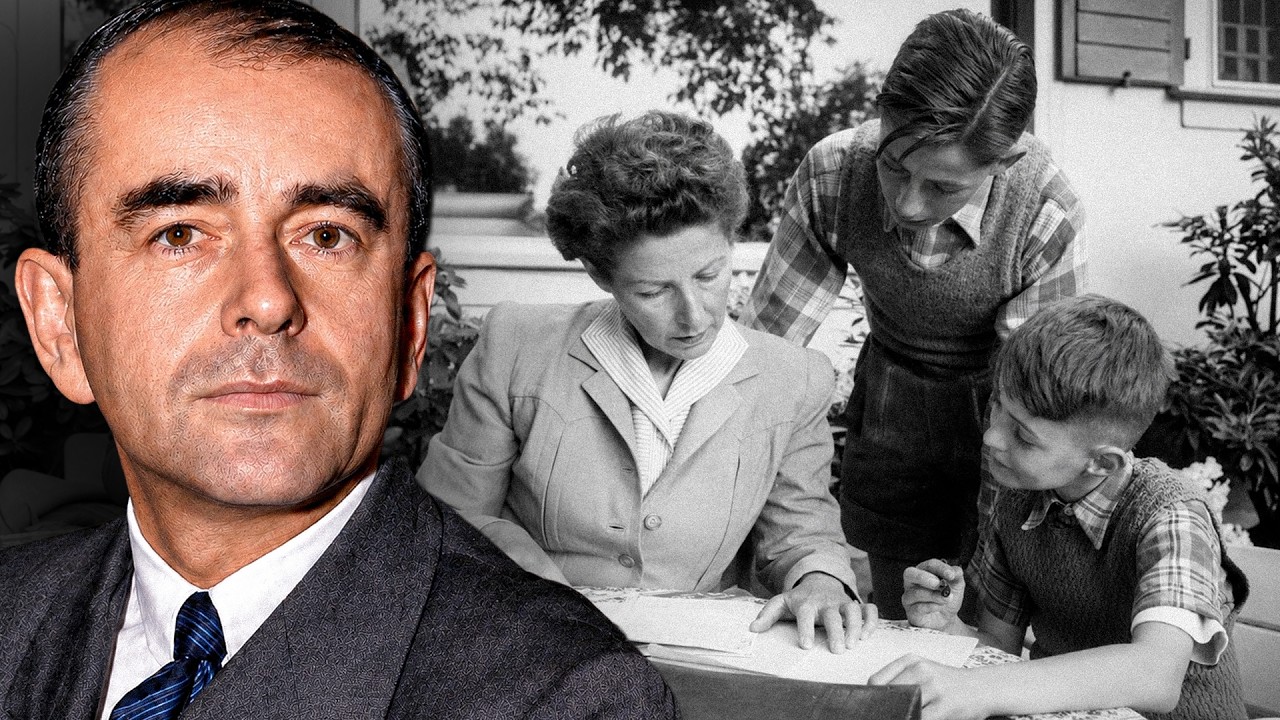
In 1977, he was appointed professor of urban planning at the University of Kaiserslautern, and in 1984, he founded Büro Albert Speer & Partner in Frankfurt am Main, which grew into one of Germany’s most respected urban-planning firms. The contrast with his father’s work was deliberate at every level. Where Speer Sr. had designed at inhuman scale to make individuals feel small, Speer Jr.
built around what he called “human dimension” — pedestrian-friendly streets, mid-rise density, ecological planning. He won few major commissions in Berlin, where his surname carried the heaviest weight, and built his reputation abroad. His firm was lead designer for the central axis of the 2008 Beijing Olympics, master planner for Expo 2000 in Hanover, contributor to Shanghai International Automobile City, part of Munich’s bid for the 2018 Winter Olympics, and master planner for the Qatar 2022 FIFA World Cup. The irony was not lost on critics: the son of Hitler’s architect repeatedly worked for governments that drew comparisons to the regime he had spent his career trying to escape. In interviews, he was direct about the arithmetic of his life. He told Süddeutsche Zeitung that he had tried his entire life to separate himself from his father, and acknowledged that the man he had visited once a year in Spandau and who came out in 1966 was as foreign to him as one of his university professors. He told Reuters he had never considered changing his name — he was
the eldest son of that father and saw no reason to take another. The name had not helped him. Albert Speer Jr. died on 15 September 2017 in Frankfurt am Main, at age 83, from complications following surgery after a fall at home. His firm continues to operate. In the summer of 1953, the United States refused her a visa.
Hilde Speer was seventeen, the second of the six children, and had been awarded an American Field Service scholarship to study at Hastings High School on the Hudson, just outside New York City. The decision was reversed only after public protest, including offers of hospitality from American Jewish families. She spent the year living with the family of Dr.
Richard Day, a children’s doctor and psychologist, with the identity of her father kept officially secret in the locality. Her father’s name had become a question that opened with “no” and required others to argue for “yes.” She had grown up around it. Born on 17 April 1936, Hilde was nine when the war ended — old enough to remember Hitler’s hand on her shoulder in photographs at the Berghof and young enough to be reshaped by what came after.
In Heidelberg, she attended a school originally founded by Elisabeth von Thadden, a resistance figure executed by the regime in 1944. One of her teachers there, Dora Lux, was a Jewish historian who had survived the war in Berlin. Lux became one of the formative influences of Hilde’s life — she would later write a biography of her — and shaped a question Hilde never stopped asking: what should the children of perpetrators do with what they had inherited? Politics came next.
She joined the Greens during their breakthrough years in the 1980s and was elected to the Berlin House of Representatives, serving from 1985 to 1987 and again from 1989 to 1991. From 1989 to 1990 she served as the chamber’s vice president. Her platform was consistent throughout: peace movement, women’s rights, anti-racism, and a refusal to look away from what Germany had done.
She married, raised children, became an education professor, and then in 1994 did something that defined her more than any office ever had. That year, she inherited several paintings from her father’s collection. Investigation suggested they had probably not been looted from Jewish owners, but she could not bring herself to keep them.
She sold the paintings, and with the proceeds founded the Zurückgeben Foundation — a German word meaning “give back” or “return.” The foundation funded grants to Jewish women working in the arts and sciences in Germany. By 2019 it had supported more than 130 projects with around 500,000 euros.
The same year, the city of Berlin awarded her the Moses Mendelssohn Prize for her work promoting tolerance. In 2019, she received the Obermayer German Jewish History Award. She gave a phrase to the Associated Press that captured a position none of her siblings ever quite reached. She had always felt fortunate, she said, because she had known what her father was and what he had done very early.
Many men and women of her generation had no such answer about their own families. She was still hosting refugees from Syria and Afghanistan in her Berlin home well into her eighties. In the 1990s, the photographer working on the Berlin exhibition Topographie des Terrors — a permanent installation on the site of the former Gestapo headquarters, documenting the regime that had run it — was Albert Speer’s daughter. Margret had been born on 19 June 1938, named after her mother, and had spent the first six years of her life at Obersalzberg, a few hundred metres from the Berghof. She studied archaeology at Ruprecht-Karls-Universität, married the archaeologist Hans Nissen on 14 April 1962, and lived in Baghdad from 1965 to 1967, then in Chicago, and finally in Berlin, where she taught herself photography and built a career in architectural work. In 2004 she published her memoir Sind Sie die Tochter Speer? — Are You Speer’s Daughter? — through Deutsche Verlags-Anstalt in Munich. The title was the question she had been asked her entire adult life. The book described a father who was egocentric, distant,
and far more invested in constructing the image he left behind than in being present for the children who carried his name. She named his crimes plainly. She did not seek to exonerate him. Arnold Speer was born in 1940. His original name was Adolf, given in the year his father’s career reached its peak. After the war, the family quietly renamed him Arnold.
Public information about his life is limited; by various accounts, he became a community doctor and stayed out of public view. Two of the six made a choice that left even less behind. Fritz, born in 1937, and Ernst, born in 1942, gave no interviews, wrote no memoirs, and made no public statements about their father.
In a family where the surname guaranteed a question every time it was spoken, silence was its own kind of answer. Six children inherited one of the heaviest surnames of the twentieth century, and each made a different choice with it. One designed cities for the modern world. One funded restitution for those his father’s regime had harmed. One photographed the regime’s archives and named what her father had done.
Three said almost nothing at all. After his death, they lived in different cities, worked in different professions, and never came together as a family. Their mother had held the household together for thirty-six years. After 1987 even that connecting figure was gone. Thanks for watching. If you found this video insightful, watch “What Happened to Hermann Göring’s Family After WW2?” next. Like this video, subscribe, and hit the bell for more History Inside.