Who Was the Woman Who Linked the Kennedys to the Mob? D
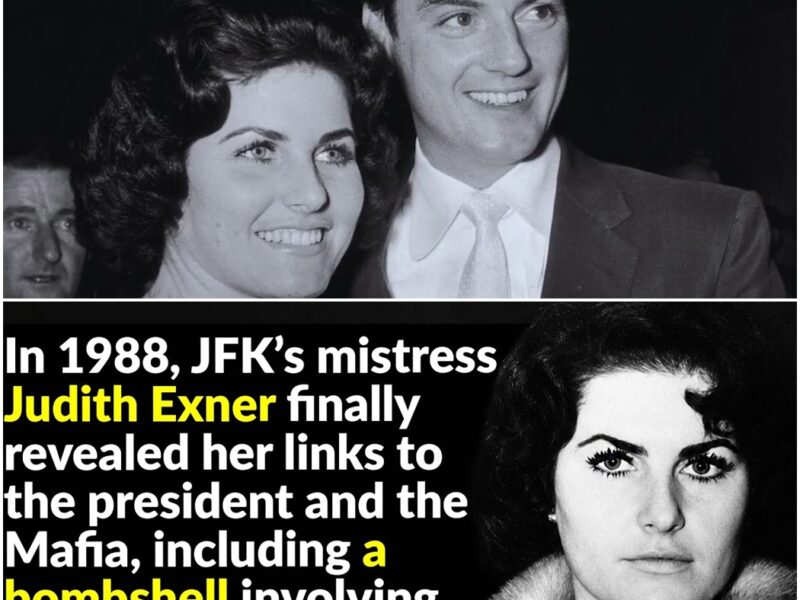
JFK’s mistress, Judith Exner, was the one person who could connect the mafia to the president. Finally, in 1988, she revealed everything in an interview. But her most shocking confession referred to a third man, and his identity was the biggest bombshell of all. Judith Exner was an all-American girl who rubbed elbows with some of the most famous, powerful, and shady men in the mid 20th century US.
The revelations of her sorted affairs with a kuner, a couple of mobsters, and the president of the United States caused shock waves in the media, and all that unwanted attention took its toll. Born in January 1934 in New Jersey, Judith was one of seven children. Her family moved to Southern California when she was still a child, where they settled into the affluent Pacific Palisades neighborhood in Los Angeles.
Part of the reason for the family’s move was the patriarch’s advancing career. Judith’s father was a successful architect and began receiving increasingly lucrative contracts from West Coast developers. Among her notable neighbors growing up, Judith counted comedian Bob Hope, who became a close family friend.
It was the palisades themselves that gave young Judith her foot in the door with the rich and powerful. Her sister Jacqueline, who was 2 years older, found herself equally dazzled at the superstars that surrounded them. She decided to pursue a career in Hollywood herself, taking the screen name Susan Morrow and making her big screen debut in 1951.
Judith reaped the benefits of her sister’s newfound fame, establishing strong ties within the acting community. She began making contacts and climbing the social ladder, becoming a well-known presence at Hollywood parties. After earning her high school diploma, Judith put her stunning looks to good use.
She began to work as a model, becoming an even more desired presence in the inner circles of the rich and famous. And with beauty and notoriety came some notable lovers. She married actor William Campbell in 1952 when she was just 18 years old and he was 29. They would remain together for 6 years before divorcing in 1958.
Judith opted to keep Williams last name and most would best know her as Judith Campbell for the next few decades of her life. One evening in 1959, Judith was hanging out at Puchini’s restaurant in Los Angeles, a regular haunt for big names in entertainment. There she caught the attention of one of the 50s biggest stars, the blue-eyed Kuner himself, Frank Sinatra.
The two began a brief romantic liaison, but she would gain something much more from this encounter. February 7th, 1960 would prove one of the most fateful days in Judith’s life. Sinatra introduced her to a popular young United States Senator, John F. Kennedy. In memoirs released over two decades later, Judith made a claim that shocked America.
She engaged in a clandestine and extrammarital relationship with President John F. Kennedy for a span of almost 2 years. She claimed her relationship with Kennedy began shortly after meeting him in 1960 while he was still a senator, but in the midst of his ultimately successful presidential campaign. Judith had numerous liaison with him on the campaign trail and they didn’t show any signs of stopping after election day.
Amazingly, Judith wrote that her affair with Kennedy continued long after his swearing in, and she would even meet him in the White House for romantic encounters. Documents later backed up this claim. White House records show she definitely visited him there. Judith claimed to have knowledge of other affairs Kennedy had too.
In fact, she made him out to be a prolific womanizer. In one account, she claimed that JFK hired ladies of the evening whom he brought to the White House swimming pool. And she wasn’t pulling these claims out of thin air. We may never know for sure exactly how much of Judith’s account is factual, but it’s undeniable that she had at least some kind of relationship with the president.
White House phone and visitors records and a trove of other documents prove that they spoke on the phone and met in person on numerous occasions. But that didn’t stop the attack dogs. Naturally, the Kennedy camp didn’t take kindly to the claims, and Judith was viciously and publicly attacked by the late president’s staff and supporters after the release of her memoirs.
Many of the people closest to JFK vehemently denied Judith’s story. Even the very man Judith claimed introduced her to JFK leapt at the opportunity to defend the president. Frank Sinatra denied the socialite story entirely, dismissing it as an attempt at garnering attention and book sales.
He summed it up with the phrase, “Hell hath no fury like a hustler with a literary agent.” One simple fact refutes Sinatra’s claims that Judith was lying. She didn’t publish her memoir for no good reason. A few years before it was published, Judith’s name came up in the FBI’s investigation into President Kennedy’s assassination in Dallas in 1963.
When the report was released to the public, it exposed her name to the nation. The report revealed much more about Judith and Kennedy’s relationship than previously known and added an entirely new element to the story, the mafia. It appeared as if there was some kind of connection between the president, his mistress, and the mob.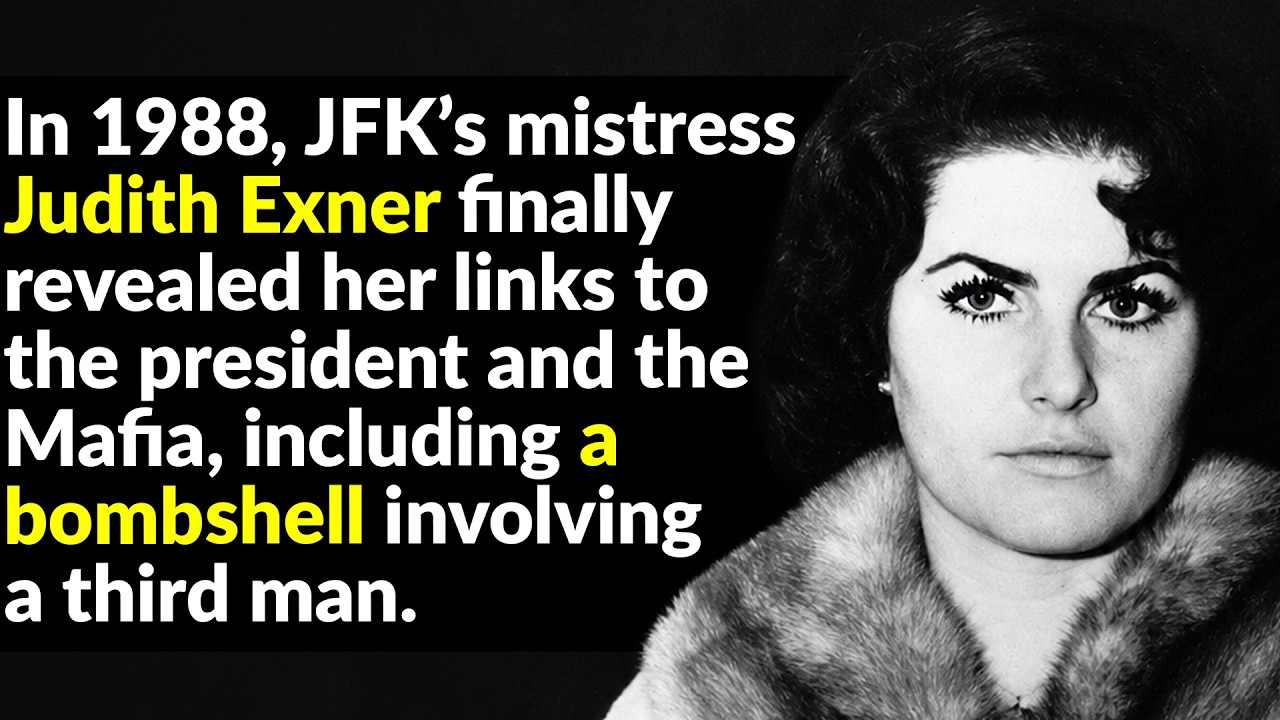
It forced Judith to tell that side of her story, too. Incredibly, her memoirs confessed that around the same time as her affair with JFK, she’d been the mistress of not one but two mafia leaders, Sam Gianana and John Rosselli, two men who were very high up in the mob. Perhaps the biggest bombshell and the element that grabbed the most public attention was her claim that she acted as a channel of information between the mafia and the president.
Many had already suspected JFK of having mob ties, and this controversial claim by Judith sent shock waves through the country. With the increasing public attention, Judith’s life became difficult as the press and the FBI continuously her for more information. It was perhaps for this reason that when she gave birth to an illegitimate child, she gave it up for adoption.
They would reconnect later in life. But in the meantime, Judith found love. In 1975, she met golfer Dan Exner. When they married, Judith Campbell became Judith Exner, and she would keep the name for the rest of her life. It was under this very name that the government subpoenaed her to speak before the Church Committee, which was investigating the CIA in the 1960s.
The media circus began all over again, and her testimony received widespread coverage. Ms. Exner still had more bombshells to drop. The specific investigation for which Judith was called to testify involved CIAled attempts on the life of the Cuban leader and revolutionary Fidel Castro. Besides questioning Judith, the committee also grilled her former mafioso lover, John Rosselli, who claimed a close friend of President Kennedy had also been close to the mob.
That close friend was Judith, of course. And though she wasn’t named in the committee’s report, the Washington Post learned the truth and leaked her name. Since it wasn’t exactly desirable to have the mob believe you were testifying against them, Judith hastily called a press conference where she denied any knowledge of mafia involvement with the president.
If she was lying, she had good reason. Her claims at this press conference would contradict claims she made later. But it didn’t necessarily mean her story was dishonest or fabricated. Because of the mob involvement, she likely lied to protect her and her family. Journalists who later investigated Judith’s claims found themselves impressed with the meticulous records she kept.
The socialite claimed she feared for her life after her breakups with Kennedy and Sam Gianana and began archiving everything. She kept these records hidden under her bed and a pistol under her pillow, but her story would eventually spin out of control. In 1988, she gave an astonishing interview to People magazine where she spilled the beans on the entire story.
After revealing that she had indeed lied to the church committee for fear of mafia retaliation, she claimed she set up a meeting between Kennedy and Gianana during the 1960 presidential election, a scandalous revelation. She clearly no longer feared the mob because the revelations kept coming.
Following that first meeting, the young socialite served as the go-between for the president and the mafia for 18 months thereafter. She would carry envelopes between the two parties, often across the country, and claimed she set up around 10 meetings between Kennedy and the mob.
Later, still, Judith would reveal more about the nature of the presidential mob meetings. She claimed that the meetings concerned a clandestine plot to take out the Cuban leader, Fidel Castro. To hear Judith tell it, “The mob seemed to act like President Kennedy’s personal fixers.” Included in many of the envelopes from Kennedy that Judith delivered to the mob, according to her, was cold, hard cash.
If she was to be believed, JFK was paying the mafia for favors. Incredibly, Judith claimed the campaign hired the mob to help Kennedy get elected. Supposedly, one mafia boss even bragged that Kennedy wouldn’t have been president if not for his connections. JFK was apparently playing with fire and it may have led to his downfall. Kennedy was assassinated in Dallas, Texas on November 22nd, 1963.
One conspiracy theory claims the mob was responsible. Allegedly, the relationship between Kennedy and the mafia soured and they reversed their election deal. Her already worsening personal struggles took another significant hit in 1988 when she and her husband Dan Exner separated.
We know little about the details of their marriage or its dissolution, but they would never reconcile, nor would Judith have any other public relationships. In 1997, Judith gave yet another interview, this time to Vanity Fair, where she made further claims about her affair with President Kennedy. One of the more shocking statements was that following her final encounter with JFK in 1962, she terminated a pregnancy shortly afterwards.
Judith’s fresh claims expanded on her previous role as courier of payments from the president to the mob. This time she implicated other parties, claiming that she carried payoffs from California defense contractors to both the president and his brother, Attorney General Robert F. Kennedy.
These were shocking revelations of Kennedy corruption, and the rebukes came swiftly. Judith’s later accounts came under heavy attack and criticism, and unlike her previous claims, these had little documented evidence. They ran counter to what was widely known about Kennedy and his staff.
However shady some of the truth may have been, these new claims depended on Judith’s word alone, and there was reason to believe she’d become an unreliable witness. FBI reports, Secret Service, and White House phone logs, and staff documentation supported Judith’s earlier claims about her interactions with Kennedy and the mob.
The claims she made in Vanity Fair had no such paper trail. What’s more, by then Judith Eggner had gone a little off the deep end, personally speaking. Since the 60s, she’d struggled with a history of depression, instability, and paranoia. By the time of her 1997 interview, her physical health had taken a turn for the worse, and she was in the midst of treatment for breast cancer.
Critics cited this as yet another reason why her account was unreliable. It is of course possible that this was used to discredit her by forces far more powerful than she. It’s tough to deny, however, that Judith’s later claims are not as provable as her earlier stories. Having spent most of her life as a model and socialite, Judith’s professional identity was on the surface at least somewhat shallow and vapid.
Later in life, however, she found a fulfilling creative outlet. She purchased a home in Newport Beach and became a painter. After her diagnosis with breast cancer, her condition deteriorated rapidly. On September 24th, 1999, the troubled socialite succumbed to her illness at the age of just 65. To her credit, she seemed to come to terms with her life by the end.
In her final interview, Judith struck a defiant tone, voraciously defending the choices she’d made. Indeed, she only had one regret, expressing how difficult her life had been after decades of media, mob, and political hounding. She summed up her actions honestly. The worst thing I did was fall in love with a married man.
To her great misfortune, Judith was simply one more historical victim of the hubris of powerful men. Thanks for watching History Expose. If you love uncovering the best stories in history, hit like and subscribe to keep exploring with us. If you enjoyed this video, check out the others on screen for more amazing history content.