Why Germans Never Expected the American M18 Hellcat to Outrun Their Panzers in WW2 D
There is a hill in eastern France that most Americans have never heard of. It does not appear in our history books. It does not appear on the maps our grandchildren study in school. There is no monument on it large enough to find from the highway. The farmers who plow it today do not know what happened on it.
The cows graze peacefully overground where on one morning in the autumn of 1944, the laws of armored warfare were rewritten by four young Americans in tank destroyers built by a man who designed Buicks. The hill has a number, not a name, Hill 246. And the fog was wrong that morning. That was the first thing Sergeant Stacy noticed as he sat in the open turret of his M18 Hellcat on September 19th, 1944.
The valley below Hill 246 had vanished. The village of Rishiort La Petit, only 800 yardds down the slope, had been swallowed whole. Even the trees at the base of the hill were just suggestions of shadow inside a wall of gray. It was 7:45 in the morning, and somewhere inside that fog, German panthers were moving.
Stacy couldn’t see them yet, but he could hear them. The slow, deliberate growl of Maybach engines fanning out through the woods of Lraine, less than a kilometer away. He couldn’t tell how many. He couldn’t tell where. He could only sit and listen and gripped the firing handle of the 76 mm gun under his hands.
Beside him, First Lieutenant Edwin Liper had taken cover behind the loader’s hatch. Four Hellcats. That was all they had. Four lightly armored tank destroyers, their hulls thinner than the armored doors of a German staff car dug into the lip of an unremarkable French hill that had no name in any history book yet written.
Down at the base of that hill, a single German tank gun barrel slid out of the mist 30 ft away, maybe less, and the morning that would rewrite the laws of armored warfare began. But to understand that morning, you have to go back almost 3 years back, to a moment when no one in the United States Army knew the M18 Hellcat would exist, to a moment when the very idea behind it was considered by most professional soldiers to be madness.
November 27th, 1941, 10 days before Pearl Harbor, in a quiet office in Washington, General George C. Marshall issued an order that would create something the American military had never had before. A week later, on December 3rd, all existing anti-tank battalions in the army were redesated as tank destroyer battalions.
A new branch, a new doctrine, a new philosophy of how to kill a tank. They called it the tank destroyer force. The man chosen to build it was a 47-year-old career officer named Andrew Davis Bruce. Bruce was tall, quiet, and unmistakably a methodical thinker. A Texas&M graduate and a veteran of the trenches of the First World War.
He had spent the years between the wars writing doctrine manuals and teaching tactics at the infantry school. He had watched the German Blitzkrieg roll across Poland in 1939 and crush France in 6 weeks in 1940. and he had drawn a conclusion that most generals in 1941 considered heresy. You cannot stop a tank by being heavier than the tank.
You stop it by being faster. The doctrine Bruce wrote down had three words at its center. Three words that would be stitched onto the shoulder patch of every soldier in his command beneath the image of a black panther crushing a tank in its jaws. Seek, strike, destroy. It was not a slogan. It was a philosophy. Tank destroyers, Bruce argued, were not meant to wait for enemy armor like medieval pikemen holding a line.
They were meant to hunt. They were meant to move faster than the enemy could respond. To find the German Panza column, strike it on the flank, and disappear before the enemy could turn its turret. Speed was armor. Mobility was survival. In September of 1942, on a piece of dry, dusty central Texas scrubland, the War Department gave Bruce a place to build his idea. They named it Camp Hood.
108,000 acres of nothing, wide enough finally to teach men how to drive armored vehicles at 60 m an hour. On the 18th of September, the camp was officially opened, and Bruce, now a brigadier general, walked the parade ground beside the men he believed would change the war. But for all of that, Bruce still didn’t have the right vehicle.
The army had given him halftracks with thin armor and underpowered guns. They had given him the M10, a tank destroyer built on the chassis of a Sherman tank, which was good, but not what Bruce had been dreaming of. He wanted something faster, something purpose-built, something that would change the conversation. He was about to get it.
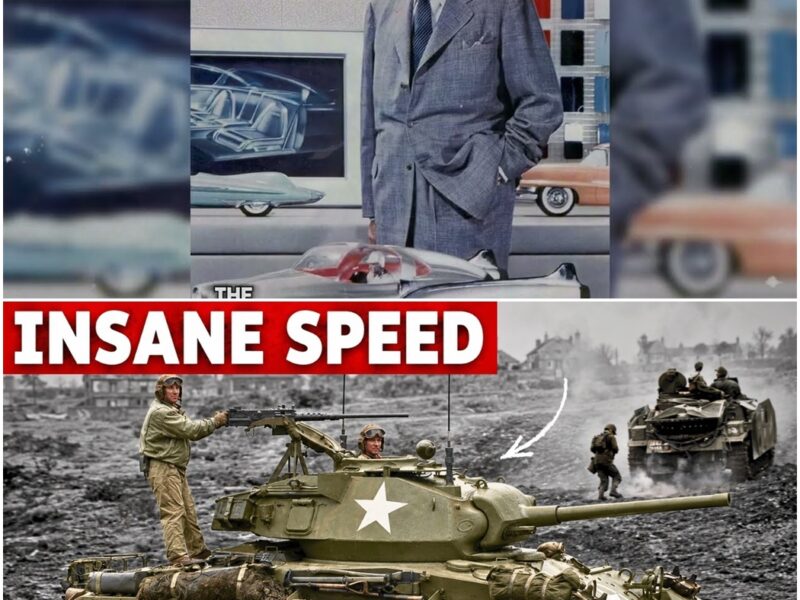
But the place it was being designed was not a military arsenal. It was an automobile factory. Flint, Michigan. The Buick Motor Division of General Motors. The man leading the work was not a colonel. He was not a weapons engineer. He had never fired a shot in anger in his life. His name was Harley Earl. He was 49 years old and his entire career up until the war had been spent designing the sleek curves and chrome details of luxury American sedans.
Earl was already a legend in Detroit. He was the man who invented the concept of the annual car model. The man who pushed General Motors toward bold colors, stylish bodies, and tail fins. He thought about vehicles the way an artist thinks about a sculpture. He believed that a machine should look like what it was supposed to do.
When the army told Buick to design a fast tank destroyer, Earl did not approach the problem the way an engineer at Crook or man would have approached it. He did not start with armor thickness. He did not start with main gun caliber. He started with proportions, with balance, with the question that any car designer asks first.
How will this thing move? He insisted that the engine be mounted on steel rollers so a crew in a field could pull it out and swap it in under two hours. He pushed for an automatic transmission, the Torquematic, derived from Buick’s civilian designs, so that a driver could focus on terrain and not on grinding gears under fire.
He used torsion bar suspension like a luxury car, so the vehicle could ride hard ground at high speed without shaking itself apart. And then, almost as an afterthought, he kept the armor thin. less than one inch in most places, just under 13 mm of steel on the sides, barely enough to stop rifle fire.
A roof so light that he simply did not put one on. The turret of the M18 Hellcat was open to the sky. A heavy machine gun could punch through its sides at 300 yd, but it would never need to be hit because it was going to be too fast to hit. The prototype was called the T70. The first production model rolled off the Buick assembly line in July of 1943.
By October of 1944, 257 of them would be built. Powered by a Continental R975 radial engine, a 9-cylinder aircooled power plant first designed for aircraft mounted in a hull weighing less than 19 tons, the M18 could reach a top speed of 55 mph on a good road. Some crews would later swear in unofficial trials that they pushed 60.
In 1944, no other tracked vehicle on Earth could do that. The German Panther, the pride of the Vermacht, with its sloped armor and its long, high velocity 75 mm gun, weighed 45 tons and topped out at 29 mph on a road. Across rough country, the Hellcat would outrun it by 3:1. The fastest armored fighting vehicle of the entire Second World War had been designed in essence by a man who built Buicks.
And in the end, the man whose doctrine had called for this vehicle to exist would never see it in action. That is the second story you need to know. In May of 1943, while production of the first M18s was still ramping up at Flint, the army quietly transferred Andrew Davis Bruce out of the tank destroyer force.
He had been promoted, the orders said. He was being given a division of his own, the 77th Infantry Division, a unit destined for the Pacific. It was not, by most accounts, a punishment. But it was not a reward, either. The truth was simpler and more uncomfortable. By the middle of 1943, the tank destroyer doctrine that Bruce had spent 2 years building was already under attack from inside the army itself.
Senior officers in the Army ground forces, including Lieutenant General Leslie McNair, were beginning to ask whether the whole concept was a mistake, whether a separate branch dedicated to killing tanks was a waste of resources, whether the Sherman tank properly used could do the job. Bruce was reassigned to lead infantry against the Japanese.
By September of 1944, when his Hellcats were rolling into the fog at Araort, Andrew Davis Bruce was 8,000 mi away in the Pacific. His 77th Division had just fought through the Battle of Guam and was preparing for the next island in the long chain back toward Tokyo. He would never set foot in France.
He would never see a panther burning on the slope of Hill 246. He would only read about it eventually in dispatches. The man who had imagined the M18 would not be there to watch it prove him right. While Bruce moved across the Pacific in Germany, a different general was preparing the strike that would put the Hellcat to its first real test.
His name was Hasso von Mantofl. He was 47 years old, small in stature, lean, intense, a former cavalry officer who had risen fast under Hitler. In September of 1944, he was given command of the fifth Panza army with orders that came down almost personally from the Fura. Halt the American advance into Lraine.
Cut off the third army of George Patton. Recapture the city of Lonville. Push the Americans back across the Miselle River. To do it, Mantofl was given two brand new units. 111th and 113th Panza brigades. Each one was supposed to be a sharpened spear point. 45 Panza force. 45 Panthers straight from the assembly lines of Germany, some of them still smelling of factory paint.
On paper, it was a fearsome force. On paper, the truth, which Montiful could see, but could not not say aloud to his superiors, was harder. The Panthers had arrived with mechanical problems that had not been fixed. The final drive, an engineering compromise from a tank that had been rushed into production in 1943, was known to fail under hard maneuvering.
The crews were not the Panza veterans of the early war. Many of them were teenagers, conscripts, tank crews who had received their vehicles only weeks before and had never trained together as a unit. And the fuel situation after 5 years of war was a quiet catastrophe. But Hitler had made his decision.
The counterattack would happen. Manufol would lead it. And on the night of September 18th, his orders went out. Strike west at dawn through Arakort. Through whatever the Americans had screening the line, the Germans expected to find Sherman tanks. They had been told to expect inexperienced American crews.
They had been told that American armor, however numerous, was mechanically unreliable and tactically unimaginative. What they had not been told, because almost no one in the Vermacht in September of 1944 yet knew, was that the fourth armored division of the United States Army had been quietly reinforced. Attached to it, dispersed in three companies of 12 vehicles each, was the 704th tank destroyer battalion, 36 M18 Hellcats, the fastest armored fighting vehicles in the world.
And on Hill 246, four of them were already in position. Captain William Dwight, the liazison officer of the 37th Tank Battalion, had ridden up onto the hill in the dark before dawn on the orders of Colonel Bruce Clark. Clark had not slept that night. He had been hearing reports for hours that something was wrong in the German lines.
That armor was moving in the woodlines to the east. He had ordered Dwight to take a platoon of tank destroyers and block the approach to Aracort from the south. Dwight had picked first lieutenant Edwin Liper’s platoon, four Hellcats. They reached Hill 246 at 7:15. They were in firing position by 7:30. By 7:45, the fog had thickened so completely that the men in the open turrets could no longer see the front of their own vehicles.
They could only listen, listen, and try not to breathe too loud as the Mayback engines in the woods below moved closer. That is when Sergeant Stacy, hands tight on the firing handle of his 76 mm gun, watched the long, dark barrel of a German tank slide out of the mist and stop completely still in the white air 30 ft below him.
The Panther crew did not know he was there. In that moment, on a small French hill that no military history book had ever named, every assumption made by every panzer officer in Hitler’s army was about to die. A car designer in Michigan had built this machine. A general in Texas had imagined the men who would use it.
Both of them were on the other side of the world, and in the wet gray silence of a fog he had not asked for, Sergeant Stacy took one slow breath, cited the German barrel below him, and put his finger on the trigger. The trigger pulled. The 76 mm gun roared. The slope of Hill 246 lit up in a flash of orange that bloomed for an instant inside the white wall of fog, and then was gone.
The shell traveled the 30 ft in less time than it took the German driver of the Panther to register the sound. It struck the side of the turret at almost a right angle just behind the front armor where the steel was only 50 mm thick. The Panther died in the time it takes a man to blink. There was no time for the German crew to brace, no time to traverse, no time even to understand that they had been seen.
The shell punched through the side armor, ricocheted off the inside of the turret roof, and ignited the ready rack of 75 mm ammunition stored beside the gunner. The fuel tanks went up half a second later. In the open turret of Stacy’s Hellcat, the men heard nothing for a single heartbeat. Then the Panther’s own ammunition began to cook off, and the explosions came rolling up the hill in long, deep, hollow waves they could feel in the soles of their boots.
A column of black smoke rose through the mist. It was 7:46 in the morning. That was the first one. Lieutenant Edwin Leaper did not waste a second. His voice came over the platoon radio, low and tight. Move now. Stacy’s driver lurched the M18 backward off the firing position. The torsion bar suspension absorbed the jolt.
The torque transmission shifted without him touching a clutch. 20 seconds. That was all it took for the Hellcat to relocate 200 yd along the ridge. find a new firing point in a slight fold of ground and re aim into the fog. 20 seconds was a number that did not exist in the German tank core. A Panther’s turret took up to a full minute to rotate 360° on hydraulic power.
A Panther could not back up at speed without risking damage to its overloaded final drive. A Panther’s commander peering through a periscope inside a closed coupella could see almost nothing in the fog. The other three Hellcats on hill 246 fired within the next 90 seconds. Two more Panthers brewed up in the woods below.
By 8:00, five German tanks were burning on the lower slope, and the survivors of the lead company of the 113th Panza Brigade still did not know exactly where the fire was coming from. One Hellcat, in particular, commanded by Sergeant Henry R. Hartman of Stacy’s platoon, would account for six Panthers before the morning was over.
the highest individual kill count of any single American crew that day. Some of them were reversing into each other in the merc. One of them had thrown a track. Two of them, in trying to maneuver fast on soft, wet ground, had snapped a final drive shaft and gone silent in the mud. That was the secret of Hill 246.
It was never just about the M18. It was about what the M18 could exploit. 6 km to the north, near the village of Bzang Lapatit, four other Hellcats from Company C of the 704th had been waiting in the dark since long before dawn. They had found a fold of low ground, a slight depression in the fields that gave them perfect cover.
Their gun barrels were level with the German line of advance. They could not have been seen from a 100 m away, even in clear weather. In the fog of September 19th, they were invisible. When the lead panthers of another company of the 113th Panza Brigade rolled past their position, the Hellcats opened fire at point blank range.
The first three Panthers were hit before the German crews even reported contact. Two more burned in the next 3 minutes. By the time the surviving German tanks tried to turn, the Hellcats had shifted firing positions twice and were striking from a different angle of the field. Seven Panthers destroyed before sunrise for zero American losses.
When the men of Company C finally pulled back to refuel and resupply later that morning, some of them were laughing in the brittle, uneven way that men only laugh after something has gone right that should not have gone right. One enlisted gunner, wounded later that week and evacuated home, wrote a single line in his pocket diary that night.
It said only this, “They never saw us.” The truth they did not know that morning. The truth that would be discussed in officer schools for decades was that the M18 Hellcat could not actually defeat a Panther in a fair fight. The 76 mm M1 A1 gun on the Hellcat was a fine weapon. It was the same caliber the upgraded Sherman would soon carry.
It could fire a standard armor-piercing round at over 2,600 ft pers against most German vehicles in 1944. It was lethal at any battlefield range. Against the front of a Panther, it was not. The Panther’s frontal armor was 80 mm of highquality steel sloped at 55° from vertical. That slope alone effectively doubled its thickness.
The result was a sheet of armor that behaved against a flat impact like nearly 140 mm of solid steel. The standard 76 mm round fired at 500 yd could not reliably get through it. At a thousand yards, it had almost no chance at all. There was a special round called HVAP that used a tungsten core to punch much harder.
But in September of 1944, tungsten was in critically short supply, and most tank destroyer crews were rationed to two or three HVAP rounds per vehicle. Some crews never saw one all month. This is the fact that gets left out of the legend. The Hellcats did not win at Arcourt because their gun was better.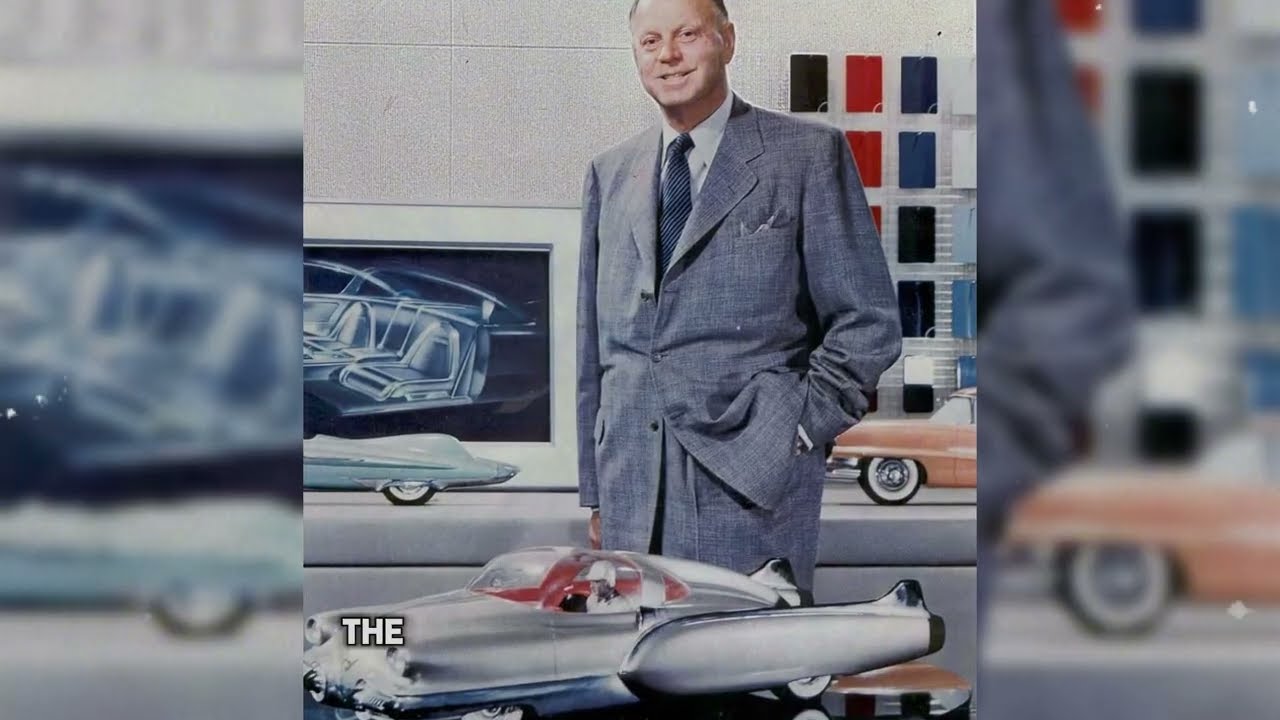
They won because the fog let them get close. They won because every Panther they hit, they hit on the side or on the rear or on the turret ring or at a steep angle where the slope was nullified. They won because the German tanks were creeping forward at less than 5 m an hour trying to see through a wall of mist that swallowed their sights, while the Hellcats were already in position, already aimed, already calculating where the next German barrel would appear.
They won because of conditions and the conditions were not chosen by either side. The fog was an accident of weather. It was the kind of accident that decides the outcomes of campaigns. The other accident that morning was a man whose name has never been recorded. He was a French farmer in the country east of Araor.
He was by most accounts somewhere in late middle age. He had lived through one German occupation already in the first world war as a young man. Now in the autumn of his life, he was watching it happen again. That morning, before the fog lifted, a column of German armor passed by his fields and stopped. A young Panzer officer climbed down from his vehicle and asked the farmer in broken French for directions to the next village along the road.
What the farmer told him, no one knows. The order paper was lost. The conversation was never written down, but we know what happened next because the maps and the afteraction reports tell the rest of the story. The 111th Panza Brigade, sister unit to the 113th, was supposed to be moving north of the Manrene Canal that morning.
It was supposed to link up with the 113th to deliver a coordinated two-pronged strike against the fourth armored division’s flank. It never arrived. Misdirected by the farmer, the 111th Panza Brigade marched in the wrong direction for hours. By the time its commander realized the mistake and corrected the route, it was already late in the afternoon. The fog had lifted.
The 113th had already been chewed apart on the slopes around Bizang and Hill 246. A single French peasant, an old man whose name we will never know, may have killed more German tanks that morning than a battalion of artillery could have. He did it with a sentence in his own language and then walked back to his cows.
There are turns of history that are not fought. They are just spoken. And while all of this was happening in Lorraine, while four hellcats were holding a hill and a Frenchman was lying about a road, something else was happening 800 km to the north in Holland. 2 days earlier, on the 17th of September, the largest airborne operation in human history had begun.
Operation Market Garden. Thousands of British and American paratroopers had dropped behind German lines trying to seize a series of bridges that would let Allied armor sprint into the heart of the German Reich. It was Field Marshal Bernard Montgomery’s plan and it had been backed personally by General Dwight Eisenhower.
And the cost of Market Garden, the cost that no one in the newspapers was talking about that September, was being paid two countries away by Lieutenant General George S. Patton. Patton’s third army had been racing east across France all summer at a pace that nearly broke the German army in the west.
By the end of August, his lead elements were within striking distance of the West Wall and possibly the Rine. He believed, and a number of his commanders agreed, that with enough fuel, he could end the war before Christmas. He did not get the fuel. In early September, by command decision, the Allied supply priority had been shifted north to Montgomery.
Trucks that were supposed to roll into Lraine were sent to support Market Garden instead. Patton’s gas tanks ran dry. His advance slowed. His divisions, the fourth armored among them, sat for days because they could not move. By the time the fog rolled into Aracort on the night of September 18th, Patton’s men were fighting on rations and on whatever fuel they could scavenge.
In his diary that week, he was openly furious. He believed his soldiers were dying so that another commander could chase his own headline. The Hellcats on Hill 246 did not know any of this. They had enough ammunition and enough fuel for that one morning and that was all. What they did not have was the knowledge that the world’s eyes were elsewhere.
That the headlines were going to be about Arnum. That the paratroopers far to the north were already running out of time. that the most decisive American tank battle of the autumn was going to be fought and won in near silence by men whose names would never be famous. This was the bitter accounting of the Lraine campaign. Patton’s army was being neglected, and his hellcats, abandoned at the end of a starved supply line were winning.
Anyway, the crews inside the Panthers that died on the slopes that morning were not who German propaganda said they were. In the years since, the Battle of Arakor has often been told as Eastern Front veterans, hardened by the worst combat the war ever produced, being defeated by lucky American gunners.
That story is wrong. By September of 1944, the German army had bled itself nearly to death. The veterans of Kursk and Karkov were already mostly buried in Russian soil or rotting in Soviet prison camps. The men who climbed into the panthers of the 111th and 113th Panza Brigades were in many cases 18 and 19 years old. Some of them were younger.
They had received their tanks within the last few weeks. They had never trained as a brigade. They had never fired live ammunition in a coordinated company level attack. Many of them did not yet know how to use their own radios. The Panther itself was a magnificent piece of engineering on paper.
But the Panthers handed to the 111th and 113th brigades were also among the most rushed vehicles to leave a German factory in the war. The final drive, the most common failure point of the Panther across its entire production run had not been improved. Several tanks in the brigade went into combat that morning with known mechanical defects that the crews had reported and been told to ignore.
When the maneuvering started, when those young drivers tried to reverse hard or pivot fast or accelerate in soft ground to escape the fire coming from somewhere in the fog, their tanks broke. Not from American shells, from their own gearboxes. In one company of the 113th, more Panthers were lost to mechanical failure during the morning than to enemy fire.
The men inside them, the teenagers from Bavaria and Saxony and East Prussia, who had been told they were riding the most feared tank in the world, climbed out of their dying machines and surrendered or ran for the woods or burned. They had never been ready. The army that put them there had run out of time to make them ready.
This is the part of Arakor that does not fit on a recruiting poster. By the morning of the 20th of September, the situation around Araort had shifted. The fog of the previous day had lifted in places. Allied air patrols were back over the front and General Depanza Trope Hasso von Manurfel watching what was left of his armored brigades gave the order for the 111th to resume the attack the next morning.
This time supported by elements of the 11th Panza division. He was outnumbered and underequipped, but he had no choice. Hitler had ordered the offensive to continue. On the American side, command of the immediate counteraction passed increasingly to Lieutenant Colonel Kraton W. Abrams. He was 30 years old that September, square jawed, short, intense, with a perpetual stub of a cigar between his teeth.
He had commanded the 37th tank battalion of the fourth armored since the unit reached France. He would three decades later command the entire United States Army. Abrams understood, as the Germans did not, that this was no longer a fight about armor or firepower. It was a fight about position.
So he refused to let his force be drawn into the wrong kind of battle. He used the Shermans first. The Shermans of the 37th Battalion were ordered forward to draw German attention. Their 75 mm guns would not threaten a Panther at long range either, but they were numerous and they made tempting targets. The German tankers, struggling to coordinate after a brutal morning, fixed their attention on the Sherman line and prepared to engage.
The Hellcats, meanwhile, swung wide through wood lines, through dead ground across small streams around the German flanks. Their speed finally was being used the way Andrew Davis Bruce had imagined it two and a half years earlier in a doctrine memo no one had wanted to publish.
When the Hellcats reopened fire, they came from three different directions at once. The German tanks, oriented toward the Shermans to their front, presented their sides and their rear. The kill rates climbed again. By the end of the day on September 22nd, the second wave of the German counterattack had been broken exactly as the first had been broken 3 days before.
Abrams said very little publicly about Arakor at the time. He was not a man given to speeches, but the lesson he carried out of those four days would shape American armored doctrine for the next 30 years. You did not fight a panther head-on. You made him fight you sideways. By the late afternoon of September 22nd, the surviving panthers of the 111th and 113th brigades were retreating east, leaving behind the burned hulls of more than 30 of their own dead in the fields around Arakort and Bazang. The fourth armored division had lost a handful of Shermans and three Hellcats. The mathematical exchange rate was nearly 10 to one, but the battle was not over. Hasso von Montel was not yet done. The 11th Panza Division, an experienced unit with veteran officers, was just now moving into position to take its turn at the American salient. And in Berlin, General Obus Hines Gudderion, the Inspector General of Armored Forces and one of the men who
had invented modern tank warfare in the 1930s, was preparing a report on Lraine for the high command. A report whose conclusions, even he had not yet found the words for. The fog of the first morning was gone. The air was clearing. But the worst day of the battle for both sides was still ahead.
The worst day of the battle came on September 24th. The 11th Panza Division had spent two nights moving up under the cover of fog and rain. Unlike the green crews of the 111th and 113th Brigades, this was a unit with a memory. Its officers had fought in Russia. Its tank commanders had survived Kursk.
They knew that armor moved by experience, not by paper. When the 11th attacked at dawn on the 24th, it did not blunder into the American positions the way the previous brigades had. It probed. It used the terrain. It hunted for the seams in the fourth armored division’s line. What stopped it was not a single weapon or a single tactic or a single hero.
What stopped it was the sky. After almost a week of low cloud and morning fog, the weather over Lraine finally broke. The high overcast lifted. The sun came out. And from forward airfields 70 mi to the west, the P47 Thunderbolts of the 9inth Air Force began to lift off in flights of four, climbing east toward the fighting.
The Thunderbolt was a beast of an aircraft, 850 caliber machine guns, two 500lb bombs. Sometimes rockets, it flew slow and low, and it could absorb damage that would have killed any other Allied fighter in the war. Its pilots, mostly men in their early 20s from places like Indiana and Texas and Pennsylvania, had been waiting all week for clear air.
They got it on the 24th. A panther on an open road in 1944 was a kind of god. A panther in an open field with a P-47 overhead was something else entirely. The Thunderbolts came down in shallow dives, 50 caliber rounds ripping into engine decks, bombs blowing tracks off, rockets shattering turret rings.
The 11th Panza Division, the unit Mantu had counted on to break the American line, lost an entire afternoon’s worth of operational tanks in a matter of hours. The fog had been the equalizer. When the fog left, the math changed. By the night of September 25th, Hasso von Mantoel knew the battle was lost.
He had committed the last of his armored reserves. He had used three different units, the 111th, the 113th, and now the 11th against the same American salient, and each one had been ground down. He had nothing left to send. He picked up his pen and drafted new orders for the units still on the line.
The orders were short. The orders were honest. Do not pursue. Do not engage in mobile battle. Hold the ground you stand on. In the language of tank warfare, that was surrender. He was not surrendering the army. He was surrendering the idea that German armor could still dictate the terms of the fight.
Colonel Bruce Clark on the American side was reading the same battlefield from the opposite direction. On September 26th, he ordered Combat Command A to pull back to higher, more defensible ground. He had won. He did not need to keep bleeding men to prove it. The Fourth Armored Division had absorbed the punch.
It had broken the punch. Now it would dig in and wait for the next phase of the war. The battle of Aracort ended officially on September 29th when the staff officers added the final numbers. They were almost unbelievable. Of 262 German tanks and assault guns committed to the offensive, 86 had been totally destroyed and another 114 damaged beyond field repair.
The 111th and 113th Panza brigades had effectively ceased to exist as combat formations. The fifth Panza army in the Lraine sector had lost in a single September over a 100 Panthers, 100 Panzer 4s and 120 assault guns. On the American side, combat command A of the fourth armored division had lost 25 tanks and seven M18 Hellcats.
25 men were dead, 88 were wounded, 10 to1. Maybe better, it was by any standard the war had yet produced a stunning American victory. The kind of result that should have made headlines in every newspaper in the United States. The kind of result that should have rewritten the doctrine textbooks. It did not.
The newspapers were full of Arnum. The disastrous end of Operation Market Garden, the British paratroopers cut off and destroyed at the bridge they had been told they could hold, dominated every front page in the Allied world that week. The Battle of Araort was reported in passing, if at all.
The men who won it never became famous. Sergeant Stacy, the gunner who fired the first shot on Hill 246, would receive a medal and finish out the war in his unit. He would go home. He would, like most of his generation, almost never talk about it. Lieutenant Edwin Leaper would survive. Captain William Dwight would survive.
They would marry, raise children, work jobs, and grow old. Their names appear in the afteraction report of the 704th tank destroyer battalion and in a handful of regimental histories printed in small runs in the years after the war and almost nowhere else. History does not always remember the men who deserve to be remembered.
But there is another harder truth about Araor that the legend does not tell you. And that truth has nothing to do with bravery or speed or American ingenuity. The Germans lost the battle. The M18 did not win it alone. The afteraction reports of the 113th Panza Brigade written in October of 1944 tell their own story.
The German commanders did not blame the American gun. They blamed the fog, the rushed crews, the broken final drive dribbles, the misdirected 111th Brigade, and the lack of air cover. The M18 Hellcat was one factor among many. A staff officer of the fifth Panza army captured later that fall said in his interrogation that he believed his brigades would have broken through if the weather had stayed clear and if the 11th Panza division had been available from the start. He may have been right.
He may have been making excuses for a defeat. Probably it was some of both. But the lesson of Araor is not that one weapon won the day. The lesson is that warfare is a system of accidents and conditions and that the side which can fit its tools to the conditions wins. The fog favored ambushes from close range.
The M18 was already trained for close-range ambush. The German tanks were not. The fog favored short bursts of speed and quick repositioning. The M18 could do that. The Panther on its overloaded final drives could not. The match between the weapon and the moment is what gave the M18 its day. When the moment changed, the math changed.
This is the part of the story that the United States Army itself understood even when the public did not. After the war, when the dust settled and the field commanders wrote their official histories, and the general staff sat down to redesign the postwar army, they came to a conclusion that would have broken Andrew Davis Bruce’s heart if anyone had asked him.
On November 10th, 1945, just three months after the Japanese surrender, the tank destroyer center at Camp Hood was officially closed. The last tank destroyer battalions were quietly deactivated through 1946. The branch that Bruce had spent 5 years of his life building was simply closed. The doctrine of pooling tank destroyers into independent battalions, of holding them in reserve to swing against German armor concentrations, was judged a doctrinal mistake.
The role of killing tanks was returned to the tanks themselves with better main guns. The shoulder patches, the Black Panther crushing the tank in its jaws went into foot lockers and attics. The motto, seek, strike, and destroy was retired. The M18 Hellcat had fought brilliantly. The branch that produced it was erased.
It is one of the deepest ironies of American military history. The single most successful tank destroyer of the war by killto- loss ratio was made obsolete not by the enemy but by its own service. The doctrine that demanded the M18’s existence was buried within 12 months of the war ending.
The men who served in those battalions returned home and found often within a year or two that the branch on their discharge papers no longer existed. It was as if their war had not happened. As if the Panthers they had killed in the fog had never crawled, as if Hill 246 was simply a French hill with no name and no story.
In a sense, the M18 had won despite the doctrine, not because of it. Bruce’s idea of an aggressive, independent, dedicated tank killing force had not really been what worked at Aracort. What had worked was a combined arms battle with Shermans, M18s, infantry, artillery, and air power all knit together into a single fight.
The wayr Kraton Abrams ran his counterattack on September 20th. The lone tank destroyer Hunter prowling for German armor never appeared on the battlefield in the way Bruce’s doctrine had imagined. The reality of the war was simpler and more cooperative and less heroic. The Hellcat would have one more major moment before the war ended.
In the middle of December 1944, the German army, against every Allied prediction, launched its last great offensive in the west. It came through the Arden Forest in Belgium and Luxembourg in heavy snow and freezing fog. The Americans would call it the Battle of the Bulge. The northern spearhead of the entire offensive, the unit Hitler personally chose to drive deepest and fastest, was the fifth Panza Army.
The same fifth Panza army that had been shattered at Araor three months earlier and the commander Hitler picked to lead it was the same man who had been beaten in the fog of Lraine. Hasso von Montterfell. It is one of the crulest patterns of the Second World War. Monttofell was given a second chance. He was given more tanks, more men and more fuel than he had received in September because Hitler had emptied the strategic reserve to throw everything into the Arden.
And once again, Mtoflal found himself attacking American positions held by, among other units, M18 Hellcats. On the night of December 18th, in the village of Noville, just outside Baston, an American task force was racing to block the German advance. The team was named after its commander as major in his mid20s named William Desbury, who would be wounded and captured before the battle was over.
With team desri were a small number of M18s racing on the highway at the top speed they had been designed for four years earlier in the studio of Harley. It is one of the very few documented occasions in the entire war where M18s actually used their full road speed in combat the way the engineers had imagined they reached Neville in time.
They held it long enough to disrupt the German timetable. They bought hours that the defenders of Baston would need. By the time team desire was forced to pull back, the German spearhead had been blunted. Montufol never reached the muse. The Arden offensive, like the Arakor offensive before it, ground to a halt against the same American combined arm system that had killed his Panthers in September.
The fog this time was snow. The conditions favored the same hideand strike tactics. The Hellcats again raced where the Panthers could not follow. The pattern held, the man held, the result held. In March 1945, Montofl was transferred east to command the Third Panza army, fighting the Red Army on the Odo River.
As the Reich collapsed around him, he led what was left of his men westward, determined not to surrender to the Soviets. On May 3rd, 1945, he surrendered to British forces at Hageno. He spent more than two years as a prisoner of war, released in September 1947. When he came home to Germany, he did not write angry memoirs.
He did not blame Hitler in print. He went into politics. He served in the Bundustag, the West German Parliament as a member of the Free Democratic Party from 1953 to 1957. He worked in those years as a quiet adviser on military matters to the rebuilding German army. He died peacefully in 1978 at the age of 81.
Andrew Davis Bruce never came back to Lraine. After Arcort, Bruce continued to lead the 77th Infantry Division in the Pacific. He fought at Lee. He fought at Okinawa. He was at the war’s bloody end in the home islands of an enemy that was different from the one the M18 had been built to kill.
After the war, his career did not stop. He served as military governor of Hokkaido during the American occupation of Japan, then returned to the United States in late 1947. He went on to command the seventh infantry division in Korea and in 1951 was named commandant of the armed forces staff college in Norfolk, Virginia where senior officers of the army, navy, air force and marine corps were trained together.
He was promoted to lieutenant general that same year. He retired from the army in 1954 with three stars. He became chancellor of the University of Houston. He taught. He wrote little about his combat experiences. He died in 1969 at the age of 74. His tank destroyer force was already a memory by then.
Almost no one outside of military historians remembered what the shoulder patch had meant. Kraton Abrams, the young lieutenant colonel who had run the Sherman Hellcat combination at Aracort, would rise through the ranks and become in 1972 the chief of staff of the United States Army. He oversaw the long withdrawal from Vietnam.
When the United States designed its next great main battle tank in the 1970s, the engineers and the army leadership decided to name it after him. The M1 Abrams, it is in its own way the descendant of both worlds. Like the Panther, it is heavily armored and powerfully gunned. Like the M18, it is built for speed and tactical mobility.
It is a synthesis and it carries the name of the man who on the roads outside Bazangji in September of 1944 learned not to fight a panther head on. Of the other men in this story, fewer headlines survive. George Patton would die on December 21st, 1945 from injuries suffered in a low-speed car accident near Manheim, Germany, only 7 months after the war in Europe ended.
His war diaries kept in his own hand throughout the campaign, would be published postumously in 1947 as war as I knew it. in them. He never fully reconciled with the decisions about supply that had cost him fuel. In September of 1944, John Wood, Tiger Jackwood, the commander of the fourth armored division, would be relieved of command on December 3rd, 1944, under circumstances that were complicated and bitter, exhaustion, disagreements with his core commander, the slow accumulation of strain that combat puts on every general who fights long enough. He went home and he watched the rest of the war from the sidelines. Harley Earl, the man who had designed the M18 in a Detroit studio, returned to designing Buicks. He invented the tail fin. He shaped the look of American cars in the 1950s. He died in 1969, the same year as Bruce, and he was famous in a way none of the soldiers in his vehicle ever became. The M18 Hellcat itself was
retired from American service shortly after the war. Some were converted into utility vehicles called M39s used in Korea. Many were sold to Yugoslavia and to other small nations. A handful of them, astonishingly, were still on operational rosters in the Balkans in the 1990s.
Children born after Harley Earl himself had died were photographed climbing on the machines he had drawn. And somewhere in the fields east of Arakort, the village of Bzang Laatit stands today, quiet, mostly forgotten by the wider world. The slopes of Hillh Hill 246 are farmland again. There is a small monument in the area set up by veterans of the fourth armored division long after the war.
Few visitors come to it, but the ground remembers. On a foggy morning in late September, if you walk those fields, you can still to find slight depressions where the M18s pulled into firing position. You can still see where the panthers burned. The metal has long been carted away. The earth has healed.
But the contours of the land tell the story to anyone willing to read them. This is what Arakort teaches. It teaches that revolutions in warfare are rarely the product of a single weapon. They are the product of the moment when a weapon and a circumstance and a doctrine and a group of ordinary men all come together at the right time in the right place with the right weather.
Change any one of those things and the story turns out differently. The fog might lift earlier. The farmer might tell the truth. The 11th Panza Division might arrive on the 19th instead of the 24th. History is fragile. The men who fought at Araort knew it. Most of them never said so out loud. They went home.
They lived. They became fathers and grandfathers and old men with quiet hands and unspoken memories. The Germans who survived went home too, to a country they would have to rebuild from rubble. In the end, the speed of the M18 Hellcat was not the real lesson. The real lesson was that in war advantage is borrowed.
It can be lost in a single shift of weather, a single misdirected column, a single decision made 800 km away by men chasing their own headlines. For one foggy morning in 1944, the borrowed advantage belonged to a handful of young Americans on a hill they had not chosen, in a country most of them would never see again, fighting in a doctrine that would not survive their war. They held the hill.
They burned the panthers. They went home and the fog eventually lifted.