Why Stalin Tried to Sabotage Mao Zedong’s Rise D
Moscow, December 16th, 1949. Mao Zedong arrives in the Soviet Union for the first time. He is 56 years old. He has just won the most consequential civil war of the 20th century, establishing the People’s Republic of China over a country of 550 million people, the world’s most populous nation.
He has done this after 22 years of fighting, during which his movement was variously described by Soviet advisers, Soviet-aligned Chinese communists, and the Comintern’s Moscow-based strategists as incorrectly applying Marxist theory, devoting insufficient attention to the urban proletariat, and pursuing a peasant-based military strategy that contradicted the foundational principles of Leninist revolutionary theory.
He has done this their way first, and watched their way fail catastrophically. He has then done it his way, against their advice, against their preferred candidates, and against the specific political line that Moscow had been communicating to the Chinese Communist Party for decades. He won. He is in Moscow to meet the man who advised against almost everything that produced his victory, Joseph Stalin, the General Secretary of the Communist Party of the Soviet Union, the leader of the international communist movement, the man who had been simultaneously the theoretical guardian of global communist revolutionary practice, and the most consistent source of strategically disastrous advice to the Chinese communist movement across its entire history. The meeting, which will extend across two months of awkward negotiation and mutual suspicion, is one of the most consequential diplomatic encounters of
the Cold War period. What happens in those two months, and why both parties behave in the ways they do, is explicable only through the specific history of what Stalin had done to and with and against the Chinese Communist movement across the preceding three decades. That history contains one of the most important and least discussed stories in the history of 20th century geopolitics, the story of how the leader of the international Communist movement consistently, systematically, and in many cases deliberately pursued policies toward the Chinese Communist movement that served Soviet state interests at the expense of Chinese Communist success and that Mao Zedong survived and ultimately overcame by doing the opposite of what Moscow recommended. This is the story of why Stalin tried to sabotage Mao Zedong’s rise, not through dramatic conspiracy or a single decisive
betrayal, through the accumulated weight of two decades of strategic advice calibrated to serve Soviet interests rather than Chinese revolutionary success delivered through the organizational mechanisms of the Comintern to a party that was simultaneously trying to make a revolution and trying to manage its relationship with the Moscow institution that claimed authority over the revolutionary movements of every country.
And it is the story of what that means for the broader question that the history of Soviet foreign policy toward Communist movements elsewhere in the world consistently raises. Was the Soviet Union under Stalin genuinely committed to the global Communist revolution it claimed to lead or was it primarily a state whose foreign policy pursued Soviet state interests with Communist ideology as the justification rather than the guide? To understand Stalin’s relationship to Mao’s rise, you need to understand the structure of the relationship between Moscow and the Chinese Communist Party across the 1920s, 1930s, and 1940s because that relationship was not simply the relationship of a senior and junior partner in a shared ideological project. It was the relationship of a patron and a client in which the patron’s interests were substantially different from the client’s interests and in which the
organizational mechanisms of the patron-client relationship gave the patron the ability to impose its interests on the client in ways that consistently damaged the client’s prospects. The Chinese Communist Party was founded in Shanghai in July 1921 with direct organizational assistance and strategic guidance from the Comintern, the Communist International that Moscow had established in 1919 as the coordinating body for Communist parties across the world.
From its founding, the CCP was formally an affiliate of the Comintern, which meant it received organizational sup- port, financial assistance, and strategic direction from Moscow and in return was expected to follow the Comintern’s line on major political questions. The Comintern’s representative in China in the critical years of the 1920s was Mikhail Borodin, a veteran Bolshevik organizer who had been sent to China to assist in building the organizational infrastructure of both the CCP and the Kuomintang, the Nationalist Party that Sun Yat-sen was leading and that the Comintern had decided to treat as the primary vehicle for Chinese revolutionary progress. The specific policy that the Comintern imposed on the CCP in the early 1920s was the policy of the United Front. The CCP would join the Kuomintang as
individuals, subordinating the CCP’s independent organizational development to the broader project of building the Kuomintang’s revolutionary capacity. The CCP would be inside the Kuomintang working to shift the Kuomintang in a more radical direction while maintaining its own separate party structure.
The policy had a specific Stalinist theoretical justification. China was not ready for a direct proletarian socialist revolution because the Chinese proletariat was too small and too organizationally underdeveloped to lead such a revolution. The necessary prior stage was the completion of the bourgeois democratic revolution, the overthrow of imperialism, and the warlord system, which required the alliance between the Communist Party and the bourgeois nationalist movement represented by the Kuomintang. The policy also had a specific Soviet state interest justification that the theoretical framework served to obscure. The Soviet Union was pursuing its own diplomatic relationships with the Kuomintang government and with the Chinese nationalist movement. And the CCP that was fully independent, fully committed to its own socialist program, and willing to challenge the Kuomintang
directly for power would have complicated those diplomatic relationships in ways that served Chinese communist interests without serving Soviet state interests. The result was the Shanghai Massacre of April 12th, 1927. The Shanghai Massacre is the foundational event that the history of Stalin’s relationship to Mao cannot be told without examining because it established the specific pattern that would characterize Soviet policy toward the Chinese Communist movement for the following two decades. The subordination of Chinese Communist organizational survival to Soviet diplomatic and geopolitical objectives. Chiang Kai-shek had been consolidating his position within the Kuomintang and the Northern Expeditions military command throughout 1926 and early 1927. The CCP’s position within the United Front had given it growing influence in the urban labor
movement and in the organizational infrastructure of the left wing of the Kuomintang. The Comintern advisers, led by Borodin, were aware of Chen’s increasingly anti-communist direction. The signals of coming repression were not subtle. Stalin’s instruction to the CCP in the weeks preceding the massacre was to bury the weapons and avoid confrontation with Chiang Kai-shek’s forces.
The weapons that the CCP-aligned Shanghai labor unions had acquired in preparation for the Communist-led insurrection that had helped the Northern Expedition take Shanghai were to be concealed, not deployed, in the face of the specifically predicted confrontation. On April 12th, 1927, Chiang Kai-shek’s forces, cooperating with the criminal organizations that controlled Shanghai’s underworld, conducted the systematic massacre of CCP members, trade union organizers, and workers who had been the most active supporters of the Communist movement in Shanghai. Thousands were killed in a single day, with thousands more killed in the weeks that followed as the anti-communist purge extended through the cities under nationalist control. The CCP was effectively destroyed as an urban organizational force. Stalin’s response to the catastrophe he had contributed to producing was not a
reassessment of the United Front policy. It was the acceleration of the United Front policy in its new form, the instruction to the CCP to maintain cooperation with Wang Jingwei’s left Kuomintang government in Wuhan, which had broken with Chiang Kai-shek, but which was itself moving towards anti-communist positions.
Wang Jingwei’s Wuhan government broke with the CCP in July 1927. The CCP was now isolated from both wings of the Kuomintang and had been catastrophically weakened by the urban massacres that the subordination to the United Front had exposed it to. Stalin’s explanation for the catastrophe was the explanation that the Soviet political culture of the period required.
The CCP leadership had made mistakes, had deviated from the correct line, had failed to implement the Comintern’s guidance with sufficient Chen Duxiu, the CCP’s General Secretary, who had been implementing the United Front policy under Comintern direction, was removed and eventually expelled from the party as a Trotskyite deviationist.
The policy had been Moscow’s. The failure was assigned to the Chinese party’s leadership. This pattern, the imposition of Soviet-directed policy followed by the assignment of blame for the policy’s failure to the Chinese party’s implementation, would repeat itself throughout the following decades. Mao Zedong was not a major figure in the CCP during the catastrophic years of 1927 to 1935.
He was a provincial organizer of peasant associations in Hunan and then a military commander in the rural base areas of Jiangxi and the surrounding provinces. He was not in Shanghai or in the urban centers where the Comintern’s organizational presence was strongest. He was not in the inner circles where the Comintern’s advisers interacted with the CCP’s leadership.
His specific position in these years was the position of someone who was developing an approach to Chinese revolutionary strategy that was substantially different from the Comintern’s approach, an approach based on the military and political mobilization of the rural peasantry rather than on the organization of the urban proletariat that Marxist revolutionary theory designated as the necessary foundation of a communist revolution.
The Comintern’s theoretical objection to Mao’s rural strategy was genuine. It contradicted the foundational Marxist argument that the proletariat was the revolutionary class whose his historical role was to lead the transition from capitalism to socialism. A revolution based on peasant mobilization was, from the Comintern’s theoretical perspective, not a proletarian socialist revolution, but something else, a peasant uprising of the kind that Marxist theory classified as incapable of achieving the specific form of social transformation that socialism required. But the theoretical objection was reinforced and in some respects motivated by the specific organizational and political interests that the Comintern represented. A CCP that was building its power base in the rural areas was a CCP that was building its power base in the
area most distant from Comintern organizational influence and least accessible to Comintern advisers. It was a CCP that was developing its own military force, its own administrative structures, its own institutional culture in ways that were less amenable to the organizational direction and financial dependency that the the Soviet-supported communist faction within the CCP, which in the early 1930s was identified with the so-called return students, Chinese communists who had been trained in Moscow and who brought the specific organizational culture of the Soviet party apparatus to the Chinese party, consistently opposed Mao’s military strategy and sought to replace it with the more conventionally Marxist-Leninist approach to revolutionary organization. The returned students, led by Wang Ming, with the specific backing of the Comintern and of Moscow, controlled the CCP Central
Committee from 1931 to 1935 and directed the military strategy that led to the disasters of 1934, the abandonment of the Jiangxi Soviet base under nationalist military pressure, and the beginning of the Long March that would eventually transform the Chinese Communist movement in ways that neither the returned students nor Moscow anticipated.
The Long March, the strategic retreat of the Red Army from Jiangxi to the northern caves of Yan’an that covered approximately 8,000 mi over a year of continuous movement through some of the most difficult terrain in China, was the specific moment of crisis in which the balance of power within the CCP shifted in Mao’s direction and away from the Moscow-trained faction.
The Zunyi Conference of January 1935, held during the Long March in a town in Guizhou province, was the CCP’s internal reckoning with the military disasters that the returned students strategy had produced. The conference produced Mao’s emergence as the dominant figure in the CCP’s military and eventually political leadership.
This emergence was not the result of Moscow’s endorsement. It was the result of the CCP’s own internal assessment under the extreme pressure of the military crisis that the strategy Moscow had been promoting through the returned students had failed and that Mao’s alternative approach needed to be tried.
Moscow’s response to the Zunyi Conference and to Mao’s subsequent rise was not the the support of a patron recognizing the emergence of the most capable leader of its most significant Asian affiliate. It was the specific combination of recognition of the fait accompli and continued preference for the Soviet-trained figures whose political formation made them more reliably aligned with Moscow’s organizational interests.
Wang Ming was still regarded in Moscow as the most reliable representative of Soviet interests in the CCP. He was returned to China from Moscow in 1937 at the beginning of the United Front period against Japan with the specific authority of the Comintern and the specific agenda of maintaining Soviet influence over the CCP’s strategic direction in ways that served Soviet diplomatic interests in the period of the anti-fascist front.
Mao managed Wang Ming’s return with the specific political skill of someone who understood what the return represented and who had spent two years consolidating his position within the party apparatus sufficiently to manage the Comintern’s preferred alternative rather than being displaced by it. The rectification campaign of 1942 to 1944, which Mao used to consolidate his ideological control over the CCP and to eliminate the specific influence of the Soviet-trained faction, was conducted in terms that were deliberately framed as internal party ideological education rather than a confrontation with Moscow’s organizational interests, but its substantive effect was the elimination of the Soviet organizational model’s influence over Chinese Communist practice and its replacement with a specifically Chinese approach to revolutionary theory and practice that Mao designated as the Sinification of
Marxism. The Sinification was a declaration of intellectual independence. It was saying Marxism applied to Chinese conditions produces different conclusions from Marxism applied to Soviet conditions, and the Chinese Communist Party’s responsibility is to apply it to Chinese conditions rather than to implement the conclusions that Soviet conditions have produced.
” Moscow did not like this. Stalin did not respond to it with the dramatic denunciation that he brought to other forms of deviation from the Comintern line. He was managing multiple crises simultaneously in the early 1940s, the German invasion being the most urgent, and the CCP’s rectification campaign, however ideologically troubling from Moscow’s perspective, was not the most pressing item on his agenda.
But his assessment of Mao and of the specifically independent Chinese Communist movement that Mao was building never became the assessment of a patron who had decided to fully support the most capable leader of the most important Communist movement in Asia. The specific evidence of Stalin’s preference for outcomes in China other than Mao’s victory is most clearly visible in the period of the Second World War and the immediate post-war years, when Soviet policy toward China was shaped by the specific diplomatic objectives that the Yalta Conference and the Sino-Soviet Treaty of 1945 represented. At Yalta in February 1945, Stalin negotiated with Roosevelt and Churchill for specific Soviet concessions in Asia in exchange for Soviet entry into the Pacific War. The return of Port Arthur and Dairen as Soviet naval bases, Soviet rights in Manchuria’s railways, and the
recognition of Soviet interests in Outer Mongolia. These concessions were negotiated with Chiang Kai-shek’s Nationalist government, not with Mao’s Communist Party. Stalin was pursuing Soviet strategic interests in Asia through the framework of a bilateral arrangement with the Chinese Nationalist government.
That the post-war international order was recognizing as the legitimate government of China. The Sino-Soviet Treaty of Friendship and Alliance signed by the Soviet Union and Nationalist China in August 1945 was the most direct expression of this policy. The Soviet Union at the moment of Japan’s defeat and the beginning of the post-war settlement was aligning itself formally with the Nationalist government rather than with a communist movement that was preparing to resume the civil war that had been suspended during the Japanese invasion. This was not simply the Soviet recognition of diplomatic realities. It was the specific expression of Stalin’s assessment of what served Soviet interests in the post-war period. A China that was domestically focused on reconstruction and internally divided between the Nationalists and the Communists was a China that was not a
strategic rival to Soviet influence in Asia and the specific arrangements of the Yalta settlement and the 1945 treaty served the Soviet Union’s interests regardless of which faction ultimately controlled the Chinese government. The advice that Stalin communicated to Mao in the critical years of 1945 to 1947 as the civil war resumed after Japan’s defeat was advice calibrated to serve these interests rather than to maximize the CCP’s prospects of victory.
He advised Mao against the civil war. He advised the CCP to cooperate with Chiang Kai-shek to participate in the coalition government negotiations that the American mediator George Marshall was organizing to avoid the military confrontation that would determine who controls China. The specific reasoning he communicated, which Mao understood and did not accept, was that a full-scale civil war in China would provoke American intervention that would destroy the CCP, that the Soviet Union’s own post-war position was too fragile to support the risk of American escalation in Asia, and that a negotiated settlement with the Nationalists that gave the CCP a share of political power without full control was better than the risk of military defeat. The assessment of the risk of American intervention may have been genuine as a military judgment. It was
also, and more fundamentally, the assessment of a Soviet Union that was not prepared to provide the level of support that would have been required to make the risk of American intervention manageable, and that was not prepared to provide that support because the costs of that support would have compromised the specific Soviet interests that the Yalta settlement and the 1945 treaty had been designed to protect.
Stalin was telling Mao not to fight a war that Stalin was not willing to support and whose outcome, from Stalin’s perspective, mattered less than the preservation of the Soviet diplomatic arrangements that a full-scale civil war would complicate. Mao fought the war anyway. He won. The December 1949 meeting in Moscow, which Mao described in his private communications as the most difficult diplomatic experience of his life, illuminates the specific character of the relationship that Mao’s victory had produced. Stalin received Mao with a combination of formal respect and barely concealed wariness that the specific history of their relationship made predictable. Mao had won without Moscow’s support and in some respects against Moscow’s advice. He had won by pursuing a strategy that the Comintern’s theoretical framework had consistently
characterized as incorrect. He had won by building a specifically Chinese Communist movement whose independence from Moscow’s organizational control was its most important institutional feature. He had done what the Soviet Union under Stalin had never fully done. Won a major revolution without being dependent on Soviet power to win it.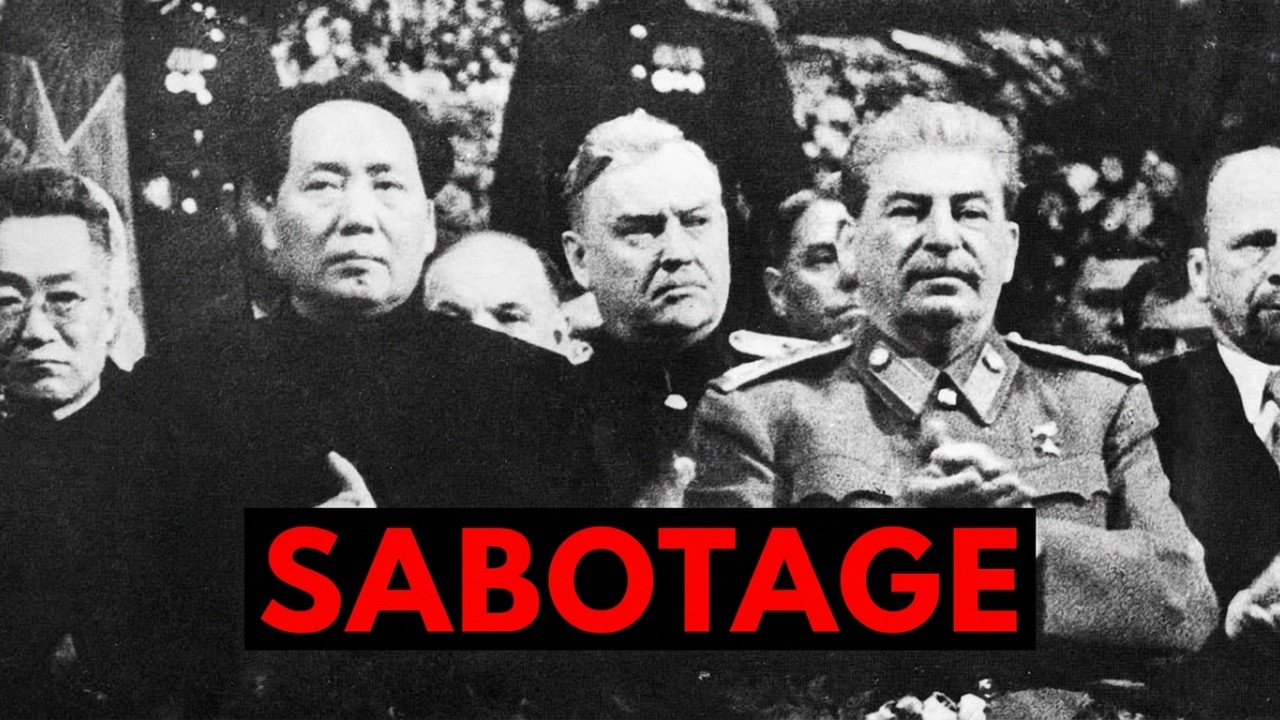
This made him the most consequential Communist leader in the world after Stalin himself. And it made him a Communist leader whose independence from Soviet influence was structural rather than contingent. Stalin’s negotiating position in the two months of discussions that produced the Sino-Soviet Treaty of Friendship, Alliance and Mutual Assistance signed in February 1950, was the negotiating position of someone who understood that the asymmetries of the relationship had changed. Mao was no longer the leader of a client party dependent on Moscow’s organizational support. He was the leader of the government of the most populous country on Earth, a government that controlled a military force of battle, hardened veterans of 22 years of continuous warfare, and a government that had demonstrated its capacity to succeed without Soviet support. Stalin
attempted to maintain the specific Soviet interests that the Yalta settlement had established. The Soviet rights in Manchuria, the naval base at Port Arthur, the railway concessions. Mao was willing to accept some of these as a diplomatic necessity while making clear that the terms of the relationship were being renegotiated.
The treaty that resulted was the treaty of two governments that needed each other but did not trust each other, and whose specific interests in the relationship were different enough that the alliance it created was always going to be more fragile than its formal terms suggested. Stalin died in March 1953. The Sino-Soviet split, which became public in the early 1960s, and which ended with the formal rupture between the two communist states that had been the primary geopolitical expression of what international communism meant in the post-war world, was the specific outcome that the specific history of the Stalin-Mao relationship had made probable from the beginning. The broader question that the history of Stalin’s relationship to Mao raises is the question of what Soviet policy toward communist movements elsewhere in the world was actually about. Was it the pursuit of the global communist revolution that the Comintern
claimed to represent? Or was it the management of Soviet state interests through the instrumentalization of communist movements as tools of Soviet foreign policy? The evidence of the Chinese case supports the second interpretation with unusual clarity. The United Front policy of the 1920s subordinated the CCP’s organizational survival to Soviet diplomatic relationships with the Kuomintang.
The support for the return students faction in the early 1930s subordinated the development of the most effective Chinese communist strategy to the maintenance of Moscow’s organizational influence over the CCP. The advice against the civil war in 1945 to 1947 subordinated the CCP’s prospects of victory to the preservation of the specific Soviet diplomatic arrangements that the Yalta settlement had produced.
The management of the 1949 to 1950 negotiations subordinated the development of a genuine Sino-Soviet alliance to the maintenance of the specific Soviet interests in Manchuria and elsewhere that Stalin had secured through his arrangements with the Nationalist government. In every case, the Soviet policy toward the Chinese Communist movement was shaped primarily by Soviet state interests as Stalin defined them.
And the interests of the Chinese Communist movement were secondary considerations that were taken into account only in so far as they were compatible with the primary objective of serving Soviet state interests. This is not a surprising finding for students of Soviet foreign policy who have observed the same pattern in the Soviet Union’s relationships with Communist movements in Spain, Greece, France, and elsewhere.
Stalin was not, in the fundamental sense of his foreign policy conduct, a Communist revolutionary who happened to govern a state. He was a state leader who used Communist ideology as an organizational resource and who managed Communist movements elsewhere in the world as instruments of Soviet state power, rather than as genuine partners in a shared revolutionary project.
The specific dimensions of what this meant for the Chinese Communist movement were the dimensions most directly experienced by Mao Zedong across two decades of navigating the relationship between the organizational dependency that Comintern affiliation implied and the strategic independence that effective revolutionary practice in Chinese conditions required.
What specifically did Stalin do to try to sabotage Mao’s rise and why? The word sabotage implies a deliberate, conscious, coordinated effort to prevent Mao from achieving the success that he eventually achieved. The historical record is more complex and more instructive than a simple conspiracy narrative would allow.
Stalin did not have a simple, unified policy of suppressing Mao specifically. What he had was a consistent preference for organizational relationships with communist movements that preserved Moscow’s control, a consistent prioritization of Soviet state interests over the interests of revolutionary movements that his own stated ideology committed him to supporting, and a specific assessment of the Chinese political situation that led him, consistently and across multiple critical junctures, to support approaches and individuals that served Soviet organizational and diplomatic interests, rather than the most effective approach to Chinese revolutionary success. The support for Wang Ming and the return students faction was not a deliberate plan to prevent Mao from winning. It was the expression of a genuine institutional preference for the people whose organizational formation made them
most amenable to Moscow’s direction. But the effect of that preference, applied in conditions where the return students strategy was catastrophically unsuited to Chinese conditions, was the consistent advancement of an approach to Chinese revolutionary strategy that was losing in practice while Mao’s approach, which Moscow consistently criticized or ignored, was developing into the strategy that would eventually win.
The advice against the civil war in 1945 to 1947 was not a deliberate attempt to ensure Chiang Kai-shek’s victory. It was the expression of Stalin’s genuine assessment that the risks of a full-scale civil war outweighed the benefits from the Soviet perspective, combined with the unwillingness to provide the level of support that would have changed the risk calculation.
But the effect of that advice, if Mao had followed it, would have been the indefinite postponement of the communist victory that the subsequent history produced. The pattern is the pattern of a patron whose priorities are consistently different from its clients’ priorities, and whose influence over its client is consistently exercised in ways that serve the patron’s interests rather than the clients’.
The specific outcomes that this pattern produced were outcomes that damaged the Chinese Communist movement’s prospects at multiple critical junctures. Mao this pattern by doing what the most capable clients of patron-client relationships have always done when the patron’s guidance is systematically at odds with the client’s survival.
He took the organizational and financial support that the relationship provided when it was available. He maintained the formal deference to Comintern authority that the relationship required, and he ignored the specific strategic guidance that would have destroyed his movement if he had followed it. He did this with the specific political intelligence of someone who understood, at a level of clarity that his party’s formal relationships with Moscow made it impossible to state openly that the guidance he was receiving was not the guidance of a patron committed to his success. The specific evidence of Mao’s understanding of the situation comes not from his public statements, which maintained the necessary deference to Moscow, but from his private conversations and from the specific strategic decisions that demonstrate the systematic divergence between what Moscow was advising and what Mao was doing. He built the peasant-based military
strategy that Moscow’s theory designated as incorrect because his assessment of Chinese conditions was that this was the strategy that could win. He conducted the rectification campaign of 1942 to 1944 to eliminate the influence of the Soviet-trained faction because his assessment of the CCP’s organizational requirements was that the Soviet organizational model was unsuited to Chinese conditions.
He resumed the civil war against Moscow’s advice in 1946 because his assessment of the military situation was that the CCP could win the war that Moscow was advising him to avoid. At every critical juncture, the divergence between Moscow’s advice and Mao’s decision was a divergence between the assessment of someone who was managing Soviet state interests and the assessment of someone who was trying to win a Chinese revolution.
He was right about the Chinese revolution. Stalin was wrong about it. Not in the abstract. In the specific, concrete, operationally precise sense that every major piece of strategic advice that Stalin communicated to the Chinese Communist Movement about how to win power in China was advice that if followed consistently would have prevented Mao from winning.
What does the story of Stalin’s attempted sabotage of Mao’s rise tell us about the relationship between ideological internationalism and national interest in the conduct of great power politics? The first lesson is about the specific way in which ideological authority is instrumentalized by states that claim it.
The Soviet Union’s claim to lead the international communist movement was a genuine claim in the sense that Moscow had been the organizational center of that movement since 1919 and that the resources, the theoretical prestige, and the diplomatic backing that Moscow provided to affiliated communist parties were real and consequential for those parties’ development.
It was also a claim that served specific Soviet state interests. The Comintern was an instrument of Soviet foreign policy that allowed Moscow to maintain organizational connections and influence throughout the world in ways that Soviet diplomatic channels could not provide. The affiliated Communist parties were, from the Soviet state’s perspective, assets whose management served Soviet interests.
The tension between the organizational dependency that affiliation created and the specific interests of the affiliated party was the tension that defined the relationship between Moscow and every major Communist movement of the period. In most cases, the organizational dependency was sufficient to keep the affiliated party in alignment with Moscow’s interests, even when those interests diverged from the party’s own.
In the Chinese case, the specific conditions of the Chinese revolution, its geographic scale, its military character, its foundation in the rural mobilization that made it less accessible to Moscow’s organizational influence produced the one major Communist movement of the 20th century whose independence from Soviet organizational control was structurally built into the movement’s own development.
Mao was not independent of Moscow because he was ideologically opposed to Soviet leadership of the international Communist movement. He was independent of Moscow because the specific conditions of making the Chinese revolution required doing things that Moscow could not support from a distance and that Moscow’s guidance consistently mischaracterized.
The second lesson is about the specific relationship between patron and client in revolutionary politics and the conditions under which clients can survive patrons whose interests diverge from theirs. The CCP’s survival of the catastrophes that Soviet directed policy produced in 1927 and its eventual victory in the conditions of the late 1940s was not simply the product of Mao’s personal genius.
It was the product of the specific organizational and military infrastructure that the rural base area strategy had created. An infrastructure that was built through Chinese conditions with Chinese resources and that was therefore less dependent on Soviet organizational support and less accessible to Soviet organizational influence than the party that the Comintern strategy would have produced.
The client that builds its own organizational infrastructure is the client that can survive when the patron’s advice becomes dangerous. The CCP built its own organizational infrastructure. It survived. The third lesson is about the specific long-term consequences of patron-client relationships in which the patron’s interests are consistently prioritized over the clients.
The Sino-Soviet split of the 1960s was not a surprise to anyone who had understood the specific history of the relationship between Moscow and the Chinese Communist movement across the preceding three decades. It was the specific outcome that the specific history made probable when the organizational dependency that had maintained alignment was removed by the Communist victory in China and when the two parties were relating to each other as governments with specific national interests rather than as Comintern patron and affiliate. The specific divergences in national interest that had been managed through organizational dependency became the specific sources of the geopolitical conflict that the split represented. Stalin died before he could witness the full consequences of the relationship he had managed. Khrushchev inherited both the relationship and its accumulated tensions and the specific management of
those tensions through the Khrushchev years led to the open rupture under Brezhnev and Mao. The split between the Soviet Union and China was one of the most consequential geopolitical events of the Cold War. It divided the Communist world. It created the conditions for Nixon’s opening to China, and it permanently altered the strategic balance of the Cold War period.
Its roots were in the specific history that this script has traced, the consistent Soviet prioritization of Soviet state interests over Chinese Communist success, the specific organizational mechanisms through which that priority prioritization was implemented, and the specific survival of the Chinese Communist movement through the development of an organizational and military infrastructure that eventually made it independent of the patronage whose terms it had never fully accepted.
Stalin died on March 5th, 1953. Mao attended the memorial events in Beijing. He did not go to Moscow for the funeral. The relationship he had with Stalin in the final years of Stalin’s life had been the relationship of two state leaders managing the specific tensions between Soviet and Chinese national interests within the formal framework of the 1950 alliance treaty.
It was not the relationship of ideological comrades sharing a common project because the specific history of what Stalin had done to and with and against the Chinese Communist movement across three decades made that characterization impossible for either of them to sustain with any sincerity. Mao’s private assessments of Stalin, preserved in the accounts of participants in private conversations and in his subsequent public statements during the Sino-Soviet split, were the assessments of someone who had spent three decades managing a patron-client relationship in which the patron’s guidance was consistently wrong, and whose guidance had been consistently ignored at the critical junctures where following it would have been most damaging. He said in his famous 1956 speech on the historical experience of the dictatorship of the proletariat and in subsequent discussions that Stalin had made significant errors in his
relationship to the Chinese revolution, had not believed in the revolution’s possibility, had advised against the civil war, had maintained the relationship with the nationalist government that had delayed Soviet support for the communist government. These were measured formulations by Mao standards and they understated what the historical record makes clear.
Stalin did not simply fail to support Mao. He spent two decades supporting the alternatives to Mao within the CCP, advancing an organizational model that was unsuited to Chinese conditions, advising against the strategies that produced the revolutionary victory, and maintaining the diplomatic relationships that served Soviet state interests at the cost of the Chinese Communist movement’s prospects.
He tried to manage Mao into a pattern of dependency that served Soviet interests. Mao refused the pattern. He won the revolution. He won it their way first and watched their way fail catastrophically. He won it his way against their advice and changed the world. The patron who tried to manage the client’s revolution ended up with a communist ally who was the most powerful independent force in the communist world.
Whose specific independence was built on the institutional infrastructure that the patron’s management had failed to prevent. The machine that Stalin built to control the international communist movement could not contain the Chinese revolution because the Chinese revolution had been built to survive exactly the kind of control that Stalin’s machine was designed to provide.
Mao understood what Stalin’s machine was. He had been inside it long enough to know how it worked. He built his revolution to work differently. That is why he won. That is why Stalin could not stop him. And that’s why the man who arrived in Moscow in December 1949 was not the client the patron had expected.
He was the survivor and survivors in the specific accounting of the revolutionary movements that Stalin tried to manage were the ones who had learned that the patron’s guidance was the most dangerous advice they would ever receive.