Why The British Army Replaced Its Scammell Commander With This ‘American’ 8×8 To Move The Challenger D
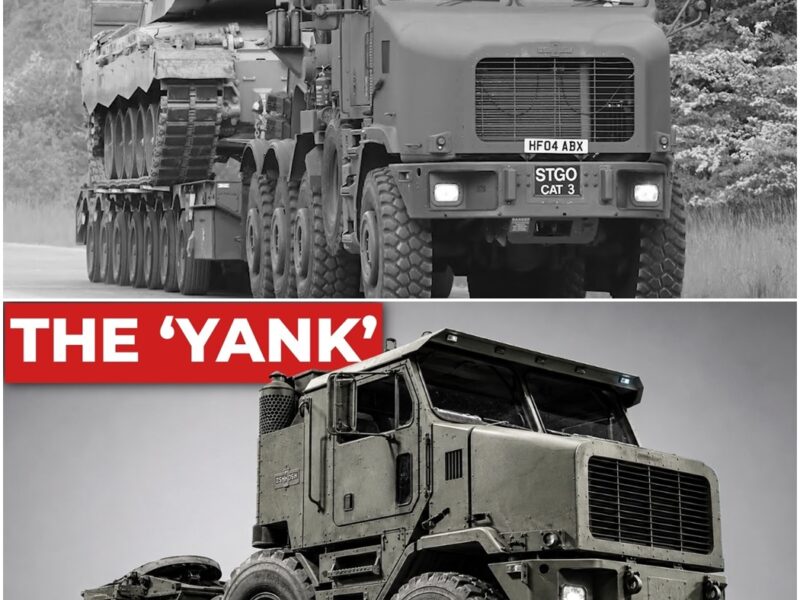
January 2001, Oshkosh, Wisconsin. American engineers had just been told their tank transporter was not good enough for the British army. This was not a minor rejection. The M1070E1 was a combat veteran. It had hauled M1 Abrams tanks through Bosnia, through Kuwait, through the deserts of Iraq. The United States Army loved it.
NATO partners had bought it and the Ministry of Defense in London looked at it, listed every European regulation it broke, every shortfall against the Challenger 2 and said, “No, Oshkosh had a choice. Lose one of the largest export contracts in their company’s history, or go back to the factory floor and build an entirely different truck for the British.” They chose the second option.
The result was the Oshkosh 1070F, a machine the British Army still uses today, 23 years later, to move every Challenger to it owns. This is the story of how British stubbornness forced America to build a better tank transporter, and why the United States Army eventually copied the homework. To understand why the British were so demanding, you have to understand what they were replacing.
The Scaml Commander entered service in February 1984. It was built at the Scaml plant in Watford under a 27.25 million pound contract. The commander was a brute, a 6×4 tractor powered by the Rolls-Royce CV12CE. That was a 26.1 L twinturbocharged V12 producing 625 horsepower at 1200 RPM. The same engine family bolted into the Challenger 2 itself, although tuned much higher in tank form.
125 tractors and 117 trailers were delivered between 1983 and 1985. The commander earned its reputation in the desert. During Operation Granby in 1990 to 1991, 70 Scaml commanders deployed to the Gulf. Each one on the road 17 hours a day for 4 months, averaging 270 km a day on desert tracks. Crews loved the truck despite its clunky semi-automatic gearbox and cramped cab.
But the math finally broke it. The Commander was originally specified to haul the Chieftain at 56 tons. Its payload was eventually upgraded to 65 tons for the Challenger 1. Then the Challenger 2 arrived in 1998 at 62.5 tons base weight. And with the Dorchester applique armor package fitted for Iraq. That figure rose to 75 tons.
75 tons on a trailer rated for 65. The commander was operating above its structural design rating. every single move, every single day, combined with 20 years of hard use, the fleet had to go. Phased retirement ran from 2002 to 2004. By the late 1990s, the obvious answer was sitting in Wisconsin.
Oshkosh Truck Corporation had been building the M1070 for the United States Army since July 1992. 2488 had rolled off the line. The American truck was an 8×8 tractor with a Detroit diesel 8V92A producing 500 horsepower. Oshkosh offered the British an updated version called the M1070E1. The Ministry of Defense walked through every floor point by point.
The Detroit diesel was not compliant with Euro3 emissions, which were becoming mandatory for vehicles on European public roads. 500 horsepower was also underpowered for a 72 ton Challenger 2. The original truck had been sized for the lighter Abrams at around 63 tons. The American M1000 trailer was illegal under European axle load and width regulations.
The cab was a two-door plastic bodied unit seating four British crews routinely needed to carry the truck’s twoman team plus the tank crew of four with at least six seats and ideally sleeping births for long road moves. Lighting, mirrors, and braking standards in the American version did not meet the ECE regulations British inspectors enforced.
The folklore version of this story has the American truck being too wide for European roads. That is not quite right. The cab itself was a similar width. The real regulatory problem was the trailer plus emissions plus brakes plus lights. A stack of European compliance issues the standard American products simply did not address.
The Americans would eventually concede the point. After 2018, they developed the M13000 tractor specifically for European service, essentially admitting that London had been right in 2001. So, Oshkosh redesigned the new truck shared the M170 chassis architecture and the same hub reduction axles, but Jane’s defense confirms the cab and all major driveline components were substantially revised.
Out went the Detroit diesel. In went the Caterpillar C18 Assert, an 18.1 L inline 6 turbocharged diesel producing 700 horsepower at 2100 RPM and 2576 Newton m of torque at 1,300 RPM. Out went the old 5-speed transmission. In came the Allison HD 4076P, a seven-speed automatic with a torque converter and second gear start protection.
The two-speed transfer case was replaced by a single speed unit, eliminating the need to stop and shift on grades. The cab was completely new, an all steel twodoor structure seating six with the driver and front passenger on suspension seats and a rear bench convertible to two double bunks.
With a tank crew of four added, a full operational load is 12 people. Eaton Vorad’s sideways scanning radar was fitted for nearside blind spot detection. That was an unusually advanced feature for a military vehicle in 2003. Driven directly by the visibility challenges of narrow British country roads. The numbers tightened to European compliance. The truck is 9.
49 m long, 2.59 m wide at the cab, 3.74 m high with a 30.5 m turning circle. The tractor alone weighs 20 tons empty. Tractor plus trailer comes to 46 tons. Tractor plus trailer plus a fully armored Challenger 2 reaches 118,50 kg. That is comfortably the heaviest legal road combination most British people will ever see.
And the truck can move all of it at 80 kmh on tarmac. Range at gross combination weight is approximately 325 m on a fuel load of 947 L. Twin hydraulic winches each pull 24.9 tons on 51.8 m of cable. The tires are Michelin 42595R20 22 ply tubeless fitted with a central tire inflation system that holds pressure even after a bullet strike.
Oshkoskosh themselves described the result in their 2001 press release as the first and only heavy equipment transporter. Fully compliant with all applicable European road regulations, including Euro3 engine compliance, the British Army’s own page puts it more bluntly. The HET is the most powerful tank transporter in production.
Now, before we move on to the trailer and the unique contract that paid for all this, if you are enjoying this deep dive into British procurement, hit subscribe. It takes a second and it genuinely helps the channel. Let’s get into the business side, which is just as remarkable as the engineering.
The trailer was every bit as important as the tractor, and unlike the tractor, it was entirely British. King Trailers Limited of Market Harbor in Leicester won the subcontract from Oshkosh. The result was the King GTS 100/7. The numbers are formidable. 17.285 m long with a load bed 12.5 m long and 2.89 m wide.
Seven axles, five of them steered, keeping the combination’s turning circle inside 30.5 m. hydraulic self-leveling suspension, which King’s Marketing rightly claims was a British first for a 7-axxle steerable trailer, empty weight 26 tons, rated payload 72 tons. The original order was for 92 tractors and 89 trailers plus three recovery systems.
In late 2009, with the King trailers proving ills suited to Afghan terrain, the Ministry of Defense ordered 20 Brushery two axle trailers from the Netherlands for off-road work in Helmond. The procurement vehicle for all this was as innovative as the engineering. Britain did not buy 92 heavy equipment transporters.
Britain bought 20 years of heavy equipment transporter service. The contract was signed on December 14th, 2001. It was the Ministry of Defense’s first major equipment private finance initiative, and it was the first contract anywhere in defense to use sponsored reserves at scale.
The headline value has been reported in two ways. Oshkosh’s January 2001 release described the deal as worth more than $440 million over 20 years. Most subsequent secondary sources site a $290 million whole life cost. The two figures reconcile when you understand that $440 million was the preferred bidder estimate before final negotiation and £290 million was the agreed contract value.
The consortium was named Fuss Tracks. It was led by Hallebert and Brown and root services which through corporate consolidation became KBR limited in 2002. Deutsche Bank provided the original financing. Oshkosh and King Trailers were subcontractors not equity partners. The contractual structure was the genuinely radical part.
Fastracks owns the trucks and trailers. FTX Logistics, a KBR subsidiary, maintains and operates them. The Ministry of Defense pays a quarterly service charge and gets transporters on demand. Drivers are a hybrid force. Regular army driver tank transporter operators work alongside roughly 85 FTX sponsored reserves.
These are 76 operators and nine maintainers who hold civilian licenses in peace time but are mobilized under the reserve forces act of 1996 when needed on operations. They have deployed in uniform to Iraq, to Afghanistan and to Estonia. The unit is the 19th tank transporter squadron of 27th regiment Royal Logistic Corps, known regimentally as the Carmons.
After 16th Tank Transporter Squadron disbanded at Bad Falling Boston in Germany on July 25th, 2014, the Carmons became the sole heavy lift squadron in the entire British military. Deliveries ran from 2003 into early 2004, dropping into the middle of Operation Telk. The very first weeks of the invasion in March and April 2003 were still being run on the old scaml commanders, but the new Oshkoskosh fleet quickly took over, moving Challenger twos from Bazreport to forward locations and recovering damaged armor. The recorded combat loss is sobering. Private Kevin Thompson, aged 21, of the Karman’s troop was killed by an improvised explosive device that struck his vehicle at around 02000 hours on May 3, 2007 during a resupply convoy out of Bazra Air Station. He died at Celio Hospital on May 6th. His commanding officer, Lieutenant Colonel David Golding, said in his tribute, “He was a professional tank transporter driver, a logistician, a man that
fearlessly got on with the job of supporting combat troops in this tough campaign. He had driven the route that ultimately claimed his life many times in the last 6 months. Afghanistan brought a different role. The Challenger 2 itself never deployed to Helmond, but the Oshkosh absolutely did.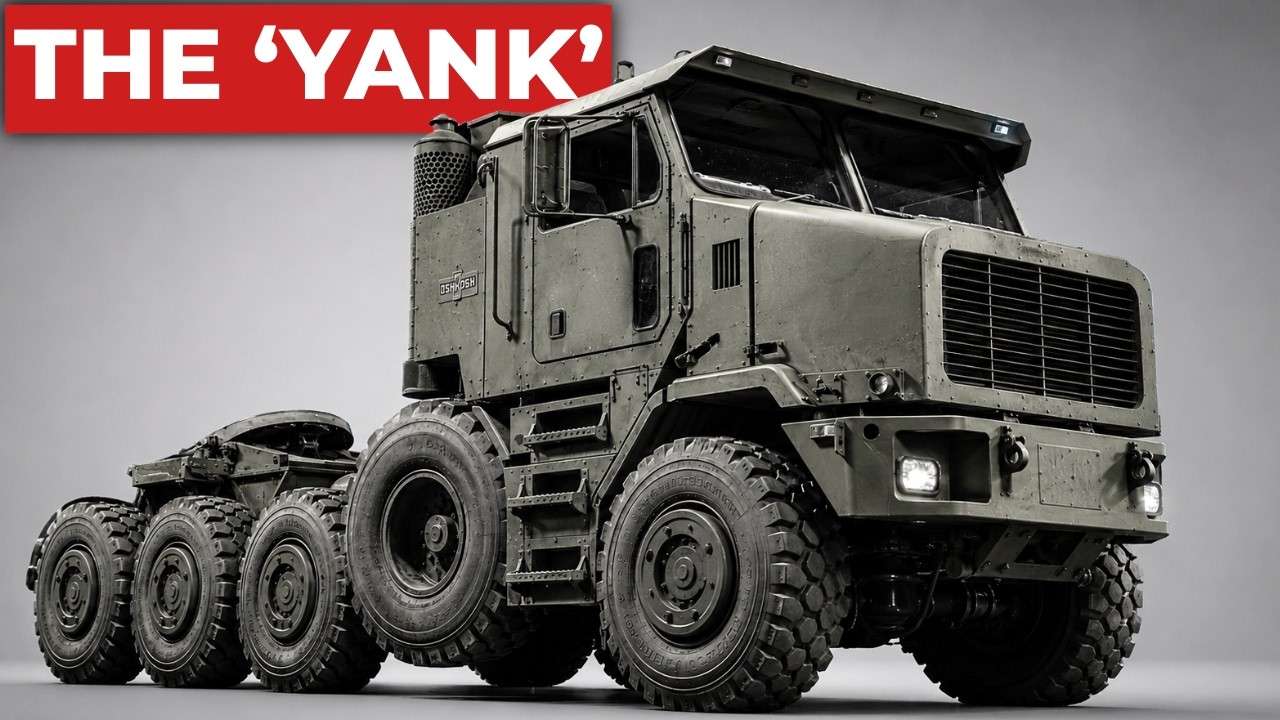
The National Army Museum’s collection includes an official 2008 photograph captioned Oshkosh heavy equipment transporters, Helman Province, Afghanistan. The transporters hauled warriors, mastiffs, Vikings, Trojan engineer vehicles, and damaged kit back from forward operating bases, saving track miles, saving fuel, and critically saving IED exposure for the crews who would otherwise have driven those vehicles themselves over high threat routes.
Oshkoskosh senior vice president Serge Bushak Jian summed up the operational record in 2011. The HT has delivered exceptional survivability to protect passengers from roadside bombs and other threats in Iraq and Afghanistan. The vehicle also has proven highly reliable, transporting equipment and crews wherever they are needed for arrival in a high state of readiness.
Since 2017, the headline tasking has been operation cabrit. That is the British contribution to NATO’s enhanced forward presence in Estonia framework nationed at Tapper following Russia’s invasion of Ukraine in February 2022. The United Kingdom doubled its Estonian presence.
Each surge was driven by Oshkosh convoys grinding across Germany and Poland. Corporal Jason McQuinn of 19 tank transporter squadron explained the rhythm of the job to forces news. We drive at 40 mph on motorways, 35 on dual carriageways, and 30 on single carriageways. Comparison against rival heavy equipment transporters is where the British procurement story really earns its argument.
The current American M1070A1 entered service in 2010, 7 years after the British 1070F. It shares the same Caterpillar C18700 horsepower engine. That is no coincidence. The British truck previewed what the American army would eventually adopt, but the American version still uses the older five axle trailer, lacks the auxiliary diesel power unit, and is not road legal across most of Europe at combat load.
Germany’s heavy lift is the closest peer competitor. The Rhin Metalman HX81, known in armored form as the Mammoth, uses a 17 L V8 producing 680 horsepower and pulls a dole 70 ton low loader. The Bundesphere has been buying it in serious numbers. The Mammoth beats the British truck on one metric, cab armor, with KMW protection against small arms, fragments, and mine blast.
Where the British truck wins is cab habitability. The Mammoth seats four with two emergency jump seats. The Oshkosh seats six with double bunks. For long road marches across NATO’s eastern flank with tank crew aboard, that matters. France’s Renault TRM 700-100 is a 6×6 configuration, not 8×8. Its trailer rates only 60 tons, enough for thelair, well below British requirements.
Russia’s KZKT7428. Rusk runs a 650 horsepower engine, 70 ton trailer payload, 65 kmh top speed, but an extraordinary 1500 km range. The newer Bellarian MZKT741351 uses the same Caterpillar C18 tuned to 812 horsepower and rates a single trailer at 76 tons. By raw numbers, it is the most powerful tank transporter on Earth.
But it cannot legally drive on European roads and it has no combat experience. Pull all that together and the British case writes itself. The Oshkosh has the biggest crew cab in its class. The highest combat loaded road speed verified at 80 km/h with 118 tons. An auxiliary diesel power unit few competitors carry.
An integrated tire inflation system with bullet tolerant pressure retention. And the King 7 axle trailer superior load spread for British and European bridge classifications as an integrated system optimized for European operations with combat loaded Western main battle tanks. Nothing else in service matches it.
A note on myths because every 20-year-old military vehicle accretes legend. The nickname dragon wagon applies to other Oshkoskosh products. The wartime M25 tank transporter and the Mark 48 LVS. It is not the British nickname. Inside the army, it is universally just the Oshkosh or the HT.
Any documentary calling the British truck dragon wagon is wrong. The original 20-year FastTracks contract is now running out. On April 30, 2024, KBR announced it had won the bridging contract. KBR will provide a fleet of heavy equipment transporters, maintainers, and operators to enable movement of strategic loads, including the British Army’s Challenger 2 tanks.
The value is more than $100 million with options. The Ministry of Defense’s deeper plan is called material distribution land 2025, a bundled procurement covering heavy equipment transporters, bulk fuel, and palletized load carriers. The formal competition is expected during 2026. The runners and riders include the new American M13000, the Rhin Metal Manhx 81 family, and possibly a British solution.
Strip away the engineering and the Oshkosh 1070F is at heart a procurement parable. In 2001, the Ministry of Defense was offered a perfectly serviceable American truck that had hauled Abrams tanks across Bosnia and into Kuwait. It had the choice every junior buyer takes. Accept the catalog product, knock 20% off the development cost, deliver early, take the political win. Britain refused.
Britain demanded a Euro3 engine, an all steel six seat cab, a seven axle British trailer, blind spot radar, a power unit, road legal axles, and a service not product contract that handed 20 years of operational risk back to the supplier. Oshkosh delivered. The British truck that arrived in 2003 was measurably better than the M170A, one the American army would not field until 2010.
And the M13000 European variant the Americans finally introduced in 2018 was essentially an admission that the British had been right from the start. 23 years later, the same trucks with the same engines are moving Challenger twos from Bulford to Tapper and back, the same Carman’s troop crews and the same sponsored reserve drivers are at the wheel and the replacement competition is being fought over a specification that the original British requirement effectively wrote.
The Scaml Commander was a beloved beast that gave 20 years of service and broke its back keeping up with the Challenger 2. The Oshkosh 1070F is the truck the British Army got because someone in the Ministry of Defense looked at the obvious American answer and said, “Not quite. Make it better.
” That more than any technical detail of axles or transmissions is why this machine deserves a documentary. It is the heavy holage equivalent of an aircraft carrier built to British specifications and the country has every right to be quietly proud of