Why This ‘Boring’ Canadian Box On Wheels Was The Most Loved Vehicle In Every British Unit D
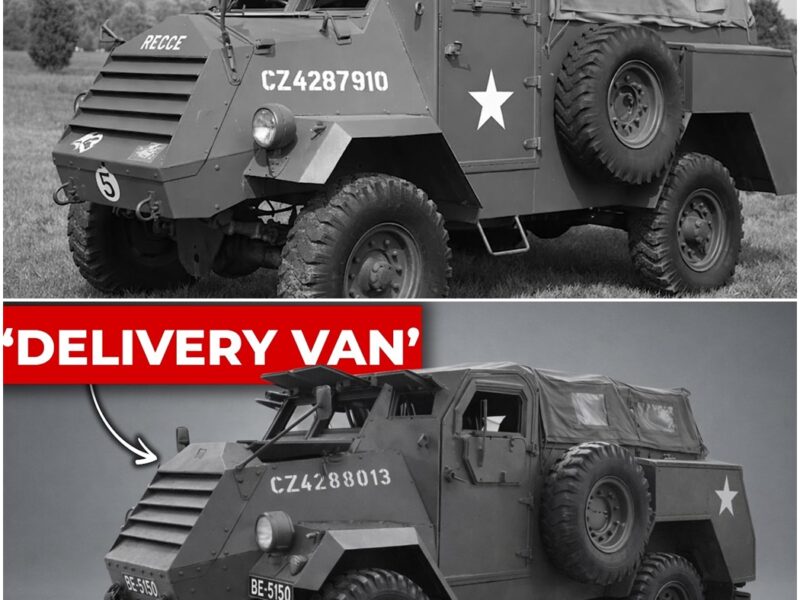
Oshawa, Ontario, late 1943. Inside the General Motors of Canada plant, workers bolted flat steel plates onto a Chevrolet truck chassis. No turret, no cannon, no tracks, just a box on wheels with an engine borrowed from a commercial lorry. The British Army had ordered 3,000 of them. Every officer who saw the prototype said the same thing.
It looked boring. It looked like a delivery van pretending to be a military vehicle. They were right about how it looked. They were wrong about everything else. The C15TA armored truck would become the most requested vehicle in every British and Canadian unit that operated one, and 15 countries would still be driving it three decades after the war ended.
To understand why this plain Canadian box mattered, you have to understand the problem it solved. By 1943, British and Commonwealth infantry had a transport crisis. The frontline troops who actually had to move under fire were doing it in one of three ways. They walked, which was slow and lethal under artillery.
They rode Universal Carriers, which were fast, but only carried three or four men, and sat so low that a rifle round could skim right over the top armor and into the crew. Or they rode American M3 Halftracks, which were capable machines, but weighed over 8 tons, devoured fuel, and required constant track maintenance that British workshops were not tooled for.
The original Canadian plan was a vehicle called Cap Lad, a 3-ton armored lorry designed from scratch. When Cap Lad failed its trials, the Canadians needed a replacement fast. The solution was elegant in its simplicity. Take the Chevrolet C15, a truck chassis already rolling off the Oshawa line by the tens of thousands as part of Canada’s massive military truck program.
Over 400,000 Canadian military pattern trucks were built during the war, making the C15 chassis one of the most common mechanical platforms on Earth. Wrap that proven chassis in a purpose-built armored body, and you have a personnel carrier that shares its engine, gearbox, axles, and suspension with trucks already parked in every Allied depot from Cairo to Caen.
General Motors of Canada handled the chassis. The Hamilton Bridge Company in Hamilton, Ontario, fabricated the armored hulls as complete units, not after thought bolt-on kits. This distinction mattered. The C15TA was not a truck with armor slapped on top. It was an integrated design where the hull provided structural rigidity alongside ballistic protection.
The front plate and engine hood carried 14 mm of bulletproof steel. Sides and rear got 6 mm, enough to stop rifle rounds and shell splinters. Not enough to stop anything heavier. The vehicle was open-topped, covered only by a canvas tarpaulin stretched over hoops. This left the crew exposed to mortars and strafing, the same weakness shared by every Allied armored personnel carrier of the era.
Under the hood sat a GMC Model 270, a 6-cylinder petrol engine displacing 4.4 L and producing roughly 104 horsepower, mated to a four-speed manual gearbox with a two-speed transfer case driving all four wheels. It pushed the 4 and 1/2-ton vehicle to 65 km/h on roads. Twin 90-L fuel tanks gave a range of 270 km.
The power-to-weight ratio worked out to 22.2 horsepower per ton, which was substantially better than the M3 Halftrack at 18, and far better than the German SDKFZ 251 at under 13. Oversize tires replaced the standard truck rubber to handle the extra weight and improve ground clearance. Brakes were hydraulic with vacuum assist.
Inside, the driver and co-driver sat in the armored cab with vision ports. Behind them, removable bench seats accommodated six to eight troops. Fittings held eight rifles. Four collapsible basket bins stored blankets and small haversacks. Two large external storage compartments above the rear wheels each held a camouflage net and four large haversacks, keeping personal kit accessible without cluttering the interior.
The vehicle was officially unarmed, though crews quickly mounted Browning machine guns on the cab rails. The versatility went further. The generous engine torque meant the C15TA could tow a 25-lb howitzer while carrying the gun crew under armor. An artillery tractor and troop carrier in one vehicle, using parts shared with 400,000 other trucks.
Production should have been straightforward. It was not. The British War Department ordered 3,000. The Canadian Army took the rest, but labor strikes at the Oshawa plant in early 1944 crippled the schedule. By January 1944, although 800 had been ordered, deliveries stalled. White Scout cars and M14 Halftracks were issued as stopgap substitutes.
The first batch of just 21 C15 TAs reached the 3rd Canadian Infantry Division in May 1944, barely a month before D-Day. Had those strikes not occurred, significantly more vehicles might have been available for the Normandy landings. Now, before we see how this performed in combat, if you are enjoying this deep dive into Commonwealth engineering, hit subscribe.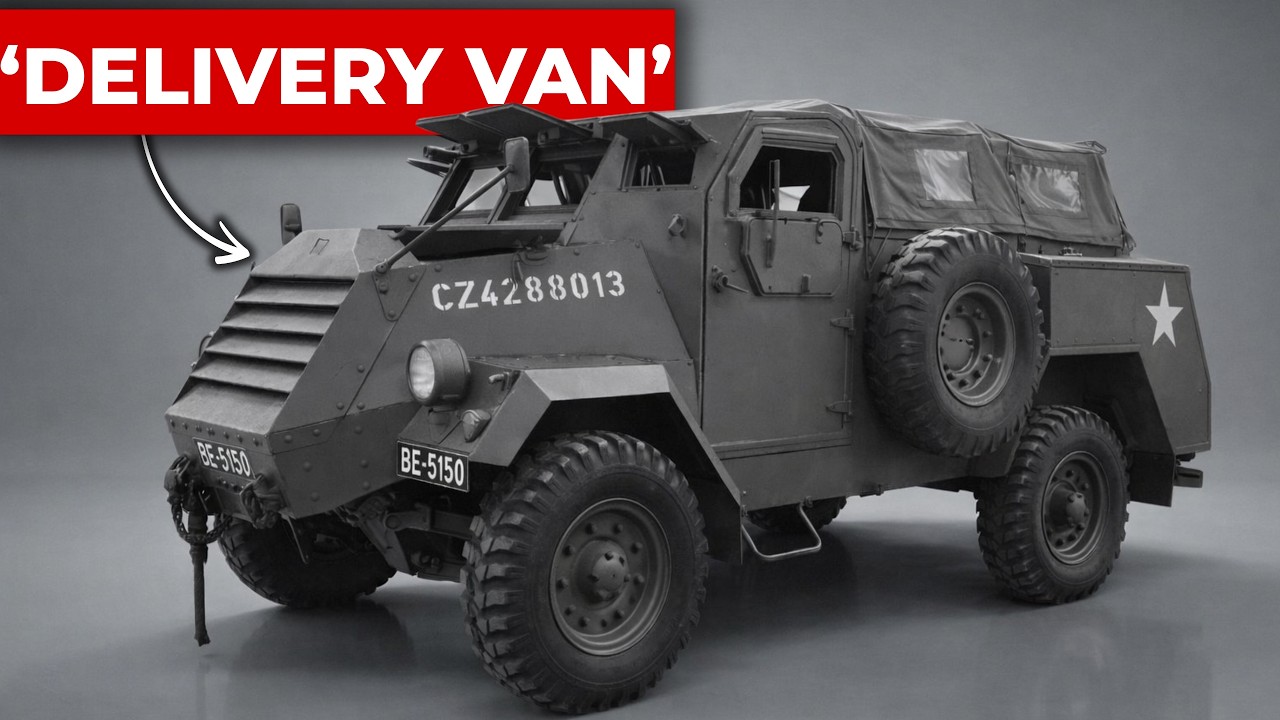
It takes a second, costs nothing, and helps the channel grow. Right, let us get into the combat record. The C15TA’s combat debut came with the 3rd Canadian Infantry Division at Juno Beach on June 6th, 1944. From that point forward, the vehicle spread across Canadian and British formations with remarkable speed.
The Royal Hamilton Light Infantry loaded C15TAs at Crab and Dacka during the Battle of the Scheldt in October 1944. The 5th Canadian Armored Division fielded one named Aristocrat near Nijmegen that December. The 2nd Canadian Armored Brigade, the 10th Armored Regiment, the 1st Canadian Armored Car Regiment, and the Royal Canadian Corps of Signals all operated them.
According to specialist records, every Canadian Infantry Regiment received at least one, typically assigned as the commanding officer’s personal vehicle. British adoption was equally broad. The 79th Armored Division used C15TAs during Operation Market Garden. The 5th Parachute Brigade deployed them in the Far East.
30 Assault Unit, the elite intelligence-gathering commando, used C15TAs from Juno and Utah beaches through operations of Cherbourg, Rennes, the liberation of Paris, and Channel Coast port assaults. Polish and Czechoslovak units received them, too. The Czechoslovak Independent Armored Brigade paraded a C15TA through Prague in May 1945.
Tactically, the vehicle filled more roles than its simple designation suggested. Troop transport, ammunition carrier, command vehicle, signals platform, artillery tractor, armored ambulance. The ambulance variant, designated C15TAA, featured an enclosed body with fittings for two stretchers. Documents in the Airborne Assault Museum titled GMC Armored Truck and Hamilcar glider suggest the vehicle was even studied for delivery inside the massive Hamilcar transport glider for airborne operations, though no confirmed combat glider delivery has been documented. Against its rivals, the C15TA traded raw capability for practical superiority. The American M3 Halftrack carried 13 men versus the C15TA’s eight. It mounted three machine guns as standard, a .50 caliber and two .30 calibers, giving genuine fire support the unarmed Canadian vehicle lacked. The M3 was faster on roads at 72 km/h, and its tracks provided far better
cross-country mobility in mud and snow. But the C15TA weighed nearly half as much, cost just 4,500 Canadian dollars versus an estimated 7 to 8,000 American dollars for the M3, required no track maintenance whatsoever, and drew spare parts from that enormous fleet of 400,000 CMP trucks already in service.
According to vehicle assessment records, troops found it far preferable to the sluggish M3 Scout Car it replaced. The German SDKFZ 251 represented a fundamentally different philosophy. It was a combat vehicle designed to deliver a full panzergrenadier squad of 12 alongside tanks with integral machine gun armament and sloped armor providing superior effective protection.
It spawned over 22 specialized variants. But at 22,560 reichs- marks, it was expensive, complex to maintain, slow to produce with only 15,252 built total, and its interleaved road wheels notoriously froze solid in winter mud. The C15TA’s simplicity was a strategic advantage the German design could never match. Soldiers liked it.
Multiple historical assessments consistently describe the vehicle as popular wherever it served. The specialist reference site tank-afv records that, compared to the M3 Scout Car, this vehicle was found to have good torque tractability and power-to-weight performance. Different armies gave it affectionate nicknames.
In Denmark, it became the M6 Mosegree, meaning water vole, because the silhouette apparently resembled the animal. In Spain, troops called them Trumpers. The Portuguese Army named theirs the Granadero. Malaysian police painted them dark blue and used the initials JMC. A fair caveat here, despite its evident popularity, no direct first-person veteran diary entries specifically about the C15TA have surfaced in publicly available records.
The assessments come from military historians and unit records rather than soldiers’ own published words. The vehicle’s afterlife dwarfs its wartime career. After VE Day, Britain and Canada left hundreds of vehicles across Europe and Asia. The Netherlands received 396 C15TAs by May 1946, many shipped to the Dutch East Indies during the Indonesian National Revolution.
Denmark adopted it as the nation’s first ever designated armored personnel carrier, serving from 1946 until replaced by the M113 in the mid-1960s. Danish police continued using them for anti-terror readiness at Copenhagen’s Kastrup Airport into the late 1970s, potentially the last operational military use of the type. Portugal deployed them as the Granadero in the colonial wars across Angola, Mozambique, and Guinea-Bissau from 1961.
France took over British vehicles left in Southeast Asia and used them during the First Indochina War, later transferring them to South Vietnam. Israel dramatically modified its examples with enclosed rooftops and eight-sided machine gun turrets. Belgium, Norway, Greece, Spain, South Africa, Indonesia, Egypt, and the Federation of Malaya all operated them.
15 countries across five continents spanning more than 30 years. For a vehicle that looked like a delivery van, production reached 3,961 units by war’s end. Rare survivors exist at the Danish Tank Museum in Oxbøl, the Cobbaton Combat Collection in Devon, and the Canadian War Museum. One privately owned example was discovered in a Dutch scrapyard in 1984 in terrible condition.
Restored over five years using parts sourced from as far away as Malaysia, and driven to Normandy in 1989 for the 45th anniversary of D-Day, the C15TA was never the best armored personnel carrier of World War II. The M3 carried more troops. The Sd.Kfz. 251 fought harder. The Universal Carrier went places no wheeled vehicle could follow, but the C15TA may have been the most practical vehicle of the entire war.
Cheap at $4,500, simple enough that any mechanic trained on a Chevrolet truck could fix it, reliable enough for 15 nations to trust it for three decades, and popular enough to earn affectionate nicknames on three continents. Its greatest weakness, arriving late because of factory strikes, denied it the chance to prove itself in the quantities the war demanded.
Its built on 400,000 shared parts, ensured it outlived every rival it was compared against. That boring Canadian box on wheels turned out to be the vehicle everyone wanted and nobody remembered. British and Commonwealth engineering at its finest. Not glamorous, not flashy, just a vehicle that worked when it mattered most.