Why This ‘Cheap’ Canadian Armored Trainer Fought Every Major NATO Mission Nobody Else Would D
1976, a factory floor in Kreuzlingen, Switzerland, a small industrial town pressed against the southern shore of Lake Constance, a few hundred meters from the German border. A vehicle rolls out of the assembly bay. It sits low and compact on six fat wheels. Its hull is welded steel, sloped at the front, squared at the sides, painted in a dull olive drab that catches nothing.
No tracks, no great gun, no thick plates of layered composite armor. It looks, to anyone who knows armored vehicles, like a compromise. A machine designed by engineers who were told to spend as little as possible and build something that would not embarrass anyone. It looked manageable. It looked modest.
It looked, frankly, like something that did not belong anywhere near a war. And yet, within 2 years, a version of this vehicle was rolling off a production line in London, Ontario. Within 15 years, it was patrolling the buffer zones of Cyprus and the streets of Mogadishu. Within 16 years, it was moving through the rubble of the Balkans, carrying Canadian soldiers into one of the most violent peacekeeping deployments in the history of the United Nations.
It would fight in the former Yugoslavia, in Somalia, in Haiti, and on the sun-cracked plains of Darfur. It would serve the Canadian Army for 27 years without a true replacement ever arriving on time. It would become the vehicle that proved wheeled armor could go anywhere a NATO soldier needed to go and survive almost everything thrown at it.
Its name was the armored vehicle general purpose, and it was the machine that carried Canada through the most dangerous decade of its modern military history. To understand why Canada bought a Swiss vehicle and sent it into the world’s worst conflicts, you need to understand the crisis the Canadian Army faced in the early 1970s.
By 1972, Canada’s armored force was in a state of managed decay. The country maintained a NATO commitment in Germany, equipped with aging Centurion tanks that were overdue for replacement. Beyond the German Brigade, the rest of the army trained on a patchwork of old M113 tracked carriers and Lynx reconnaissance vehicles, all of them expensive to run, mechanically demanding, and burning through defense budgets that a succession of governments had no interest in expanding.
The army needed two things simultaneously. It needed a new main battle tank for Germany, and it needed a cheap, simple wheeled vehicle that regular and reserve units could operate without a small army of technicians behind them. General Jacques Dextraze, appointed Chief of the Defence Staff in 1972, drove the solution.
He wanted the Leopard tank for Germany. For the rest of the army, he wanted something far simpler, a vehicle affordable to buy, affordable to run, standard enough that mechanics could fix it with parts available from civilian supply chains. A Canadian study at the time found that operating tracked carriers in peacekeeping recce roles cost roughly 10 times as much as wheeled vehicles, primarily because of track overhaul cycles.
In an era of peacekeeping deployments and budget constraints, wheels made economic sense that tracks could not match. The army opened a competition. Five vehicles were tested at Canadian Forces Base Wainwright in early 1975. There was the American Cadillac Gage V-150, the Brazilian Engesa EE-11 Urutu, three French contenders, including the Panhard M4, the Berliet VXB-170, and the Saviem VAB.
And there was the Swiss entry, the Mowag Piranha 6×6. Mowag was not a household name. Motorwagenfabrik AG had been founded in 1950 in Kreuzlingen by engineer Walter Ruf, who had spent the early post-war years building tactical vehicles for the Swiss army. The Piranha prototype 1972 as a private venture, a six-wheeled amphibious hull with fully independent suspension on all three axles, a twin propeller drive for water crossings, and a modular layout that allowed different turrets and mission packages to be fitted to the same base hull. It was clever engineering from a country with no colonial commitments, no expeditionary history, and no wars to fight. Switzerland had not deployed soldiers abroad since 1815. The Piranha won the Canadian trials on the only criteria that ultimately mattered. It was the only manufacturer willing to license production inside Canada. The Cadillac Gage entry offered no local manufacturing. The French designs offered no technology transfer. The Brazilian Urutu was competitive in price, but its manufacturer had no
established relationship with Canadian industry. Mowag signed its agreement with General Motors Diesel division based in London, Ontario in August 1976. The choice of GM Diesel was deliberate. The London plant had decades of experience fabricating heavy steel for locomotives and commercial trucks.
It had the tooling, the workforce, and the floor space to build armored hulls without the multi-year startup delays that a greenfield facility would have required. The production contract followed in 1977, initially for 350 vehicles, later expanded to 491. The first vehicles were handed over in February 1978.
Over the next 4 years, the London plant built 491 vehicles in three variants, all built on the same 6×6 hull. 195 went to a fire support configuration designated the Cougar. 269 were built as armored personnel carriers designated the Grizzly. 27 were built as maintenance and recovery vehicles designated the Husky.
Production was complete by 1982. The ballistic steel for the hulls was sourced from foundries in Hamilton, Ontario, a decision that had been contested during the procurement process by officials who questioned whether Canadian civilian industry could produce armor grade steel to military specification.
Test results proved that it could. The steel was rolled, cut, and shipped to London, where it was welded into hulls on the same production line. The supply chain was entirely Canadian from foundry to finished vehicle. The common hull used throughout the family weighed approximately 10 and 1/2 tons. It was powered by a Detroit Diesel 6V53T two-cycle turbocharged engine producing 275 horsepower, a power unit that GM Canada fitted in place of the original Mowag petrol engine.
That substitution was significant. The Detroit diesel ran on diesel fuel compatible with the rest of the Canadian Army’s vehicle fleet, which simplified logistics across deployments. A petrol-burning armored vehicle in a diesel army creates a resupply problem that compounds every kilometer from a main operating base.
The GM Canada engine removed that problem entirely. Top road speed was 100 km/h. Range was approximately 600 km, sufficient to move from one end of a large peacekeeping sector to the other without refueling. The suspension used fully independent coil springs on all three axles, giving the vehicle genuinely good cross-country mobility over hard and semi-firm terrain, though it struggled in very wet or boggy ground, where a tracked vehicle would have continued.
The hull was originally fitted with twin propellers and trim vanes for amphibious crossing at 10 km/h, though these were later removed fleet-wide because the maintenance costs outweighed the tactical benefit in Canada’s actual operating environments. Armor protection was welded ballistic steel, sourced from foundries in Hamilton, Ontario, approximately 10 to 13 mm thick at the front, 6 to 8 mm at the sides, sufficient to stop 7.
62 mm small arms fire and artillery fragments, nothing heavier, nothing more. The Cougar was the most distinctive variant. It mounted a British Alvis Scorpion turret, housing a crew of two in the turret alongside the driver below. Its gun was a 76 mm L23A1 low-velocity weapon, loaded with high-explosive HESH squash-head anti-armor rounds, canister anti-personnel shot, and smoke.
40 rounds were carried, 10 in a ready rack and 30 stowed in what crews called the wine rack behind the turret. It also mounted a coaxial 7.62 mm C6 machine gun. The gun was never a tank killer. Its 76 mm round could not penetrate the frontal armor of a modern main battle tank.
In armored regiments, the Cougar was a trainer, a stand-in for the Leopard, a machine that crews used to practice gunnery and armored vehicle drills until they graduated to heavier equipment. Its orange burning high explosive tracer earned it the name that stuck in every unit that ever fielded it. Soldiers called it the pumpkin shooter.
The Grizzly carried a Cadillac Gage one-man turret mounting a 12.7 mm M2 Browning heavy machine gun and a coaxial 7.62 mm C6. A crew of three sat up front. Behind them, the troop compartment held up to six soldiers seated on back-to-back outward-facing benches with vision ports cut into the hull sides.
Egress was through rear doors or roof hatches. It was a simple, serviceable carrier. It was never intended to assault defended positions. It was designed to move infantry quickly and protect them from fragments and small arms on the move. The Husky carried no turret at all. A pintle-mounted C6 was its only armament. What it carried instead was a hydraulic crane and a heavy winch sized to lift and swap power pack assemblies from the other AVGP variants in the field.
27 of them were built to keep the other 464 running. It was unglamorous work and the Husky performed it in every theater the family ever entered. Now, before we get into where these vehicles actually fought and what they survived, if you are finding this deep dive into Canadian military history worth your time, hit subscribe.
It takes 1 second, costs you nothing, and it helps this channel keep producing this kind of content. The AVGP family entered service expecting to spend its career in Canada. Cougars were issued to regular and reserve armored regiments and to the armor school where they trained generations of crew commanders before posting to Leopard units.
Grizzlies went to regular infantry battalions that had previously moved on foot or in soft trucks. The fleet settled into its role as a cheap low-maintenance training workhorse. And for over a decade, that was exactly what it was. Then the Cold War ended and the world Canada’s army had prepared for stopped existing.
In 1992, the United Nations Security Council authorized an expanded peacekeeping presence in the former Yugoslavia where the collapse of socialist federation had detonated into a series of ethnic wars of exceptional brutality. Croatia and Bosnia were fracturing simultaneously. The UN Protection Force, known by its initials as UNPROFOR, required armored vehicles that could protect peacekeepers in an environment where the parties were actively fighting each other and where a blue helmet offered no guarantee of survival. Canada committed troops. The AVG P was the armored vehicle had. Cougars and Grizzlies were painted white, fitted with the letters UN in black on their sides, and shipped to Croatia and Bosnia. In theater, Cougar troops were reorganized into seven-vehicle reconnaissance elements rather than the standard four-vehicle tank troops they used at home. A tacit acknowledgement that the Cougar’s gun was insufficient for the threat and that numbers would have to compensate for firepower. Canadian infantry battalions rode in white Grizzlies through checkpoints
manned by armed men who frequently had no interest in being peacekept. September 1993, the Medak Pocket, Croatia. The 2nd Battalion Princess Patricia’s Canadian Light Infantry under Lieutenant Colonel James Calvin was ordered to establish a ceasefire line between Croatian and Serbian forces in a disputed agricultural area south of the town of Gospic.
The valley was maybe 20 km long. It was full of Serbian villages that Croatian forces had been systematically clearing. What the battalion found when it arrived was evidence of a systematic atrocity in progress. Croatian forces of the 9th Guards Brigade, known as the Lika Wolves, had been moving through Serbian villages, killing civilians, burning houses, and removing all evidence of what had happened.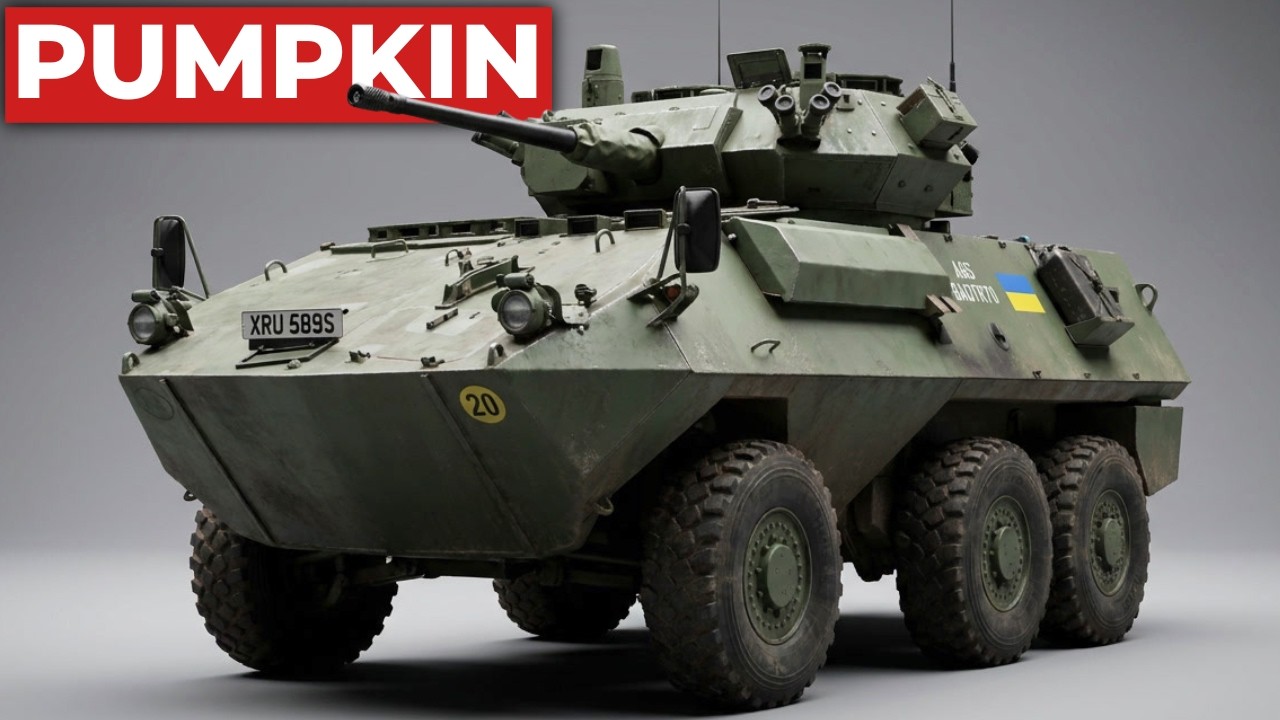
Bodies were found in the ruins. Livestock had been shot where they stood. Wells had been poisoned. Roughly 2,500 Croatian soldiers stood between the Canadians and the pocket. The Canadians numbered approximately 1,000. They were outgunned. They had Grizzly carriers, M113 tracked personnel carriers, and C6 machine guns.
The Croatians had artillery, mortars, and infantry dug into prepared positions. Calvin stood his ground. The Patricias pushed forward through the night of September 15th into September 16th, engaging Croatian positions in 14 continuous hours of firefighting. Four Canadian soldiers were lightly wounded. Croatian casualties were estimated at 27 dead.
When the Canadians finally secured the pocket, they documented what the Croatians had done. The United Nations Human Rights Commission later estimated that at least 100 Serb civilians had been killed in the pocket. The Croatian government denied it for years. Canada classified the mission for nearly a decade.
The soldiers who fought it received no public recognition until 2002, when the Chief of the Defence Staff presented the battalion with a Commander-in-Chief Unit Commendation. Lieutenant Colonel Calvin was subsequently awarded the Meritorious Service Cross. It was the largest firefight the Canadian Army had been involved in since Korea.
It happened without a single television camera present. It happened in the turrets and crew compartments of white-painted vehicles that had been built as cheap trainers in a London, Ontario factory more than 15 years earlier. The AVGP Grizzlies that served with the Balkan contingents were on continuous rotation through 1995.
They took mine strikes. They absorbed small arms fire. In at least one documented incident, a Grizzly on a United Nations patrol was captured by Serbian forces and disappeared into the inventory of a Serbian state security special operations unit, photographed later by journalists in distinctly non-peacekeeping configuration.
The rules of engagement at the time did not authorize lethal force to recover equipment. The crew was ordered to surrender it. They did. It was not the vehicle’s failure. It was the constraint of the mission it had been sent to perform. The same year that the Balkan commitment intensified, Canada deployed another AVGP contingent to Somalia as part of Operation Deliverance, the UN humanitarian intervention in the country’s collapsed state.
A squadron of the Royal Canadian Dragoons deployed with Cougars providing fire support and reconnaissance for the Canadian Airborne Regiment Battle Group based at Bellefuente, a town of roughly 40,000 people in the Hiran region, 450 km north of Mogadishu. The Dragoons provided approximately 130 personnel from A and Recce squadrons.
The Cougar’s 76-mm gun was fired in anger at least once in Somalia in a threat suppression engagement when the Battle Group took fire from a technical vehicle. The gun silenced the contact. The deployment itself was later overshadowed by the Somalia affair, the torture and killing of a Somali teenager named Shidane Arone by Canadian Airborne soldiers in March 1993, an act that triggered a national commission of inquiry, and ultimately the disbandment of the regiment in 1995.
But the AVGP performed exactly as asked throughout the mission. The vehicles did not fail. It was the conduct of the men inside them in one incident that destroyed an institution. Throughout the 1990s, AVGPs also patrolled with United Nations forces in Cyprus under Operation Snow Goose, where reserve armored squadrons rotated through the buffer zone between Greek and Turkish Cypriot communities on an island that had been divided since 1974.
Cougars and Grizzlies moved along the green line, the ceasefire boundary that cuts through the center of Nicosia, and winds west to the coast, enforcing separation between communities that in some places were within shouting distance of each other. The Grizzly’s heavy machine gun and solid profile made it an effective patrol vehicle for a mission that required presence without provocation.
Units from the Sherbrooke Hussars, the Elgin Regiment, and other reserve armored regiments served in Cyprus alongside regular force personnel, giving the AVGP one of the broadest user bases of any Canadian military vehicle in history. Some crews rotated from Cyprus directly into the Balkans. The same machine, painted white, patrolling a different border for a different reason.
On paper, the vehicle that should have replaced the AVGP was already on the drawing board by the late 1980s. The multirole combat vehicle program was launched in 1991 with $2.8 billion earmarked. It was canceled by March 1992. Defense budgets collapsed with the Cold War. The AVGP stayed. What eventually followed were interim solutions, the Coyote reconnaissance vehicle and the Bison armored personnel carrier, both built on the same 8 by 8 MOWAG Piranha 3 hull the Piranha family had evolved into.
MOWAG had not stood still in the years since Canada bought its license. By 1999, when the new LAV 3 entered Canadian service, it too was a MOWAG Piranha derivative, a larger, heavier, better armed 8 by 8. The Swiss chassis that Canada had licensed in 1976 had become the spine of an entire generation of Western armored vehicles.
Throughout the 1990s, as the Balkan mission expanded and the peacekeeping commitments multiplied, Canadian soldiers in AVGPs operated alongside allies in heavier, better protected vehicles that illustrated exactly how light the Swiss chassis had always been. British forces in Bosnia moved in Warrior infantry fighting vehicles, tracked, heavily armored, mounting a 30-mm cannon that could engage any wheeled or lightly armored threat with devastating effect.
French forces deployed in AMX-10P tracked carriers offering substantially better ballistic protection than the Grizzly. American forces, when they finally arrived under NATO’s IFOR mission in December 1995, brought Abrams tanks and Bradley fighting vehicles that dwarfed anything the UNPROFOR contingents had been using.
By every measure of protection and firepower, the AVGP was the lightest vehicle in the coalition’s inventory. The closest NATO competitor to the original AVGP in the same wheel generation was the German Transportpanzer Fuchs, a 6 by 6 amphibious carrier that entered Bundeswehr service in 1979. The Fuchs weighed 19 tons, nearly double the AVGP, carried a more powerful engine, and offered substantially better protection against heavier threats, including mine blasts under the floor.
It was also far more expensive per unit, and was built specifically for the German operational context, with limited appetite for export. The French VAB, the Saviem design that had competed against the Piranha in Canadian trials and lost, went on to equip the French Army in vast numbers and see extensive combat across Africa and the Sahel.
The VAB sacrificed protection in the same way as the AVGP, but offered greater troop capacity in its 6×6 variant and a more mature logistical base built on French industrial support. Neither the Fuchs nor the VAB produced the licensing and export cascade that the Piranha family generated. That cascade began with Canada and ended in the United States Army.
General Motors Diesel Division, the same London, Ontario plant that had built the AVGP, developed the 8×8 Piranha derivative that won the United States Marine Corps Light Armored Vehicle competition in 1983. The LAV-25 entered Marine Corps service with a 25-mm chain gun in place of the Cougar’s 76-mm low-velocity tube, a heavier engine, better armor, and a larger hull, but recognizably the same Piranha engineering philosophy.
From the LAV-25 came the 8×8 LAV-3 that Canada itself adopted in 1999. From the LAV-3 came General Dynamics Land Systems Stryker, which entered United States Army service in 2003 and has been in continuous combat use since. The pumpkin shooter from London, Ontario was the ancestor of the infantry carrier that fought in Mosul and Fallujah.
The irony at the center of this entire story belongs to Switzerland. Walter Ruf’s company designed the vehicle in a country constitutionally committed to armed neutrality, a country that had not deployed soldiers in a foreign war since the Battle of Marignano in 1515. Switzerland would not join the United Nations until 2002.
It would not join NATO’s Partnership for Peace until 1996. The Swiss Army operated its own Piranhas fitted with American BGM-71/2 anti-tank missiles as the Panserjäger 90 and used them entirely at home for territorial defense. The Swiss Piranha never crossed a border in anger. It was never used to enforce a ceasefire, escort a humanitarian convoy, or push through a checkpoint held by men with rocket-propelled grenades.
The Canadian version did all of it. When Canada finally retired the AVGP between 2000 and 2005, with the last Cougars transferred to reserve units and the final Grizzlies and Huskies phased out, the fleet had been in service for 27 years. Senator Romeo Dallaire, the Canadian general who had commanded the UN force in Rwanda during the genocide, and who had spent years afterward advocating for African peacekeeping capacity, publicly praised the donation of surplus AVGPs to African Union forces. He understood what the vehicles represented, not cutting-edge capability but proven serviceable machines in the hands of soldiers who needed anything at all. 100 vehicles, 100 Grizzlies, and five Huskies were subsequently loaned to the African Union and United Nations mission in Darfur under the AMIS and UNAMID mandates, operated by Nigerian, Rwandan, and Senegalese crews until the early 2010s. One Grizzly was destroyed by a rocket-propelled grenade in Darfur. Another was damaged after ramming a
hostile technical vehicle to neutralize a threat to civilians. The machines kept moving until they could not. Uruguay purchased 44 turretless Cougars rebuilt by the Chilean firm Fábricas y Maestranzas del Ejército, along with 98 Grizzlies and five Huskies for United Nations service in the Democratic Republic of the Congo.
The machine that Canada had bought as a cheap domestic trainer was still doing active UN missions in Africa more than three decades after it first rolled out of a London, Ontario assembly hall. Preserved examples sit at the military museums in Calgary, at CFB Gagetown’s outdoor equipment park in New Brunswick, and in several armories across Quebec and Ontario.
One of the first Cougars ever delivered stands on a plinth at the armor school at CFB Gagetown, where generations of Canadian tankers learn their trade in its two-man turret. Some disarmed Grizzlies went to Canadian police services, including the Edmonton Police Service in 2007, where the same hull that patrolled the streets of Sarajevo was repurposed for emergency response in suburban Alberta.
The AVGP was underpowered for the weight it was eventually asked to carry when extra armor and equipment were added. Its protection was inadequate for the level of threat it encountered in Bosnia, and soldiers knew it. The original amphibious capability was quietly removed because the cost of maintaining it outweighed the operational benefit.
Its 76-mm gun could not kill a T-55, let alone a T-72. In almost every technical category that military planners measure, the vehicle was out-performed on paper by heavier contemporaries, and yet it showed up in Cyprus, in Somalia, in Croatia, in Bosnia, in Darfur, in the Congo.
It carried soldiers into situations it was never designed for, and it brought most of them home. 1976, a factory floor in Kreuzlingen, Switzerland. A vehicle rolls out of the assembly bay on six fat wheels. The engineers who designed it never intended it to leave Switzerland’s borders in anything more than a catalog. The country that built it under license never intended to send it to war.
The world had other plans. 491 vehicles, 27 years of service, five continents of operation, one peacekeeping mission after another that Canada’s government committed to before Canada’s military had the equipment to fulfill. The AVGP was never the right vehicle for what it was eventually asked to do.
It was simply the vehicle that existed when Canada needed one. That is not luck. That is the difference between the army you plan for and the army you actually fielded.