Why This ‘Copied’ Australian Carrier Forced An Entire Nation To Build Its Own Armored Industry d
February 15th, 1942, Singapore, the Malayan Peninsula, the largest British military garrison in Asia, defended by over 85,000 Allied troops, surrendered to a Japanese force half its size. It was the greatest military catastrophe in British history. General Arthur Percival walked out beneath a white flag and handed Japan the keys to Britain’s most important strategic base in the Pacific.
In Canberra, Australian Prime Minister John Curtin delivered a radio address the following morning. His words were unambiguous. He said the fall of Singapore opened for Australia. He said that on its outcome depended not merely the fate of the Commonwealth, but the frontier of the United States and Australia.
Curtin knew that. Except that he did not say it aloud. Which his generals understood with perfect clarity. The supply lines from Britain were gone. Every vehicle, every tank, every piece of armored equipment Australia had depended on from British factories was now unreachable. The Japanese navy controlled the sea routes.
The Japanese army was moving south, and Australia, a continent of 7 million people staring into the barrel of the most aggressive military expansion in Pacific history, had almost nothing to fight with. In 1940, the entire armored inventory of the Australian army amounted to roughly 10 Vickers light tanks, four obsolete Vickers medium tanks, and a handful of imported tracked carriers.
There were no Australian armored vehicles. There were no Australian armored factories. There was no Australian armored industry. It looked like an impossible situation, a nation being asked to manufacture weapon systems it had never built, at speed, under threat of invasion, using factories designed for peacetime production.
What Australia built in response would go on to serve on three continents. It would equip six frontline divisions. It would fight in the Western Desert, the jungles of New Guinea, and the river valleys of Borneo. Roughly 5,000 would be produced, and the factories that built it would lay the foundation for an Australian defense manufacturing industry that still exists today.
Its designation was the Carrier, Machine Gun, Local Pattern Number 2. The Australian Army called it the LP2, and it was the first armored fighting vehicle Australia ever mass-produced. To understand why the LP2 existed, you need to understand what Australia’s strategic position actually was in the years before the Pacific War began.
Through the 1920s and 30s, Australian defense policy rested entirely on the Singapore strategy. The assumption was that a powerful Royal Navy fleet based at Singapore would shield Australia from any threat emerging from Asia or the Pacific. Australia did not need a large independent military capability. Britain would provide.
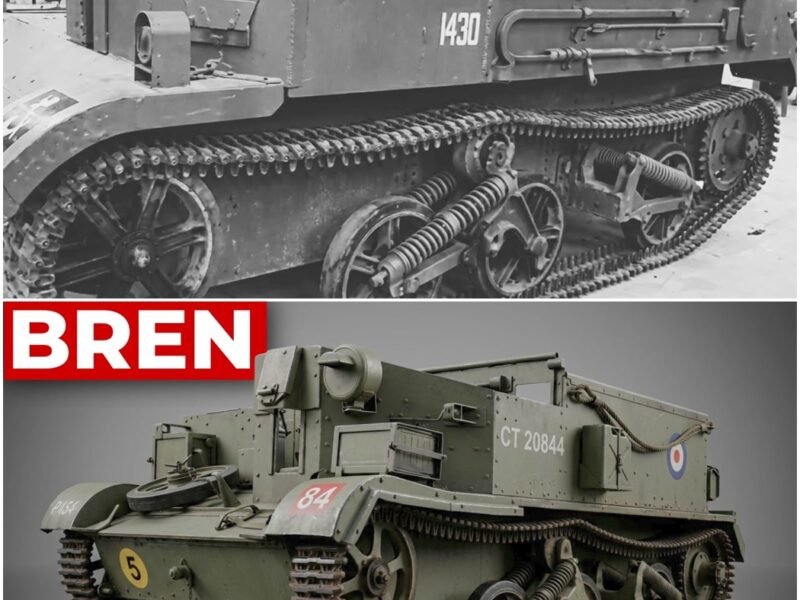
The Empire would protect its dominions. This assumption shaped everything. Artillery and heavy equipment was minimal. There was no industrial base for it. There was no perceived need for one. The vehicle Australia had imported in small numbers was the British Universal Carrier. It traced its lineage to 1930s Vickers designs refined through experimental work by a British engineer named John Carden in the 1920s.
By 1940, the Universal Carrier had become the standard British light tracked vehicle across all theaters. It was open-topped. It carried a crew of two to five. It was powered by a Ford V8 engine producing roughly 85 horsepower. It weighed approximately 3.75 tons. Its armor ranged from 7 to 12 mm. It could reach speeds of approximately 48 km/h.
It was never designed to be a tank. It was a weapons platform, a supply vehicle, a reconnaissance tool. It carried a Bren gun or a Vickers medium machine gun. It moved ammunition forward. It towed anti-tank guns into position. In the right circumstances with the right crew, it was extraordinarily useful. In the wrong circumstances, it was a death trap.
Australia had imported enough examples to study the design. When the supply lines closed, Australian engineers did not wait for permission. They began copying it immediately. The first attempt, designated the LP1, began in 1940 at the Victorian Railways Newport Workshops in Melbourne.
Engineers worked from a single imported Bren Carrier number two, Mark one. They reverse engineered it, adapted it for local construction methods, and built 160 examples using riveted construction, because that was what Newport’s machinery could initially produce. The LP1 was a starting point, not a finished product.
Australian engineers identified problems almost immediately. The riveted construction was time-consuming. The design needed adaptation for the heat, the humidity, and the terrain of the Pacific. The LP2 followed quickly. The LP2 used welded construction throughout. Australian engineers at the Broken Hill Proprietary Company, working under a metallurgist named Bishop, developed a locally produced armor steel designated Australian Bulletproof Plate number three, ABP3.
It matched the protection standard of British rolled homogeneous armor. It could be welded on Australian manufacturing lines. It did not need to be imported. The hull itself was modified. The glacis plate, the angled front armor, was given a steeper slope than the British original. A longer, higher air scoop was fitted above the engine compartment to combat the overheating problems that afflicted the original Ford V8 in tropical conditions.
The steering system was refined. The LP2 used a 1938 type Ford rear axle. A subsequent variant, the LP2A, used a 1940 type axle, which was more robust under sustained operational use. These two subtypes look nearly identical from a distance. Mechanically, they are distinct vehicles. The Canadian-built Ford 239 cubic inch side-valve V8 engine, the same basic power plant as the British original, was retained.
It was the one major component that could not yet be manufactured domestically at scale. Everything else, the hull, the armor, the running gear, the tools, the stowage, was Australian. Production was organized across five facilities in four states. The Victorian Railways Newport Workshops in Melbourne acted as the primary coordinating contractor supported by 644 subcontracting firms.
The South Australian Railways Islington Workshops ran a parallel production line. The Metropolitan Gas Company’s Fitzroy facility in Victoria contributed carrier production alongside its regular industrial work. Ford Motor Company’s Homebush plant in New South Wales joined the program. From 1943, the State Engineering Works in North Fremantle, Western Australia added further capacity.
According to the official Australian history of wartime industry written by David Philip Mellor, the Newport Workshops produced 4,023 machine gun carriers together with spare parts for a further 5,583. The Islington Workshops produced an additional 1,560. Total local pattern carrier production across all marks and variants reached approximately 5,000 to 5,600 depending on how specialist derivatives are counted.
These figures should be understood as representing the best available official record. Some secondary sources cite slightly different totals reflecting different counting methodologies. These were not small numbers for a nation that had possessed no armored manufacturing capacity four years earlier. Specialized variants followed.
A lengthened LP2 hull was modified to carry a QF 2-pounder anti-tank gun in a rear traversable mount designated the 2-pounder attack carrier. Approximately 200 were built for training and home defense. A 3-in mortar carrier variant was also produced with around 400 completed, some of which was supplied as military aid to nationalist China.
If you are finding this examination of Australian wartime engineering valuable, hit subscribe. It takes a second, costs nothing, and every subscription helps the channel continue producing content like this. The LP2 reached the front line before many of its production difficulties had been fully resolved. The first operational deployments went to the cavalry regiments of the 6th, 7th, and 9th divisions of the 2nd Australian Imperial Force, serving in the Western Desert of Libya and Egypt in 1941 and 1942. In the desert, carriers operated in the conditions they were designed for, open terrain, clear fields of fire, reliable supply lines. They performed adequately. The desert was not where their limitations would be exposed. The Pacific was different in every way. The New Guinea campaign fought from mid-1942 onward, presented terrain that no armored vehicle designer in Britain had ever seriously contemplated. Dense tropical jungle, ground that was not ground at all, but a saturated mat of
roots, mud, and rotting vegetation. Humidity that corroded metal within weeks, temperatures that caused engines to overheat within minutes of sustained running, rivers without bridges, tracks too narrow for anything wider than a man carrying a rifle. The LP2 was committed to New Guinea because there was nothing else.
The M3 Stuart light tanks requested from the United States either had not arrived or were lost in transit. At Buna, on the northern coast of Papua, the 32nd United States Division and the 7th Australian Division had been grinding against prepared Japanese defensive positions for weeks with almost no armored support.
The losses were severe. The Japanese defenders, dug into bunkers constructed from coconut logs, were proving nearly impervious to infantry assault without armor or artillery. A platoon of Australian Bren carriers was ordered forward as a substitute for tanks. On December 5, 1942, five carriers moved up to lead an American assault along the coastal track toward Cape Endaiadere.
The senior American commander present, Lieutenant General Robert Eichelberger, had reportedly overridden an Australian officer’s warning about committing the carriers in this role. The open tops, the thin armor, the absence of overhead protection, everything the warning had specified, came to bear within 20 minutes of the assault beginning.
Japanese infantry had positioned snipers in the coconut palms above the track. Grenades were thrown directly into the open-topped fighting compartments. Fire from prepared positions struck the carriers from multiple angles simultaneously. All five were knocked out. The attack stalled. Overnight, Japanese troops stripped the wrecked carriers of their machine guns and turned them against the Australian and American positions they had just tried to attack. It was a catastrophe.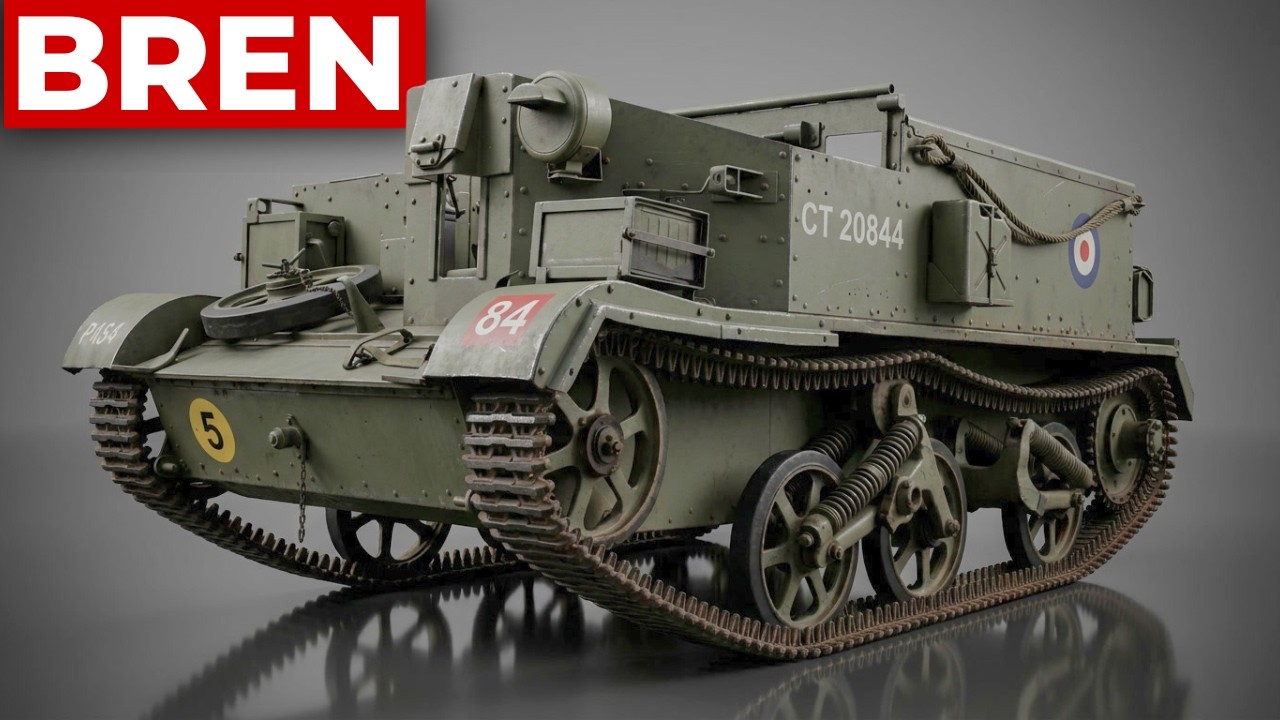
It was also instructive. The Universal Carrier and its Australian LP2 variant was not a tank. It had never been designed as one. The attempt to use it as one at Kap and Dya Daya reflected a desperate shortage of proper armor, not a failure of the vehicle on its own terms. General Cyril Clowes, commanding at Milne Bay, had made exactly this point earlier in the campaign.
The carriers were too lightly armored and the crews too exposed for assault operations against prepared positions. The army absorbed this lesson. When the six frontline Australian formations were reorganized as jungle divisions in 1943, the carrier platoons organic to each infantry battalion were disbanded.
Instead, a single divisional carrier company was assigned to each division. The LP2’s role was redefined. It would move supplies forward. It would carry ammunition to forward positions that wheeled vehicles could not reach. It would defend rear areas. It would perform limited reconnaissance tasks. It would not lead assaults against bunkers defended by Japanese infantry with grenades.
In this redefined role, the LP2 performed reliably. Divisional carrier companies operated throughout the Ramu Valley, the Markham Valley, and the Sepik region. In April 1944, a platoon from the 11th Division’s carrier company was transported forward by aircraft to engage an isolated Japanese force.
The carriers provided the mobility and firepower to resolve the situation without the infantry casualties that a foot patrol would have required. The LP2 reached Borneo in 1945, supporting the 7th and 9th Divisions during the landings at Tarakan in May, Labuan and Brunei Bay in June, and Balikpapan in July. At Balikpapan, carriers worked alongside Matilda infantry tanks to clear the town and the surrounding oil installations.
The carriers’ speed and maneuverability complemented the Matilda’s heavier protection and firepower. Working together, they performed the role each vehicle was designed for. One LP2A holds a particularly remarkable history. Serial number 1022, Army registration T16574, was dispatched with Gullforce to Ambon in late 1941.
When Japanese forces took the island in February 1942, the carrier was captured intact. The Japanese painted a rising sun emblem on its hull and used it for the remainder of the war. Australian forces recovered it from a dump near the Ambon wharf in late 1945. Its hull plate above the machine gun aperture is pierced by shrapnel.
It now forms part of the collection of the Australian War Memorial in Canberra. The LP2’s battlefield record was mixed. Honest assessment requires saying so. It was not the most effective armored vehicle of the Pacific War. It was not feared by Japanese commanders the way the Matilda was feared at Milne Bay, where the Matilda’s armor proved completely immune to every Japanese anti-tank weapon available.
The LP2 was exposed. It was vulnerable. In the wrong terrain, against the wrong threat, it was lethal to its own crews. But to measure the LP2 purely by its combat performance misses the deeper significance of what it represented. The British Universal Carrier, built in the United Kingdom, Canada, the United States, and New Zealand, was produced in numbers exceeding 113,000 units.
Across all variants and all nations, Australia’s LP2 production of roughly 5,000 represented a modest fraction of that global total. Against the British domestic production figure of approximately 57,000, the Australian number looks small. Against Australia’s own industrial baseline in 1940, the number looks like a miracle.
In 1940, Australia had no armored vehicle production, no welded armor fabrication, no tracked vehicle assembly, no established supplier networks for military specification steel, optics, or running gear. Within 3 years, five manufacturers across four states were producing finished armored fighting vehicles.
644 subcontracting firms had been drawn into the program. A metallurgist had developed a domestically produced armor steel from scratch. Railway workshops had been retooled for precision military fabrication. The workforce had expanded enormously. And the women who entered munitions factories in these years constituted more than half of the munitions workforce at its peak of roughly 60,000 workers in 1943.
General Motors Holden’s, which coordinated major Australian munitions production contracts during the war, expanded its South Australian supplier base from 190 firms to 350 by 1942. The skills, the supply chains, the workforce, the factory floor culture built during wartime production did not disappear when the war ended.
General Motors Holden’s produced Australia’s first mass-produced domestic automobile, the Holden 48215 in 1948. The workers who built it had learned their trade in part on wartime military production. Decades later, that industrial inheritance extended further. The Bushmaster Protected Mobility Vehicle, manufactured by Thales Australia and entering service with the Australian Army from 2005, is a direct institutional descendant of the wartime decision to manufacture armored vehicles domestically. The LP2 did not cause the Bushmaster to exist. But the manufacturing culture, the defense industrial infrastructure, and the national confidence to undertake indigenous armored vehicle production, all of it traces line back to Newport workshops in 1941. After the war, surplus LP2 carriers were sold at low prices to civilian buyers, mostly farmers who wanted the Ford V8 drivetrain for other uses. Most were stripped, many were destroyed. The type served briefly in the Korean War, with
the 3rd Battalion, Royal Australian Regiment operating Universal and LP series carriers during the fighting of 1950. Photographs held by the Australian War Memorial record carriers of the battalion in Korea crewed by craftsmen of the Royal Australian Electrical and Mechanical Engineers. Surviving examples can be seen today at the Royal Australian Armoured Corps Memorial and Army Tank Museum at Puckapunyal in Victoria, the Australian War Memorial in Canberra, the Australian Armor and Artillery Museum in Cairns, Queensland, which holds an LP2, a 2-pounder attack carrier, and an LP4 armored car, and the Army Museum of Western Australia in Fremantle. Examples also survive in private collections in Australia and in British collections including the Wheeled Foundation. The Ambun vehicle at the Australian War Memorial remains the most historically significant survivor. The only LP2 known to have been captured and operated by Japanese forces, February 15th, 1942. Singapore has fallen. The supply lines are gone. Australia is facing the most
serious strategic threat in its history with an armored infantry that amounts to little more than a handful of obsolete tanks and a few imported carriers. The LP2 was underpowered for assault work. Its armor was too thin for sustained direct fire engagements. Its open top left the crew exposed to snipers and grenades.
It was never suited to the conditions it was asked to fight in on the Papuan coast and yet it served. It moved supplies through jungle that wheeled vehicles could not penetrate. It carried ammunition to forward positions where men would otherwise have carried it on their backs. It supported the final campaigns of the Pacific War across New Guinea and Borneo.
5,000 of them were built in factories that had never produced an armored vehicle before by a workforce that learned armored manufacturing from scratch using armor steel that Australian engineers developed because there was no one else to develop it. Britain could not send vehicles. Australia built its own. That decision made under threat of invasion in the first months of 1941 produced not just a carrier, but an industry.
Not just an industry, but a capability. Not just a capability, but a precedent that Australian defense manufacturing has drawn on ever since. That is not improvisation. That is what a nation under pressure looks like when it decides to build rather than wait.