Why This ‘Invincible’ Russian Armoured Car Became The Most Captured Vehicle In Ukraine D
February 25th, 2022. A bridge over the Urpin River northwest of Kiev. 80 Russian special police officers from Karovo Oblast are moving at speed. Three Kamaz 6×6 trucks. A Soviet era Gaz 66. A BTR armored personnel carrier and one Gaz Tiger armored car. They have been told this will be a parade.
They have been told Ukraine will collapse overnight. One officer would later tell his Ukrainian captives that he was not entirely certain he was even inside Ukraine until the night before. They are moving as if the war is already over. It is not over. Ukrainian forces have them surrounded.
Anti-tank missiles and mortar rounds crash into the column on the bridge approach. The convoy strung out and exposed has no answer. When the firing stops, 77 of the 80 men are dead. Three survive. The GAZ Tiger, Russia’s answer to the American Humvey, its flagship light armored vehicle, is burning on a frozen road outside Kiev.
It has been in service less than 20 years. It will be destroyed, abandoned, or captured hundreds of times more before 2024 is over. Its designation was the GAZ2330, and it was the most captured military vehicle on the modern battlefield. To understand why the Tiger failed so comprehensively in Ukraine, you need to understand the problem Russia faced in the late 1990s.
The second Chetchin war began in 1999, and it was brutal. Russian Oman and so special police units, the same kind of units that would die on the urban bridge 23 years later, found themselves fighting block byblock in Grony with UAZ 4×4 jeeps and canvas topped trucks that offered nothing in the way of protection.
The Soviet era BRDM2 scout car was armored but slow, complex, and too large for narrow urban streets. The heavy BTR80 was a full armored personnel carrier, expensive and crew intensive. Russia had nothing in between. Nothing fast, nothing light, nothing armored enough for a checkpoint patrol, but agile enough to chase a pickup truck through a mountain village.
America had solved this problem in 1984 with the HMMWV, the high mobility multi-purpose wheeled vehicle, the Humvey. Russia watched American forces roll those vehicles across Iraq, across Somalia, across Kosovo, and made a decision. Russia would build its own. The irony is that it was not Russia’s idea.
In the late 1990s, the United Arab Emirates approached the Gorki automobile plant through their Bing Jaba Group with a contract worth roughly $60 million. They wanted a desert patrol vehicle in the Humvey mold, a fast modular 4×4 with an open turret ring and enough armor to stop rifle fire. Gaz built three prototypes and unveiled them at the defense exhibition IDX 2001 in Abu Dhabi.
The vehicles looked exactly right, aggressive, squared off with a high roof line and a prominent turret hatch. The UAE ultimately took their money and went to Jordan, developing what became the Nimra vehicle. GAZ kept the design. They offered it to Moscow. Moscow bought it. The Russian army officially adopted the GAZ 2975 in late 2006.
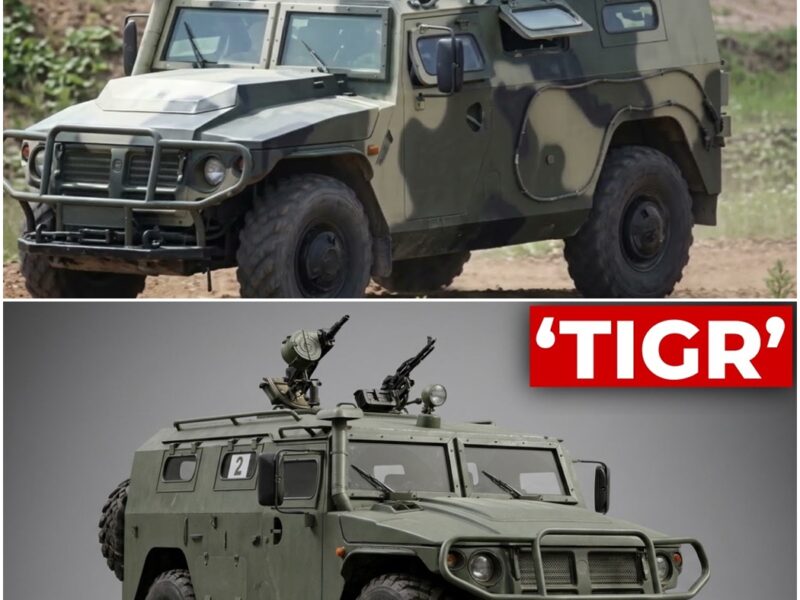
Serial production began at the Arma’s machine building plant in 2007. Within 3 years, it was rolling through Victory Day parades on Red Square. Within 5 years, it was the symbol of Russian military modernization. Within 10, it was in Syria. The vehicle itself was an impressive piece of practical engineering designed for the demands of the Russian military environment rather than a western export market.
The Gaz Tigga M, the primary military variant, weighed 5,300 kg and measured 5.7 m in length. The power plant was a Yamz 534 diesel engine rated at 215 horsepower. Purpose selected to function at temperatures as low as -50° C, a requirement no American Humvey had ever needed to meet.
Range was approximately 1,000 km on a full tank. Ground clearance was 400 mm, meaning it could fordge streams 1.3 m deep and cross ground that would defeat a civilian 4×4 without difficulty. Automatic central tire inflation allowed the crew to adjust tire pressure without stopping. Armament was carried on a pintal mounted roof ring that could accept a 7.
62 mm PKP machine gun, a 12.7 millm cord heavy machine gun, or a 30 mm AGS 17 automatic grenade launcher. Later variants introduced the Arbblelet DM remote weapon station, a fully enclosed turret system with television and thermal optics and laser range finding capable of engaging targets at 2,500 m.
operated entirely from inside the vehicle. The Tiger M seated two crew and seven dismounts. Its cabin was fully enclosed with armored glass rated against small arms fire. A military vehicle that could sprint at 140 km/h, carry a full squad, mount a heavy machine gun, and operate in conditions that would kill a Western engine. On paper, it was formidable.
The problem was what the paper did not say. The armor on the Tiger M was 5 mm of heat treated welded steel. That is the thickness of a standard metal door. It meets NATO stand 4569 level two, meaning it will stop 7.62 mm ball ammunition at close range and deflect artillery shell fragments. It will not stop 7.
62 mm armor-piercing rifle ammunition. It will not stop a 12.7 mm DSHK round. It will not stop an RPG7. And its mine protection, rated for approximately 0.6 6 kg of TNT equivalent beneath the hull is not in the same category as any purpose-built mine resistant vehicle in any Western inventory.
The Tiger was not designed to survive a peer war. It was designed to outrun a low inensity insurgency. Russia chose speed and mass production over protection. They chose cost over survivability. A Tiger M cost the Russian government roughly 1/3 the price of an equivalent Western protected mobility vehicle.
Russia could buy hundreds of them. The philosophy was coherent for the wars Russia expected to fight. Chchna, Georgia, Central Asian stability operations, checkpoint duties in occupied territories. It was not coherent for Ukraine. Now, before we get into where the Tiger met the war, it was never designed to fight.
If you are finding value in this kind of deep analysis of modern military hardware, hit subscribe. It costs nothing. It takes 1 second and it helps the channel continue producing this kind of content. The Tiger first appeared in a genuine combat role during the seizure of Crimea in February 2014.
Vehicles from the 22nd Guard Spettznaz brigade appeared on the streets of Sevastapole alongside the so-called little green men. The unmarked Russian special forces whose presence Moscow initially denied. The Tigra looked lethal. It looked like Russia had arrived. In the absence of any real resistance, it performed exactly as advertised. Syria followed.
From 2015 onward, Russian military police deployed to Syria with Tigers as their primary vehicle. The Chetchin and English battalions that patrolled the M4 highway, escorted humanitarian convoys, and provided security around May air base relied on the Tiger almost exclusively. Russian state media broadcast footage of these patrols constantly.
The Tiger was used to project a specific image, modern, capable, controlled. The vehicles were clean and freshly painted. The soldiers in them looked confident. What state television did not broadcast was the IED that detonated beneath a Russian military police tiger near the town of Ain al-A in northern Syria in June 2020.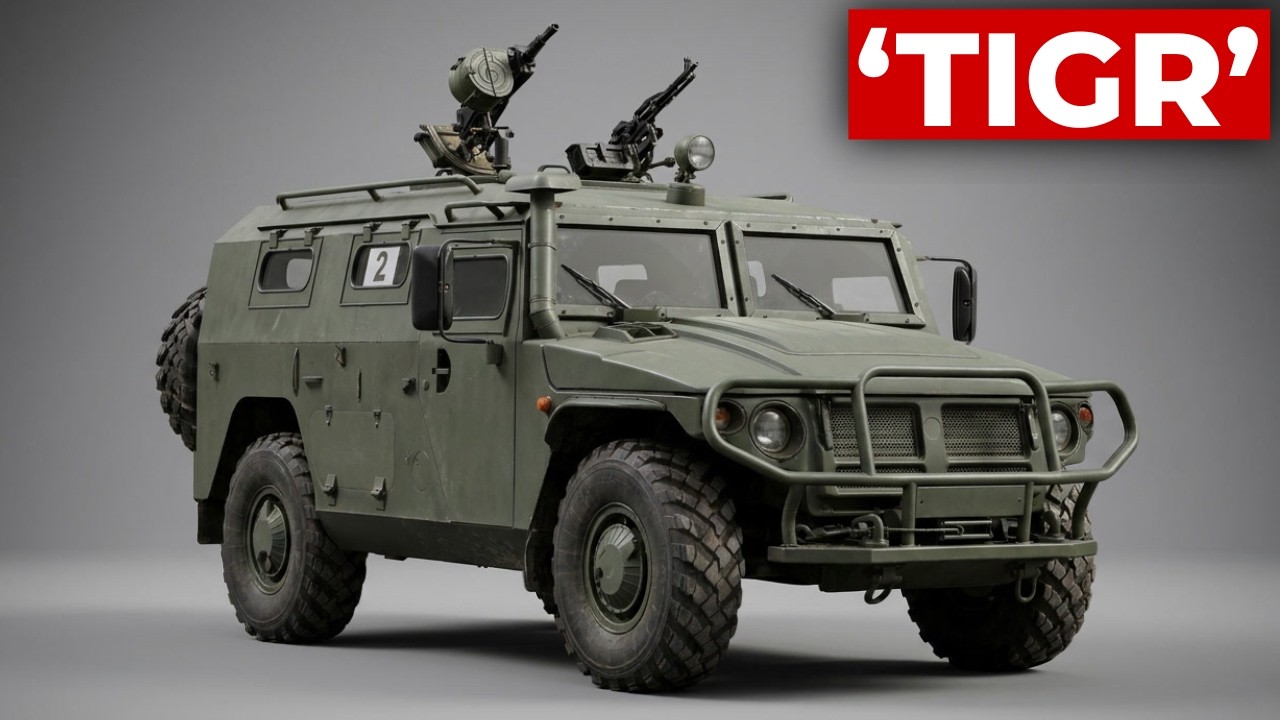
The vehicle was significantly damaged. Russian sources denied casualties, nor did it broadcast the Syrian Arab army ti captured intact by rebel forces during the fall of the Assad regime in late 2024. The vehicle that Russia had supplied for a decade as a symbol of Damascus’s military legitimacy was now displayed as a trophy by the forces that ended that regime. These were warnings.
They were not heeded. February 24, 2022, Russia invaded Ukraine with a force doctrine built on the assumption of rapid collapse. Tigers led reconnaissance columns. Tigers transported Rosvadia special police who expected to secure Ukrainian police stations within hours. Tigers raced ahead of armored columns on roads they had been told would be undefended.
They were wrong on every count. The Urin Bridge ambush was the first catastrophic demonstration of what happens when a lightly armored vehicle meets a prepared defense. It was not the last. In the Zapia region in May 2022, Ukrainian forces destroyed a Russian convoy, including two Tigers using artillery and anti-tank missiles.
In the Kharkiv region, Ukrainian border guard drone units of the Phoenix Battalion began systematically hunting tigers with firstperson view drones costing roughly $400 each, filming the strikes and uploading the footage. A vehicle worth roughly $65,000 carrying a crew of trained soldiers destroyed by a commercially sourced drone assembled in a warehouse.
The open- source tracking organization Orex, which documents only visually confirmed equipment losses, recorded 83 TigerM vehicles and six standard Tigers destroyed, damaged, abandoned, or captured by Ukrainian forces within the first 6 months of the invasion alone. By late 2024, the confirmed capture figure stood at 29 Tigerm vehicles and eight standard Tigers seized intact by Ukrainian forces.
Total losses, including destroyed and abandoned vehicles, are estimated by independent analysts to exceed 100 units. Ukrainian brigades repainted them and drove them back against their former owners. The 14th separate mechanized brigade was among the first documented Ukrainian units to operate captured Russian Tigers in combat.
The vehicle designed to project Russian military power was now firing back at Russian positions. Russia responded. The adaptations accelerated across 2022 and 2023 with a kind of desperate improvisation that told its own story. First came the Arbolate DM remote weapon station, already in limited use before the war, rushed into broader deployment so that roof gunners no longer had to expose themselves to fire the mounted weapon.
Then came crude bolt-on steel plates welded over windcreens, wheel arches, and door panels by frontline crews. Then came the anti- drone cage structures, the so-called cope cages welded above the roof to detonate firsterson view drone warheads before they reached the hull. Then on the 14th of August 2023, the Russian Ministry of Defense placed a formal production contract for the uparmored Tiger MPN variant, quickly nicknamed the Mad Max Tiger by Western analysts for its improvised appearance.
The first of these vehicles was spotted in Ukraine on the 9th of October 2023. It arrived with extra armor plates and reduced rear seating. It was still rated below Stannig level 3. It was still vulnerable to any serious anti-armour weapon. The comparison with the vehicles Russia faced in Ukraine makes the design gap impossible to ignore.
The American HMWV, the vehicle the Tiger was originally conceived to match, had itself been found inadequate in Iraq and Afghanistan and replaced in frontline roles by the MRAP, the mine resistant ambush protected vehicle, specifically the Oshkosh MATV, and later the joint light tactical vehicle.
These platforms were heavier, slower, and more expensive. They were also dramatically better protected. A vehicle that survives an IED and returns to base is worth more than three vehicles that do not. Ukraine received Turkish BMC Kirpy MAPS purpose-built with V-shaped hulls designed to deflect mine blast away from the crew.
A Ukrainian serviceman interviewed after combat near Vuluadar described his Kirpie absorbing two firsterson view drone strikes to the front and driving out of the contact area. A former Turkish soldier who had served on joint patrols with Russian forces in northern Syria put it plainly when interviewed by Defense Blog.
He stated that the Tigers had weak armor and almost no mine protection and that Russian commanders had insisted on putting Turkish Kurpus at the front of every convoy, not their own vehicles. Russian commanders knew they had known since Syria. They had known since the first Chetchin war, which is why the requirement for a better protected vehicle was written into Russian procurement plans as early as 2012 with the VPK 3927 Vulk program.
The Vulk was heavier, slower, and significantly better protected than the Tiger. Russia canceled it twice because the Tiger was cheaper, and Ozarmas was already producing it at scale. Cost one, soldiers paid for it. The Azama’s machine building plant increased Tiger production significantly after February 2022.
Russian Defense Minister Sergey Shyigu publicly stated in July 2023 that deliveries from Alzarmas had doubled compared to pre-war levels. Tigers continued to roll out of the factory. They continued to roll into Ukraine and they continued to be destroyed, abandoned, and captured at a rate that suggests the production increase was compensating for losses rather than building a surplus.
23 countries have operated the Gaz Tiger in some form. China licensed production under the designation YJ2080C and used Chinese-built examples at the 2008 Beijing Olympics. Bellarus produces a near clone called the Lisp PM at the Minsk Wheel Tractor Plant. Uruguay operates a small fleet for its Republican Guard.
Slovakia, a NATO member state, purchased a batch for its police service in 2016. The vehicle sold itself internationally on the same terms it sold itself to Moscow. Affordable, capable in low inensity environments, impressively specified on paper. None of those customers have tested it against FPV drones and Stugnip anti-tank missiles in a contested peer environment.
Ukraine has provided that test. The results are documented, confirmed, and publicly available. Return now to the Urpin Bridge. February 25, 2022. The Tiger is burning. 77 men are dead. The three survivors include a special rapid response unit Lieutenant Colonel who did not know he was in Ukraine until the night before. The vehicle that Russia built to replace the Humvey.
The vehicle that marched through Red Square that patrolled the highways of Syria that was exported to 23 countries as evidence of Russian defense industry capability has been annihilated inside 48 hours of the war. It was supposed to demonstrate Russia could win. The Tiger was fast. It was reliable in extreme cold.
It could carry a squad and mount a heavy weapon on the right road in the right war against the right enemy. It was exactly what Russia needed. It had no V-shaped hull. It had no MAP grade mine protection. It had no answer for a $400 drone. It was designed for an insurgency and sent against a peer army.
Hundreds of units destroyed, dozens captured and turned against their former operators. An up armor program launched in panic 2 years too late. A production doubling that could not keep pace with attrition. That is not bad luck. That is the consequence of choosing procurement doctrine over battlefield reality for 30