Why This Jeep Became the Deadly Weapon That Made the SAS Unstoppable in the Desert D
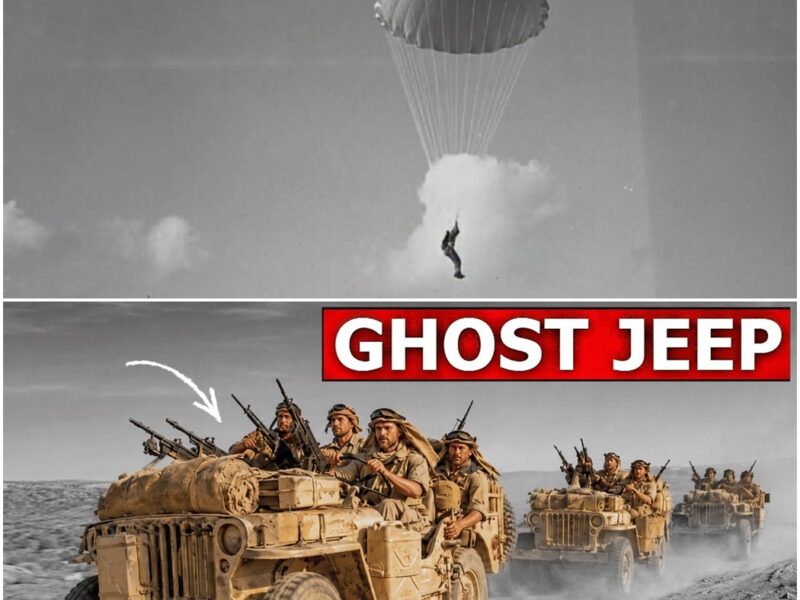
Libya, 3:07 a.m., July 27th, 1942. 18 Jeeps tear across the desert at 50 mph, no headlights, just starlight and mathematics. Inside the vehicles, SS operators grip sun compasses. Behind them, dozens of Vickers K machine guns point forward. Ahead, 60 German aircraft sit parked in neat rows, sleeping, defenseless, about to burn.
8 minutes later, 37 aircraft destroyed. Zero casualties. The attackers vanish into darkness like ghosts. This actually happened multiple times for 18 months. Between December 1941 and May 1943, small SAS teams destroyed between 250 and 400 Axis aircraft across North Africa.
More aircraft than entire RAF bombing campaigns. Cost? Minimal ammunition and fuel. Damage? Tens of millions of pounds in obliterated war machines. The Luftwaffe called them taxi drivers, an insult that became legend. Because these taxi drivers humiliated the most feared air force on Earth by doing something everyone said was impossible.
They attacked airfields from the ground, not the sky. They navigated 200 miles of trackless desert using only stars and math. They appeared where no defense existed and disappeared before response arrived. And the craziest part? The Germans never adapted. Not after the fifth raid, not after the 20th, not after the 50th.
They kept making the same mistake, defending the sky while leaving the ground wide open. This is the story of the SAS desert raids, the birth of modern special forces, the moment a handful of unconventional warriors changed warfare forever. And it starts with one question that haunted Rommel until his death.
How can you fight an enemy who who from nowhere? The gentleman gambler will weaponize your summer 1941. North Africa, the British Eighth Army is getting destroyed. Rommel owns the desert. His Africa Corps steamrolls through Cyrenaica to Brooke besieged, Egypt threatened. RAF bleeding aircraft faster than factories can replace them.
The math is brutal. Every British attempt to bomb Axis airfields costs six bombers for every one aircraft destroyed on the ground. Six to one, unsustainable, suicidal. High command knows it. But they have no alternative. Enter Lieutenant David Stirling, age 25, height 6′ 6″. Background, Scottish aristocrat failed artist, professional gambler.
His military record, mediocre at best. Shows up late to formations. Hates parade drills. Gets nicknamed the giant sloth by his own men. But Stirling has one advantage nobody else possesses. He understands probability. And the probability of winning this war through conventional bombing? Zero. July 1941, Stirling breaks his back in botched parachute training.
Stuck in Scottish military hospital, Cairo. Bored, angry, thinking. That’s when the idea hits. Current strategy costs 300,000 pounds per raid. Destroys maybe three aircraft. Loses six bombers. Murders dozens of trained crew. Alternative? Send five men on foot. Plant bombs on parked aircraft at night.
Cost? 500 pounds in explosives. Result? 30 aircraft destroyed, zero casualties. The mathematics are irrefutable. Small teams if attacking undefended targets multiply effectiveness by 100 to 1. High command thinks he’s delusional. No officer will give him a meeting. So Stirling does what any reasonable person would do.
He breaks into Middle East Command headquarters on crutches, sneaks past guards, limps into deputy chief’s office unannounced. General Neil Ritchie looks up, should court-martial him immediately. Instead, Ritchie reads the memo, sees the math, makes the call that births modern special forces. According to official correspondence now in the national archives, Ritchie wrote this, “Lieutenant Stirling’s proposal is unorthodox to the point of madness, but our orthodox methods are failing.
” “I am authorizing formation of L Detachment, Special Air Service Brigade. Six officers, 60 men. If they fail, we lose 66 men. If they succeed, we change this war.” Here’s the twist. The Special Air Service Brigade didn’t exist. It was a bluff. British intelligence created fake radio chatter about 1,200 paratroopers to scare the Axis. In reality, nothing.
Just smoke and mirrors. Stirling hijacked the fake name for his 66-man unit. The entire SAS started as a lie inside a deception inside a gamble. And it worked so well that German intelligence diverted resources to counter unit that didn’t exist before the real SAS even conducted their first operation.
Stirling recruits his killers carefully. First choice, Lieutenant Blair “Paddy” Mayne, Irish, former rugby international, Oxford educated, published poet, also the most violent man in the British Army, arrested three times for bar fights, once punched a superior officer. Avoided court-martial only because of rugby fame.
Stirling asks him one question, “Do you want to kill Germans or salute them?” According to Mayne’s diary, now held at the Imperial War Museum, he answered like this, “I told him I’d follow him to hell if it meant I could strangle Nazis with my bare hands instead of standing at attention for incompetent officers.” He smiled and said, “Perfect.
You’re in.” Paddy Mayne would personally destroy over 100 aircraft during his SAS career, more than any single RAF pilot in North Africa. Third recruit, Lieutenant Jock Lewes, Welsh, Oxford rowing champion, brilliant engineer. Lewes has one obsession, create the perfect bomb for destroying aircraft. He experiments for months, thermite, plastic explosive, oil mixtures.
The goal? A device small enough to carry 30 of them, powerful enough to melt through aircraft engines, impossible to extinguish with water. In a letter to his sister, Lewes wrote this, “I believe I’ve succeeded. I call it the Lewes bomb. 1 lb of explosive can destroy a 50,000 lb bomber. David says if this works, we’ll burn every Luftwaffe aircraft in Africa.
I think he’s right. The Lewes bomb works. 1 lb thermite devices that stick to fuel tanks. When detonated, they burn at 2,500° C, melt aluminum like butter.” By November 1941, Stirling has his weapons, Lewes bombs, 66 volunteers willing to die, permission to operate behind enemy lines, but he’s missing one critical piece, transportation.
First mission, Operation Squatter, November 16, 1941. Parachute insertion during a sandstorm. Stirling realizes the truth immediately. We need wheels, not wings. Stirling realizes the truth immediately. We need wheels, not wings. That’s when he meets the Desert Rats who’d been doing the impossible for months, the Long Range Desert Group, madmen who mastered navigation in the world’s deadliest ocean, the Sahara.
Major Ralph Bagnold founded the LRDG in 1940. His memoir, Libyan Sands, contains this passage, “The Sahara is an ocean without water. Most see it as barrier, impassable, deadly, empty. We saw it as highway, invisible to enemy, impossible to block, stretching behind every Axis position. Master navigation and you can appear anywhere, anytime.
LRDG teaches SAS three critical skills. Sun compass navigation. Track the sun’s movement, calculate bearing, adjust for magnetic variation, navigate at night using stars, Polaris for direction, Southern Cross for confirmation. According to Mike Sadler, who joined SAS from LRDG, accuracy reached within 5 mi over 200 mi journeys.
Sounds rough, but in desert that big, 5 mi is pinpoint. Water discipline. 1 gallon per man per day in 50° heat, no washing, no shaving. Drink at night only to reduce sweating. If you run out 100 mi from base, you die. No rescue, no mercy. Vehicle modification. LRDG strips Chevrolet trucks to skeleton, removes doors, roof, windshield, adds extra fuel tanks.
Range increases from 400 mi to 1,200. December 1941. Sterling makes a deal with Bagnold. LRDG provides transport and navigation. SAS provides the killing. First combined missions, multiple airfield strikes. December 14th, Paddy Mayne leads the raid on Tamera airfield. The approach takes 8 hours. LRDG navigator Mike Sadler drives in darkness.
No headlights, just compass and stars. At 23:47, they stop 2 km from target. Mayne uses binoculars. Counts 24 aircraft below. Italian guards smoking, laughing, oblivious. Mayne whispers the plan, we split into pairs, north and south flight lines. 30 minutes. Plant loose bombs. If guards spot you, abort and run. They crawl the final kilometer on stomachs.
Italian guards walk past 30 ft away. Maine freezes, hand on knife. Guard doesn’t notice, keeps walking. Maine reaches first aircraft, places Lewis bomb on engine cowling. Sets 30-minute delay fuse, moves to next aircraft, 15 seconds per bomb. At 00:44, SAS withdraws, reaches trucks, drives west slowly, no headlights. At 01:15, first bomb detonates.
Small flash, then massive secondary explosion as fuel ignites. Chain reaction ripples across airfield. 1 2 3 Four explosions light the night. SAS watches from 5 km away, silent, amazed. Maine says quietly, “They work.” According to SAS war diary reference WO 218 136, Tomet raid results read like this.
24 aircraft destroyed, zero SAS casualties. But, here’s the twist that changes everything. The Lewis bombs become obsolete in 3 months. Not because they don’t work, but because SAS discovers something better. January 1942. American Lend-Lease brings Willys Jeeps to North Africa. SAS sees them and has an idea. What if instead of sneaking on foot and planting bombs, we just drive up and shoot everything? The math is irresistible.
Lewis bomb method, sneak 5 km on foot, 2 hours, plant bombs, 30 minutes, sneak back, 2 hours, destroy 10 to 15 aircraft, total time 5 hours. Jeep raid method, drive straight to airfield. 30 minutes, shoot everything, 10 minutes, drive away, 20 minutes, destroy 30 to 40 aircraft, total time 1 hour. Plus, a Vickers K gun on fire, 4,800 rounds per minute.
Incendiary rounds ignite fuel tanks. Same result as bombs, but faster. By February 1942, SAS workshops in Cairo are welding gun mounts onto Jeep chassis. Four Vickers K guns per vehicle, two front, two rear. Loaded with incendiary tracers, the birth of the Blitz buggy, the weapon that makes Rommel rage and Hitler issue illegal orders. The desert pirates.
Weaponizing geography, the deep raids work because of one man, Corporal Mike Sadler, age 21, LRDG navigator seconded to SAS. His skill, navigate 200 miles of featureless desert in pitched darkness, arrive at target within 500 m, 95% success rate. People ask how you navigate without GPS. Sadler’s answer from a 2013 interview, “GPS is just math done by computer.
I did same math by hand. Sun compass gives bearing. The order light gives star fixes. Odometer gives distance. Plot on map, adjust for wind drift, arrive on target. The hard part wasn’t navigation. Hard part was trusting the navigation when your eyes say we’re lost. We’re doomed. Math doesn’t lie. Eyes do.
I trusted math. Never lost a patrol.” Mike Sadler navigated every major SAS raid from 1942 to 1943. Zero mission failures due to navigation error. He survived the war, lived to age 103, died 2024. But navigation alone doesn’t win battles. Jeeps need to survive. That requires engineering obsession.
Enter Sergeant Reg Seekings, SAS chief mechanic. The man who made sure death machines didn’t die mid-raid. Seekings understood something high command didn’t. Raids live or die on maintenance. In a post-war interview from the SAS Regimental Archive, Seekings said this, “People romanticize SAS’s warriors, but Paddy Mayne might kill 100 Germans.
If my Jeep breaks down 200 miles out, we all die, no glory, just vultures. So, I made sure my Jeeps never failed. Zero tolerance for good enough, perfection or death. Under Sea King’s maintenance regime, mechanical failure rate dropped from 18% in early 1942 to the 3% by mid-year. This improvement directly enabled deep raids like Sidi Haneish.
The system comes together. Navigation by Sadler, mechanics by Sea Kings, violence by Main, strategy for systems. Remove anyone, the whole thing collapses. March 1942, first major Jeep raid, Benghazi area. SAS tests the concept. Results, immediate success. 30 aircraft destroyed in one night.
Faster than foot raids, lower risk, higher kill count. But success reveals new problems. The desert isn’t just empty space. It’s an active combatant trying to murder you. Summer 1942, day temperature hits 55° C. Night drops to 5°. 50° swing in 12 hours. This isn’t weather. This is a weapon. Human sweat rate at 55°, 2 L per hour.
Daily water requirement, 8 to 10 gallons per person. Death from heatstroke occurs at 6% body weight loss. You can die in 4 hours without water. According to Sterling’s memoirs, the heat at 2:00 p.m. is unlike anything civilians can imagine. It’s not hot, it’s violent. Air burns your lungs. Metal burns your skin.
Your brain goes fuzzy. Decision-making impaired. We learned don’t fight the desert, respect it. Move dawn and dusk, hide midday, or it kills you. SAS learns the hard way. The desert dictates your schedule, you don’t. All raids happen at night, not for stealth, for survival. Then there’s navigation nightmares.
March 1942, patrol en route to Benghazi, Sadler navigate then sandstorm hits. Within 2 minutes, visibility drops to 10 ft. Can’t see sun. Sun compass useless. Can’t see stars. Theodolite useless. Sterling asks the question everyone fears, “Sadler, where the [ __ ] are we?” Sadler checks compass, does math on paper, responds calmly, “Storm blew us 40° off course.
Wind speed approximately 50 kn for 3 hours. Estimate displacement 12 mi south-southwest.” Sterling presses, “Estimate?” Sadler admits the truth, “Sir, I can’t see the sun. I can’t take star fix. I’m guessing based on wind direction and time. Could be off by 20 mi.” “Fuel status? Half tank. Maybe 100 mi range.
” “Distance to friendly lines?” “If my guess is right, 90 mi. If I’m wrong, we die in desert.” Night falls. Stars finally visible. Sadler takes theodolite reading. Face shows relief. Got a fix. Polaris puts us 15 mi south of intended route. Wind drift was 55 kn, not 50. Adjust bearing to 047°. Sterling asks the question, “You sure?” Sadler’s answer is steady, “I stake my life on it, sir. Drive 047 for 6 hours.
We hit LRDG supply dump.” Sterling responds, “You’re staking all our lives on it.” “Drive.” 6 hours 23 minutes later, jeeps crest dune. Below lies LRDG supply dump. Jerrycans, tents, radio mast. Exactly where Sadler said it would be. The LRDG officer is stunned. “Bloody hell, Sadler.
You navigated through that storm and arrived on time.” Sadler shrugs, “Just the numbers, sir.” The crew cheers. Trust in navigation becomes absolute. But the desert isn’t SAS’s only enemy. There’s a bigger problem, themselves. The men attracted to SAS are perfect for raids, risk-takers, rule-breakers, violence and seekers.
Between raids, they’re disasters. Cairo between operations. SAS men drinking heavily at Shepherd’s Hotel bar. Paddy Mayne arm wrestling Egyptian officer. Laughing, argument escalates. Mayne stands, throws punch, full bar brawl erupts. Military police arrive. Sterling bails Mayne out of jail. “Again, third time this month.
High command wants you court-martialed.” Sterling tells him. Mayne grins through black eye. “Tell them to court-martial me after I kill more Germans. I’m still ahead on the scoreboard.” Sterling learns a critical leadership lesson. You can’t discipline men like Mayne with parade drills and polished boots.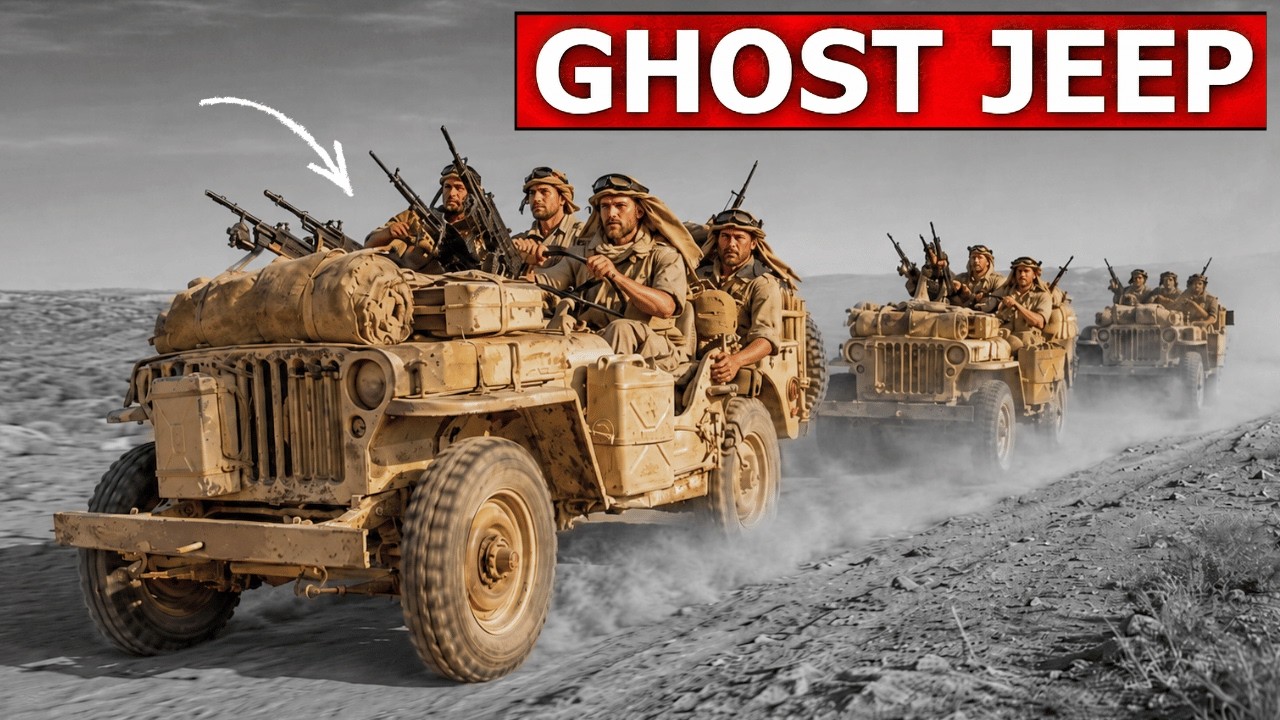
They’ll tell you to [ __ ] off, but you can channel violence, give them targets. Germans, not British officers. From Sterling’s interview. Mayne didn’t need anger management. He needed Germans to kill. Once we gave him that outlet, he was the best soldier I ever commanded. Paddy Mayne’s personal aircraft destruction tally.
47 aircraft destroyed by hand, sneaking into cockpits, ripping out instruments. 22 by loose bombs. 31 by Vickers K from jeeps. Total, over 100 aircraft. More than any single RAF pilot. Mayne’s violence, properly aimed, became SAS’s greatest weapon. Then, mechanical failures threaten everything. June 1942, raid on Boss airfield, 150 miles behind enemy lines.
Jeep number three engine seizes. Smoke pours out. Mechanic investigates. Radiator cracked, overheated. Engine’s [ __ ] Can you fix it? Not here. Need machine shop. We’re 150 miles from friendlies. Leave it? Can’t. It has our water and ammo. Solution? Cannibalize broken jeep. Transfer water, ammo, radio to other vehicles. Rig tow cable.
Tow dead weight at 15 mph. For 9 hours they tow through enemy territory. Speed cut in half. Fuel consumption doubled. Sitting ducks if spotted. but they don’t abandon gear. SAS rule, leave no trace. Take everything. After this near disaster, SAS implements new protocols. Dual radiators for redundancy, condenser coils to recycle steam into water, emergency fan belts made from parachute webbing, spare parts strapped to every vehicle.
According to Stirling, we learned mechanical failure equals death sentence. So, we over-engineered everything. Two radiators instead of one, three spare tires instead of one. Paranoid redundancy. Expensive? Yes, but cheaper than dying. By July 1942, the system reaches perfection.
Jeeps fully weaponized with redundant systems, navigation accuracy at 95%, casualties below 2% per mission, aircraft destroyed per raid, 30 to 40. From amateur hour to deadliest unit in theater, 8 months of evolution. The difference? Treating failure as data, not shame. SAS improvement curve from November ’41 to July ’42 shows mission success rate climbing from 20% to 85%.
Casualties per mission dropping from 25% to 2%. Aircraft destroyed per raid jumping from 8 to 35. Navigation accuracy rising from 60% to 95. They’re ready. Ready for the raid that makes Ronald demand Hitler send commandos to counter commandos. The raid that births modern special forces doctrine.
Operation Hanash, July 26th, 1942. When the desert fights back, July 26th, 1942, 2200 hours. 18 Jeeps carrying SAS operators depart Kufra Oasis. Mission, Operation Hanash airfield, 200 miles northeast. Intelligence reports 60 plus Axis aircraft not Messerschmitt Bf 109s, Junkers Ju 87 Stukas, Ju 88 bombers.
Target value, 3 million pounds in aircraft defenses, light security. Minimal guards, no expectation of ground attack. Perfect. Mike Sadler navigates, bearing 047 degrees. ETA to target 0300 hours. Weather clear, no moon, optimal. Stirling radios all units, radio silence from now. If we’re compromised, scatter and rendezvous at point zebra.
Questions? Silence. Good hunting. Engines rev. 18 jeeps move out in column 0030. Midpoint. Jeeps move through darkness. Headlights off. Sadler checks compass every 10 minutes, makes small bearing corrections. Men silent, tense, checking weapons. One soldier vomits over side, pre-combat nerves. Main grabs his shoulder.
Happens to everyone. You’ll be fine. 0247. Final approach. Convoy stops on ridgeline, 3 kilometers from airfield. Stirling and Main use binoculars. Below lies Sidi Haneish. Rows of aircraft visible in starlight. Count, 37 aircraft on north ramp. 23 on south ramp. 60 total. Guard tent visible.
Two Italian soldiers smoking, laughing. No patrols, no searchlights, no alertness. Stirling whispers, “Sadler, you’re a [ __ ] magician. Dead on target.” Sadler responds, “Sir, I just did the math.” Stirling asks Main, “You see what I see, see?” Main grins like a wolf. Christmas morning. Final briefing. First squadron hits north ramp.
Second squadron hits south ramp. Drive straight in, 50 miles per hour. Guns blazing. Aim for fuel tanks and engines. Incendiaries only. We want fires, not holes. 10 minutes maximum. If QRF shows up, we ghost. No heroics. Archie is killing aircraft, not Germans. Sink watches. 0252. We go at 0300 exactly.
Questions? Veteran soldier asks, “What if they have armor?” Sterling answers, “Then we die fast and expensively, but intelligence says no armor. We trust intel.” Mayne adds, “And if intel is wrong, I’ll kill the intelligence officer myself.” Nervous laughter. 02:57. Mount up. This is it, the moment that changes warfare. 0300. Engines rev.
0303. Jeeps accelerate down slope. 0315. Speed 50 mph. Closing fast. 03:45. Italian guard looks up, sees headlights. Jeeps turn lights on for final approach. Psychological shock. Guard’s face shows confusion, then realization, then terror. 03:47. Guard raises rifle. 03:49. Guard cut down instantly. 03:50.
First Jeeps open fire. Multiple Vickers K machine guns erupt across the column. Tracers light up night like demonic fireworks. Spent casings rain like hail. Tires screech on gravel. Italians scream. “Attacco! Chiesa on a 03:55. First squadron hits north ramp at 45 mph. 03:58. Open fire on first row of BF 109s.
Eight aircraft lined up. First BF 109 hit. Tracers punch through aluminum skin, ignite fuel tank. 03:59. Fireball erupts. Wings blow off. 04:01. Fire spreads to adjacent aircraft parked 20 ft apart. Chain reaction begins. One burning becomes two, becomes four. Sterling shouts over gunfire, “Keep moving! Don’t stop!” Driver yells. 04:10.
Swing around burning aircraft, engage second row. Junkers Ju 87 Stukas. Stukas are tougher, thicker armor, more rounds needed. Focus fire on engine cowling. Thermite rounds ignite oil. 04:15. Stuka engine explodes, propeller flies off, nearly hits Jeep. Gunner screams, “Fuck, too close.” Continue down flight line, firing continuously.
Ammo counter shows 2,000 rounds expended, 50% remaining. Meanwhile, second squadron hits south ramp. 0405, Mayne standing in moving Jeep. Firing twin Vickers Ks like action hero. 0408, Junkers Ju 88 bomber ahead. Large target, massive fuel tanks. Mayne focus fire, 200 round burst into starboard fuel tank. 0410. Explosion so massive it knocks Mayne backwards. Driver catches him.
Debris rains down. Wing section crashes 10 ft from Jeep. Mayne roars, “That’s one. Next.” 0430, Italian ground crew running from tent. Half-dressed, panicked. Some grab rifles, fire wildly, hit nothing. Mayne’s gunner suppresses them. Tracer stream forces them to ground. Mayne re- focuses on aircraft. Priorities clear.
0445, CR.42 Falco fighters. Italian biplanes, older, fabric-covered. Incendiaries ignite fabric instantly. Aircraft burning like torches within seconds. 0450, German officers run from accommodation block. Luftwaffe pilots watch their aircraft burning, helpless. One screams in German, “Someone stop them.
Where is the QRF?” His subordinate responds, “Sir, they’re coming from the desert. We have no defense against ground attack.” Germans scramble to vehicles, but their Kubelwagens are unarmed. No mounted weapons, plus confusion. Which direction did attackers go? 0500, Stirling’s Jeeps complete north ramp circuit. Tally, 19 aircraft burning.
Ammo status, 30% remaining. Stirling radios, “All units, ammo check.” Jeep 3, 40% remaining. Jeep 4, 25% remaining. Jeep five, 50% remaining. We had jams, less firing. Sterling decides. One more pass then we’re out. Main status? Main breathless, exhilarated. 18 confirmed kills south side. Going for 20. 0610.
Sterling sees German QRF assembling. 20 plus soldiers. MG 34 machine gun being set up. Math calculation. If we stay they’ll pin us down. Time to go. Sterling radios, “All units final pass then X-Fill on my mark. 0630. All squadrons converge on center of airfield.” 360° firing. Hitting targets in all directions. Absolute chaos.
30 plus aircraft now burning. Ammunition cooking off inside fuselages. Secondary explosions as bombs detonate. Aircraft were armed for morning missions. 0700. German MG 34 opens fire. Tracers streak off Jeep hood. No penetration. Sasquatch returns fire. Suppresses MG position. Sterling yells, “Smoke now!” Sasquatch smoke grenades.
White phosphorus smoke obscures battlefield. Jeeps accelerate heading west toward desert. Germans fire blindly into smoke. Miss 0730. The convoy clears perimeter. Hits open desert at 60 mph. Look back. City Hanish is inferno. Flames visible for miles. 0815. 18 Jeeps stopped 5 km away.
On ridgeline all crews dismount. Watching airfield burn. Sterling takes binoculars. Counts burning aircraft. North ramp 19, 20, 21. South ramp 14, 15, 16. Total 37 aircraft confirmed destroyed. Silence. Main asks, “Did we lose anyone?” Sterling checks reports from all vehicles. One wound. Shrapnel graze. Non-serious.
Otherwise zero. Pause. Veteran soldier says quietly, “We just destroyed 2 million pounds in aircraft in 8 minutes and nobody died?” Sadler responds matter-of-fact, “That’s the power of attacking where defense doesn’t exist.” But, here’s the twist that changes military history. This wasn’t the first Jeep raid, and it wasn’t the last.
Sidi Haneish was one night in an 18-month campaign. Between December ’41 and May ’43, SAS conducted over 60 airfield raids to Mit, Benina, Berka, Agedabia, Last Tmimi, Marble Arch, Matuba. Same playbook every time. Total aircraft destroyed, 250 to 400. And the Luftwaffe never adapted. You’d think after the fifth airfield got hit, they’d change security protocols.
After the 10th, deploy perimeter defenses. After the 20th, station armor at every base. They never did. Sidi Haneish, the 10 minutes that changed warfare. Why does Sidi Haneish matter beyond the body count? Because it proves a theory that reshapes modern warfare. Conventional warfare theory pre-SAS taught victory equals bigger army, better equipment, more resources, destroy enemy through attrition, accept casualties as cost of war.
Asymmetric warfare theory SAS proves, victory equals exploiting systemic vulnerabilities, destroy enemy capability manpower, zero casualties achievable through design. The math that birthed Delta Force, Navy SEALs, Green Beret. One elite soldier with right system beats 100 conventional soldiers with wrong system.
Sidi Haneish is the proof. Small team, 37 aircraft, zero casualties. Efficiency ratio, infinite. Post-war legacy shows timeline of special forces creation. 1952, US special forces founded, Green Berets. 1962, US Navy SEALs founded, 1977 Delta Force founded, modeled directly on SAS. 1980s, every NATO country creates special forces units, all citing SAS North Africa raids as inspiration.
But there’s deeper significance. As SAS discovers what modern business calls force multiplication, what tech calls leverage, what sports calls asymmetric advantage. Four principles that apply today. First, systems beat heroes. Remove Sadler’s navigation, SAS gets lost and dies. Remove Seeking’s maintenance, Jeeps break down.
Remove Sterling’s strategy, raids become suicide missions. Remove Mayne’s violence, no kills. All four required, no single hero wins, only synchronized systems. Second, attack assumptions, not armor. Luftwaffe assumed airfields attacked from sky. Built entire defense around that assumption. Radar, flak guns, fighter patrols, all pointing up.
SAS attacked from ground, where zero defense existed. Don’t fight enemy’s strength, attack their blind spot. Third, timing beats force. 10% of power at right time beats 100% of power at wrong time. 3:00 a.m. when enemy sleeping beats 3:00 p.m. when enemy alert, every time. Fourth, speed of adaptation beats initial perfection.
SAS went from 20% success rate in November ’41 to 85% by July ’42, 8 months. From disaster to dominant. How? Treat every failure as data. What went wrong? Why did it fail? How do we fix it? Test, fix immediately. No shame, no blame, just iterate. These principles explain why startups beat corporations. Why insurgents beat empires.
Why 12 men destroyed 400 aircraft. Not luck, method. But one question remains unanswered. How did Luftwaffe react? Did they learn, adapt, deploy countermeasures? Or did they do what most organizations do when faced with uncomfortable truth? Deny it, blame others, repeat same mistakes.
Let’s see what German records reveal. The Führer’s rage when denial meets reality, August 1942. After four major airfield raids in one month, Luftwaffe High Command files incident reports. Luftwaffe 2 intelligence report dated August 5th. Now in German Federal Archives, reference RL 885. The report lists three hypotheses.
Hypothesis one, large-scale British commando force estimated 200 to 300 men operating from hidden bases. Assessment, unlikely. No evidence of supply lines. Hypothesis two, local Arab saboteurs armed by British. Assessment, possible. Recommend increased interrogation of local population. Hypothesis three, small British motorized unit with exceptional navigation capability.
Assessment, impossible. No unit could navigate 200 km desert without roads, attack, and escape undetected. Conclusion, most likely explanation is hypothesis two. Recommend harsh reprisals against local civilians to deter collaboration. Signed Oberst Friedrich Wilhelm von Mellenthin, intelligence chief.
Notice the correct answer, hypothesis three, dismissed as impossible. Classic institutional blindness. Reality doesn’t fit doctrine. Therefore, reality must be wrong. But Rommel, frontline commander, not desk officer, sees truth immediately. Rommel’s diary entry, August 12th, from the Rommel papers edited by Liddell Hart.
The British have developed a new form of warfare I have no counter for. Small teams, perhaps 10 to 20 men, appearing deep behind our lines, destroying aircraft with machine gun fire, then vanishing. Intelligence insists this is impossible. But I have lost 60 plus aircraft in 6 weeks. The burning wreckage is very real.
I have requested additional infantry battalions to guard airfields. Armored cars for rapid response. Perimeter fencing and minefields around all bases. Berlin’s response? All reserves committed to Stalingrad. Make do with existing forces. So I am forced to strip frontline units to guard rear areas. This weakens my offensive capability.
The British have found my Achilles heel. I cannot simultaneously attack El Alamein and defend 50 plus airfields across 500 km of desert. These commandos, whoever they are, have achieved strategic impact far beyond their numbers. I would give a division to capture their commander and learn his methods. Rommel gets it, but Berlin doesn’t listen.
That’s when Hitler gets involved. October 18th, 1942. Hitler signs one of the war’s most infamous orders, Der Kommandobefehl, the Commando Order. Nuremberg Trial Evidence Document 498-PS. I’m going to read the actual text, not paraphrased, what Hitler ordered. Führer Headquarters, October 18th, 1942.
Top Secret. Subject: Treatment of enemy commando troops. For a long time, our enemies have been employing methods of warfare which are outside international Geneva Conventions. Especially brutal and treacherous are the commando units trained by the British. I therefore order, from now on all enemy troops encountered in so-called commando operations in Europe or Africa, even if they appear in uniform or surrender, are to be exterminated to the last man.
No prisoners are to be taken. This order applies whether they are landed by ship, aircraft, or appear from the desert. If individual soldiers from such commandos fall into hands of Wehrmacht through other means, they are to be handed over immediately to the SD. Any military commander who fails to comply with this order will be subject to court-martial.
Adolf Hitler, Führer and Supreme Commander of the Wehrmacht. Let that sink in. The most powerful military in the world just issued order to murder prisoners of war. Why? Because 12 men in jeeps made the Führer so angry he violated international law. 1946, Nuremberg trials. The Commando Order becomes exhibit 498 PS, evidence of war crimes.
Prosecutor Telford Taylor stated this in trial transcripts. The Commando Order represents Hitler’s acknowledgement that Germany was losing the unconventional warfare battle. Unable to counter SAS tactics through military means, he resorted to terrorism, executing prisoners to deter volunteers. This order directly violated Article 23 of Hague Convention and Article 4 of Geneva Convention.
It resulted in execution of approximately 100 Allied commandos, including SAS personnel. Field Marshal Wilhelm Keitel, who countersigned this order, was convicted and hanged partly based on this document. The Commando Order is proof that when conventional military systems fail, authoritarian regimes resort to atrocity.
Translation: Hitler admitted SAS won. When you can’t beat them militarily, you threaten to execute them. That’s not strategy, that’s tantrum. Did the Commando Order stop SAS raids? No. David Stirling from post-war interview, 1976. When we learned about Hitler’s order that we’d be executed if captured, it had opposite effect he intended.
Before, soldiers might surrender if mission went wrong. After they knew surrender equals death, so they fought to the death instead. SAS casualties decreased because men took fewer risks. No point in heroic last stands if you’re getting executed anyway. Plus recruitment increased. British soldiers wanted to join the unit Hitler feared most.
The Commando Order was the best recruiting tool we ever had. The SAS recruitment data shows pre-Commando Order January to October ’42 had 150 volunteers. Post-Commando Order November ’42 to May ’43 had 420 volunteers, 180% increase. Hitler’s rage made SAS more dangerous, not less. But here’s the darkest twist. The Commando Order worked once.
Other German commanders weren’t as noble as Rommel. Estimated 70 to 100 Allied commandos executed under the order, including SAS Sergeant John Jack Fairbairn. Captured after vehicle breakdown, executed by Gestapo March 1943. The order didn’t stop the raids. But it did murder brave men. What German documents reveal? Perfect case study in organizational failure to adapt.
German response hierarchy breaks down like this. Front line, Rommel identifies problem correctly. Request resources to solve it. Ignored by high command. Intelligence, Mellenthin dismisses truth as impossible. Blames locals instead. No adaptation. High command refuses resources. Eastern Front priority. Issues illegal order instead of strategy.
Negative adaptation. Hitler, rage instead of analysis, war crime instead of tactics. Catastrophic non-adaptation. Meanwhile, SAS adapted constantly. Lose bombs to Jeep raids, foot patrols to motorized, single aircraft to multiple aircraft. Navigation errors to mathematical precision.
18 months of continuous improvement. Germans, 18 months of denial and rage. That’s the difference between winners and losers. We opened with a question. How did taxi drivers destroy 400 Luftwaffe aircraft? Now you know the answer. It wasn’t the Jeeps, it wasn’t the guns, it wasn’t even the courage. It was four systems working together.
Navigation, Mike Sadler’s math turning impossible desert into invisible highway. Mechanics, Reg Seekings obsession ensuring Jeeps never failed mid-raid. Violence management, Sterling channeling Paddy Mayne’s rage into productive killing. Asymmetric thinking, attacking where defense didn’t exist. Aircraft on ground, not in air.
Remove any of these four, the whole thing collapses. Sadler gets lost, captured. Seeking’s Jeep breaks, stranded. Mayne loses control, court-martial. Sterling attacks conventionally, RAF-style casualties. Success required all four, no heroes, only systems. Luftwaffe called them taxi drivers as insult, but SAS proved taxis beat fighter jets when you attack parking lots, not dogfights.
The lesson, don’t fight your enemy’s strength. Attack their assumption. Four assumptions, all wrong. Cost 400 aircraft, North Africa campaign, ultimately the war. Assumption one, airfields attacked from sky. Reality, attacked from ground. Assumption two, desert is impassable barrier.
Reality, desert is invisible highway. Assumption three, small units can’t matter. Reality, 12 men beat 1,000 with right tactic. Assumption four, we’re safe in rear areas. Reality, no such thing as rear area. Wrong maps kill armies. You’re thinking cool history, but I’m not fighting Nazis in Jeeps. Fair. But these lessons apply everywhere.
Size doesn’t matter, system does. SAS beat Luftwaffe because they adapted faster, attacked smarter, and trusted math over emotion. Attack assumptions, not armor. Blockbuster assumed physical stores. Netflix attacked distribution. One’s bankrupt, one’s worth billions. Trust data over gut.
Sadler navigated by math when panics turned back. 95% accuracy, zero navigation failures. Master timing. 3:00 a.m. beats 3:00 p.m. Product launch when competitors vulnerable beats launch when market’s crowded. Design for zero casualties. As SAS proved, most losses come from bad systems, not bad luck. Channel energy, don’t suppress it.
Mann didn’t need anger management. He needed Germans to kill. Speed of learning beats initial perfection. As SAS went from 20% success to 85% in 8 months by treating failure as data. These principles explain why startups beat corporations, why insurgents beat empires, why small teams destroyed 400 aircraft. Not luck, method.