Why This ‘Luxury’ American Armored Truck That Looked Like A Police Van Guarded Nuclear Bombs D
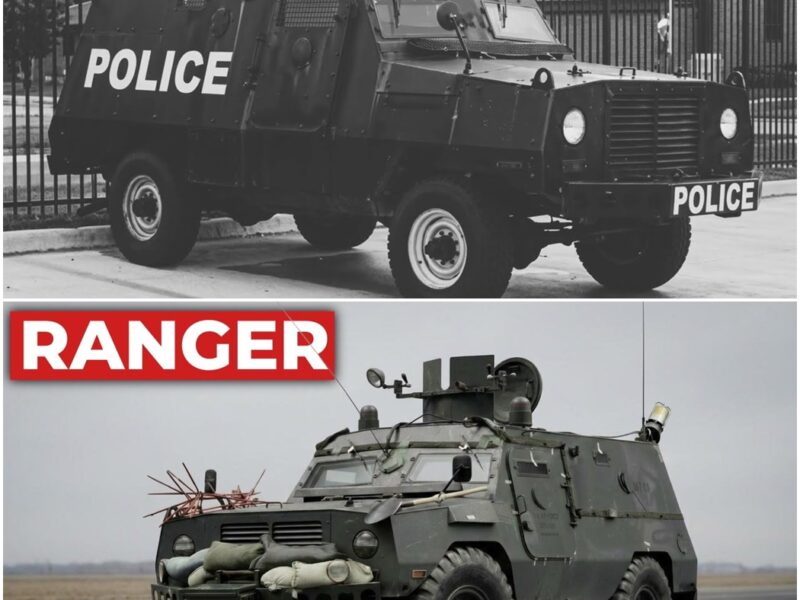
1979, a factory floor in Warren, Michigan, just north of Detroit. A vehicle rolls out of a steel-walled assembly bay. It sits on a commercial truck chassis. It is painted flat olive green. Four armed men could stand inside it without bending their necks. From a distance of 30 m, you would not know it was armored.
You might think it belonged outside a bank. You might think it was delivering mail. It looked ordinary. It looked completely wrong for the job it was about to perform. That job was guarding the most dangerous weapons ever built by human hands. Within 2 years, vehicles exactly like this one would be parked on the alert ramps of Strategic Air Command bomber bases, stationed at intercontinental ballistic missile fields, and running convoy escort for thermonuclear warheads moving between storage vaults and nuclear armed submarines. They would patrol the perimeters of American air bases from West Germany to South Korea. They would stand watch over enough nuclear firepower to end civilization, and they would do it in a vehicle built on a shortened Dodge pickup truck at a unit cost of $30,000 each. It looked like a police van. The Air Force called it the Peacekeeper. Its full name was the Cadillac Gage Commando Ranger, and it was the most strategically important expendable vehicle the Cold War ever produced. To understand why the Ranger existed, you need to understand the problem the United States Air Force
faced in the mid-1970s. The Cold War had entered a new and dangerous phase. Soviet military doctrine had spent the previous decade developing the concept of special forces teams inserted deep behind enemy lines to destroy command infrastructure before a full-scale conventional attack could begin. American defense planners read those Soviet field manuals.
What they read alarmed them. Hundreds of United States Air Force installations worldwide held nuclear armed aircraft on constant alert. Minuteman intercontinental ballistic missile fields in Wyoming, Montana, and North Dakota sat largely undefended beyond a chain-link fence and a pair of armed sentries in unarmed trucks.
Nuclear weapon storage areas at overseas bases in Britain, West Germany, Italy, Turkey, and South Korea were protected by men in standard pickups that offered no protection at all. The threat was not a full armored assault. The threat was a small, fast, disciplined team hitting a base at night and destroying parked aircraft or contaminating a weapon storage area before any response could arrive.
The Air Force needed an armored response vehicle fast enough to cover a flight line, protected enough to survive small arms fire, and cheap enough to buy in large numbers. It did not need a main battle tank. It needed something priced like a truck. Cadillac Gage entered a competitive evaluation in 1978. The company was not the luxury car maker, it shared only the name.
Cadillac Gage was a precision instrument firm best known to machinists for the Play Check height gauge, a tool for calibrating instruments to within fractions of a thousandth of an inch. Its Cadillac Gage defense division had already built the V-100 Commando armored car, a purpose-built four-wheel drive armored personnel carrier that had sold to over 35 nations and seen combat in Vietnam.
The Commando was a serious fighting vehicle, but it weighed nearly 10,000 kg and cost far more than any air base needed per vehicle. The Air Force needed something cheaper, something simpler, something that could be fielded in the hundreds without straining a procurement budget. Cadillac Gage’s answer was direct. Take a commercial Chrysler truck chassis, the shortened Dodge 200 series, weld Cadaloy high hardness steel armor plate to every surface including the floor, bolt on a one-man turret carrying a 7.62 mm machine gun, fit run-flat tires, and sell the result to the Air Force for $30,000 per copy. The armor was rated to stop 7.62 mm armor-piercing rounds from all aspects, including underneath. This meant it could survive the rifles carried by virtually any sabotage team it was likely to encounter. The range was 483 km on a single tank, enough to patrol an entire missile field without refueling. The top speed was 113 km/h, fast enough to close a runway or chase a threat vehicle down
a highway. The engine was a Chrysler 548, approximately 180 horsepower, mounted up front to keep the rear cabin clear for four armed troops plus the driver. The off-road capability was, in the assessment of every technical review ever written about it, essentially zero. A vehicle built on a road-going commercial chassis could not cross broken ground, could not negotiate steep berms, and would bog down in soft earth.
The Air Force accepted this limitation without objection. The doctrine was precise. The Ranger did not need to go off-road. It needed to get men to a threat on paved taxiways and access roads. If the Ranger was destroyed in the process, that was acceptable. The vehicle was, in the words of the procurement philosophy that shaped it, expendable.
Cadillac Gage won the contract in June 1979, beating out Oshkosh Truck Corporation and Vehicle Systems Development Corporation. The first deliveries arrived in April 1980. Initial production stood at 571 vehicles at $30,532 each. A second contract in 1981 added 560 more for the Air Force and the Navy. 708 Rangers had been built for United States forces and overseas sales by 1994, when production finally ended.
Before we get into where the Peacekeeper actually served and what it actually guarded, if you are finding this deep dive into Cold War hardware worth your time, hit subscribe. It costs nothing. It takes 1 second, and it keeps this channel running. The Peacekeeper began its operational life on the most sensitive real state in the world.
Strategic Air Command installations in the early 1980s were places where a single mistake could end a civilization. At Minot Air Force Base in North Dakota, at Malmstrom in Montana, at Francis E. Warren in Wyoming, Peacekeepers began their perimeter circuits in 1980 and 1981. A Minuteman missile field stretches across an area the size of a small European country.
The missile silos are separated by kilometers of open prairie. A security team responding to an intrusion alert at a launch facility could face a drive of 15 minutes or more across empty flatland with no cover and no reinforcement. The Peacekeeper changed that calculation. It could reach any silo on any field in a fraction of the time a standard pickup could manage and it would arrive with four armed troops behind steel that no rifle could penetrate.
The second mission was more sensitive still. At naval submarine base Kings Bay in Georgia and at naval base Kitsap at Bangor in Washington state, United States Marine Corps security battalions ran convoy escort for Trident D5 submarine launched ballistic missile warheads moving between the weapon storage areas and the submarines at the dock.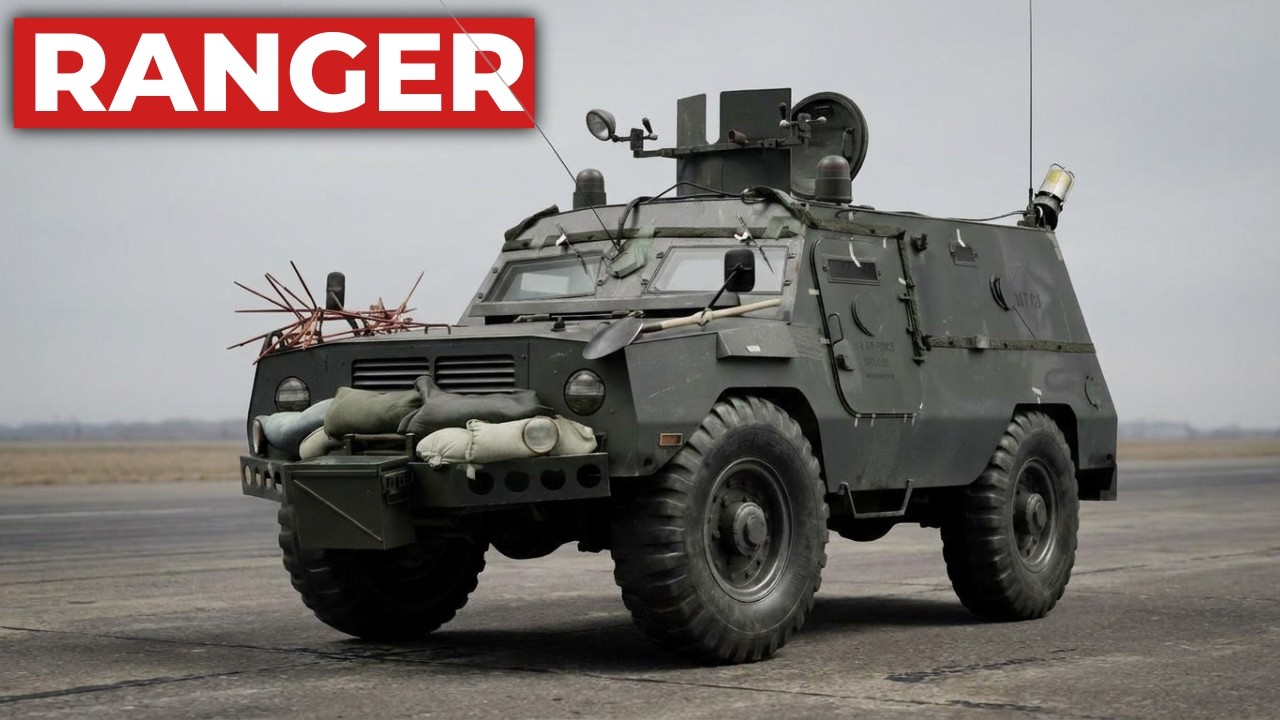
These convoys moved at night on public roads under absolute secrecy carrying warheads each carrying yields measured in the hundreds of kilotons. Peacekeepers were the armed escort. If a convoy was interdicted, the Peacekeeper’s job was to hold the threat off long enough for reinforcement to arrive and for the nuclear material to be secured.
No such interdiction ever occurred. The vehicles never had to fire in anger, but the threat was assessed as real. The mission was real and the Peacekeeper was the answer the United States government chose. Overseas, Peacekeepers stood guard at American airbases across the width of the Cold War’s front lines.
At Ramstein in West Germany, at Royal Air Force Lakenheath in England, at Osan and Kunsan in South Korea, at Kadena on Okinawa, at Incirlik in Turkey, at Aviano in Italy. Peacekeepers ran security patrols on flight lines where nuclear armed aircraft sat on alert around the clock every hour of every day for decade after decade.
They were there not to fight conventional battles, but to deter, delay, and defeat any ground attack long enough for alert aircraft to scramble or for weapons to be disabled and secured. The vehicle’s only documented deployment into an active conflict zone came in 1996. A small number of Air Force Security Forces Peacekeepers is to Bosnia in support of the implementation force, the multinational operation charged with enforcing the Dayton Peace Agreement.
After the wars of the previous 4 years, the role was airbase security and force protection. The vehicles patrolled perimeters and ran access control at the NATO airhead. They did not engage hostile forces. According to multiple published sources, it is the only time the peacekeeper is known to have operated in a declared military conflict.
Foreign military sales were limited. Luxembourg acquired five vehicles in 1981, making it the first export customer. Indonesia acquired 20 vehicles in 1994 for the Pasukan Pengamanan Presiden, the Indonesian presidential security guard, for use protecting the head of state and for internal security mobilization in the capital.
These are the confirmed foreign military operators. The Philippines is listed in some secondary sources, but no unit, quantity, or delivery data has ever been established, and that claim should be treated as unverified. After retirement from Air Force service in the late 1990s, the Ranger did not disappear.
It entered a second life under the Department of Defense Law Enforcement Support Office program, redistributed to American police and sheriff departments across the country. Departments in Anaheim, Sacramento, and Burbank received vehicles. Sheriff’s offices in Cobb County in Georgia, San Bernardino County in California, and Becker County in Minnesota received vehicles.
The Anaheim Police Department operated its 1989 example for approximately 31 years before retiring it in February of 2020. The vehicle having outlasted three full generations of police equipment around it. On paper, the Cadillac Gage V-100 and V-150 Commando was everything the Ranger was not.
The Commando family weighed nearly twice as much. It was purpose-built with a monocoque armored hull, full amphibious capability, and weapons ranging from a 7.62-mm machine gun to a 90-mm cannon. It fought in Vietnam, in the Gulf, and across three continents. More than 3,000 vehicles were built for over 35 nations. It proved itself under fire repeatedly.
The Ranger shared only a manufacturer and a rough silhouette. In its own niche, the Ranger competed against the British Shortland, built on a Land Rover Series 2A chassis, and used operationally by the Royal Ulster Constabulary during the Troubles in Northern Ireland, and against the Belgian BDX, a 10-ton wheeled carrier used by the Belgian Air Force for exactly the same base defense role the Ranger fulfilled for the Americans.
The Shortland was lighter and narrower and had fought really engagements. The Ranger was faster on a highway and offered a larger crew compartment. What the Ranger offered that none of its competitors could match was the price, $30,000 per unit in 1980, a credible deterrent against any small arms threat.
A vehicle any security forces squadron could operate, maintain, and when necessary, walk away from. The strangest chapter in the Ranger’s history belongs not to a battlefield, but to a courtroom. In July 1996, the collections chief at the National Museum of the United States Air Force at Wright-Patterson Air Force Base in Ohio, convinced his superiors that the museum’s original 1980 production Peacekeeper had been requisitioned by another facility.
He then drove it off the base. He displayed it openly at military vehicle conventions in Tennessee and Pennsylvania in 1997 and 1998. He sold it for $18,000. The buyer sold it to the Eastern Band of Cherokee Indians for $38,000. A federal grand jury indicted him in February 2003. He was convicted in August 2004 and sentenced to 12 months in federal prison, 3 years of supervised release, and $29,000 in restitution.
The vehicle was eventually recovered. 1979, a factory floor in Warren, Michigan. A vehicle built on a commercial truck chassis, armored with welded steel plate, painted flat olive green, rolls out of an assembly bay and into two decades of the most sensitive service the Cold War ever demanded of a wheeled vehicle.
It had no amphibious capability. Its off-road performance was rated at essentially zero. Its original foam-filled tires melted at sustained highway speeds and had to be replaced across the entire fleet. It was outgunned by every purpose-built armored car of its generation. It cost $30,000. It was designed to be abandoned if it was destroyed, and yet it guarded the nuclear arsenal of the United States for 20 years.
It escorted thermonuclear warheads through the night on roads no one knew were carrying them. It stood watch on flight lines where bombers sat armed and ready around the clock. It patrolled missile fields large enough to be small countries. It deployed to a continent still healing from war.
It served for 31 years in the hands of a police department in California, and it finished its career without having fired a shot in anger. 708 were built. Two remain in United States Air Force service today. The Ranger was not a great armored car. It was a cheap one. It did not win battles. It prevented the conditions in which battles might have started.
That is not luck. That is the correct answer to the correct question. Built at the right price, deployed at the right moment, and trusted with the most serious work the Cold War ever produced.