Why This ‘Tiny’ American Light Tank Was So Loved That British Crews Refused To Replace It D
July 1941. The Alexandria dockyard, Egypt. A crane arm swings out over the side of a cargo ship and hoists a small tank from the hold below. The machine rises slowly into the white morning heat above the harbor, turning on its chain, catching the light. On the keyside below, a group of British tankers stands watching.
These are men who have spent 18 months in the Libyan desert, nursing broken, leaking, overheating cruiser tanks back to life between battles. They have learned through experience that cost lives exactly what the desert does to machines that are not ready for it. They look up at this new American vehicle with quiet professional skepticism. It is small, 12.
9 tons against the German machines waiting across the wire in Libya. It looks almost modest. Its gun is short. Its hull is compact. Standing next to a Crusader cruiser tank on the keyside, it appears almost underpowered. And the men watching know what a German 50mm anti-tank gun does at 800 m. They have sent friends out to find out.
Most of those friends did not come back with good news within 72 hours of its very first engagement with the enemy. The British Army’s entire reserve of these machines would be completely exhausted, gone. At 11:00 on the night of November 20, 1941, an urgent message went from 8th Army headquarters ordering Cairo to scour the entire Nile Delta for every spare one that could be located.
The reserve had lasted 3 days. And yet the men who fought in this tank adored it, not accepted it, not made do with it, adored it. Crews who could have traded up to larger, better armed machines argued to keep theirs. Regiments rebuilt after catastrophic losses asked for the same vehicle again.
Officers quoted it in formal battle reports. Generals praised it in their memoirs. A driver climbing out after his first run across the desert turned to his officer and found a word that would travel from regimental cantens into official 8th Army documents and British national newspapers. The vehicle was the M3 Stewart.
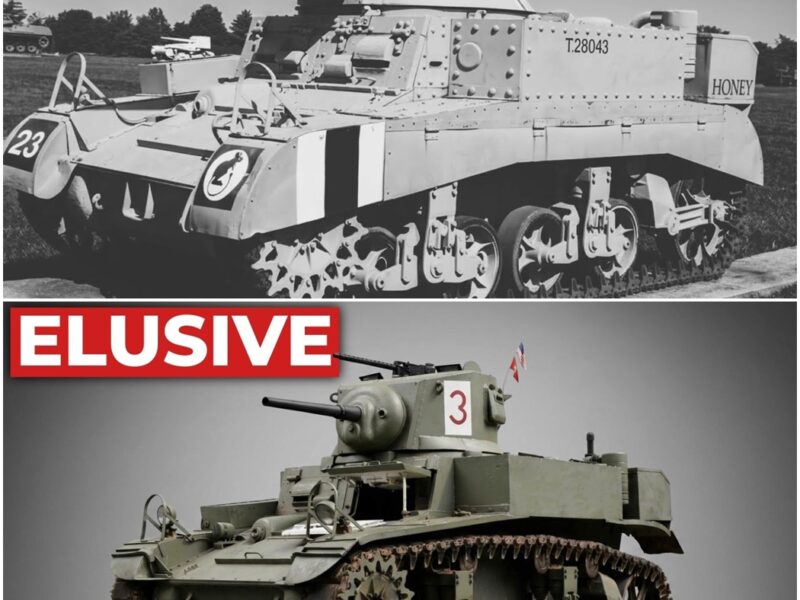
In British service, from the moment it arrived, it had one name, Honey. It would fight from the Libyan desert to the beaches of Normandy to the Baltic coast. It would equip British, Commonwealth, and Allied forces across four continents. It would outlast every Britishbuilt light tank of its generation in frontline service.
More than 80 years after that crane lifted it onto the Alexandria keyside, one example survives in running condition in a museum in Dorset. It still starts. It still moves. The men who named it are gone. The tank is not. Its formal designation was the M3 Stewart. Its name was the Honey, and it was the most beloved tank the British army never designed.
To understand why those men on the keyside came to feel the way they did, you have to understand the condition of British armor in North Africa in 1941. The Crusader cruiser tank, the A-15, was the main fighting vehicle of British armored brigades in the Western Desert. It was fast by the standards of 1941, touching 26 mph on a road.
It carried a two-p pounder gun and looked from a distance like a modern fighting machine. In the Libyan desert, it was a mechanical catastrophe. The Crusader’s Nuffield Liberty engine, a design originally developed from a First World War aircraft engine, cracked water jackets in the desert heat, shed fan belts without warning, leaked oil through every gasket, and left vehicles stopped in the sand with no enemy action required.
The suspension through tracks on rocky ground. The cooling system failed in temperatures that were entirely predictable given the theater of operations. Crews spent every halt not resting, but working, checking fluid levels, listening for sounds that meant another breakdown was coming. During Operation Crusader, launched on November 18th, 1941, the 7th Armored Division Workshops received 252 tanks for repair in just the first 8 days of fighting.
That was more than half of the armored strength that had crossed the start line. A significant portion of those losses were mechanical, not enemy action. The Crusader was being defeated by the desert before the Germans had to do anything at all. One formation, the 22nd Armored Brigade, started Operation Crusader with 76 Crusader tanks and 40 M3 Stewarts.
By the end of December, it had eight Crusaders and 21 Stewarts still standing. The arithmetic was not subtle. Britain needed a tank that could absorb the desert and keep fighting. What arrived from American factories in the summer of 1941 answered that need in a way no British production line could manage at the time.
The M3 had been developed by the American Ordinance Corps in 1940, building on lessons drawn from earlier light tank designs and incorporating heavier armor, a new vertical Volute spring suspension system, and a purpose-built power plant. When the Lendley sacked was signed on March 11th, 1941, Britain placed orders for as many M3 light tanks as American production could spare.
The first consignment steamed around the Cape of Good Hope, the Mediterranean being closed to Allied shipping, and began arriving at Alexandria from July 1941 onward. The eighth king’s royal Irish hsars of the fourth armored brigade became the first British regiment to receive them. And photographs from August 28th, 1941 show the hsars already throwing their new machines across desert terrain at speed, their faces wearing expressions their crusader photographs never managed to capture.
The specifications told the story. The engine was a Continental W670, a 7cylinder air cooled radial producing 250 horsepower, air cooled, no water jackets, no coolant lines, no radiator to split or boil in 50° heat where a Crusader crew spent every halt anxiously monitoring fluid levels and listening for the early warnings of engine failure.
A Steuart crew climbed down, brewed tea, and climbed back up. The engine ran because American engineers had designed it to run in precisely these conditions. That was not an accident. It was the product of an aviation industry that had been building reliable air cooled radials for years and knew exactly what sustained heat did to engines.
The vertical vollet spring suspension distributed the vehicle’s weight across a trailing rear idler. In contact with the ground, softening the ride significantly compared to British cruiser designs. At 36 mph on a desert road, the Stewart tracked clean and straight across broken ground. At 18 mph, it remained controllable.
The controlled differential steering allowed a practiced driver to pivot the hull with precision that astonished crews used to the lurching unpredictable behavior of the A-13 and A-15. One veteran of the Third Royal Tank Regiment, speaking to the Imperial War Museum decades later, described the Steuart as wonderful and fast and said his crews were very, very pleased after the slower English tanks.
Armor protection ran from 25 mm on the hull sides to 51 mm on the gun mantlet, heavier than the Crusader at comparable weight. The main armament was a 37mm M5 gun with a coaxial Browning 30 caliber machine gun in the turret and a further 30 caliber weapon in the hull. Critically, the 37 mm fired a high explosive round.
This single fact mattered more than almost any other specification on the page. The British two-pounder gun fitted to the Crusader could not fire high explosive against enemy gun positions, against infantry in the open, against soft vehicles, against any target that was not another tank. Crusader crews were helpless.
Steuart crews were not. The weaknesses were genuine and well understood. Operational range in the desert was approximately 75 miles, roughly half the Crusaders, which imposed hard constraints on how far a Steuart regiment could operate before it needed to stop and refuel. The two-man turret placed the commander in the role of gunner as well, an arrangement British armored doctrine had moved away from and formal battle reports from Crusader onward complained consistently that commanders could not observe the battlefield, communicate, think, and aim simultaneously against the 50 mm gun on the Panza 3 and the long-barreled 75mm. Arriving with the Africa Corps from mid 1942 onward, the Stewart was outranged in a direct tank versus tank duel, but it started every time and it kept running. Before getting into the battles that proved what this machine was, if you are finding value in this deep dive into desert armor and the eighth army, hit subscribe. It takes 1 second, costs nothing, and helps the channel continue.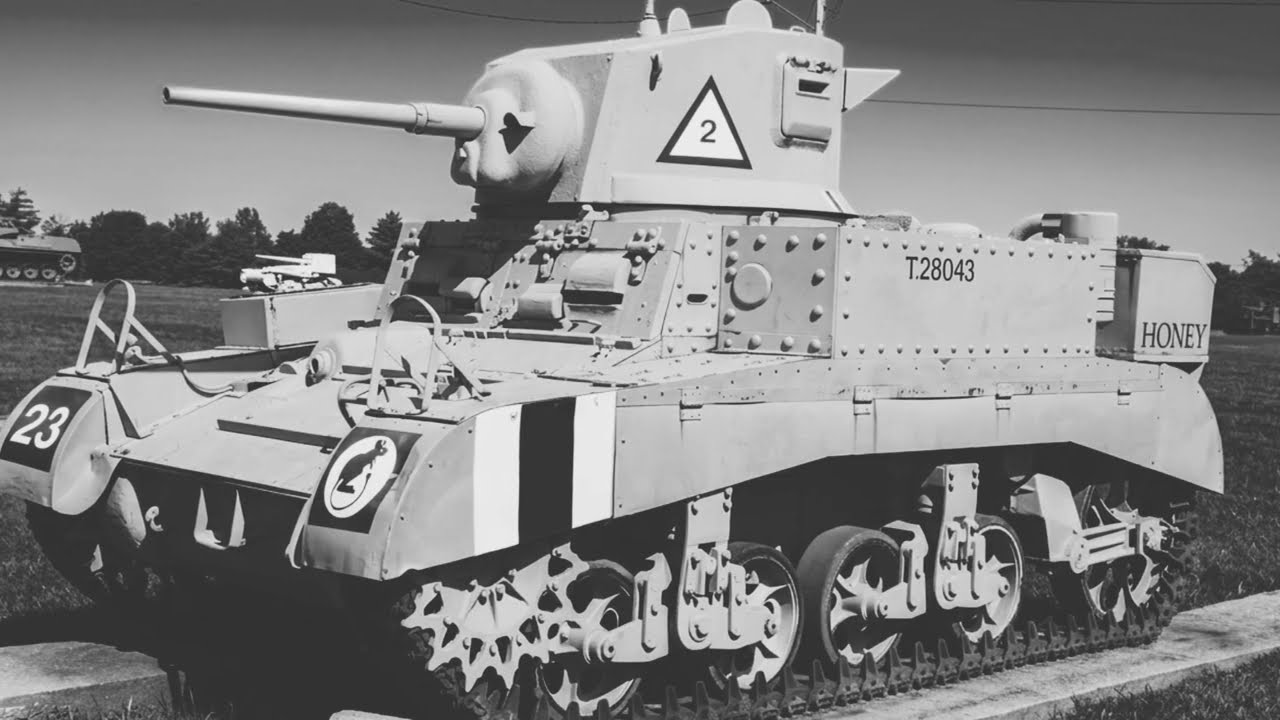
The first combat came on November 19, 1941, the opening day of Operation Crusader. A German battle group from the 21st Panza Division drove toward Garbasal in the southern desert and met tanks of the fourth armored brigade. 23 Stewarts were knocked out that day for a loss of three German tanks by nightfall.
Taken in isolation, that figure suggests a defeat. What it conceals is that the Stewart crews were engaging veteran German Panza men at ranges where German guns held the advantage in their first combat action ever, while crusader regiments nearby were already sending vehicles back to the workshops with mechanical failures.
The battle intensified on November 21 at Cidra, the airfield ridge above the besieged tobrook garrison. A squadron of the eighth HAR was effectively destroyed in a single day of fighting. Major CER Duff, the squadron leader, was mortally wounded in what the regimental account describes as a valiant attempt to close with an enemy whose guns outranged theirs.
By the morning of November 23, the regiment had lost 35 Stewarts. Four had driven back to their own lines under their own power. four. That was what remained of a complete armored regiment after 5 days of battle. The reserve request went to Cairo that night. Major Robert Crisp of the Third Royal Tank Regiment fought through all of it.
Crisp was a South African-born test cricketer who had found himself commanding a troop of tanks in the most violent armored engagement the British Army had yet fought. He survived and two decades later he recorded it in a memoir called Brazen Chariots, which became one of the most precise and unsparing accounts of desert tank warfare in the English language.
In that book, Crisp described the moment his regiment first received the American machines. After a demonstration drive with a Texan liaison officer present, Chris asked his driver, Trooper Whe. The driver, plainly under the influence of the nearby Texan, beamed and said simply, “It’s a honey, sir.
” From that moment, Chris wrote, “They were never known as anything else.” The name spread through the 8th Army faster than any official designation could travel. By August 1942, it appeared in British newspaper reports from the desert. It appeared in formal 8th Army operational documents. One newspaper account described Winston Churchill being swept across the western desert in a honey tank with a brigade penant flying from the turret.
The word was not sentimental. It was precise. In an army where tanks broke down before the battle reached them, a machine that ran was exactly and specifically a honey. Brigadier Alec Gate House commanding the fourth armored brigade through the whole of Crusader recorded the campaign’s arithmetic afterward. 172 honeys had been knocked out by the enemy across 5 weeks of fighting against a brigade starting strength of 163 tanks.
Knocked out, recovered, repaired, and returned the same machines over and again. Average sleep for troop commanders across the first 14 days had been 1 and 1/2 hours in 24. At the end of the campaign, Ronald’s 400 tanks had been reduced to 58. The American military atache in Cairo, Colonel Bonafellers cabled Washington in early December with the verdict from the men who had fought them.
Personnel of the fourth armored brigade, he wrote, are enthusiastic in their praise of American tanks, and they have developed confidence in their vehicles never before known in the British army. The M3, he continued, was the fastest, soundest mechanically, and most maneuverable tank in Libya. It was outranged by German guns with 50 mm and 75 mm weapons.
That limitation was real and acknowledged. The confidence was real, too. At the Battle of Gazala in May 1942, Stuarts fought in mixed squadrons alongside the new M3 Grant medium tank. Lieutenant Colonel GPB Pip Roberts, commanding third Royal Tank Regiment, sent his 16 Stewarts forward on the morning of May 27 as the leading element, his 19 Grants holding behind.
The Stewarts went first. They always went first. At the second battle of Elmagne in October 1942, the 8th Army’s 1,029 ready tanks included 119 Stewarts. The fourth light armored brigade on the southern flank held 57 of them. Through the breakthrough of early November and the pursuit that followed all the way to Halire Pass, those Stewarts kept moving when other machines stopped.
By 1944, every British Sherman equipped armored regiment in northwest Europe maintained a reconnaissance troop of Steuart Fives. They ran from the Normandy beaches to the Baltic. Britain never stopped using them. Formally, on paper, the verdict was more complicated. In February 1942, Brigadier RB Briggs of the Second Armored Brigade filed a formal report recommending that armored regiments convert entirely to Crusaders until something better arrived and stated plainly that the Crusader was the more capable battle tank. In the same document, he wrote that the Stewart had proved more sound than the Crusader, required far less maintenance, that its air cooled engine did not overheat, and that it stood up well to fast work. Two sentences, contradictory in appearance, both accurate. The Crusader was the better weapon when all conditions were ideal. The Stewart worked in the conditions that actually existed. 22,744 M3 and M5 family tanks were built across all variants. Britain and the
Commonwealth received several thousand under Len lease. The Soviet Union received 1676 and eventually rejected the type. Nations from France to Yugoslavia to Brazil operated it. Brazil rebuilt captured examples into a successor design that remained in service into the 1980s. Paraguay kept them operational into the 21st century.
The tank museum at Boington in Dorset holds the principal British survivor, an M3A1 donated by the Brazilian army in 1990. It runs. More than 80 years after the first Stewart was lifted onto the Alexandria keyside, that vehicle still moves under its own power. It is one of a tiny number of Steuart family tanks anywhere in the world still fully operational. July 1941.
The Alexandria dockyard. A small tank swings down from a crane, and the men watching are not sure what to think. It is too compact. Its gun is too short. Its range in the desert is barely 75 mi. Its twoman turret makes the commander do two jobs at once. Against what RML has across the wire, it has no obvious right to matter.
It mattered at Garbasal, where the reserve ran out in 72 hours. It mattered at City Reg, where four tanks drove home as the only survivors of a regiment. It mattered at Gazala going forward first. It mattered at Elmagne, still moving when everything else stopped. It mattered from Normandy to the Baltic, one reconnaissance troop at a time, until the day the war ended.
Trooper Whe climbed down after his first drive, turned to his officer, and said it was a honey. He was right. That is not sentiment. That is what happens when a machine is built correctly for the conditions it actually has to work in. And what happens when men who understand the difference between theory and desert sand are finally given something that does not let them