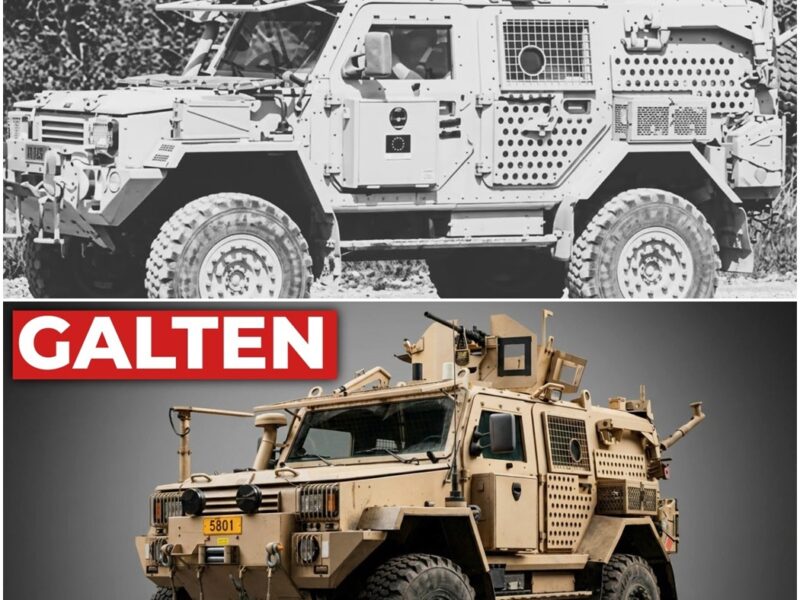
Why This ‘Tiny’ South African Scout Vehicle Survived Bombs That Levelled Every Convoy In Afghanistan D
November 11th, 2009, a road 40 km west of Mazzar Sharif, northern Afghanistan. A small four-w wheeled patrol vehicle rolls out of a Swedish forward base, joining a column from contingent FS17 on a routine patrol through Belk province. The vehicle weighs just over 7 tons. It seats five, four doors, four wheels, a stubby roof mounted weapon station, and a hull shape beneath the floor like the bottom of a boat.
It measures barely 5 1/2 m from end to end. against the heavier armored vehicles elsewhere in the convoy. It looks undized. It looks improvised. It looks, frankly, wrong for the job. Within the hour, a homemade bomb will detonate directly beneath it with enough force to throw a 7-tonon vehicle into the air and slam it down, inverted on its roof.
Four of the five people inside that vehicle will live. That vehicle was the RG32M Scout. It was born in a South African factory, forged from a lineage of mine protection knowledge earned in a bush war most of the world had already forgotten. And it would go on to equip the armies of Sweden, Finland, Ireland, and the United Nations across four continents.
More than 800 would be built. Not one nation that sent it to war ever sent it alone twice. Meaning every country that lost soldiers to roadside bombs while driving something else eventually came back and bought more. Its name was the RG32M, and it was the most important small armored vehicle of the Afghanistan era that nobody talks about.
To understand why the RG32M existed, you need to understand the problem that armies around the world faced by the late 1990s, patrols needed a vehicle that could handle the rough terrain of a Land Rover or a Humvey, but survive what Land Rovers and Humvees demonstrabably could not. The roadside bomb, the pressure plate, the command detonated charge, the mine buried under a dirt track.
These weapons did not care about armor bolted to the sides of a vehicle. They detonated beneath the floor and drove the blast upward, directly through the chassis, through the seats, and into the human bodies sitting above. Solving that problem was not a European problem. It was not an American problem.
It was a South African problem, and it had been solved 20 years earlier in a different war on a different continent. Between 1966 and 1989, South African forces fighting in what is now Namibia and Angola faced relentless Soviet supplied anti-tank mines laid by SWAPO insurgents. The TM57 mine alone contained 12 kg of high explosive roads that looked clear at dawn were lethal by midday.
Ordinary armored vehicles, regardless of how well armored on their sides, were being blown apart from below. The SADF lost men consistently and the death toll forced a fundamental redesign of every vehicle that drove a dirt road. The solution was the V hull, not armor bolted to the bottom of a flat floor, but a hole shaped like the letter V, angled outward from the center, so that any blast detonating beneath it was directed away from the crew compartment rather than straight up through it.
Combined with energyabsorbing seats that suspended the crew above the hull, the V-hole transformed survivability mathematics entirely. The engineer at the center of this work was Dr. Vernon Joint of the South African CSIR, the Council for Scientific and Industrial Research.
Joint designed the Hyena, the first purpose-built mine protected vehicle in history. His teams followed it with the Hippo, the Buffalo, and then the vehicle that became the godfather of every modern mine resistant vehicle, the Casper. The Casper, introduced in 1981, was certified to survive a double TM57 blast under the hull.
that is 14 kg of TNT directly beneath the floor. The crew walked out. More than 2,500 were built. In the mid 1990s, an engineering team at Rome OMC in Benoni, east of Johannesburg, designed a much smaller vehicle on the same principles. Not a 12tonon personnel carrier, a compact 4×4 patrol vehicle that could carry five soldiers, fit two at a time inside a C130 Hercules transport aircraft, and survive what would destroy anything else in its weight class.
They called it the RG32 Scout. The military export variant was the RG32M. Its hull was not a chassis with armor bolted to it. The hull was the chassis welded from high alloy armor steel into a single monoke capsule. The V-shaped bottom angled at over 40°. The crew capsule was the whole structure. Subframes for the drivetrain bolted to the outside.
Energy absorbing seats suspended the crew above the whole floor. Run flat tire inserts allowed the vehicle to continue driving after a mine destroyed a wheel. A Ster six-cylinder turbocharged diesel engine producing 135 kW drove all four wheels through an Allison 5-speed automatic gearbox. Top speed on road was 110 kmh.
Range exceeded 600 km. According to Army Guide technical data, the RG32M carried a crew of five, mounted a roof weapon station for a machine gun or automatic grenade launcher, and offered mine blast protection against anti-tank mine charges under any wheel. Combat weight ran to roughly 7,300 kg fully loaded.
Two vehicles fit inside a single C130, meaning one transport aircraft delivered two fully equipped patrol teams in one sort. It looks small. It was small. That was the point. Before we get into where this vehicle went to war and what it survived when it got there, if you are finding this dive into armored vehicle history valuable, hit subscribe.
It takes a second, costs nothing, and it helps the channel grow. By 2005, Sweden was deep inside the NATOled mission in northern Afghanistan and had taken command of the provincial reconstruction team at Mazzari Sharif from the British. Camp Northern Lights established in the southeastern corner of the city became the operational center for Sweden’s presence in regional command north.
Swedish patrols moved daily across the flat agricultural plains and mountain bordered valleys of Belalk province. They were doing it largely in unarmored Toyota Land Cruisers fitted with nothing more than fabric and optimism. After serious incidents in 2008, the Swedish army faced a straightforward choice.
Get a mine protected vehicle into theater or keep taking casualties from weapons that those vehicles were specifically designed to survive. Sweden had already seen what was coming. In June 2005, the Swedish armed forces signed the first contract for 102 RG32M vehicles at a cost of roughly $28 million.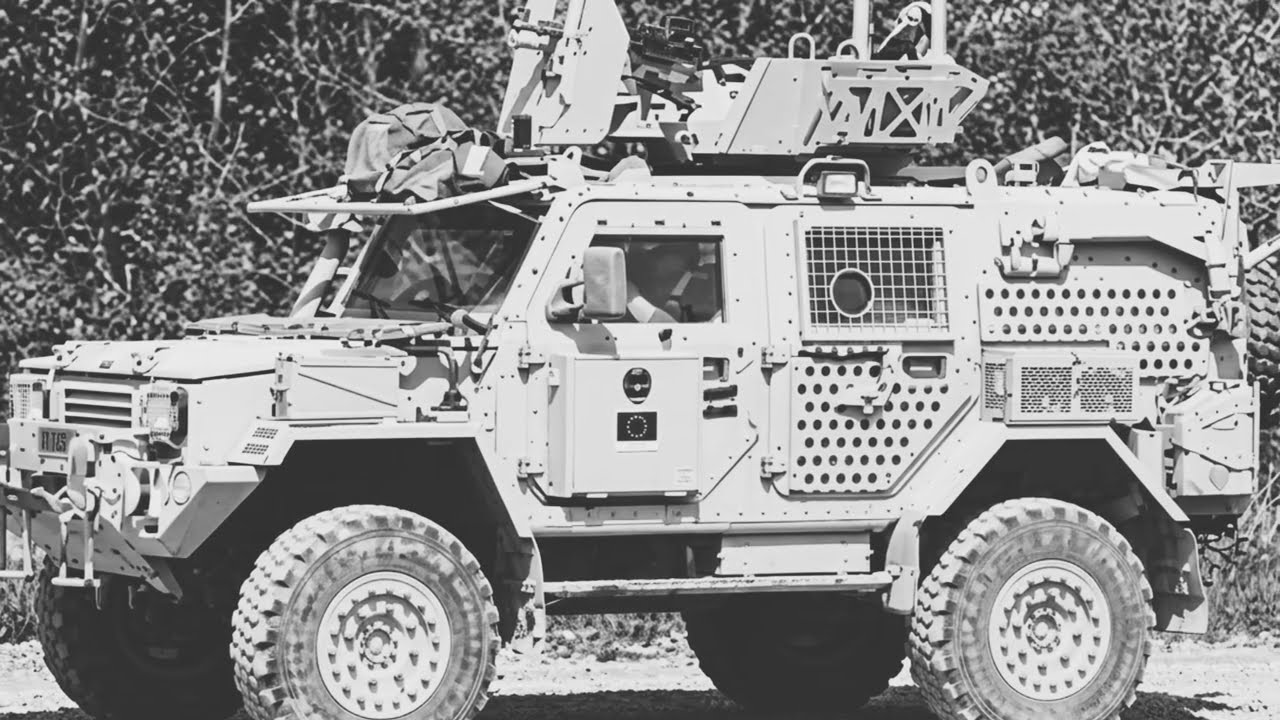
In Swedish service, the vehicle was designated terring bill 16 and nicknamed the Golton, Swedish for the bore. A second batch of 98 followed in May 2007. A third order of 60 more was placed in December 2008, driven entirely by urgent demand from Afghanistan. By autumn 2009, 22 Goltons were operating in theater with contingent FS17 commanded by Swedish Colonel Olaf Graner with another 18 vehicles on route.
Then November 11 arrived. A fiveperson patrol was operating 40 km west of Mazzari Sharif alongside Afghan security forces when the bomb detonated. According to Swedish radio and multiple Swedish press accounts, the device was a substantial homemade IED planted beneath the road surface.
Triggered as the Gulton crossed it, the blast was powerful enough to throw the 7-tonon vehicle into the air. It came down inverted on its roof. Inside were four Swedish soldiers and one Afghan interpreter named Hamid, 25 years old. Hamid was killed instantly. The four Swedes survived. The most seriously injured was a soldier named David Strum, a group medic and grenadier from northern Sweden.
Strum suffered open fractures to both lower legs, three crushed vertebrae, a brain hemorrhage from the concussion of the blast, and additional fractures to his clavicle and ribs. Two of the four soldiers had life-threatening injuries. The other two were wounded but stable. The vehicle was destroyed beyond recovery.
All four men were alive. The Golton’s Vhull had directed the blast outward. The Monoke capsule had held its shape as the vehicle rolled and came down on its roof. The energyabsorbing seats had absorbed enough of the shock to keep the crew from being killed by the impact forces alone. Four soldiers who should have been dead were instead being pulled from the wreckage, injured, critical in two cases, but breathing.
What followed became its own controversy in Sweden. The evacuation helicopter and American aircraft took nearly 2 hours to arrive. David Strumm and his colleagues lay in the dust of the road with serious injuries and inadequate on-site medical resources for two hours. That delay drove a political fight in Stockholm over Sweden’s failure to deploy its own medical evacuation helicopters and defense minister Sten Tolfors was forced to address the gap in parliamentary sessions.
It accelerated Swedish decisions to invest in organic helicopter capability for future deployments. But the vehicle had done what it was built to do. Over the entire Swedish ISF deployment from 2002 to 2014, five Swedish soldiers died. Of those five, not one was inside an RG32M Golton at the time of their death. The fatalities that predated Golton deployment occurred in unarmored vehicles.
The combat deaths in 2010 involved a small arms attack and a different, heavier vehicle. The Golton’s record remained intact throughout. Sweden’s deployment of the RG32M extended beyond Afghanistan. Swedish Gton served in Mali with the UN Minisma peacekeeping mission and the Tuba Special Operations Task Force operating across desert and savannah where improvised explosive devices and ambush remained constant threats.
The pattern held every time, small enough to go where heavier vehicles could not, light enough to be airlifted, robust enough to bring its crews home. Finland procured 74 RG32M vehicles for its special forces and armored infantry with deliveries beginning in 2006. The United Nations purchased 27 vehicles for humanitarian convoy escort in Georgia and Burundi.
Ireland procured 27 of the larger RG32M light tactical variant for patrol duties in southern Lebanon with the United Nations interim force in Lebanon. By 2025, more than 800 RG32 family vehicles had been delivered to over 22 operators across four continents. The vehicle against which the RG32M most clearly defines itself is one that looks on paper like an entirely reasonable choice for the same mission.
The British Land Rover Snatch weighed roughly 3,000 kg in its standard configuration. Fast, familiar, narrow enough for European width roads and cheap enough to operate at scale. The British army sent it to Iraq, then to Afghanistan. Then soldiers started dying inside it. According to legal firm Bolt Burden Kemp, which represented bererieved families in subsequent proceedings, 37 British service personnel were killed in Iraq and Afghanistan in snatch Land Rovers.
The vehicle became known in the British press as the Mobile Coffin. In August 2017, Defense Secretary Sir Michael Fallon wrote a personal letter of apology to Sue Smith, whose son, Private Philip Huitt, was killed in 2005. Fallon acknowledged that decisions made at the time in bringing alternative protected vehicles into service could have saved lives.
The Snatch Land Rover had no V-hull. It had armor bolted to its sides. That armor was useless when a bomb detonated beneath the chassis. The direct European competitor to the RG32M was the Avo LMV, known as the Panther in British service and the Lintz in Italian service. The Ivico LMV weighed approximately 6,500 kg, offered a sophisticated modular protection architecture, and was purchased by Italy, Belgium, the United Kingdom, Norway, Austria, Spain, and others in quantities that eventually exceeded 4,000 vehicles across 13 nations. It was a serious piece of engineering. In 2009, Ireland ran a competitive trial between the RG32M Light tactical variant and the IVO LMV. the RG32M1. According to Army Technology, Ireland cited the vehicle’s protection pedigree and operational agility as the deciding factors. On paper, the ICO LMV had more sophisticated engineering and a larger
operational footprint. In practice, the RG32M offered four decades of Vhull refinement, tested not in laboratories, but under real mines in the Angolan and Namibian bush and then on real roads in Afghanistan. The Humvey, even in its most heavily uparmored configuration, was rejected by Sweden before the Golton purchase.
Swedish procurement assessments indicated it was too small inside and insufficiently robust for the mine protection requirement. That judgment was vindicated by the vehicle’s catastrophic failure rate in Iraq, which drove the entire American MAP program at enormous cost. The RG32M’s replacement in Swedish service is the SISU GTP Paci, a Finnish designed vehicle in a heavier protection class.
Finland is replacing its fleet with the newer Paci 2. The Irish fleet was placed in storage in 2026 following documented reliability difficulties with their variant. Production at Denel Vehicle Systems in Benoni continues at low volume focused on spare parts and upgrade kits for existing operators. Over 800 vehicles, more than 22 operators active service across Afghanistan, Mali, Lebanon, Georgia, and Bundi.
November 11th, 2009, 40 km west of Mazzari Sharif, a 7-tonon vehicle lying inverted in the dust of a dirt road, the RG32M Gulton was not fast enough to outrun an ambush. It was not armed enough to win a sustained firefight. It carried no night vision integration in its base configuration, no active protection system, no electronic countermeasures against radiocontrolled devices.
Its ballistic protection was rated at the lowest tier of the NATO standard. Sufficient against rifle fire and fragmentation, but not designed to stop armor-piercing rounds at close range. Its engine produced less power than a mid-range sports car. And yet, four Swedish soldiers crawled out of a vehicle that had been blown into the air and slammed down on its roof because an engineer in Benoni in the 1990s applied a principle that a different engineer had proved in the Angolan bush in the 1970s.
The blast goes outward. The capsule holds the the crew lives in northern Afghanistan in the Marley Savannah on the roads of southern Lebanon in the dust of Bundi. That is not fortune. That is what happens when you build a vehicle around a single question. And the question turns out to be the right one.
Not how much can it carry, not how fast can it go, not how cheaply can it be made. The question was simpler than all of those. Will the people inside it come