Why This ‘Ugly’ British Armored Box Nicknamed ‘Ned Kelly’ Outlasted Every Vehicle Built To Replace D
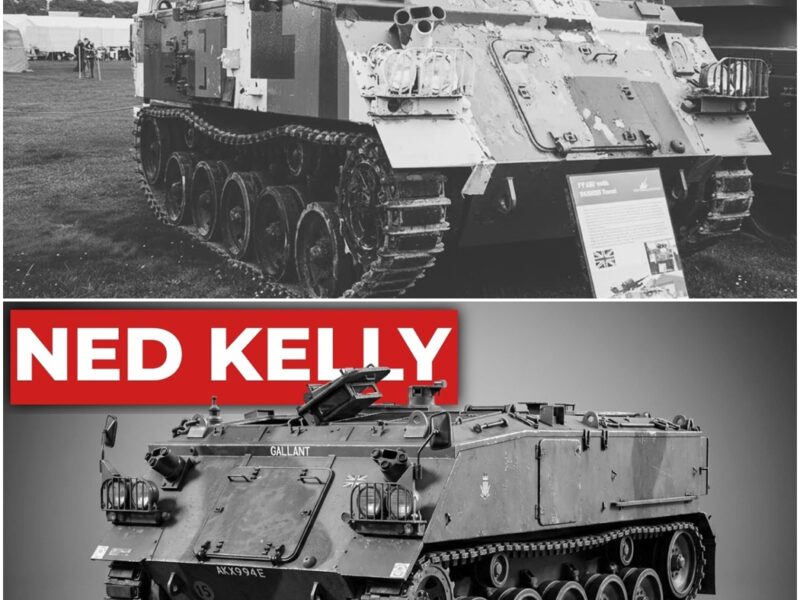
1963, the GKN Sankey Works, Hadley Castle, near Wellington, Shropshire. A squat, angular steel box rolls off the production line under gray Midland sky. 15 tons of welded, rolled, homogeneous steel. Tracks the width of a man’s shoulders. A hull so flat and so plain it looks less like a fighting vehicle than a shipping container someone has bolted caterpillar tracks onto.
Officers watching the first batch saw something unimpressive, a metal box, a rolling green coffin. It had no sloped armor, no long gun, no imposing silhouette, just a driver, a commander, a single machine gun, and 10 infantrymen crammed into a dim interior that smelled of diesel, canvas, and boiling tea.
It carried no glamour, it inspired no fear, and yet this unimpressive green box would serve the British Army for more than 60 years. It would deploy to the inner German border, to the back roads of South Armagh, to the deserts of Iraq, to the mountains of Kosovo, and in 2023, in Ukrainian colors, to the front lines of the largest European war since 1945.
It would outlast three replacement programs. It would cost the British taxpayer over 3 billion pounds in failed upgrades. It would be re-engined, up-armored, and returned to the front line long after every vehicle designed to replace it had either failed, been canceled, or been quietly retired. Its designation was FV432, and it became the longest-serving tracked armored personnel carrier in British military history.
To understand why the FV432 existed, you need to understand the problem Britain faced in the late 1950s. The British Army of the Rhine was the front line of NATO in Europe. If the Soviets came west, they would come in massed armored formations, behind a wall of artillery, under the shadow of tactical nuclear strikes.
British infantry could not fight that war riding in trucks. In September 1958, the War Office issued policy statement 26. It called for a tracked armored personnel carrier that could keep pace with the Centurion tank, cross broken ground, protect infantry from shell splinters and nuclear fallout, and run on whatever fuel could be found in a retreating column.
The contract went to GKN Sankey, a Shropshire firm whose Hadley Castle Works had been forging steel since 1910. What Sankey produced was deliberately unglamorous, a rectangular hull of welded rolled steel, maximum 12.7 mm thick, an engine at the front right, a driver and commander forward, 10 infantrymen on inward-facing benches in the rear, a single rear door, no firing ports, none.
That last detail was deliberate. Unlike the Soviet BMP, which was built for infantry to fight from inside, the FV432 was built for infantry to fight from outside. The vehicle delivered them, the men did the killing. The power plant was a Rolls-Royce K60 multi-fuel engine, six cylinders, horizontally opposed, two-stroke, supercharged, 240 horsepower.
It would burn diesel, kerosene, aviation jet fuel, or low-octane petrol. If the Soviets overran NATO fuel depots, the FV432 would keep running on whatever a retreating column could siphon from civilian tanks. The vehicle weighed 15.3 tons combat loaded. It could reach 52 km/h on road. Its range was 580 km. Standard armament was a single 7.
62 mm general-purpose machine gun on a pintle mount. The interior was brutal. Summer temperatures inside reached 40° C. In winter, soldiers froze against unpadded steel. The noise was deafening, the fumes were worse. The one universally loved feature was a small boiling vessel mounted at the rear, which produced tea.
British infantry, with characteristic understatement, called it the battle taxi. Unofficially, they called it the green coffin. Between 1963 and 1971, Sankey produced approximately 3,000 hulls across a growing family of variants, the 81-mm mortar carrier, the command post, the ambulance, the FV434 fitter’s vehicle with a 3,000-kg crane for changing tank engines in the field, the Cymbeline mortar locating radar carrier, the Milan anti-tank missile carrier, the Royal Engineers bar mine layer.
Whatever job the British Army needed doing in the back half of the 20th century, someone at GKN Sankey found a way to do it inside an FV432 hull. Now, before we get into where this green box actually fought, and why it refused to die when its replacements failed, if you are enjoying this deep dive into British armor and military history, hit subscribe.
It takes a second, costs nothing, and helps the channel grow. For two decades, the FV432 was the workhorse of the British Army of the Rhine. It equipped the mechanized infantry battalions of First British Corps, garrisoned at Fallingbostel, Hohne, Münster, and Paderborn. Each rifle platoon rolled in four of them. In September 1984, during Exercise Lionheart, the largest British field exercise since the Second World War, 131,000 NATO troops maneuvered across Lower Saxony. FV432s were everywhere.
They carried infantry through the forests of the Lüneburg Heath, across the rivers of the North German Plain, and into the defensive positions meant to stop a Soviet break A war planned for 40 years, but never fought. The war it did fight was smaller, colder, and closer to home. From the early 1970s, FV432s deployed to Northern Ireland under Operation Banner.
Their role there was not assault, it was survival. The back roads of South Armagh, Fermanagh, and East Tyrone had become killing grounds for the Provisional IRA. Covert bombs, land mines, ambushes from hedgerows. A standard Land Rover offered no protection. A Saracen offered little more. The FV432, with 12.
7 mm of rolled steel, offered survival. By the mid-1970s, much of South Armagh had been declared off-limits to wheeled military vehicles. Soldiers moved by helicopter or by tracked armor. The FV432 became, in the dry language of British infantry, the ticket home. The pintle machine guns were often stripped or blanked with wooden bungs.
Under the yellow card rules of engagement, a belt-fed weapon on a rooftop was a political liability. The most powerful armored personnel carrier in British service patrolled Belfast and Crossmaglen, essentially unarmed. Its only weapon, the steel around the men inside. Then came the Gulf, Operation Granby, 1991. First United Kingdom Armoured Division under Major General Rupert Smith crossed into Iraq on the 24th of February.
The combat infantry that day rode the new Warrior fighting vehicle, but behind them, and alongside them, the FV432 carried everything else. The battalion mortars of 1 Royal Scots, 3 Royal Regiment of Fusiliers, and 1 Staffords, the brigade command posts, the Royal Artillery observation vehicles, the Royal Signals satellite terminals, the Royal Army Medical Corps ambulances.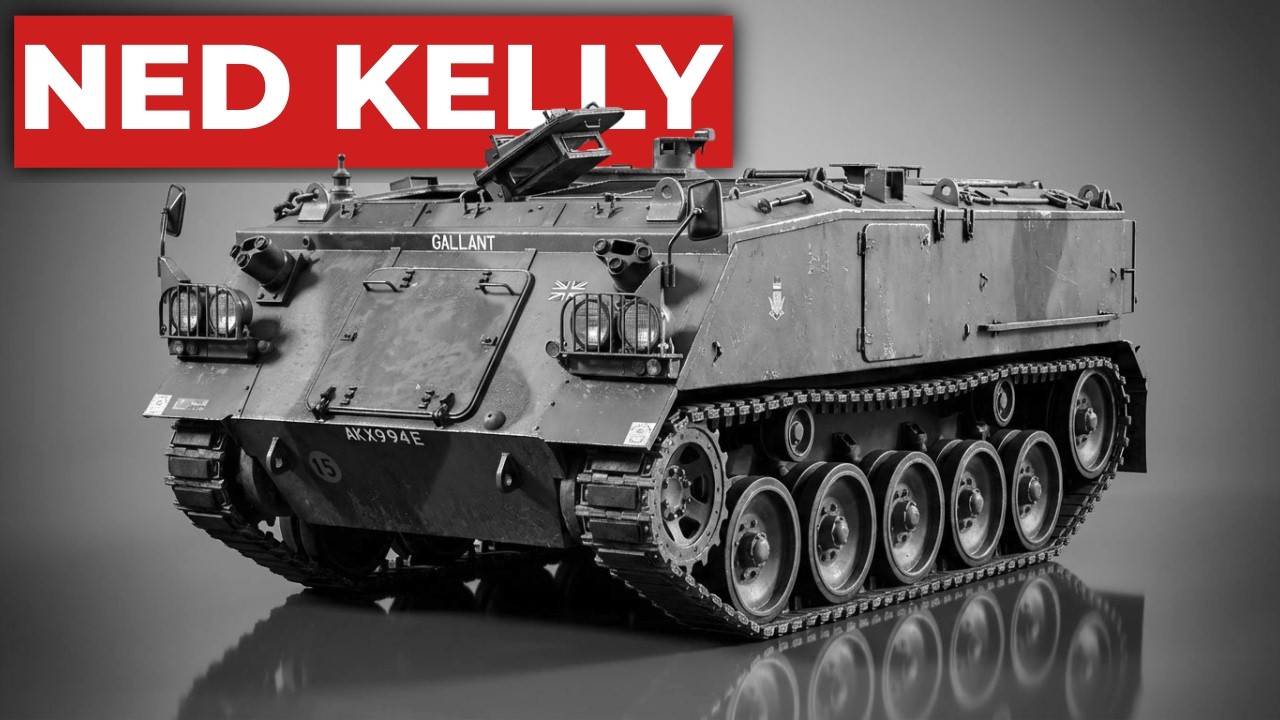
An FV432 ambulance was photographed on the Basra to Kuwait Highway behind Lieutenant Colonel Arthur Denaro’s Challenger. The vehicles did not make the headlines, but without them, the war logistics collapsed. Then came Bosnia, Operation Grapple, October 1992. FV432s painted United Nations white rolled into Vitez and Gornji Vakuf into Lieutenant Colonel Bob Stewart of 1 Cheshire’s.
They escorted firewood convoys into besieged Sarajevo. They carried the dead and wounded out of villages whose names most of Britain could not pronounce. Then Kosovo in 1999 through the Kaçanik defile behind 1 Royal Gurkha Rifles and 1 Parachute Regiment. Then Iraq again, Operation Telic, March 2003.
7 Armoured Brigade, the Desert Rats, under Brigadier Graham Binns, drove north from Kuwait into Basra province. On the 26th of March 2003, the mortar platoon of 1 Royal Regiment of Fusiliers dropped 81-mm bombs on Iraqi Army positions from FV432 carriers. The Battle of Basra ended on the 6th of April, but the war did not end, and by 2005, it was killing British soldiers faster than Whitehall had planned for.
Iranian-backed militias had flooded Basra with explosively formed projectiles. British Snatch Land Rovers were being shredded. On the 16th of July 2005, Second Lieutenant Richard Shearer, Private Leon Spicer, and Private Philip Hewitt of 1 Staffords were killed near Al Amarah in a single Snatch. On the 4th of April 2007, a single roadside bomb in Hayy an Niya killed Second Lieutenant Joanna Yeork Dyer, Corporal Chris O’Neil, Private Eleanor Dlugosz, and Kingsman Adam James Smith of 2 Lancs.
Even Warriors were not surviving. The Ministry of Defence turned to the oldest vehicle in the fleet. An 85 million-pound contract went to BAE Systems. Upgrade the FV432. Make it survivable. Do it fast. What came out of the Bovington workshops in December 2006 was called the Bulldog. The Rolls-Royce K60 was gone.
In its place, a Cummins 6BTA turbocharged diesel of 250 horsepower, a new Allison automatic transmission, yoke steering, improved cooling, Bowman radios, air conditioning, and bolted onto the hull, a Rafael explosive reactive armor package tuned to defeat the shape charge of the Soviet-era RPG-7 bar armor cages.
Kevlar belly plates, electronic countermeasures, a steel gun shield around the commander’s pintle that crews nicknamed the Ned Kelly. The first Bulldogs arrived at Basra Palace in December 2006. The first operational unit was 1 Royal Green Jackets, redesignated 2 Rifles on the 1st of February 2007, then 4 Rifles, then 1 Staffords, who on Christmas Day 2006 launched Operation Sinbad and raided the Al Jumhuriya police station in Basra in Bulldogs. It worked.
Rifleman Keith Murphy, whose section was ambushed in downtown Basra, later described what happened. The vehicle drove through the contact, struck a roadside bomb, and the armor held. The crew lived. The Bulldog was not invincible. On the 21st of May 2007, Corporal Jeremy Brooks of 4 Rifles was commanding a Bulldog in Al Tuwaysa, Basra, when a convoy escort ambush killed him. He was 28.
His commanding officer, Lieutenant Colonel Patrick Sanders, later Chief of the General Staff, called Brooks an inspirational and much-loved figure who died leading his beloved riflemen in battle. Roughly 500 vehicles were upgraded to Bulldog standard in the initial program. Later contracts pushed the total past 1,000 conversions.
Meanwhile, every single vehicle designed to replace the FV432 was failing. The Boxer program, joined in 1999, abandoned by Britain in July 2003. The FRES program, launched in 2004, promised 3,000 vehicles and 14 billion pounds of spending. By 2011, the National Audit Office recorded 300 and 21 million pounds spent on canceled projects with zero vehicles delivered.
The Warrior Capability Sustainment Program, meant to upgrade 380 Warriors with a 40-mm cannon, canceled on the 22nd of March 2021 after 594 million pounds had been spent. Not a single upgraded Warrior was delivered. And Ajax, General Dynamics UK, contracted in 2014 for 3.5 billion pounds.
By November 2020, trials were suspended after crew suffered permanent hearing damage and tinnitus from the vehicle’s vibration. Program cost ballooned past 6 billion. On the 22nd of January 2026, Defense Secretary John Healey told the Defense Committee that officials had not had the full facts and that the program must be backed or scrapped.
A peer in the House of Lords summed it up. The Ministry of Defense had spent over 3 billion pounds in failing to introduce or upgrade two armored vehicles. The FV432, meanwhile, kept rolling. On the 16th of January 2023, Defense Secretary Ben Wallace announced that the United Kingdom would donate over 100 Bulldogs to Ukraine.
By August 2025, they were serving with Azov’s 12th Special Purpose Brigade near Toretsk, converted into armored medical evacuation vehicles. A design from 1958, built in a Shropshire works in 1963, pulling wounded Ukrainian soldiers out of trenches in 2025. On paper, the Americans built a better vehicle.
The M113 was 3 tons lighter. It was faster. It was genuinely amphibious. It was built in 80,000 examples and sold to over 50 countries. The FV432 was sold only to India. Australia tested both in 1963 and chose the American vehicle. In practice, though, British steel protected infantry that American aluminum did not.
And the FV432’s chassis proved endlessly adaptable in a way the M113’s never did. On paper, the Soviet BMP-1 was a generation ahead. A 73-mm gun, an anti-tank missile rail, firing ports. The West German Marder carried a 20-mm auto cannon. By every metric of a modern infantry fighting vehicle, Britain was a decade and a half behind.
Britain did not close the gap until Warrior arrived in 1988. And yet, the FV432 outlasted them all. 1963, the GKN Sankey Works, Hadley Castle, Shropshire. A squat, angular steel box rolls off the production line. It has no sloped armor, no long gun, no imposing silhouette. Its machine gun is a single pintle-mounted weapon. Its armor is 12.
7 mm of rolled plate. It cannot swim in practice. It cannot fight as an infantry fighting vehicle. It was obsolete by the measure of its Soviet and West German rivals within 5 years of entering service. And yet, it worked. It worked on the North German plain, where a war never came. It worked in the hedgerows of South Armagh, where a quieter war did.
It worked on the highway to Basra, in the valleys of Bosnia, in the passes of Kosovo, and in the trenches of Ukraine. 3,000 hulls, 11 prime ministers, 68 years of service and counting, four replacement programs that failed. That is not luck. That is the strange genius of British military engineering, which asks not whether a machine is elegant, but whether the men inside it come home. It was not fast.
It was not pretty. It was not modern. It was British. And it worked when it mattered.