Britain’s WORST King Was Edward VIII And The Palace Knew It?
Britain’s WORST King Was Edward VIII And The Palace Knew It?
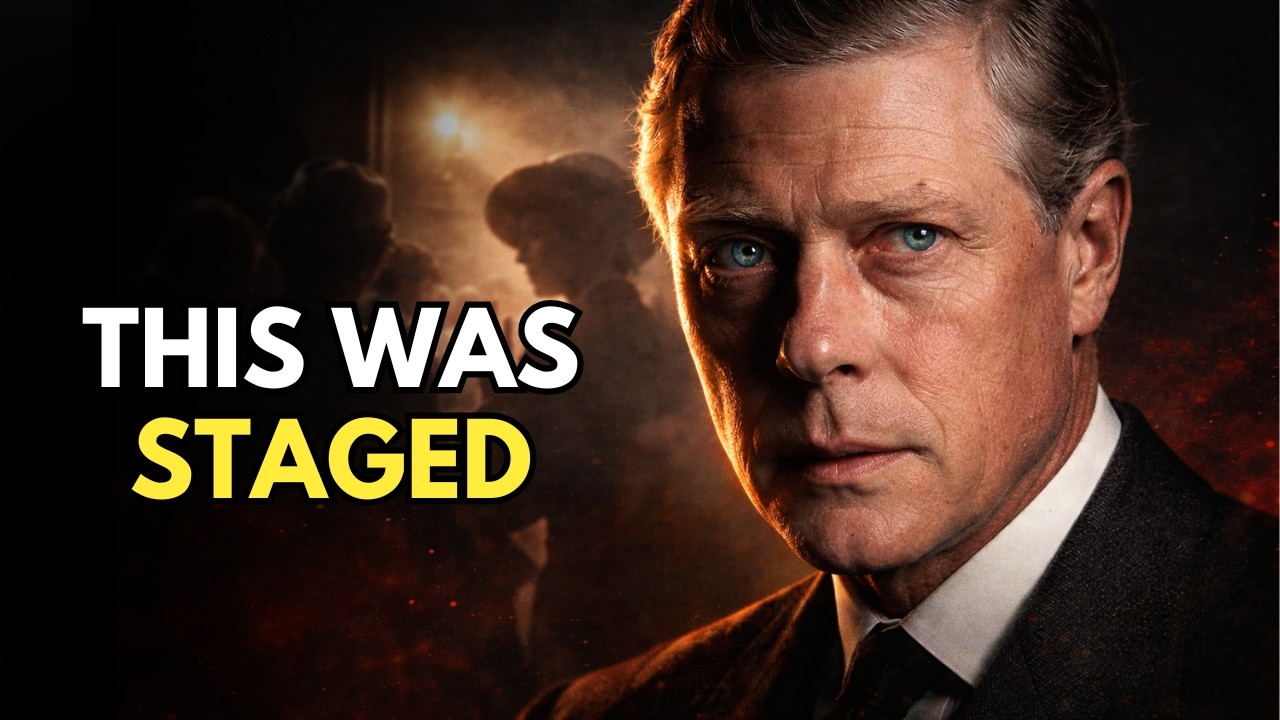
There is a photograph of Edward, taken sometime in the mid-1920s during one of his public tours. He is surrounded by crowds, smiling, waving. And if you look closely at his other hand, he is adjusting his cufflinks. Not once, repeatedly. The look of a man desperately trying to make a costume sit right on a body that has never quite accepted it.
That photograph tells you more about what followed than almost anything written in the official record. Because the story the world was eventually given about Edward the VIII, the love story, the sacrifice, the impossibly romantic abdication, was designed, whether consciously or not, to make you look at the smile and never notice the hands. But, if you look at the private diaries of the men in gray suits who surrounded him, that romance starts to look like a very convenient distraction from something the establishment had been quietly terrified of for years.
Edward Albert Christian George Andrew Patrick David, and known to his family as David, was born on June 23rd, 1894, the eldest son of George V, the future King of England. From the moment he came of age, the public adored him. He was energetic, almost jarringly so, behaving with an informality that made the old guard at the palace wince.
He toured the empire and shook hands with miners and veterans and ordinary people who had never expected to be seen by a royal. He had this restless, slightly uncomfortable quality in formal settings, and always moving, always adjusting, that read to the public as relatability and read to those managing him as something else entirely.
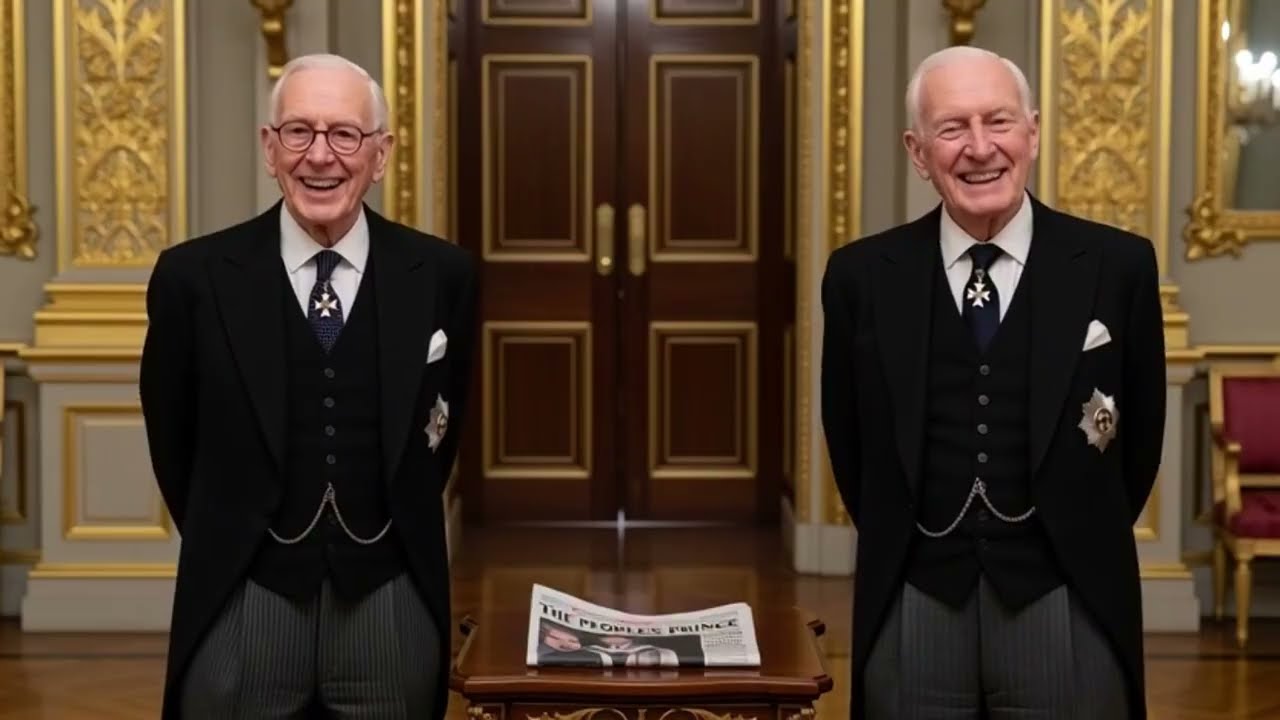
The press called him the people’s prince. The public agreed. The palace smiled and said nothing. When his father died on January 20th, 1936, and Edward became king, the general feeling across Britain was something close to excitement. Here, finally, was a monarch suited to the modern world.
The optimism lasted roughly 10 months. What the public was told, abruptly, with very little preparation, was this. The king wished to marry an American woman named Wallis Simpson. She had been divorced twice. The Church of England could not sanction the marriage. The prime minister informed him that neither the government nor the Commonwealth would accept her as queen, and Edward, unwilling to give her up, signed the instrument of abdication on December 10th, 1936.
He left the country. He gave a radio address. The world wept, and that version, love, sacrifice, impossible choice, became the story that survived. But, here is what the official version requires you not to notice. It requires you to believe that a man described for over a decade as the most promising royal of his generation simply crumbled the moment he was asked to choose, that everything fell apart in 10 months, that one relationship brought down a king.
It requires you to ignore something that was privately known at the very top of the British establishment long before Wallis Simpson arrived. Edward had been a source of serious concern for years. His own father, George V, the old, grim, dutiful king, looked at his eldest son and reportedly said in private words to this effect, “After I’m gone, the boy will ruin himself within 12 months.
” That is not a father worried about a love affair. That is a man who had watched his son for decades and reached a conclusion about his character. The version of history we’re fed is usually the one that’s easiest to swallow. If you’re interested in the versions they tried to hide, subscribe, because that is exactly what we dig into here every week.
The love story was the door they handed you. The question worth asking is what they were keeping you from opening. It survived not because it was the truest version. It survived because it was the most convenient for a palace that needed the publics to grieve a romantic hero rather than examine a troubled king, for a press that had spent years protecting the monarchy’s image, and for a government that had made a decision it couldn’t openly explain.
Every myth has a maintenance cost. Someone has to keep paying it. Someone has to decide again and again that the uncomfortable version is too dangerous to surface. The myth of Edward VIII has been maintained for nearly 90 years. It is worth asking what that required. Begin with the behavioral record that existed long before 1936.
Edward’s household staff, the people who observed him daily, managed his schedule, handled his correspondence, described in private accounts and letters a man deeply resistant to the routine demands of royal life. Not occasionally, consistently, he avoided state papers. For [snorts] a constitutional monarch, state papers are the job, the mechanism by which the king remains informed and formally engaged with government.
We know from the memoirs of his private secretaries that red boxes were returned to London from his weekends at Fort Belvedere with circular stains from cocktail glasses sitting on top of top secret cables. They weren’t just delayed. In some cases, they were never opened at all. This wasn’t embarrassing, it was dangerous.
A king operating without reading the information his government was sending him wasn’t just disengaged, he was functionally ali- absent from the role. At that point, this wasn’t a personality issue anymore. This was a constitutional problem wearing a personality issue as a mask. His moods were volatile in ways those around him found genuinely difficult to manage.
He required constant reassurance at a level that struck observers as far outside the normal range. Not the behavior of a man building the stoic, contained public face the monarchy demanded. He formed intense, consic- consuming attachments to married women one after another. Freda Dudley Ward, then Thelma Lady Furness.
Those closest to him noticed the pattern was less about romance than about control, a need to occupy the center of a private world operating entirely by his rules, sealed off from the obligations of official life. These observations weren’t made by enemies, they were made by staff, by family, by people with every reason to protect him, and none of it reached the British public.
The press of the 1920s and 1930s operated under an informal, but remarkably durable, code of deference toward the royal family. It was the 1930s version of a modern PR cleanup, the kind of coordinated image management we tend to think of as a recent invention, but which had actually been perfected over generations.
Editors understood, without being explicitly told in most cases, that certain stories weren’t published, certain relationships weren’t acknowledged, not through any single directive, through a shared understanding that the monarchy’s image was a national asset, and protecting it was simply part of the job. The result was a constructed portrait.
The public saw the charm and the accessibility. They did not see the red boxes with cocktail rings on them. They did not see the staff quietly managing his volatility. They did not see the advisers asking each other, carefully and privately, what would actually happen when this man was required to govern. Foreign newspapers got um had no such arrangement.
American and European press reported on Edward’s relationship with Wallis Simpson openly from 1935 onward. The constitutional implications were being openly discussed in American papers months before the British public had any idea a crisis was forming. Readers in New York and Paris were better informed about the state of the British throne than readers in London.
That is not a minor irony. The British public was being deliberately kept behind the curve on the biggest constitutional story of their generation. Not through any single directive, but through a system of mutual interest between press, government, and palace that produced exactly the same result as a directive would have.
There were people inside the system who tried to say so directly. Alan Lascelles, who served as Edward’s assistant private secretary during his time as Prince of Wales, had watched long enough that by the early 1930s, he had reached his professional limit. According to his own later recollections, named and it is worth noting these are recollections shaped by memory and hindsight, he he spoke to Stanley Baldwin directly, describing the heir as a man likely to destroy himself and cause serious damage to the monarchy
in the process. Whether that conversation carried the decisive weight Lascelles later attributed to it, historians still debate. What is not debated is the broader picture. Senior people around Edward had formed serious conclusions about his fitness, and the system’s response was to manage those conclusions privately and hope he grew into the role.
He didn’t. By 1934, Wallis Simpson was less a catalyst and more a convenient excuse for a government that was already exhausted by him. She moved into an instability that had been quietly building for years. And what she provided wasn’t the crisis. She provided the name for it. A way of framing an institutional problem as a personal one.
Rather than saying the king appears unable to perform the duties of his office, a statement with devastating implications for everyone who had allowed it to reach this point, the crisis could be reduced to a matter of the heart, romantic, understandable, clean. Was Wallis a victim of that framing? Partly, almost certainly.
She became the official explanation for a failure that had been developing long before she arrived. What comes next is where this gets darker. Stay with it. And if you haven’t subscribed yet, now is the moment. This is the part most people never reach. Myths don’t survive by accident, and the deeper you look at this one, the harder it becomes to believe it survived naturally at all.
They survive because powerful people make active repeated decisions to maintain them. Because institutions understand that the story they tell about themselves is part of what keeps them standing. And because people will often accept a story that makes them feel something over a story that makes them think something uncomfortable.
Return to December 1936. The standard account presents the abdication as a clean choice. Give up Wallis or give up the throne. Edward chose Wallis, romantic, decisive, but the structure of what happened does not look like a choice freely made. Stanley Baldwin’s handling of the crisis has been studied by historians for decades.
The weight of that scholarship suggests he was not a man caught off guard. He was a man who responded firmly and strategically once the situation became unavoidable. Deploying constitutional arguments that were genuine in their weight, but that also happened to produce an outcome many in the establishment had quietly hoped for.
Whether Baldwin had been working toward this moment or simply acted decisively when it arrived is something historians still argue over. What is not in dispute is what Edward did next. He didn’t fight. A king who believed he was being wrongfully removed would have fought. The tools were available.
He could have appealed directly to a public that still largely supported him. He had Winston Churchill making overtures about organizing a political defense. He had press allies. He dismissed Churchill. He declined to contest it. He abdicated quickly and cleanly with remarkably little resistance for a man supposedly losing everything he valued.
There are two honest readings of that. One, he loved Wallis completely and surrendering the throne felt like the right price rather than a battle worth fighting. The other, this was a man who had never fully accepted the role, who had always, at some level, experienced kingship as an imposition, and who, when offered a way out, took it without the resistance you would expect from someone fighting to stay.
Both are interpretations. Neither is proven. But one of them fits the behavioral record of the previous decade considerably better than the other. Once the abdication was complete, the narrative moved fast. The radio address was genuinely moving. Almost certainly shaped by people who understood exactly what the public needed to feel.
Grief, not suspicion. Sorrow for a romantic hero, not questions about a managed departure. The alternative, a public beginning to ask why none of this had been mentioned before, why serious concerns had gone unaddressed, why foreign newspapers had known things the British press had declined to print, would have been far more destabilizing than the loss of one king.
So, the story was sealed. Edward became the Duke of Windsor. He and Wallis settled in France. In 1937, they visited Nazi Germany, where they were received by Adolf Hitler. It wasn’t just bad judgment. It was a flirtation with the enemy that the palace has spent the better part of 80 years trying to contextualize, minimize, and carefully distance itself from.
Whether it reflected genuine ideological sympathy or simply a staggering absence of political awareness, historians still disagree. What they don’t disagree on is that it happened, that it alarmed the British government deeply, and that it required yet another round of careful management from the people responsible for protecting the crown’s reputation.
The myth had to keep running even after he was gone. Because the myth was never really about Edward. It was about the institution, about the idea that the palace was sound, its judgments trustworthy, the people responsible for preparing kings doing their jobs properly. If Edward was the romantic abdicator, the palace was a blameless bystander to one man’s personal decision.
If Edward was a king removed through managed crisis, a conclusion the establishment had been quietly edging toward for years, then the palace was the architect, the body that had known and waited, and acted when it finally had to, and then immediately set about controlling how the whole thing would be remembered.
The first version lets everyone keep their dignity. The second raises questions nobody in a position of power wanted asked. There is a third force that kept this story alive, and it is worth naming directly. People needed it. The 1930s were a decade of genuine fear, economic collapse, fascism advancing across Europe, a war most people in Britain could see coming.
The monarchy represented continuity, the idea that certain things endured. A romantic king who gave up the throne for love was a story that provided real comfort in a moment when comfort was scarce. An unfit king removed by a nervous establishment to prevent a constitutional crisis was not that story. It was cold and institutional, and it made the people running things look frightened and not quite in control.
In 1936, that version was genuinely dangerous to offer. So, they offered something else. The truth is, Edward didn’t just leave a throne. He handed the establishment an opportunity to fix a mistake they had been terrified of for years. The love story wasn’t the cause of the abdication. It was the cure for a crisis they didn’t know how else to solve.
A way of closing a chapter that had been written badly from the beginning, and making it read, in the end, like something almost beautiful. Next time you see a royal scandal in the headlines, the breathless coverage, the clean narrative, the obvious villain and the obvious victim, ask yourself, is this the fire or is it just the smoke? Because the machinery that handled Edward the VIII didn’t disappear in 1936.
It learned from it. And it has been running quietly and efficiently ever since.