“Get Those Clowns Out Of My Sector” — How The Australians Proved Him Wrong
“Get Those Clowns Out Of My Sector” — How The Australians Proved Him Wrong
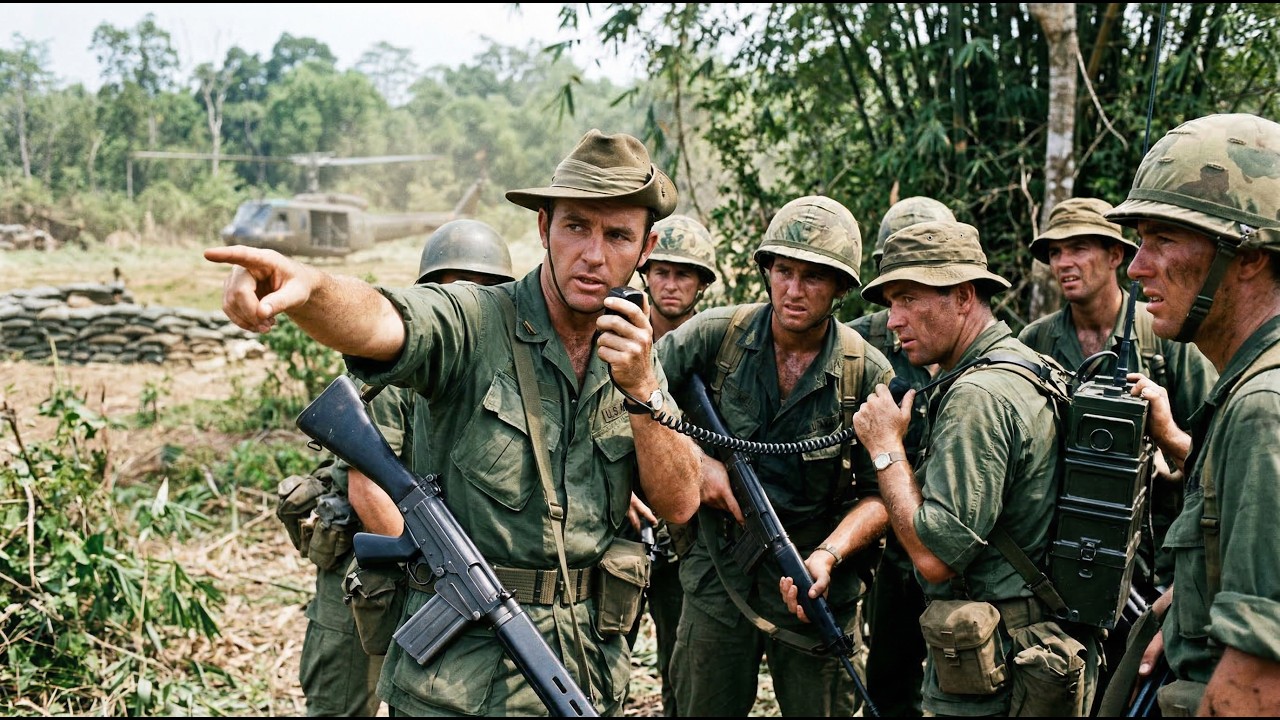
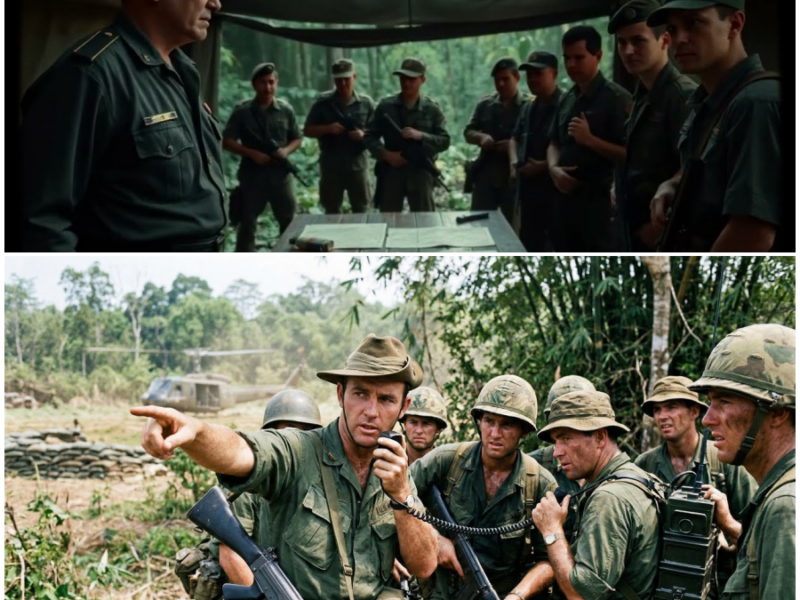
Bien Hoa Air Base, South Vietnam, June 1965. Monsoon rain hammered the ground. American radios still blared in the dark, and the new Australian battalion was already blacking out its position in silence. In veteran memory, one furious US commander looked at these baggy, mud-stained allies and wanted them out of his sector.
Too scruffy, too quiet, too different. But the records show this was never just a clash of personalities. It was a collision between two completely different ways of surviving Vietnam, and that mattered immediately because in Vietnam, being misunderstood could get men killed. If the Australians bent to American methods, they risked becoming louder, more visible, easier targets in a war where the jungle was already listening.
If they refused, they risked humiliation inside the alliance, seen as backward or timid by the biggest military machine on Earth. So, the question was brutal and simple. Were these Australians out of date? Or were they seeing the war more clearly than the Americans beside them? Australia had not entered Vietnam with grandeur.
It began in 1962 with the Australian Army Training Team Vietnam, a small group of advisers sent into the American system, scattered across the country, often working singly or in pairs with South Vietnamese forces, Montagnards, US Special Forces, and local units. Small numbers, long distances, no glamour, just men dropped into an expanding war, learning early that in Vietnam, survival belonged to the patient, the observant, and the men who could think before they fired.
By 1965, the war was swelling fast. The United States had decided South Vietnam could not hold without escalation, and Australia sent 1 RAR to serve alongside the US 173rd Airborne Brigade in Bien Hoa Province. To young Australian soldiers stepping off transport into the heat, the first impression was overwhelming.
Aircraft everywhere. Helicopters in swarms. American abundance on a scale that seemed almost unreal. A war fed by steel, jet fuel, artillery shells, and confidence. But first impressions can lie. The Australians arrived in older gear, a mix of worn greens, old weapons, older habits, and a field style that looked unimpressive beside starched American uniforms and gaudy shoulder patches.
One veteran remembered the contrast immediately. The Americans looked as if they were always ready for parade. The Australians looked like men already expecting a fight. Not polished, not elegant, just practical. And in that difference was the seed of the entire conflict to come. Because the Australians were not merely dressed differently, they thought differently.
At dusk, they stood to in darkness while nearby American camps glowed with lights, slamming vehicle doors, loud talk, and radios. Australian veterans remembered the silence of their own perimeter and the almost casual noise from their allies. To one side, a force convinced its sheer power would dominate the battlefield. To the other, a smaller army that had learned in Malaya and Borneo that noise in the jungle was not confidence.
It was an invitation. Then came the patrols, and this is where the contempt, the disbelief, the muttered insults would have sharpened. Australian veterans later described moving with American patrols and being horrified by what they saw. Rifles slung, men talking, radios sometimes playing, large groups drifting into ambush positions with a kind of casual bulk.
The Australians felt exposed just standing among them. Every instinct told them the jungle would hear this long before the enemy was seen. And that is the cruel thing about doctrine. Men can die for a theory long before anyone admits it was wrong. To the Americans, the Australians could look almost perverse.
Too cautious, too unwilling to force contact, too attached to stealth. The US way in those early years leaned toward overwhelming the enemy in open battle using artillery, helicopters, aircraft, and volume of fire to smash guerrillas once they were fixed. Australian officers watched this closely, and one veteran remembered the cultural divide with painful clarity.
Americans wanted what he called a donnybrook, a big fight, while the Australians knew guerrillas did not fight by invitation. They fought when they chose and vanished when they didn’t. There is a psychological humiliation in being the smaller ally. You are expected to fit in, to adapt, to follow the logic of scale.
And for a while, the Australians had to live inside that logic, attached to American command, carried by American helicopters, fed by American fire support, measured beside American confidence. The pressure was obvious. If the big battalions, the air mobility, the bomb tonnage, the artillery parks, and the body counts were the future of this war, then what exactly were the Australians supposed to be? A quaint relic? A colonial sideshow? Men in faded greens pretending jungle craft still mattered? And for a dangerous moment, even the
Australians could feel the pull of that American rhythm. Young officers wanted first kills. Platoons wanted to prove themselves. Success was increasingly discussed in the language of enemy dead. One veteran admitted that in those early months, he became almost reckless chasing that first confirmed kill because the atmosphere of the war pushed everyone toward numbers.
That is how a doctrine spreads. Not just through briefings, but through shame, pride, impatience, and the need not to look ineffective beside your allies. Then, the jungle began to punish illusions. The Australians saw American battalions suffer terrible casualties in operations designed to draw the enemy in. Companies were mauled.
Helicopter landing zones filled with bodies. Men who had arrived with starched uniforms and absolute faith in firepower were suddenly being bagged for evacuation. Australian troops witnessed it up close, and the effect was chilling. This was no abstract doctrinal debate anymore. The question had become physical.
Whose sons were still standing at dusk, and whose were being zipped into body bags? One of the most haunting lessons came in the Ho Bo Woods, where Australians found themselves on top of a major tunnel complex. What should have been a holding operation turned into a nightmare beneath their boots. The enemy was not just in front of them.
He was below them, around them, listening from black earth. Australians could hear movement in the tunnels, feel the uncertainty of ground that wasn’t solid at all, and confront an enemy who could surface behind them, strike, and disappear again. Firepower could crater the jungle.
It could not automatically solve the terror of an invisible enemy living underground. And this is where the myth of the clowns starts to rot from the inside. Because the Australians were not refusing modern war out of stubbornness. They were adapting to a battlefield that refused to behave like one. They learned to search with patience, to read disturbed earth, to notice absence as much as presence, to hear silence as information.
In the Ho Bo Woods, they faced tunnels, command-detonated explosives, hidden bunker systems, medics being killed while trying to save the wounded, and the suffocating claustrophobia of underground war. This was not glamour. It was not swagger. It was men learning that Vietnam punished every lazy assumption. The senior Australians absorbed that lesson fast.
Official histories are blunt about it. The US and South Vietnamese forces were fighting the insurgency differently from the Australians, and that difference became serious enough to shape policy. Australia decided it needed its own designated area of operations under its own command. Not out of vanity, out of necessity.
If their men were going to fight the war in the way they believed actually worked, they needed room to do it. That decision gave birth to the first Australian Task Force in Phuoc Tuy in 1966. So, in one sense, the American colonel who wanted the Australians out got his wish.
The Australians would go, but not because they had failed. They would go because they no longer intended to fight Vietnam as an accessory to someone else’s doctrine. They would build at Nui Dat, Phuoc Tuy, and run the war the way their own officers thought gave men the best chance of coming home alive. That is the deeper answer hidden inside the outburst.
The alliance did not fracture. It adjusted because the jungle itself was already choosing which habits deserved to survive. At Nui Dat, the Australians settled into something colder and more intimate than the American idea of search and destroy. Small patrols, quiet movement, ambushes laid with patience, long hours of watching tracks, listening to villages, reading sign, and trying not to be seen until it was too late for the enemy.
The purpose was not theatrical destruction. It was pressure, control, slow suffocation of insurgent freedom of movement. It lacked the dramatic spectacle of mass helicopter assaults, but it matched the war more honestly. And then, there was the SAS. If the conventional Australian infantry already seemed too quiet for some Americans, the SAS must have looked almost absurd.
Five men, sometimes 10, inserted by helicopter, then swallowed by bush and heat and rot. Their job was not to announce presence. It was to erase it. Reconnaissance, surveillance, ambush, tracking bunker systems, movement routes, enemy concentrations. They fed intelligence back through squadron channels to battalion and task force commanders who then acted on it with infantry, artillery, or engineers.
Tiny patrols producing decisions for much larger formations. Imagine the strain of that. Five men in country where even breathing felt loud. Heat pressing under the shirt, sweat drying into salt, leech bites going tacky in the dark, the stink of stagnant water, the constant itch to move and the discipline not to.
To American eyes raised on mobility and mass, such tiny patrols could seem reckless or even comic. What could five men possibly do in a province full of guerrillas? But in Vietnam, smallness had an advantage. It could disappear. And what disappears can watch. Officially, the SAS became the eyes and ears of the task force.
In practice, that meant they went where bigger formations were clumsier, noisier, and easier to detect. AWM records describe the patrol pattern clearly. Usually five-man teams inserted by helicopter, operating throughout Phuoc Tuy and neighboring provinces, reporting enemy numbers, movements, camp locations, and bunker systems.
Later, even US long-range reconnaissance personnel were patrolling with Australian SAS around Nui Dat. The ridicule, where it existed, had begun to run into results. And those results were hard to ignore. The Australian War Memorial notes that the SAS had the highest kill ratio of any Australian unit in Vietnam.
On its first tour, one squadron mounted 246 patrols and killed 83 Viet Cong, with more possible kills recorded. Those numbers matter, but not for the usual reason. They matter because they came from a style of war that looked unimpressive from the outside. No thunderous spectacle, no giant assault columns, just men patient enough to let the jungle reveal itself.
This is what men in large headquarters often miss. Battlefield competence does not always look impressive at first glance. Sometimes, it looks dirty, underfed, old-fashioned. Sometimes, it looks like soldiers wearing mixed uniforms, carrying what works, sleeping in filth, and talking less than everyone else. Sometimes, it looks like the kind of men an angry colonel might dismiss in one contemptuous sentence.
But the enemy is rarely defeated by appearances. He is defeated by men who understand what kind of war they are actually in. And if you want to know what that war felt like at ground level, not from a briefing slide, but from a human body, listen to the Australians themselves. One infantryman remembered Harvard nights among decaying corpses, the stench so heavy he wretched in darkness.
Another remembered a US helicopter force ruining an ambush and then nearly attacking the Australians by mistake. Another remembered scorpions moving over the leaves at dusk, leeches under lips and around eyes, boots never dry, fear turning strange until the absurd became normal. That is what untidy soldiers were surviving.
The American military machine was not stupid. It was massive, brave, and capable of extraordinary violence. Australian veterans repeatedly acknowledged American courage. That is important because this story is not about easy mockery. It is about friction inside an alliance where both sides were trying to win, but not always learning the same lessons at the same speed.
The Australians did not despise the Americans. They feared parts of their doctrine. And some Americans, in turn, mistook Australian restraint for weakness until combat experience made the distinction impossible to ignore. That is why the band the Australian story has endured, even in rough-edged veteran memory.
Because it captures something emotionally true, whether the exact words were shouted at a perimeter, muttered after a patrol, or passed around as bitter camp folklore. Somewhere in Vietnam, again and again, Australians were judged by how they looked instead of how they fought. Somewhere, again and again, they had to prove that a war against guerrillas could not be won by noise alone.
Somewhere, again and again, men with polished theories had to watch the jungle favor something else. And there was a deeper humiliation in that for the Americans because the Australians had learned some of these lessons the hard way before Vietnam. Malaya, Borneo, counterinsurgency fought without the illusion that technology could replace fieldcraft.
So, when Australian officers watched American units try to dominate the war through firepower, they were not merely being stubborn allies. They were watching a larger partner repeat mistakes that jungle warfare had already exposed. The tension was not about ego, it was about memory. Whose military memory would shape survival? By late 1966 and into 1967, the answer was becoming harder to avoid.
Australian methods were not perfect. They still bled. They still made mistakes. They still walked into mines, ambushes, and tunnel systems that felt like the earth itself wanted them dead. But their commanders had chosen a style built around reducing exposure, controlling casualties, and forcing contact on better terms.
Officially, that meant small, quiet patrols. Unofficially, it meant admitting something politically awkward. The smaller ally had not come to Vietnam to learn everything from the bigger one. And that is the real sting inside the phrase, “Get those clowns out of my sector.” Because once you strip away the contempt, what remains is fear of the unfamiliar.
A fear every military institution carries. If these scruffy men are right, then our polished assumptions may be wrong. If silence works better than swagger, then rank cannot protect bad habits. If five men in the bush can feed better intelligence than a battalion blundering forward, then the issue is not resources, it is humility.
Vietnam punished armies that confused size with understanding. The Americans could own the sky and still not own the village path. They could flatten jungle and still miss the men moving through it. They could count bodies and still fail to control the rhythm of battle. The Australians saw this early, and not because they were wiser in some abstract moral sense.
They saw it because they were smaller, more exposed to consequence, and less able to waste men proving a theory. For them, every tactical mistake cost too much. So, no, the Australians were never the clowns in this story. If anything, the mockery reveals how quickly armies can sneer at what they should be studying. The men who looked too loose, too rough, too unlike parade ground professionals were often the ones best adapted to the war under their boots.
They did not need to look heroic. They needed to come back with useful intelligence, hold a perimeter in darkness, move quietly enough to live, and keep faith with the men beside them. That is a harsher kind of professionalism, less visible, more real. And maybe that is why this story still matters now.
Not because one American colonel lost his temper. Not because Australians enjoyed being underestimated. But because modern war still seduces powerful armies into believing that more force means more understanding. Vietnam said otherwise. The Australians said otherwise. The jungle said otherwise. And when history forces those voices together, the lesson is brutal. Arrogance makes noise.
Competence often whispers. In the end, the Americans did not erase the Australians. And the Australians did not win Vietnam by themselves. The war was bigger, uglier, and more tragic than one tactical argument. But inside that tragedy, there is still a hard-earned truth. Alliances survive best when pride gives way to observation.
When soldiers are judged by what they accomplish, not by how tidy they look under fluorescent lights. When commanders have the courage to admit the battlefield may be teaching them something they did not want to hear. So, when you hear that line, “Get those clowns out of my sector.” Hear the deeper echo beneath it. Hear rain on canvas.
Hear radios crackling in one camp and silence settling in another. Hear five men easing into bush that wants to swallow them whole. Here a larger army learning slowly and painfully that polished doctrine is useless if it cannot smell the ground it stands on. And remember this, in Vietnam the men laughed at first were often the men everyone else was studying by the end.
That is the payoff. Not that the Australians were magical, not that the Americans were fools, but that war strips away vanity faster than almost anything on earth. In the end it asks only one question. What works when the light goes, the jungle closes, and somebody is trying to kill you? In Vietnam the Australians answered that question with patience, stealth, and the cold humility to fight the war that was actually there.
If you want more untold military stories like this, subscribe to Australia’s Secret Wars.