How Did Ben Roberts-Smith Go From War Hero To Facing Shocking Allegations?
How Did Ben Roberts-Smith Go From War Hero To Facing Shocking Allegations?
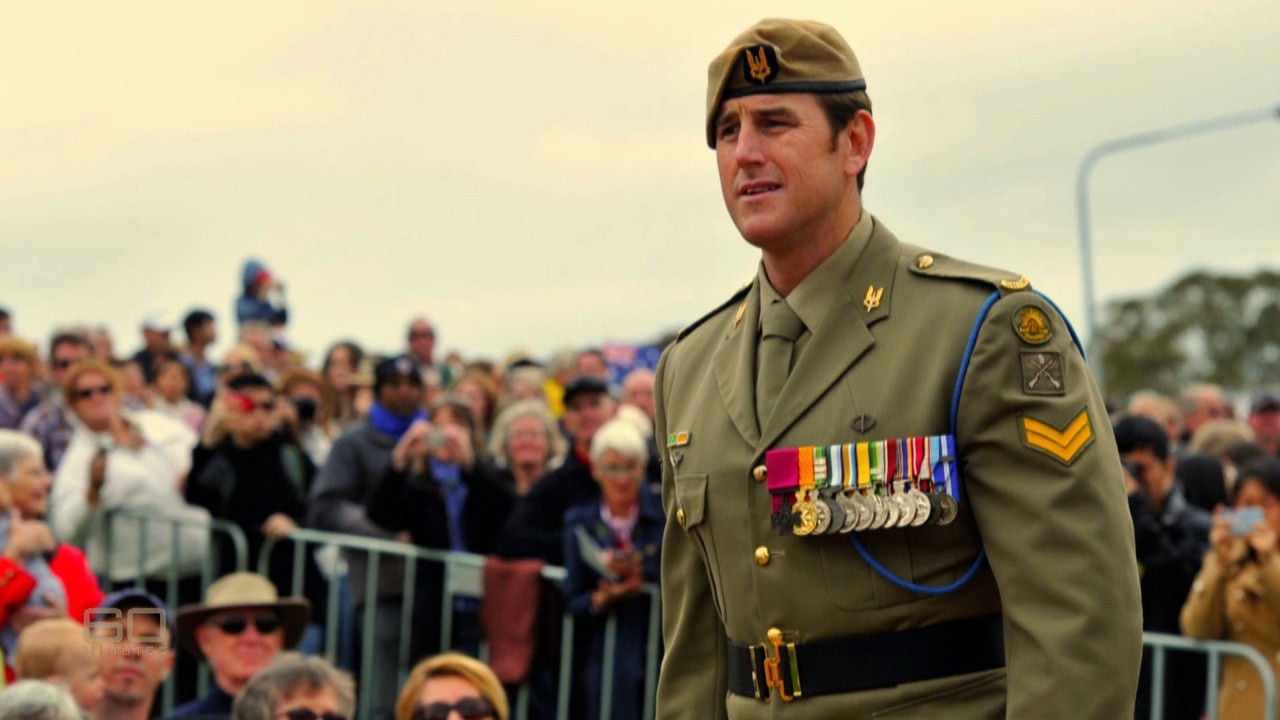
He was the most decorated living soldier in Australian history, a Victoria Cross, a medal for gallantry, mentioned in dispatches multiple times across multiple deployments, a man whose name had become synonymous with the idea of Australian military excellence, spoken in the same breath as the legends of Gallipoli, of Kokoda, of Long Tan.
The Australian Defense Force used his image in recruitment material. Politicians shook his hand in front of cameras. He was, by every official measure, the face of the modern Australian warrior. Then, the journalists started asking questions, and the story that emerged, piece by piece over years, was one that the Australian military establishment had no framework to process.
Because the allegations weren’t about failure. They weren’t about cowardice or incompetence or the kind of human weakness that war occasionally reveals. The allegations were about what happened when no one was watching, and whether the most decorated soldier in the country had used the cover of combat to do things that no medal could justify.
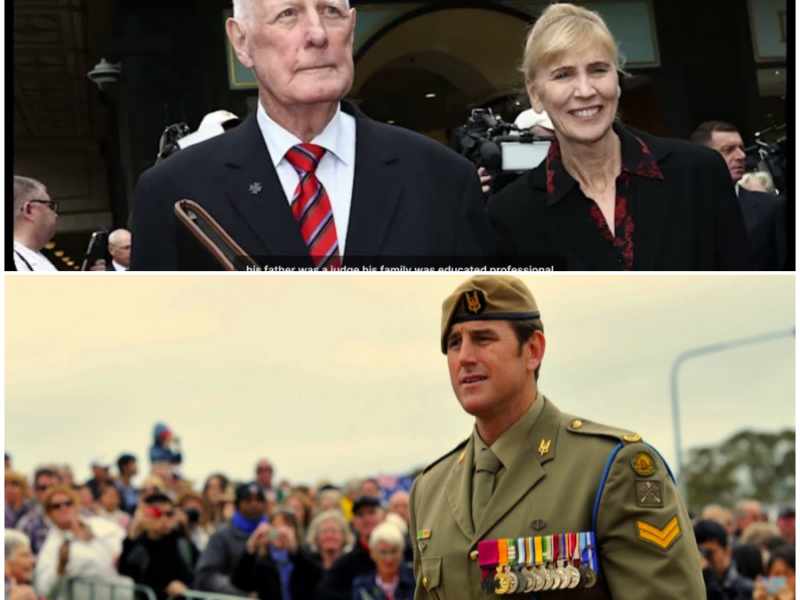
Ben Roberts-Smith was born in Perth in 1978. His father was a judge. His family was educated, professional, stable, the kind of background that produces lawyers and doctors and occasionally soldiers who approach their profession with the same methodical ambition they would have brought to any other career. Robert-Smith was not a casual soldier.
From the moment he entered the Australian Army, he pursued excellence with an intensity that his peers described as almost frightening. He was physically extraordinary, 6 ft 5, built in a way that made other fit men feel inadequate. But the physical was secondary to the drive. He wanted to be the best, not one of the best.
The best. He attempted SASR selection and passed. He deployed to Afghanistan multiple times from 2006 onwards, accumulating a combat record that was, by any conventional measure, remarkable. His Victoria Cross was awarded for actions in the Shah Wali Kot district in 2010. The citation described him charging two machine gun positions under fire, taking them out with grenades and his own weapon, allowing his patrol to break contact and survive.
He was 32 years old. The medal was presented by the Governor-General. The Prime Minister attended. Australia had its hero. But here is where the story splits. Because while the official record was being written, the citations, the commendations, the recruitment posters, a different record was being built in a different place, in the villages of Kandahar and Uruzgan provinces, in the memories of Afghan civilians and local interpreters, in the private conversations of Australian soldiers who had served alongside Robert-Smith and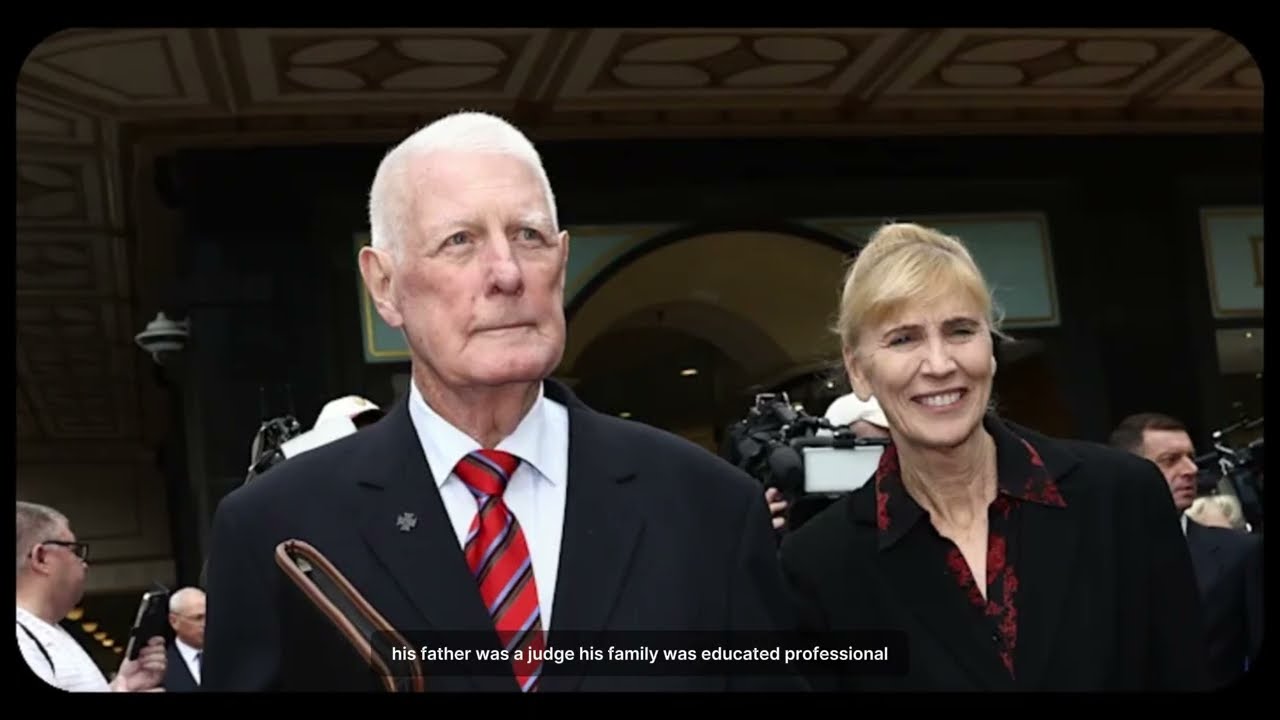
had seen things they couldn’t find a way to report through official channels. And eventually, slowly, carefully, over years, in the notebooks of two journalists at The Sydney Morning Herald and The Age. Chris Masters and Nick McKenzie spent years on this story, not weeks, years. They cultivated sources.
They interviewed former SAS soldiers who spoke only under conditions of strict anonymity. They traveled to Afghanistan and interviewed villagers through interpreters. They cross-referenced accounts. They verified what could be verified and were transparent about what couldn’t. What they published, beginning in 2018, was not a casual accusation.
It was a documented, sourced, carefully constructed set of allegations that went to the heart of what Australian special forces had done in Afghanistan. And at the center of those allegations, not as a background figure, not as a peripheral name, was the most decorated soldier in the country. The allegations were specific, not vague claims of misconduct or generalized brutality.
Specific incidents, specific locations, specific dates. The journalists alleged that Robert-Smith had been involved in the unlawful killing of Afghan civilians and prisoners. That in at least one case, a prisoner had been kicked off a cliff while his hands were bound. That in others, men who posed no threat had been executed in circumstances that could not be justified under any rules of engagement.
They alleged that junior soldiers had been pressured, either directly or through the culture of the patrol, to participate in these killings, to blood themselves, in the language that was reportedly used within the unit. And they alleged that a culture of cover-up had operated around these incidents for years.
That reports had been buried. That witnesses had been discouraged. That the machinery of military administration had, consciously or otherwise, protected men whose conduct in the field had crossed lines that the law and basic morality did not permit. Robert-Smith’s response was not silence. He denied every allegation, categorically, publicly, and then, in a decision that would define the next 5 years of his life, he sued.
Not just a statement of denial, not a request for correction, he launched one of the largest and most expensive defamation cases in Australian legal history against Nine Entertainment, the parent company of The Sydney Morning Herald and The Age, and against the journalists personally. The legal strategy was aggressive and deliberate.
If the journalists had lied, if the allegations were fabricated, defamation law would destroy them, their careers, their outlets, their reputations. But defamation law in Australia operates on a specific principle. Truth is a complete defense, which meant that if Nine chose to fight the case, and they did, the courtroom would become the place where the evidence was tested.
Every source, every account, every allegation that had been published. All of it in open court, under oath. Subscribe to Australia’s Secret Wars. These are the stories that change how you see things. Subscribe now and never miss what’s coming next. The trial began in June 2022 in the Federal Court of Australia. It ran for over 100 days.
100 days of testimony, cross-examination, documentary evidence, and witness accounts that placed some of the most sensitive and disturbing material about Australian military conduct in Afghanistan directly into the public record. Former SAS soldiers testified. Some supported Robert-Smith. Others, appearing under pseudonyms to protect their identities, did not.
Afghan witnesses gave evidence via video link from locations that were not disclosed for their protection. Men who had survived incidents that were now being litigated. Men who described, through interpreters, what they said they had seen in their villages. Robert-Smith himself took the stand. He was cross-examined for weeks.
His barrister fought for every inch, and the full machinery of one of Australia’s most powerful media companies, with its legal team, its resources, its years of document preparation, pressed back. It was the most significant military defamation trial in Australian history, and the world watched.
Now, here is what you need to understand about defamation law and what the verdict actually means. Because this is the part that almost every media report got wrong, or at least got incomplete. A defamation verdict is not a criminal conviction. The standard of proof is different. The question being asked is different. The court was not asked, did Ben Robert-Smith commit war crimes beyond reasonable doubt? The court was asked, did Nine Entertainment prove, on the balance of probabilities, that the substance of what they published was
true? These are not the same question, and understanding that distinction is essential to understanding what happened on the 1st of June, 2023, Justice Anthony Besanko delivered his judgment. 842 pages, after 100 days of trial, after years of investigation, after the full weight of the Australian legal system had been brought to bear on the question of what happened in the villages of southern Afghanistan over a decade earlier.
The judge found in favor of Nine Entertainment on the majority of the allegations. He found that the publications were substantially true. He found that Robert-Smith had engaged in conduct that, in the judge’s assessment of the evidence presented, constituted the unlawful killing of civilians. Specifically, the judge found it was proven on the balance of probabilities that Robert-Smith had kicked a bound Afghan prisoner named Ali Jan off a cliff, and that Ali Jan had subsequently been shot.
He found that Robert-Smith had pressured subordinates to execute an Afghan prisoner known as W108 in a tunnel in the village of Darwan. He found other serious findings across multiple incidents. And he dismissed Robert Smith’s defamation case in its entirety. Robert Smith appealed. In February 2025, the full Federal Court heard the appeal and upheld the original judgment.
Every finding of the original trial, tested again on appeal by some of Australia’s most senior legal minds, upheld. Robert Smith was ordered to pay costs. The man who had sued to protect his reputation had instead created a legal process that placed, permanently, in the formal record of the Australian Federal Court, findings that he had committed acts of shocking brutality against civilians and prisoners who posed no threat.
Here is the question that this story demands. How? How does a man with a Victoria Cross, a medal awarded for genuine, documented, extraordinary bravery under fire, how does that same man, in the same war, on other days, allegedly do what the court found he had done? This is not a comfortable question because the answer, the honest answer, requires you to accept something that military mythology has always resisted.
The qualities that make exceptional soldiers are not the same as the qualities that make ethical ones. Drive, aggression, the capacity to act without hesitation, the ability to process violence as a tool rather than a trauma, the refusal to stop, to yield, to accept limitations. These qualities produce Victoria Crosses in firefights.
They can also, in the absence of adequate oversight, adequate culture, and adequate accountability, produce something else entirely. The darkness that sits adjacent to elite military capability is not widely discussed. It is easier to tell the story of the charge, the grenade, the machine gun position taken at cost. It is much harder to tell the story of what the same man does on a quieter day in a village with a prisoner when no one is watching and the culture around him has decided that certain rules no longer apply.
The Australian military, in the wake of the Brereton report, a four-year Inspector General investigation into Special Forces conduct in Afghanistan that preceded the trial, faced exactly this reckoning. The Brereton report found credible information that 39 Afghan civilians and prisoners had been unlawfully killed by Australian Special Forces personnel across 14 incidents.
39 people, not by foreign soldiers, not by an adversary, by Australians. The report described a culture within certain SAS squadrons where killing had become normalized, where blooding junior soldiers by having them participate in executions was described as an actual practice, where the competitive culture of elite soldiering, the drive to accumulate, to prove to be the best, had been grotesquely redirected toward body counts.
Robert Smith was not the only person named in the broader investigation, but the court case meant he became the public face of it. He has lost his marriage, his career, his corporate roles. He had been a senior executive at Seven Network’s Queensland operations, his public image, everything the military had built around him, everything he had built around himself, dismantled.
Not by his enemies, not by the Taliban, by a courtroom in Sydney and 842 pages of judicial findings. As of today, no criminal charges have been laid against Robert Smith. The Australian Federal Police investigation into war crimes allegations, triggered in part by the Brereton report, is ongoing. Criminal prosecution requires a higher standard of proof than a civil defamation trial.
The process is slow, complex, and may take years more. But the civil record is settled. The court has spoken. And what it said, what 842 pages said, cannot be unwritten. The most decorated living soldier in Australian history, a Victoria Cross that no court has taken away because the acts for which it was awarded were real and documented, and the bravery they represent was genuine.
And findings, equally real, equally documented, that the same man committed acts of profound cruelty against people who were defenseless. Both things are true. That is the hardest part of this story, not the legal outcome, not the fall from public grace. The fact that both things can exist in the same person, that the medal and the findings belong to the same hands.
That war, at its extreme edge, without adequate culture and accountability, can take everything that makes a soldier exceptional and turn it, on the wrong day, toward something that no medal will ever balance out. The villages where these things happen still exist. The families of Ali Jan, of W108, of the others, they exist.
They were never on recruitment posters. Their names were not in the newspapers until journalists spent years making sure they couldn’t be ignored. The story of Ben Robert Smith is not really a story about one soldier. It is a story about what happens when a system builds heroes without building guardrails, when it celebrates the edge without asking what lies at the edge, when it values the medal more than the question of how it was earned.
Australia is still answering that question. The courtroom closed. The answer hasn’t arrived yet. If you want more stories like this one, the full picture, not just the headlines, subscribe to Australia’s secret wars. These are the stories that demand to be told. Subscribe so you don’t miss what’s next.