How US Special Forces Were Told Never To Follow Australia’s SASR After Dark
How US Special Forces Were Told Never To Follow Australia’s SASR After Dark
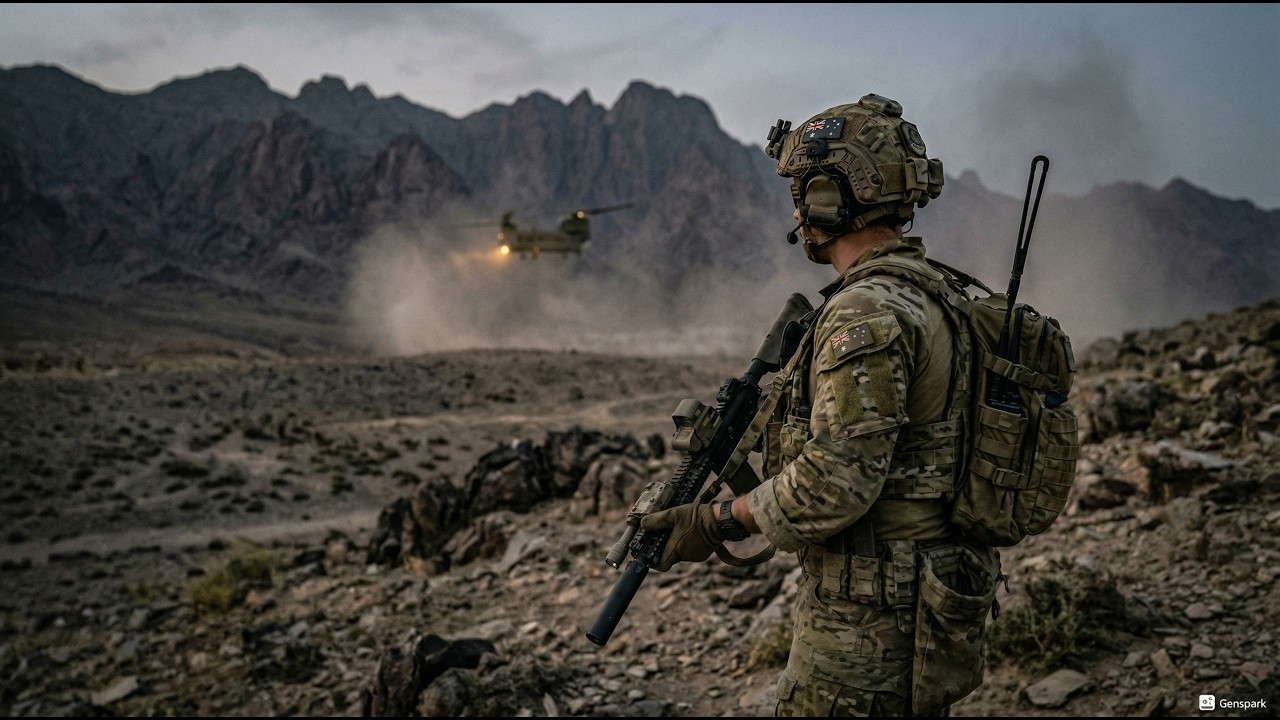
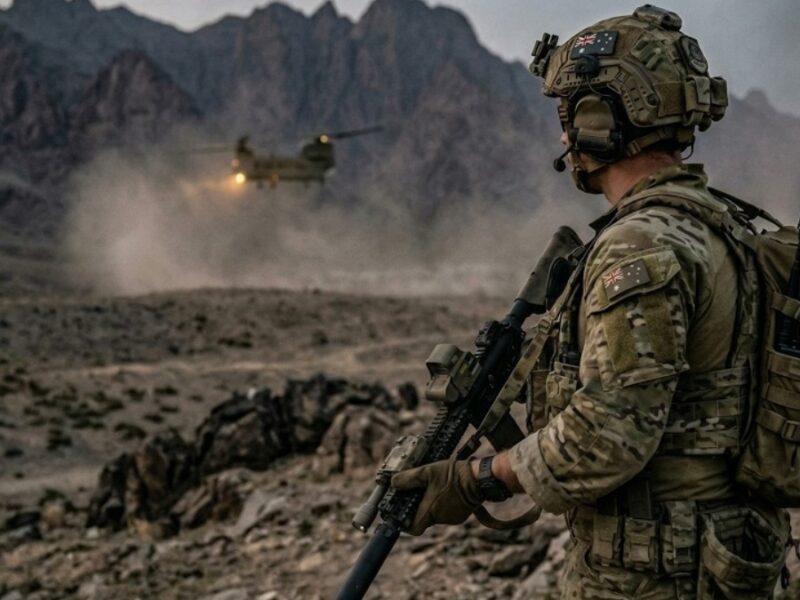
Uruzgan province, southern Afghanistan. Winter 2012. A Black Hawk drops special operators into the dark near a farming village, and before the night is over, men in the fields will be dead. Bodies will lie beside a tractor, and a rumor already spreading through coalition circles will sound less like gossip and more like a warning.
Because years later, when witness statements, leaked accounts, and an official Australian inquiry began peeling back what happened in Afghanistan, one question kept returning like a footstep in the dark. Why were some American operators told, in one form or another, never to follow the Australians after sunset? It was never the kind of order you’d frame on a headquarters wall.
No stamped directive, no neat line in a coalition briefing book. Just something passed quietly from team room to helicopter ramp, washed from one hard deployment to the next. A phrase spoken low enough to deny, but clear enough to remember. And the most disturbing part was this. At first, it sounded like respect.
If hidden military stories matter to you, stay with this one because what happened in Afghanistan was not just about tactics. It was about how an elite reputation is built, how it mutates in war, and how fear can change its meaning without anyone noticing until it is far too late. To understand that warning, you have to go back before the scandal, before the inquiry, before the headlines turned admiration into suspicion.
You have to go back to what the Australian SASR already was in the minds of allies. Small, professional, hard to read, and unusually comfortable in the kind of country that grinds ordinary soldiers down. So, they had carried a legacy out of Borneo and Vietnam. The old mythology of patience, stealth, endurance, and men who could outlast the terrain itself.
When Australia sent SASR squadrons into Afghanistan after 9/11, they arrived with that old reputation already attached to them. In the early phase, they worked mainly in support of American operations in southern Afghanistan. Long vehicle patrols, isolated ground, distances that made rescue feel theoretical, dust that got into your teeth, engines ticking in the cold after midnight halts, the sense that once you rolled beyond the wire, you were entering a place where maps became suggestions and time stretched strangely.
That kind of work impresses allies. But admiration in special operations is never simple. It comes with comparison, and in comparison becomes competition faster than most people realize. By the time Australian special operations returned in strength to Uruzgan, especially through the years of Task Force 66 and the Special Operations Task Group, the war had changed.
It was no longer only about hunting the remnants of Al-Qaeda. Now it was insurgency, counterinsurgency, local power brokers, shifting loyalties, kill-capture missions, partnered Afghan units, and a grinding cycle of raids that almost always happened at night. And night was where the Australians seemed to come alive.
Ask enough veterans of coalition warfare what makes one unit stand out from another, and they won’t start with medals. They’ll start with habits. How much a team talks, how much noise it makes, how it moves to a door, how long it waits before violence, how quickly it switches from stillness to action.
The Australians built a reputation for being calm in that space between silence and sudden force. Less chatter, less theatrics, a kind of cold patience. They would sit with the dark longer than other men. Let the dogs bark themselves tired. Let the village settle. Let the enemy believe the danger had passed. Then move. To some Americans, especially those used to working with louder, more heavily resourced formations, that composure looked almost supernatural.
It was the kind of professionalism that could make a coalition partner mutter, half admiring and half uneasy, that these blokes were different. And they were. But different is one of the most dangerous words in war. Because sometimes it means better, and sometimes it means something nobody wants to define out loud.
The missions in Uruzgan were supposed to be precise. And disrupt Taliban leadership. Break networks. Protect reconstruction teams and mentors. Partner with Afghan provincial response forces. Hit compounds in the hours before dawn, when surprise was strongest and resistance weakest. On paper, it all sounded controlled.
On the ground, it was mud walls, frightened families, bad intelligence, armed men who vanished into irrigation ditches, and seconds to decide whether someone running in the dark was a fighter, a farmer, or a boy too scared to stand still. That pressure changes people, especially when the deployments do not stop. By the later years of the war, some operators were arriving in Afghanistan already carrying six, seven, even eight rotations inside them.
Think about what that means. Years of broken sleep. Years of adrenaline spikes at 2:00 a.m. And years of walking into compounds where every shadow might hide a rifle and every hesitation might get a friend killed. At some point, war stops feeling temporary. It becomes climate. And that is where the real mystery begins. Because the warning about following the Australians after dark may have started as a tactical observation.
They moved fast. They moved quietly. They accepted risk. They operated with a confidence that could make other units feel slow and overexposed. But somewhere in Afghanistan, that warning changed tone. It became less about keeping up and more about not wanting to be there for what came next.
That change did not happen in one night. It happened by degrees, in the private language of elite units, in after-action stories, in nervous laughter, in things a man hears in a smoke pit and wishes he hadn’t, in the widening gap between what gets written in a report and what everybody in the room knows actually happened. The Australians were not the only special operators in Afghanistan carrying that burden. Not even close.
But later investigations would suggest that inside parts of Australia’s special forces, something had gone badly wrong. A warrior culture, distorted prestige, a clique mentality. Junior men left to absorb the habits of dominant patrol commanders. A code of silence so powerful the truth itself became a kind of betrayal.
And if that sounds like language written after the fact, it was. That is what makes it so chilling. Because by the time official investigators described the culture, many coalition veterans had already felt its outline without knowing its full shape. They sensed something. Not enough to prove. Not enough to stop the machine.
Just enough to whisper warnings no one wanted recorded. In Afghanistan. Whispers often traveled faster than reports. Village could hear helicopters before headquarters heard concern. An ally could know which patrol to avoid before any inspector general opened a file. And Afghan civilians, of course, knew first. They knew from the sound of aircraft at night, from the way doors exploded inward, from boot steps in courtyards, from the smell of churned dust and fuel, from the terror of not understanding English, but recognizing immediately when men had entered the compound with
restraint, and when they had entered with something else. Some villagers gave the foreign raiders names. Names born out of fear. That fear matters because it raises the question coalition soldiers did not want to ask early enough. Were the Australians feared because they were effective, or because they were becoming uncontrolled? The answer is ugly. It was both.
There were genuine battlefield achievements, real professionalism, real courage, real tactical skill. Australian special operations fought hard in places like Shah Wali Kot, where close combat was savage and the margin between survival and death was razor thin. Their allies knew they were competent, knew they could stay composed in contact, knew they could bring violence exactly when it was needed.
But war has a terrible habit. It lets men use real excellence to hide moral decay. That is how reputations become armor. And in elite units, armor is dangerous because it can protect the guilty as easily as the brave. By around 2012, according to later testimony and reporting, the atmosphere around some patrols had become darker.
Afghan complaints were often dismissed. Operational reporting could be embellished. Weapons and radios could appear beside bodies afterward, as if the dead needed help becoming legitimate targets. Even hearing that now, it still feels impossible. Because everyone tells themselves the same lie about professional militaries.
That skill acts as a safeguard. That the better trained a unit is, the less likely it is to cross the line. But history keeps teaching the opposite lesson. Sometimes the most skilled men are the ones most capable of crossing the line cleanly. And at night, in a remote valley, cleanly can look invisible. Take the raid near the village of Sara Hou in Kandahar in December 2012, a mission that later became one of the most disturbing alleged episodes connected to Australian special forces.
In the darkness, helicopters descended. Men in fields ran. A tractor became a point of terror. By the end, according to accounts later reported by journalists and witnesses, multiple civilians were dead, including a young teenager. One description of that night still lands like a physical blow, that after an accidental shooting, the decision was made to leave no one behind to tell what happened.
Whether every detail of every witness recollection survives legal scrutiny is not the point here. The point is that these were not battlefield rumors shouted by the enemy. These were claims emerging from within the orbit of the operators themselves, later intersecting with broader official findings about unlawful killings, planted evidence, and fabricated stories.
That is when the old warning starts to sound different. Not, don’t follow them, they’re too good, but don’t follow them because if this goes wrong, you are now part of it. Imagine the pressure of that. You are an allied operator, same desert, same coalition, same night sky ripped open by rotors.
You trust these men with your life. You may even admire them. But you also know that if they move into a compound and the rules bend, your presence becomes witness. Your silence becomes currency. Your report becomes a battlefield of memory against loyalty. So, maybe you hang back. Maybe you tell your new guys to hang back, too.
Not in writing, never in writing, because written things can be discovered. And in Afghanistan, everybody was already discovering too much. Former insiders later described a pattern that should have terrified commanders much earlier. Blood and rituals where junior soldiers were allegedly ordered to shoot prisoners to get their first kill.
Throw-downs planted on bodies. Liberal interpretations of who counted as actively hostile. Deceit toward investigators. A bond of secrecy so tight that mateship, the sacred glue of combat, curdled into protection for wrongdoing. That is the part civilians often misunderstand. The danger was not monsters appearing from nowhere.
And Teresa, the danger was normal military virtues becoming corrupted. Aggression becoming entitlement. Loyalty becoming silence. Pride becoming exemption. And once a unit begins to believe it is uniquely burdened, uniquely capable, uniquely misunderstood, it can start believing something even worse, that the rules are for other people.
There was another poison in the Afghan years. Frustration. Operators would risk their lives to capture suspected insurgents, only to see some released later for lack of evidence or because the local system was compromised, corrupt, or simply weak. Over time, that can produce a bitter logic.
Why risk men to grab targets if the target walks free? Why restrain force if restraint appears meaningless? That logic is emotionally understandable and morally catastrophic. Because the moment soldiers stop distinguishing between justice and convenience, night raids become something else entirely. Not law, not war as disciplined violence, just armed men deciding who deserves dawn.
By the time allegations around Australian special forces became impossible to contain, even the language used by Australia’s own military leadership was extraordinary. Rules were broken, stories concocted, lies told, prisoners killed. An official inquiry would later find credible information of unlawful killings across 23 incidents with 39 people dead and two cruelly treated. 39. Say that slowly.
Not because the number is abstract, but because each digit hides a face that was once visible only in torchlight. Once visible only to the men standing over it. Or once visible only long enough for someone to decide whether truth would survive until morning. And still the deeper question remained. How did allies not stop it sooner? Part of the answer is simple.
They did not fully know. Part of the answer is harder. Some probably knew enough to feel uneasy, but not enough to detonate a coalition relationship, challenge elite credibility, or accuse men who were also risking their lives against a brutal enemy. And part of the answer is the oldest answer in military history. People protect successful units, especially during war, especially when those units produce results, especially when admitting the truth would contaminate metals, careers, command decisions, political narratives, and
national mythology all at once. That is why the never follow them after dark warning matters so much. Because it captures the stage before scandal becomes evidence. The stage where conscience is still informal. Where an unwritten rule appears because a written one would require courage. Where men sense the abyss, but still speak about it like folklore.
And folklore is safer than accusation. For a while. Then came the inquiry. Years of work, hundreds of witnesses, tens of thousands of documents and images. Rumors and leaked stories finally dragged into a process that could not be laughed off in a team room. What emerged was devastating, not only because of the alleged acts themselves, but because of the culture described behind them.
Ego, elitism, secrecy, misplaced loyalty, intimidation, and a distorted warrior identity. One SAS squadron was ultimately struck from the order of battle. Think about what that means. An elite military unit does not simply lose public innocence. It loses institutional continuity. Its name becomes a wound. And yet even that does not fully answer the mystery.
Because the real answer is not that American special forces were afraid of Australian competence. Nor is it only that they feared Australian aggression. The deeper answer is that in the shadows of Afghanistan, some coalition personnel appear to have realized that the Australians could carry them into a place where tactical success and moral disaster were becoming impossible to separate.
And once that line blurs, er, the dark changes. It is no longer concealment from the enemy. It is concealment from judgment. That may be the most unsettling lesson of the entire war. Not that one unit became feared, but that fear itself split in two. The Taliban feared the Australians because they were deadly. Some allies came to fear following them because deadliness was no longer the whole story.
That is what secrecy does inside an elite force. It does not always create incompetence. Sometimes it creates the opposite. Highly effective men moving with terrifying confidence while the ethical foundations beneath them quietly rotted away. From a distance, that still looks like excellence. Up close, it smells like dust, cordite, sweat, and silence.
And silence was the key. Silence in debriefs. Silence in patrol reports. Silence between allies. Wide. Silence between what men saw and what they were willing to sign their names to. By the end, the darkest truth was not that nobody knew anything. It was that too many people knew fragments. And fragments are how atrocities survive.
A joke here, a warning there, a hesitation on one operation, a story that doesn’t add up, a villager’s terror, a young operator’s unease, a commander who decides not to push, an ally who decides not to ask. None of it enough alone. All of it damning together. So, were US special forces literally ordered never to follow Australian SASR after dark? Maybe in some places it was phrased that bluntly.
Maybe in others it was a caution, a custom, a team room rule, a whispered instruction passed from veterans to newcomers. But whether it was formal or informal is almost beside the point. Because in war, the unwritten rules are often the truest ones. And this unwritten rule, however it was spoken, existed for a reason. Not just because the Australians were feared by the enemy, but because by the later years of the Afghan war, some men had begun to fear what might happen if no one was watching them.
That is the real story behind the darkness. Not mystery for its own sake, not legend. A warning about what elite units can become when operational brilliance is allowed to outrun accountability, when brotherhood hardens into omerta, and when the night becomes a place where even allies prefer not to see too much. In the end, Afghanistan did not just expose crimes, it exposed a seduction.
The seduction of believing that results excuse method. That reputation is character. That the most dangerous men are also the most trustworthy simply because they are effective. History keeps punishing armies for that belief. And Afghanistan punished Australia with a question that will outlive the war itself.
How many times did men hear the warning, understand it, and choose to call it folklore instead of evidence? Because if they did, then the dark was never just where the raids happened. The dark was where responsibility went. If you want more untold military stories like this, subscribe to Australia’s Secret Wars.