King Edward VII Was the MOST Scandalous Ruler of All Time?
King Edward VII Was the MOST Scandalous Ruler of All Time?
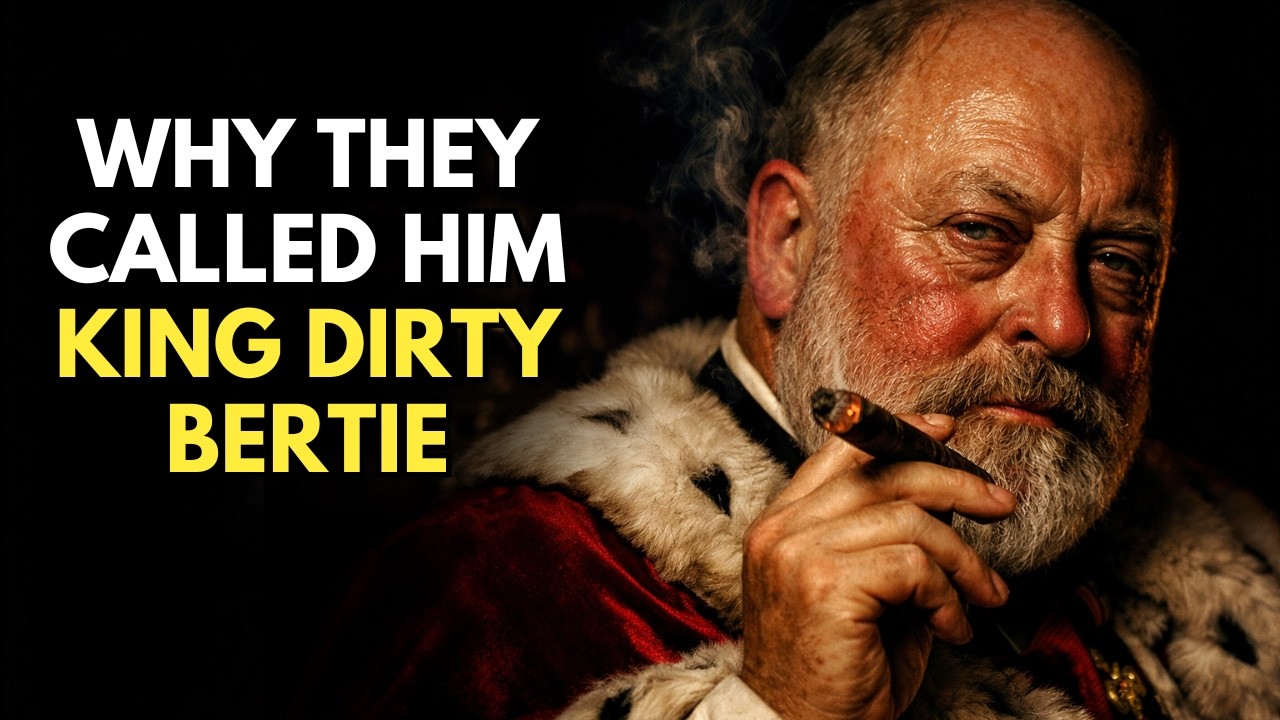
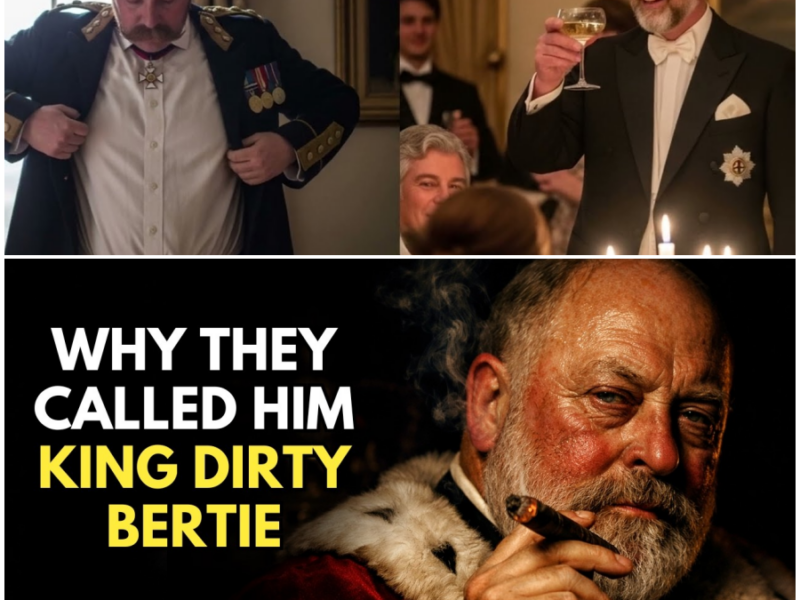
In 1901, a man who had been held at arms length and often openly scolded by his own mother for four decades finally ascended to the British throne. By the time he got there, Edward was 60 years old. A man physically defined by his excesses, carrying significant weight and usually in the smoke of his signature cigar habit, reportedly as many as 12 a day with dozens of cigarettes on top.
He had already been named in open court during a divorce trial and caught up in an illegal gambling scandal. Worse still, he had been within arms reach of a crisis so explosive that some people connected to the case left England before arrests could even be made. The British Empire handed him the crown anyway. His name was Edward IIIth, though behind closed doors the aristocracy had long called him Dirty Bertie.
The story the world chose to remember about him is one of the most carefully managed public faces in modern royal history. If you think you know what kind of king he was, you only know what you were supposed to know. What follows is the version that didn’t make it into the official record.
Before Edward was a king, he was a problem. His mother, Queen Victoria, and his father, Prince Albert, had designed an entire childhood around the idea of perfecting him. Private tutors, strict schedules, military drills, moral instruction. They wanted to mold the next ruler of the British Empire into something unshakable, disciplined, and above reproach. It didn’t work.
Edward was restless, struggled with academic subjects, and wanted to talk to people rather than read about them. His parents interpreted this as a character failure, not a personality difference. And from a very early age, a gap opened between who Edward actually was and who the monarchy needed him to be. That gap, it would define his entire life.
In 1861, when Edward was 19 and stationed at the Curr Military Camp in Ireland, fellow officers arranged for him to spend a night with an Irish actress named Nelly Clifton. It was a private encounter, brief and unremarkable by the standards of the Victorian aristocracy, where such arrangements were common among young men of wealth.
The secret didn’t stay secret. Word reached Queen Victoria, who was horrified, not just morally, but dynastically. She and Albert had been negotiating a marriage between Edward and Princess Alexandra of Denmark. The Clifton affair threatened to derail that union and embarrassed the royal family across Europe.
Prince Albert, already weakened by illness, traveled in the cold to confront his son. The conversation was reportedly agonizing. Albert returned home visibly worse. 3 weeks later, he died. Officially diagnosed at the time as typhoid fever. Victoria decided who was responsible. In letters to family members, she suggested that Edward’s conduct had brought on the tragedy.
She wrote to her eldest daughter that she could never look at Edward without shuddering. From that moment, something inside the monarchy cracked. Victoria set rules, formal and informal, that kept Edward far from real power. And that arrangement taught him a lesson. The monarchy would come to regret. Before we trace what Edward built during those decades of exile, you need to understand what the monarchy was already concealing.
In 1889, London police stumbled onto something the establishment was not prepared to handle. A routine investigation into a theft at the Central Telegraph Office led officers to a modest three-story brick building at 19 Cleveland Street. What they found inside was a male brothel catering to wealthy and aristocratic clients.
The men employed there were workingclass telegraph boys, some of them teenagers, reportedly paid as little as four shillings per visit. Boys with no power, no name, no protection, serving men who had all three. The implication was s unprecedented. Among the names connected to the investigation was Lord Arthur Somerset, a military officer who served as superintendent of the Prince of Wales’s stables.
Somerset was part of Edward’s inner circle, and his involvement placed the scandal uncomfortably close to the future king. Then the investigation began to collapse. Many historians believe Somerset was warned or allowed enough time to flee the country before any arrest could be made. He settled in France and never returned to England.
Other high-profile figures connected to the case similarly disappeared from public scrutiny. Key witnesses became difficult to locate and court proceedings were kept as narrow as possible. The journalist who tried to expose the cover up, Ernest Park, was the one who ended up in prison, convicted of criminal liel for naming Lord Houston as a visitor to Cleveland Street.
Houston denied it in court and won. Though later evidence suggested he had been seen at the establishment and that his denial may not have been entirely truthful, the pattern is worth spelling out. The working-class boys at Cleveland Street were prosecuted. The wealthy clients were protected. The person who tried to name the powerful was punished.
The investigation narrowed quickly, leaving many questions unanswered. No one has ever proven that Edward himself was directly involved in suppressing the case. the people who intervened to protect Somerset and others were however members of Edward’s social network and the system moved quickly to limit exposure.
The result was the same regardless of Edward’s personal knowledge. The powerful were protected. The vulnerable were not. This scandal should have been a reckoning. Instead, it became a footnote. And the monarchy took away a tactical lesson, not a moral one. control the story or risk losing everything. If you’ve made it this far, you’re already seeing something most people never look at twice.
Hit subscribe because the stories we tell on this channel are the ones that powerful institutions spent decades trying to contain. This mastery of reputation management wasn’t an overnight development. It was a survival skill forged over decades of royal isolation. After Prince Albert’s death, Victoria systematically excluded Edward from most meaningful political responsibility.
He was denied access to cabinet papers, kept out of state meetings, and given no official duties beyond the ceremonial, representing the monarchy at dinners and dedications, while never being allowed near real decisions. In any other family, this might have led to open conflict.
Edward didn’t rebel publicly, didn’t issue statements, didn’t sulk in exile. He adapted. The way he adapted is where the palace friendly version of this story begins to separate from the truth. With no political purpose, Edward threw himself into society, becoming the center of aristocratic life in Britain. He hosted legendary gatherings at Marbor House and Sandringham, cultivating friendships with financiers like the Rothschilds and Ernest Cassell, diplomats seeking royal endorsement, aristocrats jockeying for social position, and politicians who understood
that proximity to the prince could be more valuable than a seat in parliament. This network had no formal authority. No minutes were kept, no votes were taken, but decisions were made. Introductions arranged, favors exchanged. The line between social connection and political influence became so blurred that it essentially stopped existing.
Edward was building something unprecedented, a parallel court, a system of power that answered to no one because technically it didn’t exist. The people closest to him held a form of influence that the British public never voted for, never approved, and mostly never knew about. The most powerful person in that system wasn’t a minister, a BM general, or anyone elected.
It wasn’t even anyone official. Her name was Alice Keell. Keell was introduced to Edward in 1898 and within a calculated short time. She became his most trusted companion, a relationship that lasted until his death in 1910. She was present at state dinners and according to several accounts, she sometimes advised the king or helped calm him during political tensions.
Some accounts suggest she could soothe him and steer his mood at moments when politics pressed in. The sanitized version of this story treats Keell as a stabilizing force, a woman of intelligence and discretion who handled a delicate role with grace. Even Alexandra, Edward’s wife, is said to have tolerated Keell’s presence, and some accounts claim Kele was allowed to visit during Edward’s final hours, though historians debate the details.
Look more closely, and the picture gets uncomfortable. Keell held no office. She was never elected, never appointed, never subject to parliamentary oversight. Yet, she had regular access to the king during conversations that affected national policy. Some contemporaries believed that access to Keell could help influence the king directly.
While the history books prefer the charming mistress narrative, the reality is far more troubling. We’re looking at a massive hole in the British constitutional system. in any functioning constitutional monarchy. The idea that a private citizen, however intelligent, however charming, could influence the head of state during political discussions without any institutional check should be deeply concerning.
In the Edwwardian world, it was simply accepted, not because it was right, but because the people who could have objected were all benefiting from the same arrangement. Then there is Alexandra. The story that survived describes her tolerance as aristocratic composure, dignity in the face of difficulty.
There is another way to read the same evidence. A dynastic wife expected to produce heirs and project dignity, not exercise power, who understood from an early stage that resistance would achieve nothing except public humiliation. Alexandra’s acceptance might not have been acceptance at all. It might have been the only rational response to a situation where she held no real leverage, and the entire social order was designed to make Edward’s behavior seem normal.
That version of events doesn’t appear in the version fit for print. It would require us to stop admiring the arrangement and start questioning it. While the monarchy was busy managing that narrative, another scandal was about to land in open court. In 1890, just a year after Cleveland Street, Edward found himself at the center of another crisis, this time in plain sight.
During a house party at Tram Croft in Yorkshire, one of the guests, Sir William Gordon was accused of cheating at Bakarat. The game was illegal and Edward took a prominent role at the table. Gordon was pressured into signing a document swearing never to play cards again [music] in exchange for the incident being kept private.
The secret leaked. Gordon Cummings sued for slander and the case went to trial. Edward was called as a witness. The heir to the British throne sat in a courtroom and answered questions about an illegal gambling session at a private house party. The press covered every detail. The public was fascinated and appalled.
Gordon lost the case. His military career was destroyed and he was cast out of society, erased from the guest lists of every house that mattered. Edward faced embarrassment, but no lasting consequences, continuing his social life, his parties, and his gambling without interruption. Gordon Cummings career collapsed.
Edward’s crown didn’t even tilt. The king never spoke to Sir William Gordon again. Gordon lived out his remaining years in social exile at his Scottish estate, a ghost to the world that had once welcomed him. He died in 1930, still shunned. The cost of Edward’s lifestyle was always paid by someone else.
By the time Edward IIIth took the throne in 1901, the infrastructure for managing his image was already in place, built over decades, not through a single conspiracy, but through a thousand small decisions by people who understood that the monarchy’s survival depended on public perception more than public truth.
Friendly newspaper editors received early tips about royal events. Court correspondents who reported favorably kept their access. Unflattering stories were met with quiet pressure. Not dramatic censorship, but the kind of gentle discouragement that made editors think twice. A word from a courtier, a withdrawn invitation, a suggestion that certain angles might be unhelpful.
This wasn’t unique to Edward. The monarchy had always managed its image to some degree. Under Edward, though, the gap between the managed image and the underlying reality became wider than it had ever been. The image being sold was specific. Edward was the modernizer, the people’s king, the man who opened Buckingham Palace to a broader social circle, who charmed foreign heads of state, who represented a warmer, more human monarchy than Victoria’s grieving isolation.
Much of this was genuinely true. Edward was more socially engaged than his mother, did open doors that had been closed, and brought energy and color back to the monarchy after decades of royal withdrawal. The image required constant maintenance because behind the charm, the pattern of private scandal, institutional protection, and downward consequences hadn’t changed.
It had simply become better managed. The Eduwardian era is often remembered as a golden age, a final burst of aristocratic glamour before the horrors of the Great War. Golden Ages, though, are usually gilded, beautiful on the surface. something else underneath. Some royal correspondence was curated. Certain documents were never preserved and critics were marginalized.
The historical record that tended to survive was not the full record. It was the record that was allowed to exist. Then came the moment the king’s own body nearly betrayed the entire performance. In June 1902, just days before his scheduled coronation, Edward collapsed. He had developed a serious abdominal abscess that required immediate surgery.
The coronation was postponed and the empire held its breath. For a brief moment, the possibility of a king dying before he could be crowned hung over the nation. There were rumors that his coronation chair had to be specially reinforced to support his weight. Doctors drained the abscess.
Edward survived and the coronation went ahead weeks later. Scaled down but triumphant. The public reaction was telling rather than questioning the years of indulgence that had likely taken a toll on his health, decades of rich food, heavy drinking, constant smoking, and a schedule built around excess. The British public rallied around him.
His survival became a PR victory. His recovery became proof of his strength. The crisis actually strengthened the myth. Edward wasn’t just charming. He was tough. He had faced death and come through. The medical reality told a different story. Edward’s body was already failing. 60 years old, significantly overweight, showing the accumulated strain of a lifetime of indulgence.
His doctors knew this. His inner circle knew this. the public chose not to. This is one of the most important mechanisms by which the myth endured, the public’s own desire to believe it. Not because they were foolish, but because the alternative, accepting that the symbol of the nation was a product of institutional image management, was too uncomfortable.
It is easier to love a flawed hero. Edward’s diplomatic reputation rests heavily on a single achievement, the Entant Cordial of 1904. The agreement that improved relations between Britain and France. His state visit to Paris in 1903 is widely credited with warming French public opinion toward Britain.
He charmed hostile crowds, flattered French officials, and spoke the language fluently. By the time the formal agreement was signed the following year, the story was already being written. Edward the Peacemaker. There is real substance to this. Edward did contribute to improved Anglo French relations and his personal diplomacy mattered.
It mattered, however, in a specific way, and the limitations of that way would prove devastating. Edward’s diplomacy was personal, depending on relationships between royal individuals. His network of cousins, in-laws, and social connections across European courts gave him unique access. But it also meant that his diplomacy was only as durable as those relationships.
Those relationships were were fracturing. His nephew Kaiser Wilhelm II of Germany was increasingly antagonistic. Edward reportedly disliked him and Wilhelm reportedly resented his uncle. Their personal friction tracked with a broader geopolitical rivalry between Britain and Germany that no amount of royal charm could resolve.
Edward’s diplomacy assumed that the old order, royal families managing Europe through bloodlines and social ties, would hold, that personal relationships could contain industrial scale tensions, that charm could prevent catastrophe. It was structurally fragile, built on assumptions the modern world was already outgrowing.
Not because Edward lacked intelligence, but because his entire world view was shaped by a system that had always rewarded personal connection over structural change. He died in 1910, believing, perhaps sincerely, that his network of royal relationships had helped secure European peace. Four years later, the continent was at war and the royal cousins he had dined with were enemies.
The system he had spent his life navigating was being torn apart. Edward IIIth died on May 6th, 1910, and his final days were marked by the same pattern that had defined his life, the public story, and the private reality. Running on parallel tracks. Publicly, the nation mourned a beloved king. Newspapers praised his warmth, his diplomacy, and his modernizing influence.
His funeral was one of the great ceremonial events of the age, attended by nine reigning monarchs. Privately, the scene was more complicated. [music] Some accounts claim Alice Keell was allowed to visit during Edward’s final hours, though historians debate the circumstances. Several accounts describe the visit as distressing. Alexandra who had spent decades performing Publix composure is said to have finally had the room to herself.
After Edward’s death, the myth solidified quickly. He became the peacemaker. The scandals were folded into his legend as evidence of his colorful personality. Rather than examined as evidence of systemic problems, the women in his life became romantic footnotes. Cleveland Street remained halfold. Tramoft became an amusing anecdote.
The speed of this mythmaking was not accidental. The new king, George V needed stability. The aristocracy needed continuity. The press needed access. Everyone involved understood that the most useful version of Edward IIIth was the charming one. So that’s the version that was written and that’s the version that survived.
The world Edward built was about to face its final test. That test arrived in August 1914 when the world Edward had spent his life navigating collapsed into the first world war. The royal network he had worked so carefully to maintain. The cousins, the allies, the dinner companions now found their nations destroying each other on an industrial scale.
George V of Britain, Kaiser Wilhelm II of Germany, Zar Nicholas II of Russia, all connected by blood and by the social system Edward had embodied. That system failed completely. The war destroyed empires. The Romanovs were overthrown and executed. The Habsburgs collapsed. The Hohan Hollands abdicated. The aristocratic world Edward had represented, country house parties and royal cousin diplomacy was revealed to be built on a foundation of inherited privilege rather than genuine stability.
None of this was Edward’s fault in any direct sense. He didn’t cause the war, and he wasn’t alive to prevent it. The system he symbolized though, personal power, social networks, charm as statecraft, proved to be exactly as fragile as its critics had always warned. The question the war raised was not about Edward specifically.
It was about the entire model of governance he represented, a model where access to power was determined by social position rather than democratic mandate. where accountability was optional for those at the top and where the public image of the ruling class was managed so carefully, that the underlying instability was invisible until it was too late.
More than a century later, the story of Edward IIth is still being told the way it was designed to be told. Charming prince, lovable rogue, diplomatic king, peacemaker. trace the actual chain of events, the private scandals that were suppressed, the investigations that were contained, the women whose experiences were narrated for them, the carefully managed public face that was manufactured rather than earned.
The diplomatic system that collapsed the moment it was genuinely tested, and a different picture emerges, not a picture of a monster. Edward IIIth was not a tyrant and was not deliberately cruel. by most accounts genuinely warm and capable of real connection. He was also the product of a system that existed to protect itself, a system that absorbed scandal, redirected blame, punished the vulnerable, and rewarded the compliant.
The most unsettling part is not [music] what Edward did. It’s how well the system worked. The myth of Edward IIIth is a template, a demonstration of how power, when combined with charm and institutional support, can rewrite its own history in real time, editing out the people it harmed and inviting the public to admire the performance without ever being shown the stage machinery.
The real question isn’t whether Edward IIIth was the most scandalous ruler of all time. Scandal implies exposure. consequences, the truth eventually winning out. The real question is simpler and more disturbing. How many other stories are we still believing? Because no one has bothered to look underneath. Edward IIIth died in 1910.
The age that bore his name ended four years later in the trenches of the Western Front. His legend survived because legends are easier than truth. Because institutions protect their own and because the people who write history are often the same people who benefit from the version they’re writing.
Dozens of cigarettes, a courtroom, a half-told investigation, a reinforced coronation chair, and a crown that never even tilted.