The Dark Truth of Prince Philip: The Royal Outsider
The Dark Truth of Prince Philip: The Royal Outsider
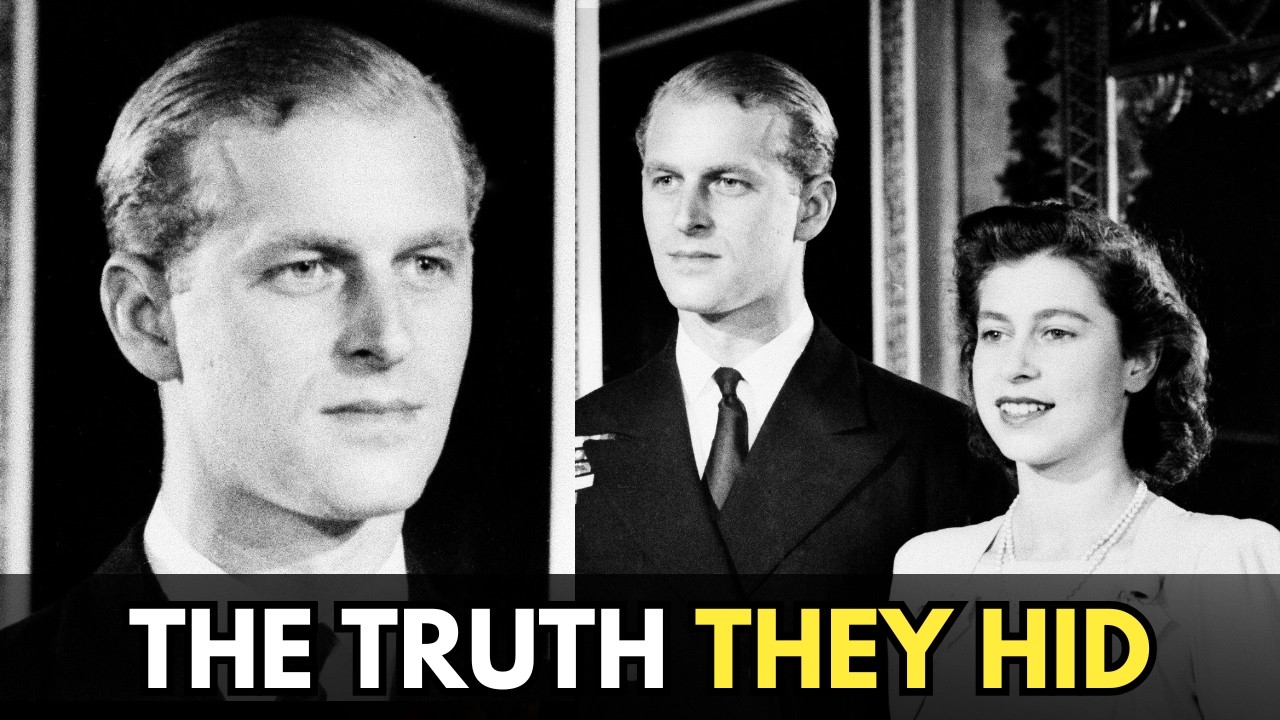
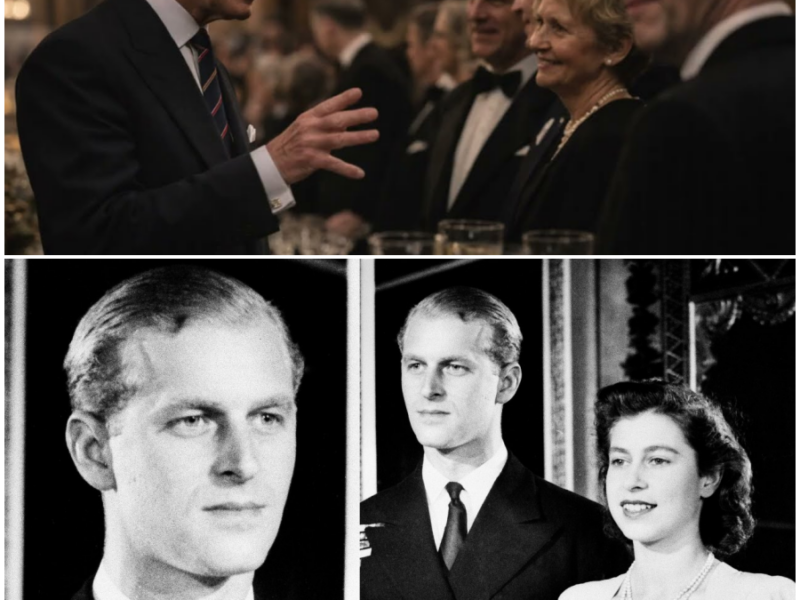
73 years behind the throne is a long time to keep a secret. Prince Philip stood there the whole time, decorated war hero, man of duty, the Queen’s loyal husband. Except before Buckingham Palace turned him into the perfect sidekick, he was a displaced prince, abandoned by every member of his family before the age of 10, tied by blood to the Nazi regime, and quietly rebuilt into a man the monarchy could control.
This wasn’t a love story. This was a life edited for the public, plain and simple. Philip was born on a dining table at Mon Repos, a villa on the Greek island of Corfu, on June 10th, 1921. His mother, Princess Alice of Battenberg, delivered him there because the island had limited medical facilities. His father, Prince Andrew of Greece and Denmark, was a military commander, about to be blamed for a catastrophic defeat against Turkey.
Within 18 months, a military coup overthrew the Greek monarchy. Prince Andrew was arrested, convicted, and narrowly avoided execution. King George V of Britain intervened, dispatching the warship HMS Calypso to evacuate the family. Philip, still a toddler, was carried aboard in a cot improvised from an orange crate.
They landed in Paris. For a few years, it almost looked like a real family. Parents who were present, four older sisters who doted on the blond little boy his mother called Babins, a house that felt like home. Then, one by one, they all vanished. Between 1930 and 1931, all four sisters married German princes and moved to Germany.
His mother, Princess Alice, who’d been born profoundly deaf and spent her life lip-reading across multiple languages, suffered a severe psychological collapse. Doctors diagnosed paranoid schizophrenia. She was committed to a sanatorium in Switzerland. Philip wouldn’t see her for 5 years. His father relocated to Monte Carlo with his mistress.
Visits stopped. Letters thinned. He’d die there in 1944, largely alone, not having seen his only son in years. The house in the Paris suburb of Saint Cloud was shuttered. Philip was nine. His sister, Sophie, recalled it simply, “Then we all sort of disappeared. There was no farewell and zero explanation.” Just a house in Paris that suddenly went dark.
Philip was shuttled between relatives in England. His uncle George, the Marquess of Milford Haven, became his guardian. When George died of bone cancer, his brother Louis Mountbatten stepped in. Philip was sent to Cheam School, then briefly to Salem in Germany, and finally to Gordonstoun in Scotland. Gordonstoun was founded by Kurt Hahn, a Jewish educator who had fled Nazi Germany after being arrested for opposing the regime.
The school’s philosophy was deliberately punishing. Cold showers before dawn, cross-country runs in freezing weather, emotional restraint treated as the highest virtue. Philip thrived. He became head boy. He absorbed the school’s central lesson, endurance is strength, and showing pain means you’re weak. He carried that code for the rest of his life.
Here’s the thing, though. Code isn’t the same as healing. A boy who lost every anchor before he reached double digits learned to survive by needing no one. Useful trait inside an institution, devastating inside a family. And the first test of that hardness came at 16. In November 1937, his sister, Cecilia, her husband, Georg Donatus, their two young children, and their unborn baby were killed in a plane crash in Belgium.
Cecilia and Georg had joined the Nazi party just months before their deaths. The funeral in Darmstadt was attended by senior Nazi officials. Mourners gave the Hitler salute. Photographs from that day show a teenage Philip walking in a funeral procession flanked by men in full Nazi regalia. His headmaster said Philip’s grief was that of a man.
His classmates didn’t remember any grief at all. The boy had already learned, show nothing, keep walking. In 1939, Philip joined the Royal Navy at 18. He served with genuine distinction. At the Battle of Cape Matapan in March 1941, he operated the searchlights aboard HMS Valiant during a night engagement against Italian warships off the Greek coast.
His commanding officer credited Philip’s alertness with helping sink two enemy cruisers in minutes. He was mentioned in dispatches and awarded the Greek War Cross of Valor. Two years later, aboard the destroyer HMS Wallace during the Allied invasion of Sicily, Philip devised a plan under fire that likely saved his entire crew.
With the ship under repeated attack from a German night bomber, he ordered a wooden raft rigged with smoke floats thrown overboard. The smoking raft mimicked a burning ship. The Wallace cut its engines and drifted in silence. The bomber returned, dropped its payload on the raft, and flew away. A crew member named Harry Hargreaves said afterward, “Prince Philip saved our lives that night.
His war record was real, brave, resourceful, effective under fire. Nobody disputes that.” But, while while Philip served the British Crown, his brother-in-law, Prince Christoph of Hesse, was an SS officer and director in the Reich’s Air Ministry. His sister, Sophie, later admitted she and Christoph had been personally charmed by Hitler during a private lunch.
They named their eldest son Karl Adolf. Multiple sources connect the name to the Führer. Though Sophie maintained in old age that the context was more complicated than it looked. Philip addressed his family’s Nazi affiliations once, a single 2006 interview where he acknowledged that many Germans had found hope in Hitler’s early promises.
One sentence, no follow-up, and nobody with the authority to press him ever did. The war made Philip a hero. His family made him a liability. The monarchy would spend decades making sure only one of those facts mattered. Philip and Princess Elizabeth married at Westminster Abbey on November 20th, 1947. BBC Radio broadcast the ceremony to roughly 200 million listeners.
Philip had given up his Greek and Danish titles, become a British citizen, and taken the surname Mountbatten from his mother’s side. None of his four sisters were invited. The war had ended 2 years earlier. Their Nazi connections were still too raw for a British royal wedding. His mother, Princess Alice, showed up in a simple gray outfit.
She’d spent part of the war hiding a Jewish family, >> [music] >> the Cohens, in her Athens residence during the Nazi occupation. When the Gestapo questioned her, she used her deafness to play confused. She’d later be recognized as Righteous Among the Nations by Yad Vashem. One mother who risked her life to shelter Jewish refugees, four sisters who dined with Hitler and named a child after him.
Both were Philip’s family. The institution he married into only acknowledged the version that served its image. The press sold the wedding as romantic redemption. A displaced prince, hardened by war, finds his place beside the woman who’d become the longest-reigning monarch in British history. People wanted to buy it.
What Philip gave up to enter that story wasn’t just a title. It was who he actually was. Every part the monarchy couldn’t afford to keep. Once Elizabeth became Queen, the palace figured out what to do with Philip. He’d be the hard edge beside her restraint, the masculine force that made the institution look stable.
And once that role locked in, even his worst qualities could be reframed as strengths. The public noticed the charm. They didn’t notice the cost. And this is where the fairy tale begins to crack. The traits that made Philip useful to the monarchy made him damaging in every human relationship he touched.
His bluntness got repackaged as candor. His distance got repackaged as discipline. His inability to tolerate weakness got repackaged as decisiveness. The people on the receiving end weren’t institutions. They were human beings. Philip accumulated a record of remarks over his public life that the British press kept calling gaffes.
That word makes it sound accidental, like a stumble. It wasn’t accidental, and it wasn’t random. In China in 1986, he told British exchange students that staying too long would leave them with slitty eyes. The students laughed nervously. The press called it vintage Philip. In Australia in 2002, he asked a successful Aboriginal entrepreneur, a man who’d built a career and a reputation, whether his people still threw spears at each other.
The entrepreneur smiled. What else do you do when a prince insults you to your face in a room full of cameras? In Cardiff in 1999, he told a group of deaf teenagers standing near their school’s steel band that it was no wonder they were deaf. They were children standing where they’d been told to stand, smiling for royalty, and the joke was about their disability.
By his 90th birthday, the Daily Mirror had compiled 90 such remarks. 90. And honestly, some of these are hard to even read out loud. Race, disability, weight, gender, nationality. Every single time the framing was identical. Philip being Philip. The man who said what everyone was thinking. Except not everyone was thinking those things.
And the people targeted were never given the dignity of a response. Power doesn’t need to censor. It just needs to make disagreement feel ungrateful. And when the person speaking is the Queen’s husband, standing in a room built for deference, the silence of the people he insulted was guaranteed before he opened his mouth. The palace built a whole personality out of that silence.
One the public loved because it never had to absorb the cost. In the mid-1950s, Philip became a regular at the Thursday Club, an all-male gathering in a private room at Wheeler’s fish restaurant in Soho. Actors, poets, aristocrats. Princess Elizabeth called them Philip’s funny friends. Rumors about the club ranged from heavy drinking to associations with the Profumo affair.
In 1956, Philip took off on a tour of the Commonwealth aboard the Royal Yacht Britannia. Left his wife and two young children for over 4 months. His private secretary, Michael Parker’s marriage collapsed during the voyage. Parker resigned. A Baltimore newspaper ran the headline, “Report Queen, Duke in rift over party girl.
” Buckingham Palace issued a rare public denial. Whether Philip was unfaithful has never been proven. Only one major royal biographer, Sarah Bradford, stated flat out that he had affairs. Most of the women linked to him publicly denied it. The evidence stays circumstantial. But Pat Kirkwood didn’t find the gray area harmless.
She was a stage actress linked to Philip since 1948 when he showed up backstage while Elizabeth was 8 months pregnant with Charles. The rumors followed her for the rest of her career. She begged the palace to deny them. They never did. Philip wrote to her privately, “Short of starting libel proceedings, there is absolutely nothing to be done.
” She died with the story still stuck to her name. In her own words, “I would have had a happier and easier life if Prince Philip, instead of coming uninvited to my dressing room, had gone home to his pregnant wife on the night in question.” The real scandal isn’t whether he cheated.
It’s that the monarchy let the mess destroy other people’s reputations while protecting its own. But the deepest damage Philip caused wasn’t to strangers or rumored lovers. It was to his own family. Philip sent his eldest son, Charles, to Gordonstoun. Same cold showers, same forced endurance, same philosophy. Discomfort builds character. Philip had thrived there.
Charles didn’t. He was bullied, isolated, and miserable. He later described his time there in terms that left zero room for misinterpretation. Philip couldn’t fathom his son’s experience where he saw weakness. Charles felt abandonment where he imposed discipline. Charles received rejection.
A man trained to bury vulnerability had produced a son who couldn’t do that. And instead of recognizing the difference, Philip treated it as a defect. Father and son communicated largely by letter. Not because of distance, because that was the only way Philip knew how to talk. And it was through a letter that he changed the course of the monarchy forever.
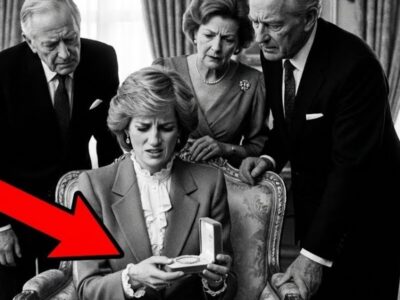
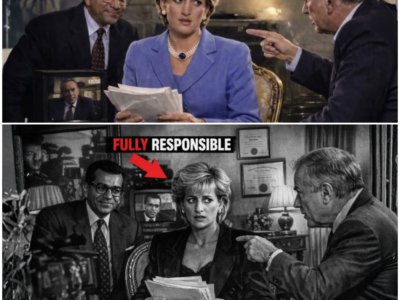
In 1980, when 32-year-old Charles started courting 19-year-old Lady Diana Spencer, Philip wrote him a letter that multiple people close to the family have confirmed, “Either propose to her or release her.” Diana’s reputation was at stake. The press was circling. Delay wasn’t fair to a young woman who’d done nothing wrong.
Charles’s cousin, Pamela Hicks, read the letter. She called it measured and sensitive. Charles read it as an ultimatum. He told friends he felt bullied. According to biographer Ingrid Seward, Charles was frightened of his father and probably thought, “Well, okay. I’ll marry her if that’s what you want me to do.
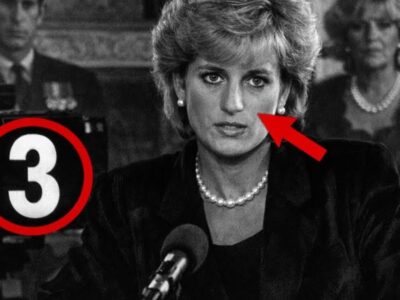
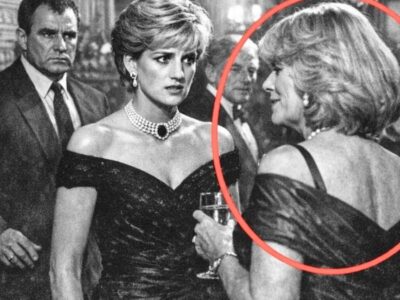
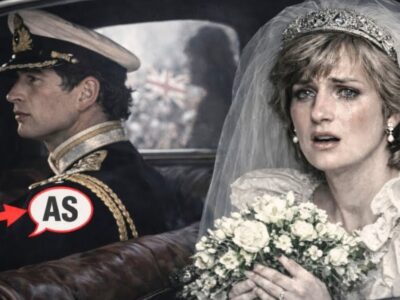
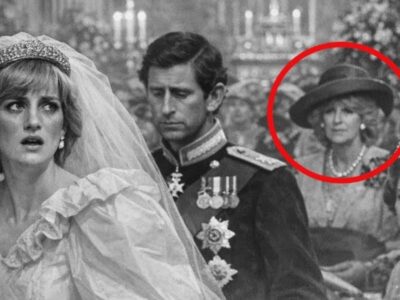
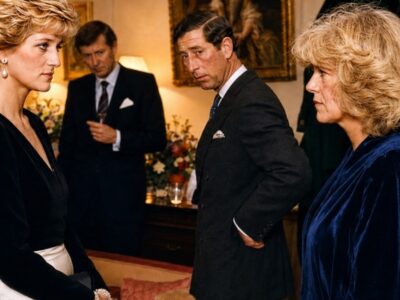
” He proposed after meeting Diana 12 times. She was 19. He was still in love with Camilla Parker Bowles. The night before the wedding, Charles reportedly cried. Diana later called it the worst day of her life. The ceremony was broadcast to over 750 million viewers worldwide. And the marriage that followed produced two sons, a public separation that ripped the monarchy wide open, a divorce that shattered the fairy tale, and a death in a Paris tunnel that brought the whole institution to its knees.
Philip’s letter didn’t cause all of that, but it was the push that sent the first domino falling. And someone else caught everyone. A man trained to suppress emotion pressured his son into a marriage built on duty instead of truth. The monarchy’s emotional code, the same code Gordonstoun had installed in Philip decades earlier, just reproduced its damage one generation later.
And the person who absorbed the greatest cost was a woman who entered the family at 19 and left it in a coffin at 36. And the people who built that system were never the ones who paid for it. Everything in part two was known. The remarks were broadcast on camera. The rumors ran in mainstream newspapers. The letter to Charles got discussed in books and documentaries by people who’d held it in their hands.
None of it was hidden. None of it was secret, and none of it stuck. Philip’s myth survived because the truth was inconvenient. That’s it. Inconvenient truths, when they collide with powerful institutions, tend to lose. The monarchy had a problem in the mid-20th century. The sovereign was a young woman who’d taken the throne at 25 in a world that expected authority to look and sound like a man in a uniform.
Philip solved that problem. Tall, decorated, blunt. He projected a version of masculinity that could stand beside the Queen without threatening her authority, but without looking like a prop, either. The institution didn’t hide his flaws. It reclassified them. Insensitivity became candor. Emotional distance became stoicism.
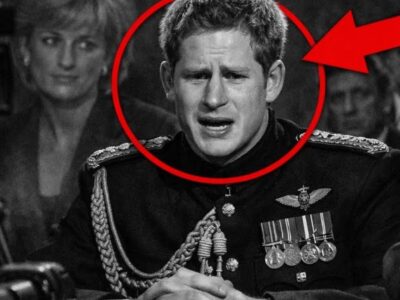
Controlling behavior became decisiveness. Whether that was deliberate or just convenient, the result was the same. Once the reclassification was done, questioning Philip felt like questioning the monarchy itself. When Philip died in April 2021 at 99, his grandson Harry called him the legend of banter. Banter. Seven decades of remarks targeting people by race, disability, gender, and nationality shrunk down to a single word that made the behavior social instead of structural.
A personality quirk instead of a pattern. The royal mask held. The people behind it paid the price. Philip’s family connections to the Third Reich were managed, not erased. The formula was consistent. Acknowledge the bare facts. Emphasize Philip’s war service. Redirect to his mother’s heroism. And look, Princess Alice’s story was genuine and extraordinary.
She hid the Cohen family at great personal risk. She was recognized as righteous among the nations. In 1994, Philip became the first British royal to visit Israel, planting a tree in her memory at Yad Vashem. But that story also got used, consciously or not, as a counterweight. Every time the conversation drifted towards Sophie’s private lunch with Hitler, or the son named Karl Adolf, or the funeral where a 16-year-old Philip stood among men in full Nazi uniform, Alice’s courage was there to absorb the blow.
As though one relative’s heroism could cancel out another relative’s complicity. It can’t. Both things were true. And whether by design or instinct, the effect was the same. The palace didn’t need to erase the contradiction. It just needed to keep it from becoming central. Pat Kirkwood carried rumors she denied until she died.
The palace never stepped in. Charles carried a marriage he entered under pressure into a catastrophe that consumed his first wife and nearly ended the institution. Diana carried the loneliness, the performance, the eating disorder she described as a cry for help. She carried it until Paris. She was 36. The Aboriginal entrepreneur, the Filipino nurse, the deaf teenagers, they carried those moments home with no option to respond.
They smiled because the alternative was making a scene in front of royalty. And in Britain, that’s the only thing considered worse than what royalty actually said. The monarchy absorbed the prestige. Other people absorbed the damage and someone else always paid. If stories like this matter, subscribe because polished history survives when no one pushes back.
It’d be satisfying to end with a verdict. Philip the villain, Philip the victim, Philip the product of his time. Any of those would give the story a resting place. The truth is messier. Philip was a child who lost everything before he understood what was happening. He got raised by institutions that taught him endurance was love and showing pain meant you’d failed.
He carried that training into a marriage, a family, and a role that rewarded him for never examining it. He was also a man who chose, decade after decade, not to look back, not to question the cost, not to ask who was paying. The myth endures because it’s comfortable. It tells us a hard life produces character, that bluntness is honesty, that duty justifies whatever it costs.
The people who paid that price, the women left to manage their reputations, the son pressured into a marriage he never wanted, the strangers humiliated on camera, the family history folded away because it threatened the brand, didn’t find the official story comfortable at all. Philip died at 99. The tributes called him a man of duty.
And maybe he was. But he was also a man whose institution made sure the cost of his life was always paid by someone else. That arrangement didn’t die with him. It’s the same deal the monarchy makes every day. Give us your reverence and in exchange, we’ll give you a story clean enough to believe in. The only question is whether you still want to take it.