“These Men Don’t Know How To Die” — Japan’s Shocking Words About Australians at Kokoda
“These Men Don’t Know How To Die” — Japan’s Shocking Words About Australians at Kokoda
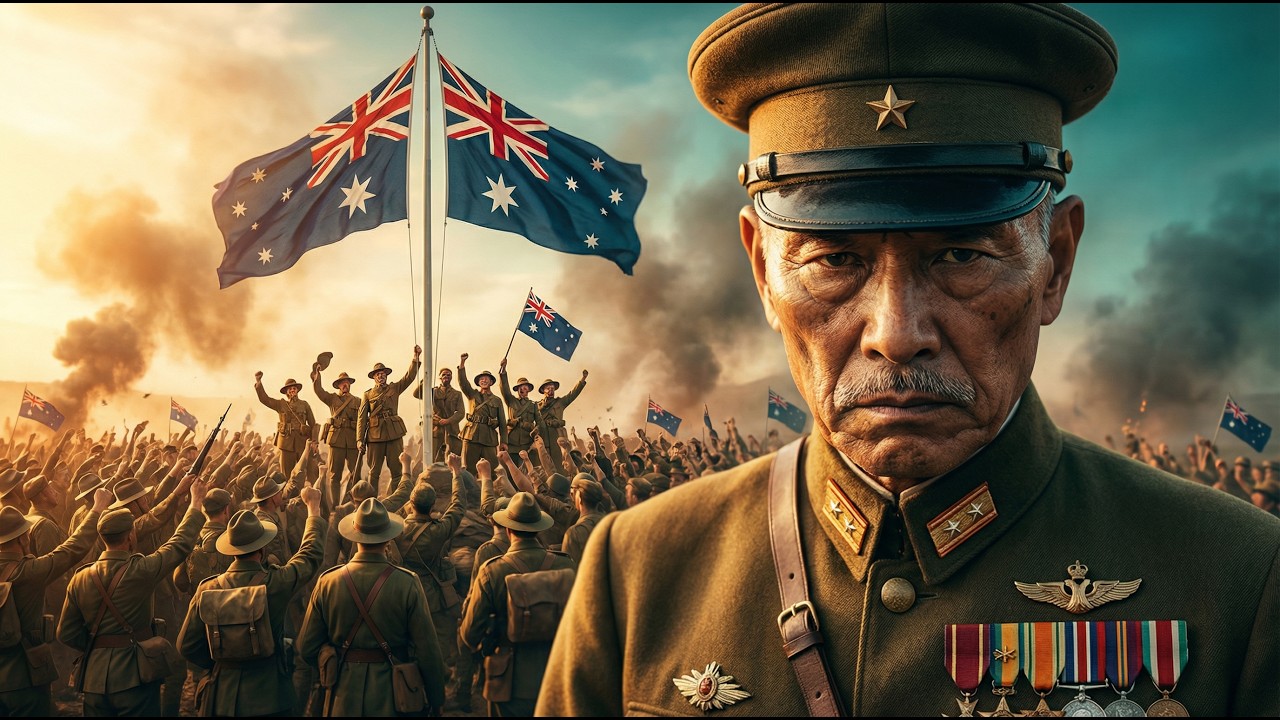
August 1942. Somewhere in the Owen Stanley ranges, Papua New Guinea, a Japanese officer opens his field report. His hands are steady. He has fought in China. He has fought in Malaya. He has watched British forces crumble and fold before him like wet paper. But what he is reading now stops him cold.
His men, battleh hardened veterans of the most decorated fighting force in the Imperial Japanese Army, had just engaged an enemy force they estimated at 1,200 soldiers. They fought all night. They poured fire into the jungle. They executed flanking movements that had never failed them before. They called on training and experience built across years of brutal warfare.
And when dawn came, exhausted, they believed they had faced a formidable dug-in force. The actual number of Australians in that position, 77. The Japanese commander stared at the page. 77 men had done that, and those 77 men had not been elite special forces. They were not decorated veterans. Many of them were teenagers, poorly equipped, malnourished, undertrained.
Some were wearing civilian boots. Some had never fired their weapon in anger before setting foot on the Kakakota track. So what was it about these Australians that shook Japanese commanders, men who had never been shaken before? And why, when the postwar records were finally declassified, did Japanese officers write about Australian soldiers in ways they had never written about any other enemy? That question is what this story is about.
To understand the shock, you have to understand the confidence. By mid 1942, Japan had not simply been winning the Pacific War. Japan had been humiliating it. Hong Kong had fallen in 17 days. Singapore, the so-called Gibralar of the East, had surrendered in just over a week. The Philippines had been seized. The Dutch East Indies collapsed.
A Japanese naval force had sailed freely into the Indian Ocean and struck Salon. Every Western army the Empire of Japan had faced, it had destroyed or routed or forced to the surrender table. The pattern was consistent. The psychology was simple. Japan wins. Japan expands. Japan cannot be stopped. Against that backdrop, the plan to cross the Owen Stanley Ranges and seize Port Moresby was not seen as an audacious gamble.
It was seen as a formality. Tokyo had assigned the operation a timeline. 10 days. 10 days to cross one of the most savage mountain ranges on the face of the earth. 10 days through jungle so dense that men could get lost 3 ft from the track. 10 days through disease, mud, and terrain that would strip a soldier down to nothing.
10 days. The force assigned to the task was the Nankai Shitai, the South Seas detachment under Major General Tomarohori. These were proven jungle fighters, experienced, ruthless, disciplined, and their first obstacle was not a fortified position. It was not a tank division or an artillery battery.
Their first obstacle was a battalion of Australian boys who had barely finished training. They were known as Marubra Force. At its core was the 39th Australian Infantry Battalion. Militia soldiers, citizen soldiers. The average age on the Cakakota track that winter was shockingly young. Some men were 18. A few were younger.
They had been rushed to Port Moresby with inadequate supplies, inadequate weapons, and a mission that their commanders barely understood. When they were ordered up the track toward Kakakota, many had never experienced combat. The track itself was not a road. It was not even a proper path. It was a nightmare carved through jungle and mountain.
96 miles of mud and root and rotting vegetation, punctuated by ridgeel lines that required men to claw upward on their hands and knees, then descend the other side on ropes. The heat was suffocating. The humidity stripped a man of his energy before noon. Rain came without warning and turned the ground to sucking mud that swallowed boots whole.
And lurking in that darkness, moving toward them through the jungle, 4,000 Japanese soldiers. The Australians had 420. Not a fair fight by any definition. But here is what the numbers don’t tell you. Here is what the records would slowly reveal. One report at a time. One Japanese diary entry at a time over the years and decades that followed.
The Australians were not simply fighting to survive. They were fighting in a way the Japanese had never encountered before. July 21st, 1942. The Japanese landed at Buuna and Gona on the northern coast. Elements of the Papuan Infantry Battalion and the 39th moved to intercept them before they reached the mountains.
The skirmishes were sharp and savage. The jungle absorbed everything. Sound, distance, certainty. You could hear a man die 10 m away and never see him. The Australians were pushed back. Outnumbered and outgunned, they retreated step by step up the track, but they did not break. This is where the first confusion enters the Japanese reports.
Japanese Lieutenant Colonel Tukamoto Hatsuo, commanding the advanced force, found himself unsettled by what he was encountering. The retreating Australians left nothing behind. No prisoners, no abandoned equipment. They pulled back on their own terms, turning to fight at every ridge line, every creek crossing, every fold in the ground.
It was not the retreat of a beaten force. It was something else entirely. Japanese Sergeant Immani Sadharu later wrote of one engagement that captured the nature of the fighting. His unit had launched a night assault, a tactic they had used with devastating success in China and Malaya. Complete darkness, sudden violence, overwhelming aggression.
It had always worked. He wrote, “No one knew there was a hill. We knew nothing of the terrain, but we were very good at executing night attacks. We had experience of this in China. We kept shooting all night. But in the morning, the Australians had not fled. They had adapted. And that word adapted would appear again and again in what Japanese commanders wrote about Australian soldiers.
By late August 1942, Major General Horry had pushed forward to Isurava. Here the battle took on a different character entirely. The Japanese had numerical superiority. They had better logistics for now. They had veterans who had fought across half of Asia and yet Isarava became a bloodbath. The 39th Battalion reinforced now by elements of the seventh division.
These were the veterans of Tbrook and the Western Desert. Men who had fought Raml stood and fought with a ferocity that the Japanese had simply not budgeted for. Hand-to- hand combat in the jungle. Men fighting with bayonets, with rifle butts, with bare hands. The sound of the fighting at Isarava, the shouting, the crashing through undergrowth, the terrible intimate violence of men in close terrain was something that even hardened Japanese officers noted as different from anything they had experienced.
One action in those days became legendary in both armies. A private named Bruce Kingsbury charged a Japanese position alone, firing his Bren gun from the hip. He broke through their flank and turned the tide of the battle in that moment, buying time for his unit. He was killed seconds later by a sniper. He was postumously awarded the Victoria Cross, but the Japanese officers present at Isarava didn’t know his name.
What they noted in their afteraction reports was the pattern. Individual Australian soldiers not ordered by their officers, not following a grand tactical plan, were making decisions in the jungle that changed the outcome of individual engagements. Adaptability, individual initiative. These were not qualities the Imperial Japanese Army had expected to find in the men opposing them.
By September 1942, the Japanese had pushed the Australians back to Iori Baywa Ridge. They stood 40 km from Port Moresby. From the top of the ridge on a clear day, you could see the Coral Sea. They had come further than almost anyone had believed possible. But here is what was happening beneath the surface of the tactical map.
Here is what the official reports don’t fully capture. The Japanese were being worn down, not just physically, psychologically. The retreating Australians had begun leaving traps in the jungle. spoiled cans of bully beef left open, visible, positioned on or near the track. Japanese soldiers, increasingly underfed, their supply lines stretched impossibly thin, would rush toward the abandoned food.
Then the shooting would start. Australian snipers, invisible in the canopy, patient, waiting. It was brutal. It was calculated. And it worked. Japanese afteraction reports noted the tactic with a mixture of outrage and grudging acknowledgement. The Australians were using the jungle, using psychology, using hunger itself as a weapon.
And then there were the ambushes, the same methodology again and again. An Australian patrol would make contact with Japanese advanced troops, hit their lead elements hard, then fall back. The main Australian body would wait in concealment. When the Japanese pursued, as the Japanese always pursued, they would walk into a coordinated pinser attack from both flanks.
Then the Australians would melt back into the jungle and prepared to do it again. Japanese command was used to enemies who fought and then surrendered or fought and then broke. The Australians did neither. They fought, they retreated on their own terms. They reorganized and they fought again. The reports coming back to Japanese headquarters were beginning to use language that had rarely appeared before in assessments of enemy forces.
The Australians, the reports noted, possessed fighting spirit that exceeded the Americans, the British, and the Filipinos. Think about what that meant. This was the Imperial Japanese Army, possibly the most formidable infantry force of the 20th century. acknowledging that these young, underfed, underequipped Australian boys were the hardest enemy they had yet encountered in the Pacific.
And then everything changed. In late September 1942, orders came through from Imperial General Headquarters in Tokyo. Japan had committed overwhelming resources to Guadal Canal in the Solomon Islands. The losses were catastrophic. More than 31,000 Japanese troops would die in that campaign. Horay’s force on the Kakakota track was ordered to withdraw back over the Owen Stanley ranges from Port Moresby’s doorstep. 10 days.
That was what the plan had said. 10 days to cross the ranges and seize Port Moresby. They had been on the track for more than 2 months and now they were retreating. Hi tried to frame it as a strategic redeployment. His men understood the reality. They had pushed 120 km through some of the worst terrain on Earth. They had fought a retreating enemy that somehow never fully retreated, never fully broke, never stopped costing them.
And now they had to walk back through all of it. Only this time, the Australians would not be retreating. What happened on the Japanese retreat from Eura Ridge to the north coast is one of the most harrowing episodes of the Pacific War. The Australians, now reinforced and resupplied, went on the offensive. They had learned the jungle.
They had learned its sounds and silences, its rhythms of rain and heat, its capacity to hide a man or to expose him. They had been schooled in it by two months of desperate fighting. Now they used every lesson. The Japanese, cut off from resupply, began to starve. Not metaphorically, literally. Men who had been soldiers became scarecrows.
Dysentery ravaged units. Men too weak to walk were left behind. Officers who had commanded hundreds of men found themselves leading dozens, then handfuls. One newly arrived Japanese officer coming forward to relieve exhausted survivors, was appalled when the men did not salute him. In the Imperial Japanese Army, failure to salute was not merely bad manners. It was near unthinkable.
One soldier looked at the officer. He said, “Well, we are no longer soldiers, just skeletons disguised as humans.” The great Nonkai Shitai, the South Seas detachment, the veterans of a dozen campaigns, had been reduced to this. Major General Tomarro Horry himself did not make it out.
Attempting to cross the Kamoosei River after the collapse of his position at Oigerari. His raft was overturned in floodwaters. He drowned. The commander who had been given 10 days to walk to Port Moresby. After the war, the documents began to surface. Diaries recovered from the jungle. afteraction reports translated by occupation authorities, the interrogation records of Japanese officers.
And in those documents, there is something extraordinary. Lieutenant General Tsuto Yoshihara, chief of staff of Japan’s South Seas Army, was one of the most senior Japanese officers to write in detail about the Australian soldiers he had faced on the Kakakota track. His words preserved in postwar records and cited by the National Museum of Australia are precise, measured, and devastating in what they reveal.
He wrote that the Australian soldiers qualities of adaptability and individual initiative enabled them to show tremendous ability as jungle fighters. Read that sentence slowly. Yoshihara was not writing from a place of bitterness or trying to excuse failure. He was a professional soldier making a professional assessment.
And his assessment was that the Australians had something his own men with all their experience and all their discipline had not been able to counter. Not brute force, not numbers, not even superior equipment. adaptability, initiative, the willingness of an individual soldier, a teenager from Victoria or Queensland or New South Wales to make a decision in the jungle that his officers had not anticipated, that the tactical manuals had not prescribed, that the enemy had no ready answer for.
The Japanese army had been built on absolute conformity to hierarchy. A soldier did what his officer ordered. An officer did what his commander ordered. This had made them extraordinarily effective in conventional warfare, but the Kakakota track was not conventional warfare. It was a different kind of hell entirely, and it rewarded a different kind of soldier.
Here is what was actually at stake on the Kota track. Here is what the numbers behind the names really mean. Port Moresby was the last major Allied base between the Japanese advance and the Australian mainland. Had it fallen, northern Australia, Darwin, Townsville, Kairens would have been within sustained bomber range of Japanese air power.
The psychological impact on Australia would have been incalculable. The strategic impact on the Allied war effort in the Pacific, potentially irreversible. It did not fall. It did not fall because 77 men held a position that 3,000 assumed they could take. It did not fall because boys in bad boots made decisions in the dark that professional officers with decades of experience could not prepare for.
It did not fall because when the moment came, Australian soldiers did something their enemy had never encountered before. They refused, against every logical calculation of survival, to break. Over 2,000 Australians were killed in the Cakakota campaign. Thousands more were wounded or evacuated sick. The carriers, the Papuan men who carried the wounded on stretchers over the mountains, who were never soldiers but were never not warriors, served with a quiet heroism that still deserves far more recognition than it has received. And more than
13,000 Japanese soldiers died, many of them not in battle, many of them in the jungle from starvation and disease, still walking back toward a coast they would never reach. There is a final question that the Japanese commander assessments leave hanging in the air. If the Imperial Japanese Army, arguably the finest infantry force of the century, assessed Australian soldiers as possessing greater fighting spirit than any enemy they had encountered in the Pacific.
Then what does that tell us? Not about tactics, not about strategy, about something deeper. Japanese commanders understood discipline. They understood obedience. They had built an entire military culture on the idea that the individual soldier existed to serve the collective will. What they encountered on the Cakakota track was something they could not fully systematize, could not fully counter, could not fully explain.
A soldier who, in the worst conditions imaginable, starving, sick, outnumbered, cut off with no clear idea whether reinforcements were coming, could still look at the jungle, look at the enemy, and decide on his own what needed to be done and do it. That quality doesn’t appear in training manuals. It doesn’t come from a lecture.
It isn’t manufactured. It is either there or it isn’t. on the Kakakota track in the green and suffocating dark in the rain and the mud and the silence that fell between the shooting. It was there. And the Japanese commanders in their reports, in their diaries, in the words they wrote after the war and the knowledge that no one was watching, no one was grading them, no one needed to be impressed, wrote it down.
The Australians, the ones nobody saw coming. If you want more untold military stories like this, the ones the history books skim past, the ones that reveal what soldiers were really made of, subscribe to Australia’s Secret Wars. The stories that shaped a nation are still being told. This is one of them.