“You Call That Gear?” — How Australian SAS Shocked US Special Forces In Flipflops
“You Call That Gear?” — How Australian SAS Shocked US Special Forces In Flipflops
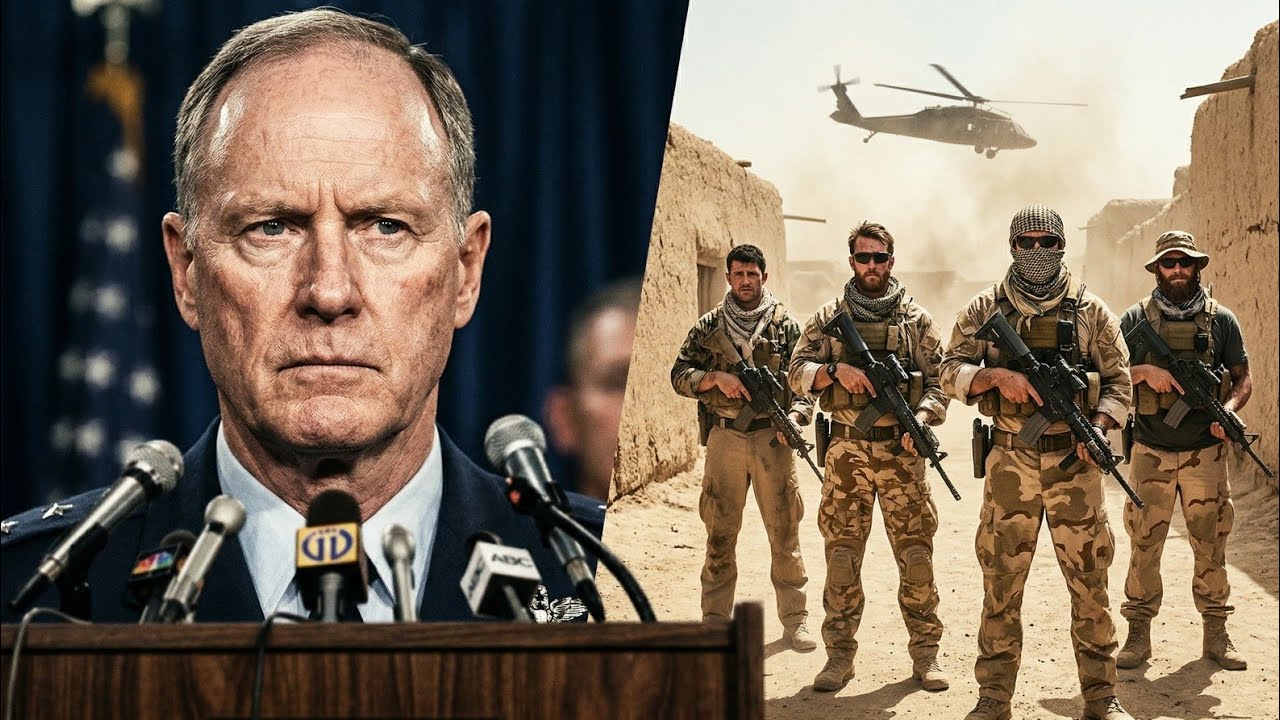
March 4th, 2002. Shah-i-Kot Valley, eastern Afghanistan. Before sunrise, five Australians were pinned to a freezing mountainside watching 36 trapped Americans wait for death in the dark. Hours earlier, some US commanders had treated the Australians like an odd colonial attachment. A curiosity. Men to be used, not listened to.
But now, according to battle accounts, interviews, and wartime reporting, those same Australians were the only thing stopping a massacre. And that raises the question that still hangs over this battle. How did the men some Americans underestimated become the men everyone suddenly depended on? Because this was never just about courage, it was about something more unsettling.
It was about two very different ideas of what special forces were supposed to be. One idea arrived with satellites, gunships, helicopters, and overwhelming firepower. The other arrived with patience, silence, endurance, and the kind of fieldcraft that looks unimpressive right up until the moment it saves your life. If you think you know how modern special operations work, stay with this one.
Because what happened in those mountains did more than shock US special forces. It exposed a weakness in the way the war was being fought. After 9/11, Australia moved fast. It invoked the alliance, committed forces early, and sent the Special Air Service Regiment into Afghanistan as part of Operation Slipper.
By late 2001, Australian SAS patrols were already operating in some of the harshest ground on earth. These were not ceremonial commandos. They were built for long-range reconnaissance, austere insertion, and deep patrol work. Uh, the sort of soldier who carries discomfort like another piece of equipment. But in Afghanistan, many American commanders did not fully understand what they had.
At one coalition headquarters, the Australians were reportedly marked on a map with a cutout of Steve Irwin. That sounds funny. It wasn’t. To the men who had come to hunt Al-Qaeda through mountains and cave systems, it felt like a message. They were not being seen as a precision capability. They were being seen as a novelty. And in war, being underestimated can get you killed.
The Australians had a very different rhythm for many of the Americans around them. They were used to going in light, staying out longer, observing without being seen, building an intelligence picture one grain of dust at a time. That did not always fit the American preference for tempo, mass, ease, and action.
The Australians wanted time. The Americans wanted movement. And in the Shah-i-Kot Valley, that difference was about to matter. Shah-i-Kot sat high, cold, and cruel. The valley floor was around 8,500 ft. The surrounding ridgelines rose far higher. Snow clung to the ground. The air was thin enough to punish every breath.
At night, the temperature plunged below anything most soldiers would call survivable. It was the kind of place where metal burned your hands, sleep came in fragments, and every sound traveled too far. Somewhere out there, Al-Qaeda and Taliban fighters had dug into caves, folds in the mountain, old fighting positions, and natural choke points.
They knew the ground. They had mortars, machine guns, escape routes, and they were waiting. The Australians understood that terrain like this could not be bullied. It had to be read. They pushed to infiltrate early, to get eyes on before the main assault, to watch the routes, study the habits, learn where men moved, where they hid, where they would run when pressure came down.
But, the plan did not unfold that way. When Operation Anaconda began on March the 2nd, 2002, it was the largest battle of the Afghanistan War up to that point. Roughly 2,000 coalition troops were involved, including around 100 Australian SAS. The idea looked straightforward on paper. Afghan allies and coalition forces would push into the valley.
Blocking forces would cut off escape routes. Air power would crush resistance. The trap would close. But, the mountains had other ideas. Almost immediately, the operation began to unravel. Yet, Afghan militia elements ran into heavy fire. Mortars landed. Trucks were destroyed. Men pulled back. The neat geometry of the plan broke apart hard in dust, panic, and bad ground.
American troops who were supposed to be sealing exits suddenly found themselves in direct punishing contact. And the enemy was not scattering. He was fighting hard. US troops landed into kill zones and came under machine gun and mortar fire so intense that veterans later described it with real disbelief. Some were hit almost as soon as they touched down.
Others dropped equipment in the chaos. Positions that were supposed to block movement became desperate fights for survival. The valley had become a trap. Just not for the men it was meant to trap. This is where the Australian difference started to show. In one early crisis, as American elements were pinned down, Australian personnel kept their communications intact and fed critical information back up the chain.
In a battle where seconds mattered and confusion killed, that kind of discipline was everything. Not glamorous, not cinematic, just essential. And then came the moment that changed everything. During the battle, Australian patrols were pushed into observation roles on the surrounding heights, exactly the kind of work they had wanted more freedom to do from the beginning.
Hidden on ridges and mountain shoulders, they watched movement through optics, listened to the rhythm of the valley, and began to understand the shape of the fight better than many of the men inside it. They were not there to look impressive. They were there to see what others missed. And if you have ever been high in the mountains before dawn, you know what that feels like.
The cold turns your fingers wooden. Your breath catches in your throat. Sweat freezes under layers. The silence becomes so total that when gunfire finally cracks open the dark, it sounds like the world itself has split. That was the atmosphere in Shah-i-Kot, a war of distant flashes, thudding rotors, radio whispers, sudden violence.
Then, on the night of March 3rd into March 4th, the battle became something even worse. A US Chinook helicopter approached a mountain position near Takur Ghar. Enemy fire came up fast. The helicopter was hit. In the chaos, Navy SEAL Neil Roberts fell from the aircraft onto the mountain. What followed was the kind of rescue attempt that turns confusion into catastrophe in minutes.
A second helicopter came in with a quick reaction force. It, too, ran into ferocious fire. Then, another. Soon, Americans were dead, wounded, and stranded in brutally exposed terrain. 36 survivors were left on that mountain under pressure, with enemy fighters massing around them. This was no longer a clean mission.
It was a fight to keep men alive until darkness, firepower, and sheer nerve could pry them out. And near that crisis sat a five-man Australian SAS patrol. Five men. That was it. No armored column. No dramatic relief force appearing over the ridge. Just five Australians in the right place with the right eyes at the most important possible moment.
They saw what was forming around the Americans. They understood the danger before others did. And they began calling in air strikes. Again, and again, and again. For hours that tiny patrol coordinated attacks onto enemy forces massing to overrun the survivors. Mortars, machine guns, fighters moving in through folds in the terrain.
Every movement had to be identified, relayed, corrected, and hit under extreme pressure. This is the part people often miss when they romanticize special forces. There is nothing glamorous about sitting exposed on a freezing slope knowing a bad grid reference could kill friendlies, a missed movement could doom trapped men below, and a single enemy burst could end your own part in the battle forever.
It is concentration so intense it feels physical. It is exhaustion fighting with instinct. It is fear being held in place by training. All night coalition aircraft pounded the mountain. AC-130 gunships tore into enemy positions. Attack helicopters raked the slopes. Jets came in hard, and through it the Australians kept directing the violence where it needed to go.
Not louder, not wilder, more precise. There is a reason this hit American observers so hard because this was exactly the sort of work the Australians had argued they should be doing more of from the start. Quiet insertion, deep observation, independent judgment under pressure, long endurance reconnaissance turned into decisive battlefield effect.
They were proving their point in the only language war respects. Results. Somewhere on that mountain wounded Americans lay in the snow listening to the impacts hit around them and wondering whether help would come in time. Somewhere above them five Australians were making sure it did. You can imagine the sensory chaos. The smell of aviation fuel and explosive residue hanging in the cold.
Blood freezing into fabric. Men pressing themselves into rock as tracers sliced the dark. The noise of rotors building, fading, returning. And always the radio. That constant lifeline. That thin electronic thread between survival and obliteration. The Australians were not invincible. They were vulnerable the entire time.
A patrol that small in terrain like that could disappear under concentrated fire. If the enemy found their exact location and pushed hard enough, the story ends very differently. But fieldcraft bought them time. Deep discipline bought them angles. And calm bought other men their lives. Eventually, additional Australians joined the extraction effort.
Under cover of darkness and air power, the survivors were pulled out. The mountain was not won cleanly. Nothing about Takur Ghar was clean. Americans were dead. Others were badly wounded. The operation had become one of the most painful and controversial episodes of early Afghanistan. But without those Australian patrols, the death toll could have been much worse.
And everybody knew it. That was the moment the tone changed because shock is not always loud. Sometimes it is a silence after the firefight when men who thought they understood a war realized someone else understood it better. Operation Anaconda kept grinding on. Fighting continued in and around the Shah-i-Kot.
Air power pounded caves and positions. US and coalition troops kept pushing. The terrain kept punishing. The enemy kept resisting. But the Australians were no longer being viewed the same way. Now they had credibility that could not be argued away. Now they had shown what deep reconnaissance could do in a battle built too heavily around direct action and late intelligence.
Now the novelty from Australia looked a lot more like a missing piece. And then the Australians delivered another jolt. Later in the operation, one SAS patrol infiltrated undetected onto high ground overlooking a likely escape route. It was exactly the kind of mission they had wanted from the beginning. Patient, hidden, unshowy.
The sort of task that rewards the soldier who can lie still longer than his own discomfort. From over a kilometer away, they observed a group of high-value figures moving through the mountains. Among them was an older man in white robes walking with a cane surrounded by armed guards in camouflage and black balaclavas.
For a moment, US intelligence believed the Australians might have found Osama bin Laden. Others later argued the target may have been Ayman al-Zawahiri. Still others believed it was the Uzbek militant leader Tahir Yuldashev. Even now, the identity remains debated. That uncertainty matters because it shows how close these wars often come to changing history without anyone realizing it in the moment.
A bomb was called in. It landed, but not close enough. Follow-up strikes killed fighters, but the high-value target appears to have escaped. And there, buried inside that one fleeting sighting, I is another reason the Americans were shaken. The Australians had found in harsh mountain terrain what larger systems had struggled to locate.
Not with magic, with patience, with positioning, with the old hard craft of being where the enemy does not think to look. That changed the relationship. After Anaconda, Australian SAS were increasingly treated not as exotic attachments, but as a serious planning asset. Their later patrols reportedly impressed not only Americans, but also other special operations veterans.
In one case, they even stunned observers with detailed intelligence about weapons movement across the border, down to vehicles and load details. The point was becoming impossible to miss. Technology is powerful, but it does not replace fieldcraft. Firepower is overwhelming, but it does not replace understanding.
And arrogance, even subtle arrogance, is expensive in the mountains. There is another layer to this story that matters. The shock to US special forces was not that the Australians were braver. Bravery is common in battle. Plenty of men were brave in Shah-i-Kot. The shock was that the Australians represented a different philosophy.
Less theatrical, less dependent on constant support, less obsessed with looking dominant, more willing to suffer quietly for a better position tomorrow. That is not as dramatic in a planning room. It is very dramatic when the shooting starts. American commanders eventually recognized it. General Tommy Franks later praised Australian interdiction work in Anaconda as some of the most highly effective actions of the campaign.
The Australian commander, Rowan Tink, was awarded the US Bronze Star for his leadership during the deployment. By then, the point had been made. The men on the mountain did not need speeches. Their work had spoken clearly enough. And yet, the title of this story, the idea of men who had fight in flip-flops, captures something real even if the battlefield was far uglier than the phrase. It captures the attitude.
Strip it back. Carry less. Complain never. Get closer. Stay longer. See first. Hit last. There is a reason that kind of soldier enervates even other elite soldiers because he does not just fight the enemy. He quietly exposes everyone else’s excuses. For the Americans in Afghanistan, Anaconda was a brutal lesson in what happens when you move against difficult terrain with an incomplete picture.
It was a warning about overconfidence, about assuming that speed and mass could compensate for not knowing enough soon enough. For the Australians, it was vindication bought at the edge of disaster. They had argued for deeper infiltration, better reconnaissance, more time, more eyes on. Then, the battle went bad in exactly the ways they had feared.
And when it did, they were the ones helping hold it together. That is why this story endures, not because it is comfortable, because it isn’t. It reminds us that in coalition warfare, prestige can blind. Big allies can stop listening. Smaller allies can see more than anyone expects. And the battlefield has a cruel way of rewarding the people who paid attention before everyone else got interested.
In the end, what shocked US and especially forces was not some mythic act of superhuman violence. It was competence. Cold, disciplined, unadvertised competence under impossible conditions. Five men on a mountain. A valley full of gunfire. 36 trapped Americans and a war machine discovering in real time that one of its most valuable tools had been sitting off to the side, half-understood.
That is the lesson buried inside Shah-i-Kot. Wars are not always shaped by the loudest force in the room. Sometimes they turn on the quiet men who arrive light, stay hidden, and know exactly what they are doing long before anyone else does. And when history looks back, that is often the difference between a battle report and a eulogy.
If you want more untold military stories like this, subscribe to Australia’s Secret Wars.