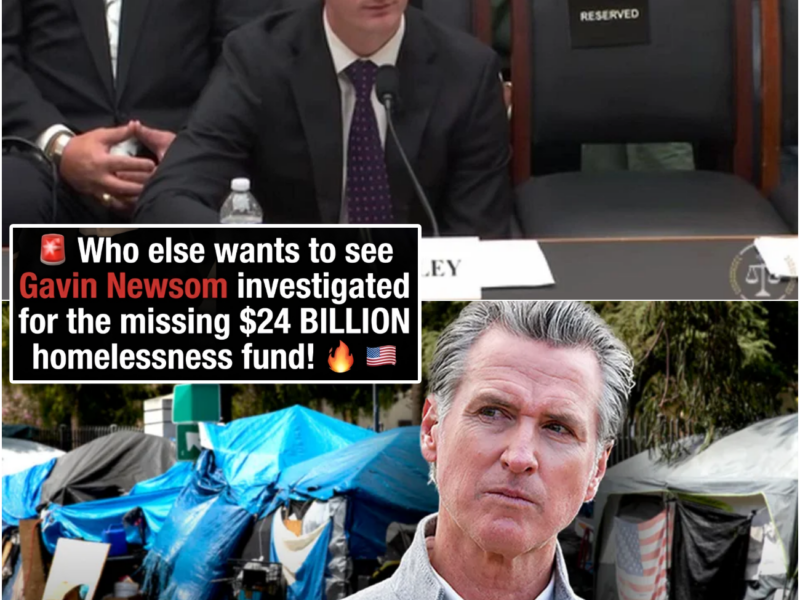
Nick Shirley Questions California Spending as $24 Billion Homelessness Fund Comes Under Scrutiny, Demands Accountability Over Missing Impact
Nick Shirley Questions California Spending as $24 Billion Homelessness Fund Comes Under Scrutiny, Demands Accountability Over Missing Impact
In California’s long-running struggle with homelessness, few issues have become as politically charged—or as symbolically powerful—as the question of where public money goes and whether it produces measurable results. That debate has recently been reignited by commentator and citizen investigator Nick Shirley, who has called for answers regarding what he describes as roughly $24 billion in homelessness-related spending under California Governor Gavin Newsom.

His framing is blunt: billions of dollars, he argues, have been deployed in the name of solving homelessness in California, yet the visible crisis on the streets appears to have worsened. Encampments remain widespread in major cities, public frustration is rising, and the state’s political leadership continues to defend its approach. Shirley’s conclusion is equally stark—he says the public deserves a full accounting of how funds were spent, and whether the system itself is fundamentally failing.
But behind the viral headlines and political outrage lies a far more complex story: a sprawling network of state programs, local initiatives, nonprofit organizations, and federal partnerships attempting—often imperfectly—to address one of the most persistent social crises in modern American governance.
This is the story of that system, the controversy surrounding its outcomes, and the broader debate it has sparked about accountability, ideology, and the limits of public policy in solving homelessness at scale.
A Crisis That Defines California Politics
Homelessness in California is not new. It has evolved over decades, shaped by rising housing costs, economic inequality, mental health system closures beginning in the late 20th century, and urban development patterns that have left many low-income residents vulnerable to displacement.
By the time Gavin Newsom became governor in 2019, the issue had already become one of the most visible political challenges in the state. Tent encampments in cities such as Los Angeles, San Francisco, and San Diego were not just social issues—they were national symbols, frequently used in political messaging on both sides of the ideological spectrum.
Newsom declared homelessness a “statewide emergency,” signaling a shift toward large-scale intervention. Over the following years, California dramatically increased spending on homelessness services, housing programs, and supportive infrastructure.
According to figures often cited in public debates, the combined state, local, and federal spending directed toward homelessness response in California has reached into the tens of billions over several years—numbers that have become the centerpiece of criticism from activists like Nick Shirley.

But understanding those figures requires unpacking what “spending on homelessness” actually includes.
What the $24 Billion Debate Is Really About
The figure commonly referenced in public discourse is not a single budget line. Instead, it is an aggregation of multiple funding streams:
State housing initiatives
Emergency homelessness response programs
Mental health and addiction services
Local government grants
Nonprofit contracts for outreach and shelter services
Affordable housing construction subsidies
Federal pass-through funds
Critics like Shirley often consolidate these categories into a single headline number, arguing that the total should have produced more visible improvements.
Supporters of the state’s approach counter that such aggregation can be misleading, because many programs are long-term infrastructure investments rather than immediate street-level interventions. Housing construction, for example, can take years before units are completed and occupied.
Still, the gap between spending and visible outcomes remains the core of the controversy.
Visible Outcomes Versus Measured Outcomes
One of the central tensions in California’s homelessness debate is the difference between perception and measurement.
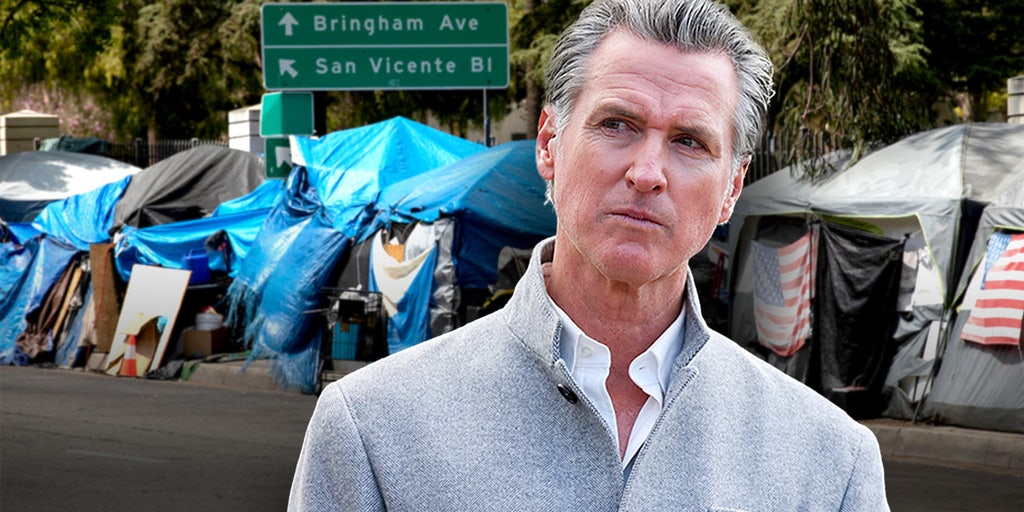
On the ground, many residents and visitors see:
Expanding tent encampments
Encampments near highways and public parks
Overburdened shelters in major cities
Rising public safety concerns in some neighborhoods
These visible signs have fueled frustration and created a sense that spending has not matched results.
However, state officials point to a more complicated set of metrics:
Thousands of individuals moved into temporary or permanent housing programs
Expansion of shelter capacity in multiple counties
Increased funding for mental health outreach teams
Prevention programs aimed at stopping homelessness before it begins
The disagreement is not simply about facts—it is about which facts matter most.
Critics focus on street-level visibility. Policymakers emphasize systemic flows: how many people are housed at any given time, how many are prevented from becoming homeless, and how long individuals remain in assistance programs.
Nick Shirley’s Accusation: A System Without Accountability
In his commentary, Nick Shirley argues that California’s homelessness response system lacks transparency and accountability. His central claim is not just that money has been spent, but that it has been dispersed through a complex network of nonprofits and consultants with limited oversight.
He describes a structure where:
Funds are distributed through multiple administrative layers
Nonprofit organizations manage large contracts
Outcomes are inconsistently measured
Public reporting is fragmented across agencies
Shirley’s framing resonates with a broader populist critique of government contracting: that large bureaucratic systems can dilute responsibility, making it difficult to determine which programs succeed and which fail.
His call for investigation focuses on what he sees as a fundamental question: if spending has increased dramatically, why has visible homelessness not decreased at a corresponding rate?
The Role of Nonprofits and Service Providers
At the center of California’s homelessness response system are hundreds of nonprofit organizations. These groups provide:
Emergency shelter beds
Street outreach teams
Mental health counseling
Substance use treatment referrals
Housing placement assistance
Case management services
Supporters argue that these organizations are essential because they operate at street level, often filling gaps that government agencies cannot quickly address.

Critics, however, argue that the system can become fragmented. With so many organizations involved, each receiving portions of funding for specialized services, accountability becomes diffuse.
Some policy analysts describe this as a “distributed responsibility problem”: no single actor is fully responsible for outcomes, making system-wide evaluation difficult.
This is one of the key points raised by critics like Shirley, who suggest that complexity itself may be part of the problem.
Governor Newsom’s Defense of the Strategy
Governor Gavin Newsom and his administration have consistently defended California’s approach, arguing that the state is dealing with one of the largest homelessness populations in the United States, driven largely by structural factors beyond short-term policy control.
Their arguments typically include:
Housing shortage
California has a severe shortage of affordable housing, especially in coastal metropolitan regions.
Mental health system gaps
A significant portion of the homeless population struggles with untreated mental illness or addiction, requiring long-term care rather than emergency intervention.
Time lag in housing projects
Many funded housing units are still under construction and have not yet entered the system.
Local control constraints
Cities and counties often control zoning and implementation, limiting the state’s ability to enforce uniform solutions.
Newsom has also emphasized recent initiatives aimed at accelerating housing construction and increasing accountability for local governments that fail to meet housing targets.
The Political Polarization of Homelessness
Homelessness in California has become deeply polarized politically.

On one side, critics like Nick Shirley argue that the issue reflects government mismanagement, excessive spending, and lack of oversight. Their framing often emphasizes:
Waste
Bureaucracy
Ideological priorities
Lack of measurable results
On the other side, policymakers and many policy researchers argue that the crisis is structural and cannot be solved simply through increased enforcement or budget cuts. Their framing emphasizes:
Housing economics
Healthcare system failures
Long-term social determinants
Regional inequality
As a result, the same set of facts is often interpreted in radically different ways.
Public Reaction: Frustration and Fatigue
Among residents, the reaction is often less ideological and more pragmatic.
Many Californians express frustration not necessarily with the idea of spending money on homelessness, but with the persistent visibility of the crisis. Common concerns include:
Encampments near schools or parks
Trash and sanitation issues
Safety concerns in certain areas
Perception that conditions are not improving despite funding
At the same time, others emphasize compassion, warning against policies that would criminalize homelessness without addressing underlying causes.
This duality—compassion versus frustration—has become a defining feature of California’s public discourse on the issue.
Media and Viral Amplification
The role of independent commentators like Nick Shirley highlights another modern dynamic: the amplification of political narratives through digital platforms.
In traditional media environments, discussions of homelessness spending might be framed through policy analysis and institutional reporting. In the current landscape, however, short-form commentary, viral videos, and investigative-style content often shape public perception more directly.
Shirley’s messaging taps into several powerful narrative themes:
Large sums of money
Lack of visible improvement
Suspicion of institutions
Demand for accountability
These themes are highly shareable and emotionally resonant, which helps explain their rapid spread online.
The Challenge of Measuring “Success”
One of the most difficult questions in this debate is how success should be defined.

Is success:
A reduction in visible encampments?
A decrease in total homeless population counts?
More people transitioning into permanent housing?
Improved health outcomes for vulnerable populations?
Fewer new entrants into homelessness?
Each metric can tell a different story.
For example, a program might successfully house thousands of people, but if new individuals become homeless at a similar or faster rate, street visibility may not change significantly.
This dynamic contributes to the perception gap between spending and outcomes.
Oversight, Audits, and Governance Questions
California’s homelessness funding is subject to audits and reporting requirements, but critics argue that oversight is still fragmented across multiple agencies.
The system involves:
State-level departments
County-level implementation agencies
City housing authorities
Private contractors and nonprofits
This layered structure makes it difficult for the public—or even policymakers—to track spending in a simple, unified way.
Shirley’s call for a “full independent investigation” reflects a broader demand for consolidated reporting and clearer outcome measurement.
Supporters of the current system counter that oversight already exists, but acknowledge that improving transparency is an ongoing challenge.
The Broader National Context
California is not alone in facing homelessness challenges. Major cities across the United States have experienced increases in unsheltered populations, driven by similar factors:
Housing affordability crises
Wage stagnation in low-income sectors
Mental health system limitations
Substance abuse epidemics
However, California’s scale and visibility make it a focal point for national debate.
As one of the largest economies in the world, the state’s policy choices are often viewed as benchmarks—or cautionary tales—for other regions.
The Road Ahead: Reform or Reassessment?
The controversy surrounding Nick Shirley’s claims reflects a deeper unresolved question: is California’s homelessness strategy fundamentally flawed, or is it simply incomplete?
There are several possible directions forward:
1. Increased Transparency
Calls for unified dashboards tracking spending and outcomes across agencies.
2. Streamlined Contracting
Reducing fragmentation among nonprofits and service providers.
3. Expanded Housing Production
Accelerating construction of permanent supportive housing.
4. Policy Realignment
Shifting emphasis between prevention, enforcement, and long-term care.
Each approach carries political, financial, and logistical trade-offs.
Conclusion: A Debate Bigger Than the Numbers
At the center of the controversy sparked by Nick Shirley is not only a question of where money went, but a deeper conflict over how society understands and responds to homelessness.
Is it primarily a governance failure, as critics argue, or a structural crisis that cannot be solved quickly even with massive investment?
The reality in California likely contains elements of both interpretations. Large sums of money have undeniably been spent. Programs exist, expand, and evolve. Yet the visible persistence of homelessness continues to challenge public confidence in the system.
For Governor Gavin Newsom, the challenge is proving that long-term investments will eventually translate into measurable improvements.
For critics like Nick Shirley, the challenge is demonstrating that the system’s structure itself is not preventing success.
And for the public, the question remains immediate and tangible: how long can a system spend at this scale while visible conditions remain largely unchanged?
Until that question is answered in a way that satisfies both data and perception, California’s homelessness debate will remain one of the most politically potent and emotionally charged issues in American governance.