Vanessa Trump Shares Breast Cancer Diagnosis at 48, Saying “This Isn’t the News Anyone Expects” in Emotional Announcement
Vanessa Trump Shares Breast Cancer Diagnosis at 48, Saying “This Isn’t the News Anyone Expects” in Emotional Announcement
A Personal Diagnosis in a Public World
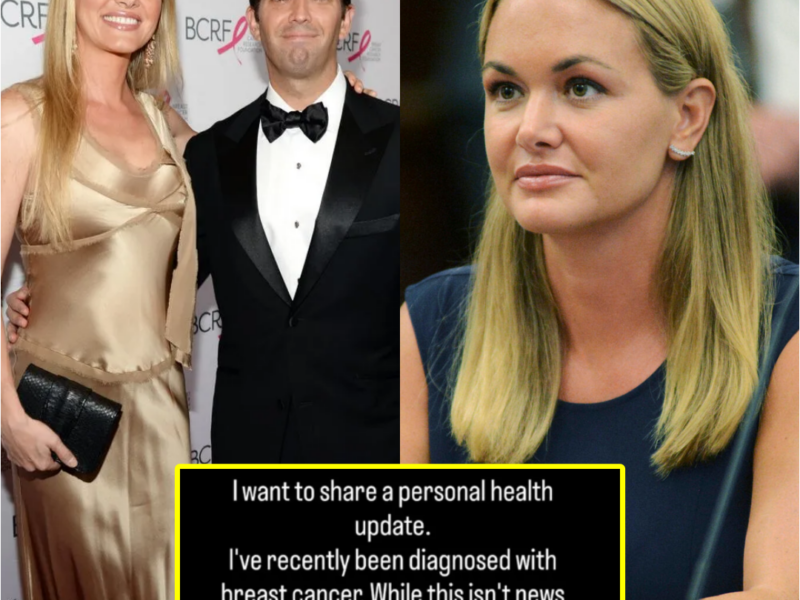
According to Vanessa Trump, she shared her diagnosis directly through an Instagram post, describing it as a “personal health update” and stating plainly: “I’ve recently been diagnosed with breast cancer.” The tone of her message, as reported, emphasized both emotional steadiness and medical engagement. She noted that she is working closely with her doctors on a treatment plan and expressed gratitude for the care she has already received, including a procedure performed earlier in the week.
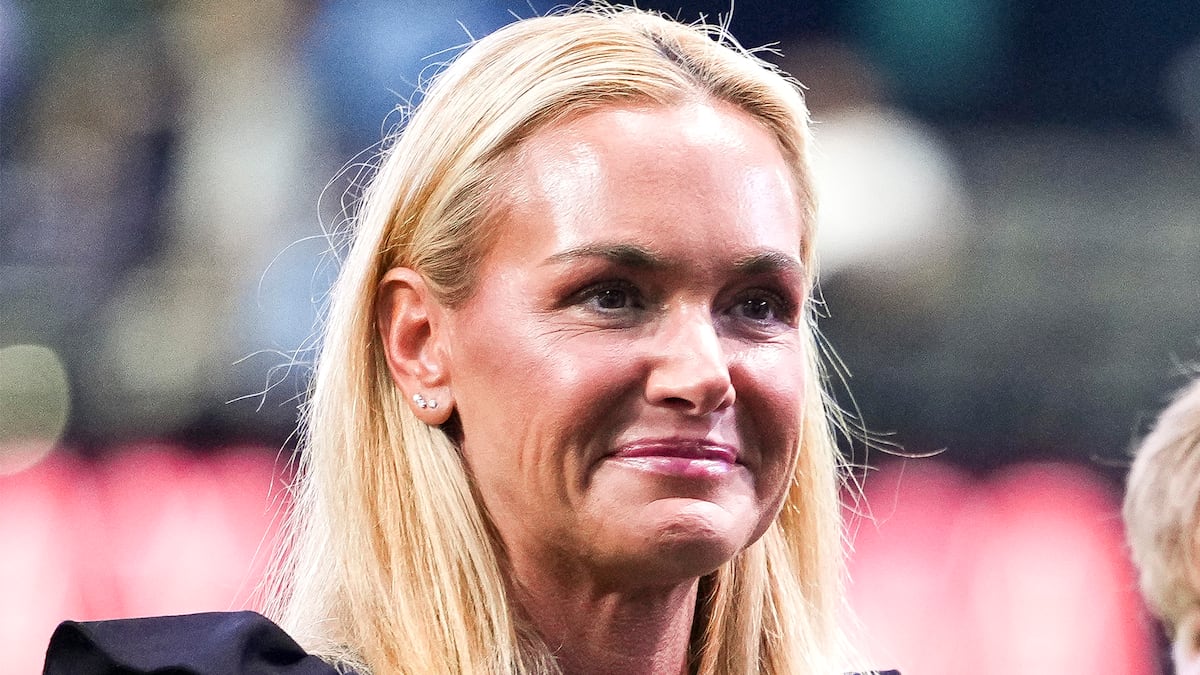
Her message also carried a clear emotional subtext: a recognition that such news disrupts not only the individual’s life but also the expectations of those around them. “While this isn’t news anyone expects,” she wrote, “I’m working closely with my medical team on a treatment plan.”
In addition to medical acknowledgment, Vanessa Trump emphasized her psychological state—staying “focused and hopeful”—and the importance of her support system, including her children and close family. She also requested privacy during her recovery, a common but increasingly complicated request in an era when public figures often disclose personal health matters in highly visible digital spaces.
The post quickly circulated beyond her immediate follower base, picked up by entertainment outlets, political media, and social platforms. Within hours, her announcement had moved from personal statement to widely discussed public news.
The Trump Family Response: Support and Visibility
One of the defining aspects of the story is not just the diagnosis itself, but the immediate public reaction from members of the Trump family.
Her daughter Kai reportedly responded with a deeply personal Instagram post, describing her mother as “the strongest person I know” and expressing love and emotional support. The post was widely shared and interpreted as a rare public glimpse into the more intimate dynamics of a family that is often portrayed through political headlines rather than personal narratives.
Other family members also expressed support. Ivanka Trump offered a message of encouragement, writing: “Praying for your continued strength and a swift recovery. Love you mama.” Tiffany Trump reportedly engaged with the post through social media interaction as well.
These reactions matter in part because they reflect the evolving nature of political families in the social media age. Where once such responses might have been communicated privately or through formal statements, they now appear in real time, publicly visible and instantly amplified.
The tone across responses was notably consistent: emotional support, emphasis on strength, and appeals to resilience. In this sense, the family’s reaction helped shape the broader public framing of the story—not as scandal or controversy, but as a health crisis met with solidarity.
Vanessa Trump’s Public Identity Beyond Politics
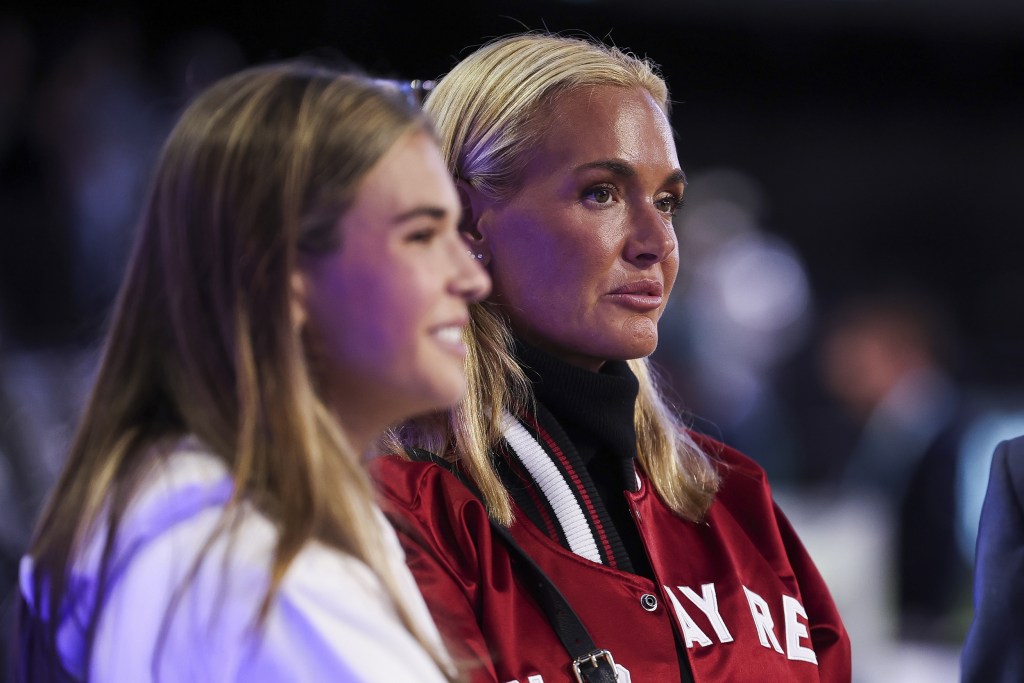
While Vanessa Trump is widely recognized through her former marriage to Donald Trump Jr., her public identity is not solely defined by that relationship. She has also worked as a model and maintained a relatively low public profile compared to other members of the extended Trump family.
Her marriage to Donald Trump Jr., which lasted from 2005 to 2018, resulted in five children: Kai, Donald, Tristan, Spencer, and Chloe. Despite the dissolution of the marriage, she has remained a central figure in their upbringing, and by most accounts, co-parenting arrangements have kept both parents actively involved in their children’s lives.
The presence of children is an essential part of the context surrounding her diagnosis. Unlike public figures without dependents, health disclosures in such cases inevitably carry implications beyond the individual. They become family-wide events, shaping routines, emotional dynamics, and public perception.
The recent public celebration of Kai’s school graduation—attended by family members including both parents—suggests that, prior to the announcement, the family was functioning in a publicly visible but relatively stable co-parenting rhythm. The sudden introduction of a cancer diagnosis inevitably alters that balance.
The Role of Social Media in Health Disclosure
One of the most notable aspects of this story is the medium through which it was shared: Instagram.
In earlier eras, a diagnosis of this kind would likely have been communicated through a formal press statement or kept entirely private. Today, social media has transformed health communication into a hybrid of personal storytelling and public announcement.

This shift raises several questions:
Why do public figures choose social media for such disclosures?
How does the platform shape the emotional tone of the message?
What expectations are created when private health becomes public content?
In Vanessa Trump’s case, the message combined vulnerability with control. By sharing the information herself, she defined the narrative before external speculation could emerge. She emphasized gratitude, hope, and privacy, effectively setting boundaries within a highly public format.
However, once posted, the message entered an uncontrollable media ecosystem. News organizations, commentators, and social media users all reinterpreted and redistributed the information through their own lenses.
This tension—between control and exposure—is central to modern celebrity communication. Social media offers direct voice, but it also guarantees amplification beyond intended audiences.
Public Reaction and Emotional Framing
Public responses to Vanessa Trump’s announcement largely followed a predictable emotional pattern: sympathy, encouragement, and references to resilience. Cancer diagnoses, particularly breast cancer, often trigger strong empathetic reactions due to their widespread personal impact across families and communities.
What distinguishes this case, however, is the intersection of empathy with political visibility. Because Vanessa Trump is associated with one of the most politically polarizing families in the United States, reactions were not purely personal—they were filtered through political identity, media alignment, and cultural interpretation.
Despite this, the dominant tone across mainstream responses remained non-partisan. Supportive messages from both political allies and general observers reflected a momentary suspension of political division in favor of human concern.
This phenomenon is not uncommon in high-profile health disclosures. Illness often temporarily disrupts ideological boundaries, replacing them with shared recognition of vulnerability.
Media Coverage and the Question of Privacy

The rapid spread of the story also highlights ongoing tensions in media ethics surrounding health disclosures of public figures.
Vanessa Trump explicitly requested privacy as she focuses on treatment and recovery. However, the nature of her public profile makes complete privacy difficult to maintain once the information is shared in a public forum.
This raises a recurring ethical question: when a public figure voluntarily discloses a medical condition, how should the media respond?
On one hand, reporting on such disclosures is standard journalistic practice, especially when the individual is linked to a prominent political family. On the other hand, there is an obligation to avoid sensationalism and respect boundaries clearly stated by the individual.
In this case, most coverage has focused on factual reporting and supportive framing rather than speculative commentary. Still, the speed and volume of attention illustrate how quickly personal health updates can become large-scale media events.
Political Context: The Trump Family and Constant Visibility
Although Vanessa Trump is not a political figure herself, her association with the Trump family inevitably places her within a broader political context.
The Trump family occupies a unique position in American public life: simultaneously political actors, media subjects, and cultural symbols. This means that even non-political events involving family members often become indirectly politicized.
In this instance, however, the response has largely avoided overt political framing. Instead, the focus has remained on health, family, and support systems.
Still, the underlying context cannot be entirely separated. The Trump family’s visibility means that personal milestones—whether graduations, relationships, or health updates—are consistently interpreted through a public lens.
This dynamic can create additional emotional pressure for individuals within the family who are not themselves political actors but remain publicly visible due to association.
Family, Children, and Emotional Impact
Perhaps the most important dimension of the story is not media or politics, but family structure.
Vanessa Trump’s five children occupy a central role in how the story is publicly understood. Her daughter Kai’s public message, in particular, reflects the emotional reality behind the headlines. In describing her mother as strong and expressing direct love and support, she offered a counterbalance to the abstract nature of media coverage.
For children and adolescents, a parent’s serious illness can be deeply destabilizing, even when managed with medical care and strong support systems. The public nature of the announcement may add an additional layer of complexity, as personal emotional experiences intersect with external attention.
At the same time, public expressions of solidarity from family members can also serve as stabilizing forces. They create a narrative of unity and resilience that can be both emotionally grounding for the family and reassuring to observers.

Relationship History and Public Interest in Personal Life
The report also references Vanessa Trump’s past relationship with Donald Trump Jr., and her more recent reported relationship with professional golfer Tiger Woods. These details contribute to the level of public attention surrounding her life.
Her relationship with Woods, in particular, has drawn media interest due to his own global celebrity status. The intersection of two high-profile individuals naturally attracts scrutiny, though both have generally maintained a relatively private approach compared to more publicly performative celebrity couples.
The inclusion of these details in coverage reflects a broader pattern in media reporting: when a public figure has multiple layers of celebrity association—political, entertainment, and sports—the narrative tends to expand beyond the immediate subject matter.
However, it is important to distinguish between relevant context and unnecessary speculation. In the case of a medical diagnosis, the central issue remains health and recovery, not the extension of unrelated narrative arcs.
The Broader Cultural Meaning of Illness in Public Life
Vanessa Trump’s announcement fits into a larger cultural pattern: the increasing visibility of illness among public figures.
In recent years, more celebrities and high-profile individuals have chosen to share health struggles openly. This shift is often framed as empowering, destigmatizing, and community-building. At the same time, it raises questions about boundaries between public and private life.
There is no single explanation for this trend, but several factors contribute:
The rise of social media as a direct communication tool
Public expectations of transparency from public figures
The emotional support received through mass visibility
The desire to control personal narratives before speculation emerges
In cases like this, disclosure becomes both a personal act and a cultural event.
Conclusion: A Private Battle in a Public World
Vanessa Trump’s breast cancer diagnosis is, at its core, a deeply personal health challenge. Yet because of her visibility and her connections to one of the most politically prominent families in the United States, it has become a widely discussed public story.
The response—both from her family and from the broader public—has largely centered on support, empathy, and respect for privacy. In an era often defined by polarization and rapid information cycles, that shared tone of humanity stands out.
Still, the situation also underscores the complex reality faced by individuals who exist at the intersection of private life and public attention. A medical diagnosis is never just medical when it occurs in the public eye. It becomes narrative, symbol, and shared experience.
For Vanessa Trump and her family, the coming period will be defined not by headlines, but by treatment, recovery, and the internal rhythms of family life away from public scrutiny. For everyone observing from the outside, it is a reminder of something far simpler than politics or celebrity: that illness does not distinguish between public figures and private lives, even if the world’s attention does.