Janis Joplin Drank Southern Comfort on Stage Every Night — The Company Sent Her a Fur Coat
Before Instagram, before Tik Tok, before anyone had invented the word influencer, Janice Joplain drank whiskey on stage every night. She held the bottle where everyone could see it. She talked about it in interviews. She brought it on tour, on television, to every show she ever played.
She was never paid to do this. She just loved the whiskey. And one day, a package arrived. inside a Lynx fur coat from the Southern Comfort Company as a thank you. She was the first rockstar influencer 50 years before anyone had a name for it and she did it without meaning to. This is that story. Southern comfort is not whiskey. This is a point of some importance.
It presents itself like whiskey. The amber color, the bottle, the name, the southern associations, but it is technically a leour, a fruit and spice flavored spirit based on whiskey. Smoother than bourbon, sweeter, the specific taste of something that goes down easier than it probably should. It was invented in New Orleans in 1874 by a bartender named MW Heron, who wanted to make something more approachable than the raw whisies of the era.
He originally called it cuffs and buttons. In 1967, when Janice Joplain started appearing on stages and television programs with a bottle of it in her hand, Southern Comfort was a respectable, but not particularly glamorous American spirit. It was not the drink of rock and roll. It was not the drink of counterculture.
It was not the drink that anyone would have deliberately chosen to associate with the wildest female voice in American music. It was just what she liked. She had grown up in Texas. She had come of age in the South and then in San Francisco. And at some point, no one has definitively documented when she decided that Southern Comfort was her drink.
Not strategically, not because someone suggested it because she tasted it and liked it. And being Janice Joplain, she did not bother to hide what she liked. The association grew the way Janice Joplain associations grew. organically, loudly, without management. She brought the bottle on stage. She drank from it between songs. She held it up.
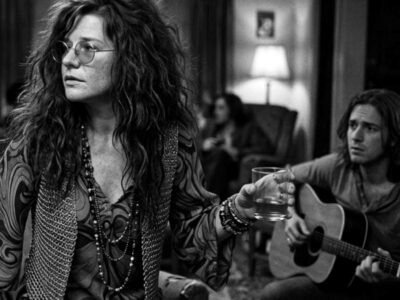
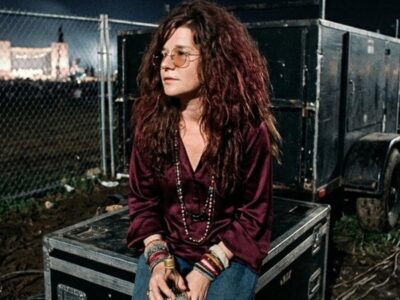
She talked about it in interviews with the specific directness she brought to everything she loved. Photographers photographed her with it because it was part of the image. As much as the feather boa, as much as the beads, as much as the wild curly hair, the woman and the bottle and the microphone, a complete picture.
Journalists mentioned it because she mentioned it. It appeared in articles, in concert reviews, in profiles. In a 1970 Rolling Stone interview with writer David Dalton, who was traveling with her on her last tour, the bottle made its inevitable appearance. Dalton described the specific chaos of her purse, the antique cigarette holder, the motel room keys, the cassettes of Johnny Cash and Otus Reading, and then a bottle of Southern Comfort, empty.
Even the empty bottle was there. It was always there. She was not trying to sell it. She was not thinking about the optics. She just liked the taste and brought it with her everywhere, the way people bring the things they like. In the late 1960s, that turned out to be a remarkably effective marketing strategy. The Southern Comfort Company was paying attention. Sales were going up.
Not dramatically, not overnight, but consistently in the years when Janice Joplain’s face was on magazine covers and her voice was on the radio and her image, bottle in hand, feather boa, completely herself, was everywhere. The brand was being associated entirely without their orchestration with the most exciting woman in American music.
They had not paid her. They had not asked her. They had not sent a contract or a rate sheet or a brand brief. She had simply started drinking their product in public and declined to stop. In the era before endorsement deals were the standard machinery of the music industry, this was remarkable. The relationship between a performer and a brand was usually explicit.
You signed something. You were photographed according to specifications. You said the approved things in the approved contexts. Janice Joplain’s relationship with Southern Comfort had none of that. She just liked it and showed up everywhere she was going to show up anyway, and the bottle came with her. And the company, watching their sales numbers and seeing her face on every music magazine cover, decided they needed to say thank you.
They sent a fur coat, a Lynx fur coat, not a check, not a contract for future appearances, not a letter of appreciation, a Lynx fur coat, which in 1970 represented significant value, several thousand in the money of the time. She received it and she loved it immediately. This is documented in the accounts of people around her from that period.
The coat became part of her life the same way the Southern Comfort itself had. Not strategically, not for image purposes, but because she genuinely liked it and wore it wherever she went. Offstage the feather boa came off. The coat went on. She wore it to dinners, to parties, to the kinds of ordinary occasions that famous people attend when they are not performing.
She wore it the way someone wears something they love, without ceremony, without consciousness of the image it was creating. The coat had been given to her as a thank you for a relationship she hadn’t tried to build. She wore it because it was warm and beautiful, and it was hers. In retrospect, the whole transaction was the most Janice Joplain thing that could have happened.
She never signed anything. She never agreed to anything. She just loved a product publicly for 3 years. and a company sent her a fur coat and she wore the fur coat because she loved it too. No rate card, no disclosure statement, no manager approval, just here is something we love. Here is something you love.
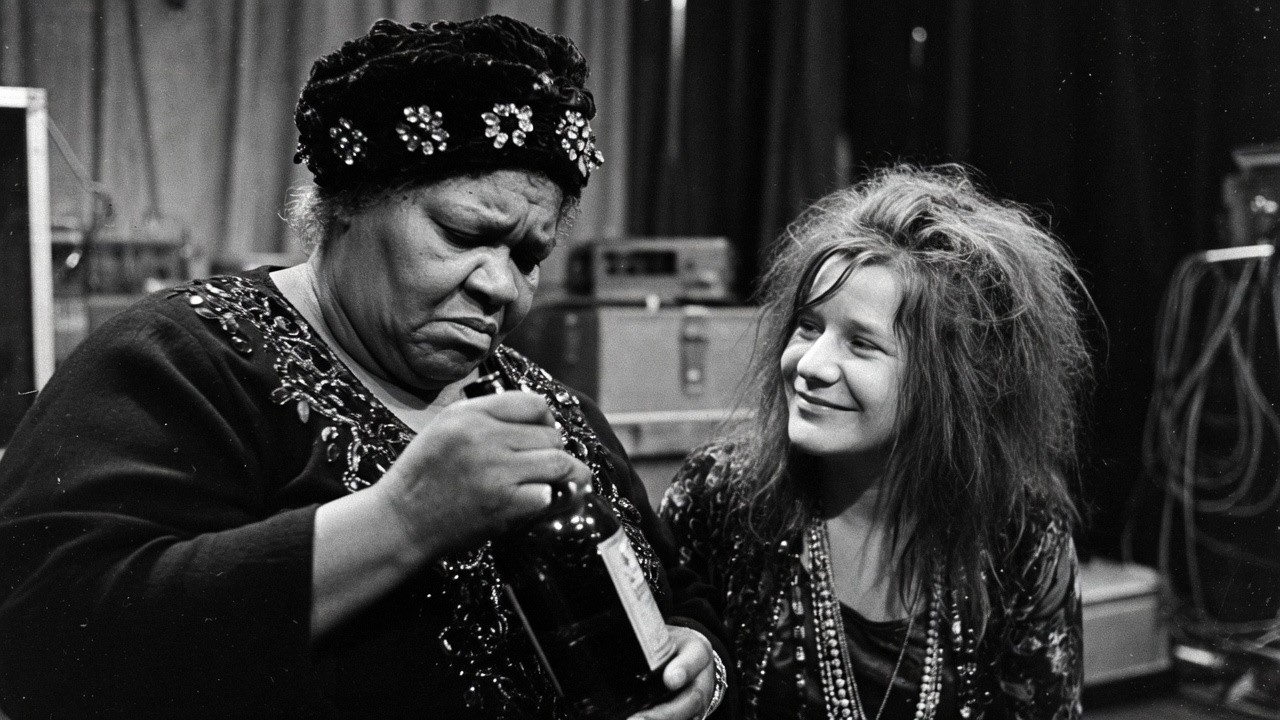
Let’s call it even. 620 7:30 Fall in Steve 7:30. Not everyone was enthusiastic about the Southern Comfort relationship. Big Mama Thornon was one of Janice Joplain’s most significant musical influences. The woman who wrote Ball and Chain, the woman whose recording Janice had listened to and absorbed and built something new from.
She was older than Janice, wiser about the road, and direct in the way that blues musicians of her generation were direct. According to the accounts from people around Janice, Thorton told her at some point to take it easy on the whiskey before a show. the specific phrase, as it has been passed down, so your liver don’t go.
She was right to say it. She was right that the amount Janice drank was not sustainable. She was right that the body eventually presents a bill. Janice loved Thornton. She respected her. She had arranged for Thornon to open shows for her as a way of acknowledging the debt, of saying publicly, “This woman made me possible.
” and she listened to the warning the way she listened to most warnings about her own choices with warmth and appreciation and without fundamentally changing what she was doing. The bottle was part of who she was and Big Mama Thornton, who understood better than most what that meant in the long run, was watching. Here is the part that makes the story feel like it belongs in a different century.
Today, the relationship between a performer and a brand follows a specific and wellocumented path. There are agencies, there are rate cards, there are contracts specifying how many times the product must be mentioned, in what context, with what language, and for what payment. There are disclosure requirements. There are follower counts and engagement rates and demographic analyses.
Janice Joplain’s relationship with Southern Comfort had none of this. She didn’t have a follower count. She had concert attendance figures and magazine circulation numbers and the specific metric of how many people stopped whatever they were doing when her voice came through a speaker. She didn’t have an engagement rate. She had the Mterrey footage, the face of 7,000 people in the moment they understood what they were hearing.
She didn’t have a disclosure statement. She had a genuine preference and the specific personality that expresses genuine preferences without filtering them through a professional calculation. And the result, the Lynx fur coat, the southern comfort sales increase, the permanent association of a brand with one of the most recognizable images in rock history is exactly what every influencer marketing team in 2025 is trying to recreate.
They cannot recreate it because the thing they are trying to recreate was authentic. She actually liked the drink. She was not performing liking it. She was not calculating the brand implications of being seen with it. She was just thirsty. The entire multi-billion dollar influencer economy is built on trying to replicate the authenticity of someone who was simply being themselves.
She was doing it before they had the word for it. Nine Tay 1 C. One say, oneay, onesie. The link’s fur coat and the southern comfort relationship tell you something specific about Janice Joplain that the more dramatic versions of her story sometimes miss. She was funny, not performing funny, actually funny.
The specific kind of humor that comes from paying attention to how absurd things are and being willing to say so. The idea that she had been the most effective unpaid advertisement in the history of a major liquor brand, that she had increased sales through sheer genuine enthusiasm and had received a fur coat in recognitions, delighted her.
She talked about it with the specific warmth of someone recounting a joke that keeps getting better the more you think about it. She drank the whiskey. She didn’t plan for it to be anything other than drinking the whiskey. And then a fur coat arrived. The world is strange. Rock and roll is strange. A Lynx’s coat from a liquor company is strange.
And being Janice Joplain, she understood that the strangeness was part of the gift. She wore the coat. She kept drinking the whiskey. She kept being exactly who she was. That was the deal. That was always the deal. She would be exactly who she was without modification, without management, without the kind of professional distance that most people put between themselves and the things they actually love.
And the things she actually loved would keep giving back. Sometimes in the form of music that stops the world, sometimes in the form of a fur coat. Southern Comfort still exists. It changed hands multiple times over the decades from its New Orleans origins to various corporate owners. In 2016, it was acquired by Sazzarak.
The recipe has changed somewhat. The brand still uses Janice Joplain’s association with the product in its own historical materials, in its brand story, in the way it talks about its history. The woman who never signed a contract, never asked for anything, never had a manager approve the relationship.
She is now part of the official brand history. She got there by being thirsty. That’s the whole story. Janice Joplain was the first rockstar influencer, not because she tried to be, because she was constitutionally incapable of pretending to like things she didn’t like or hiding things she did. In a world that increasingly understands authenticity as a strategy, she was authentic without strategy.
The coat was real, the whiskey was real, the voice was real, the love was real. All of it all the time without management. That was the deal. And it produced one of the most recognizable images in rock history. Woman with voice, woman with bottle, woman with feather boa, woman with fur coat. All of it hers, none of it planned. Subscribe because every story on this channel is one that most people don’t know about a person that most people think they do.
She wasn’t just the voice. She was also the coat and the empty bottle in the purse and the cassettes of Johnny Cash and Otis Reading. All of it pearl.