America’s Toughest President D
When an assassin shot Theodore Roosevelt moments after he took the stage, he waved off doctors and finished his speech. But when they finally got to examine him, what they found left them absolutely stunned. In the long list of America’s presidents, four became so revered that they’re memorialized on Mount Rushmore.
But only one of them practically carried the nation into the 20th century. Theodore Roosevelt didn’t have an easy life, but each hardship he endured turned him into a stronger man and leader who became renowned for the sheer force of his will as he overcame any obstacle until he couldn’t fight anymore.
Born in 1858, Teddy almost immediately began struggling with health issues, including bouts of asthma that threatened to strike him down long before his time. Being so sickly as a child, his parents were constantly worried about his welfare, and this meant they chose to homeschool him rather than send him away.
His passion for learning carried him on to Harvard in 1876, where he continued to pursue the subjects that interested him most. While he found a love for both science and philosophy, he truly set himself apart by publishing several papers on ornithology and becoming an esteemed naturalist. His father died in 1878, leaving him an inheritance of $60,000.
With his finances taken care of, he was free to chase any dream he wanted. Possibly inspired by the legacy left behind by his father, who was a member of the Republican Party, Teddy decided that his future lay in politics. Attending an institution as prestigious as Harvard, Teddy had the opportunity to make countless important connections, but not just professionally.
He met Alice Hathaway Lee through a friend and was immediately love struck. From the moment he saw her, Teddy knew she was the one he wanted to spend the rest of his life with. They married in 1880. Four years later, they welcomed their daughter Alice. The birth of his daughter should have been one of the happiest moments of Teddy’s life, but only two days later, a tragedy befell him that would leave him changed forever.
Within the same day on February 14th, 1884, Teddy’s wife and his mother both died from separate medical emergencies, leaving him utterly devastated. Believing he was in no shape to care for his newborn daughter, he left her with his sister for the next 3 years. Having made progress in his political endeavors, Teddy managed to win the election for the New York State Assembly in 1881.
And while he was relatively new on the scene, everyone would soon know his name. Before long, he earned a prominent reputation through working to expose the corruption he found in Albany. Having a love of nature from childhood, Teddy was always on the lookout to experience the outdoors. Traveling to North Dakota in 1883, he realized he wanted nothing more than to be a cattle rancher.
After the horrific losses he suffered in 1884, Teddy threw himself into his dream of being a cowboy, even building Elk Horn Ranch in North Dakota. This helped him to cope with his grief, as did an old friend. Even before Teddy met his wife Alice, he’d already experienced a dramatic love life, mostly centered on his childhood sweetheart, Edith Carow.
Whatever the problem was that had led to their eventual breakup, it was water under the bridge by 1879, when they decided to bury the hatchet. By that time, Teddy was already married to Alice, but Edith hadn’t let go of her feelings for him. After losing both his mother and his wife, Teddy and Edith became reacquainted.
They would eventually marry in 1886 and go on to welcome four children of their own. Teddy had already proven that he was a man who could get things done in the political sphere. So, when President William McKinley was looking for a new Assistant Secretary of the Navy, Roosevelt’s name stood out. Taking the position in 1897, he immediately began shaking things up by fortifying the US Navy, likely foreseeing that this would be necessary soon enough.
The United States had been at odds with Spain. So, when the USS Maine mysteriously exploded in early 1898, Teddy knew exactly where to point the finger. President McKinley wanted to talk his way out of conflict, but Teddy ordered many of America’s naval vessels to ready themselves. His suspicions were soon confirmed as Spain and America went head-to-head in 1898.
Teddy realized he no longer wanted his position and instead established the first volunteer cavalry regiment in America so he could fight in the conflict himself. Following his service in the Spanish-American War, he ran for governor of New York and won. Focusing on protecting those in poverty, Teddy’s run as governor was a taste of what he would later be like as president.
Having impressed prominent figures in the Republican Party, Teddy was suddenly presented with an opportunity when William McKinley’s vice president, Garret Hobart, died in 1899. Many urged Teddy to throw his hat in the ring as Hobart’s replacement, but while he was no less ambitious than before, he adamantly refused.
Ever since he became governor, Teddy had rubbed several other politicians the wrong way, including Thomas C. Platt, who wanted nothing more than to get rid of him. Believing the post of vice president would get him out of the way, Platt made a deal with Teddy, who stated that the only way he would take the nomination was if the Republican National Convention offered it to him directly.
Believing he had a pretty good chance at avoiding such an outcome, he was in for a rude awakening. Teddy may have wanted nothing to do with the office of vice president, but as he quickly discovered, not everything would turn out how he planned. After his enemies got him on the Republican ticket in 1900, he had no choice but to live up to his word as the convention unanimously nominated him.
Teddy’s ruthless determination to get results was what many believed would make him a great leader, but at the same time, it was exactly why he knew he would make a poor vice president. After officially taking the position, he realized he had no real power to make changes, and this only made him grow more bitter.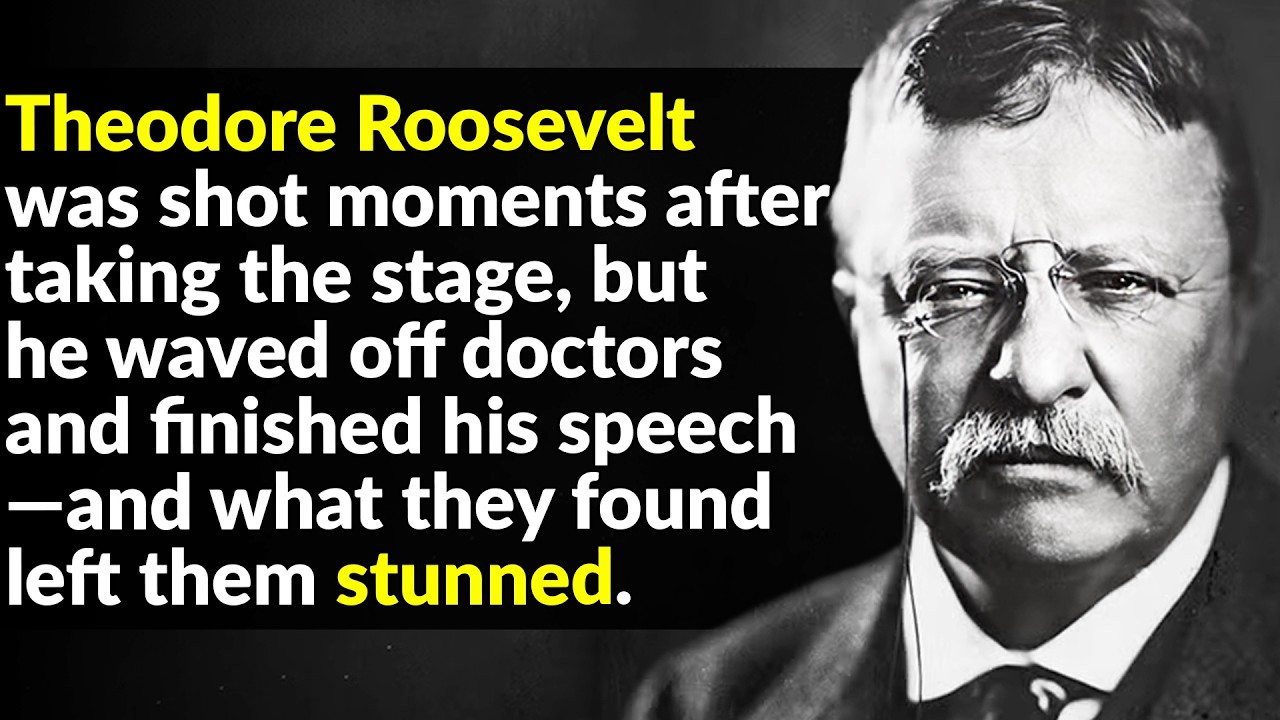
While on vacation in Vermont in 1901, Teddy received the shocking news that someone had shot President McKinley. Teddy Roosevelt was now president of the United States. His childhood love of the outdoors transformed into an intense desire to protect the natural world, which drove a lot of what he did as president.
He made great strides in conserving America’s land and wildlife, such as creating five national parks and the United States Forest Service. By the time he won the 1904 election, Teddy had made up his mind about his future in politics. Just before his inauguration, he announced that while he was happy to serve a second term, it would be his last.
During the hostilities between Russia and Japan in the early 1900s, both nations chose Teddy to act as referee during their peace conference. He agreed and performed his duties so well that he became the first of just four US presidents to receive the Nobel Peace Prize. Even though he remained dedicated to his job throughout his second term, he’d already sworn he wouldn’t run for a third.
And as the 1908 election drew nearer, he remained true to his word. It wasn’t that he’d grown tired of the job, but more so that he believed sticking to two terms was how the presidency would avoid becoming a dictatorship. Although there were candidates whom Teddy believed would be a good choice to succeed him, there was one man who stood out.
Not only had William Taft served on the US cabinet, but he was also a long-time friend of Teddy’s and had always been one of his most vocal supporters. With Teddy’s endorsement, Taft easily won the Republican nomination and subsequently the 1908 election. Going all the way back to his early interest in zoology, Teddy chose to use all his new-found free time to embark on an unprecedented adventure.
Leaving the US in March 1909, he led the Smithsonian-Roosevelt African Expedition, where they searched for creatures to bring back as exhibits for the American Museum of Natural History and the Smithsonian Institution. Teddy wouldn’t return from his expedition until the following year, and it was only a matter of months before he was off on another adventure.
This time he decided to conquer the air itself as he flew in an aircraft designed by the Wright brothers. Soaring through the skies for about 4 minutes, he was the first US president to fly in a plane. Having always seen eye to eye with Taft, Teddy envisioned that he would follow in his own footsteps, but he was sorely mistaken.
Feeling like Taft was failing as his replacement, Teddy decided to go back on his previous sentiments and run for president again, but he would have to win the Republican nomination first. In his mind, he believed the party was on its way to destruction with Taft in the lead, and only he had the power to save it.
However, the rest of the party didn’t agree, and they instead chose Taft as their nominee for the 1912 election. Determined to fight in the presidential race till the very end, he left the Republican Party and created his own, which he called the Progressive Party. With his hat in the ring for the presidency again, Teddy began his campaign leading up to the election and traveled all over to meet prospective voters, one of whom had something nefarious in store.
While visiting Milwaukee, Teddy was about to give a speech when a man named John Schrank walked up and shot the former president. As Schrank later revealed, he did it because the ghost of President McKinley had commanded him to. Although the crowds could see him bleeding profusely, Teddy assessed his injury and knew he had some time before his situation became dire.
So, despite objections, he proceeded with 90-minute speech. He finally went to hospital where doctors decided it would be too risky to remove the bullet from his chest. Teddy would have that bullet inside him till the end of his days. After about 6 years of planning, Teddy embarked on another international expedition, this time into South America with his friend John Augustine Zahm and his son Kermit.
What started out as another trip to bring back more exotic specimens became a whole new adventure. The group shifted their focus to explore how the River of Doubt connected to the Amazon. While their canoes sat tied up on the riverbank, the waters grew more treacherous and nearly dashed them upon the rocks.
Ever the man of action, Teddy dropped into the water to settle them, suffering a wound to his leg in the process. While the leg injury itself wasn’t so bad, the group didn’t have access to the necessary treatment. Weeks passed as Teddy fell ill with tropical fever, robbing him of his mental faculties and strength to walk to the point where he begged the others to go on without him.
He planned to take his own life rather than have his party waste supplies on him. Treating Teddy as best they could, the rest of the men in his expedition were able to help him survive the trip. Once he reunited with his family in New York, they saw how much of a physical toll he’d suffered and continued to see it for the rest of his life as he dealt with frequent bouts of leg inflammation and malaria.
Teddy didn’t win the 1912 election and instead had to concede victory to Woodrow Wilson, but he wasn’t about to abandon politics altogether. This was especially the case with the outbreak of World War I. Being such a staunch supporter of the Allies, Teddy was at odds with President Wilson, who was adamant about the US staying neutral.
Wishing to serve his country himself in the war, he was over the moon to learn that each of his sons had enlisted, but this pride only lasted so long. Only 20 years old, his son Quentin joined the Air Force, but in July 1918, he was flying over Germany when his plane was shot down. After the loss of his son and the lingering complications from his tropical fever, Teddy’s health quickly deteriorated until he required long-term hospitalization.
He died in his sleep from a pulmonary embolism in January 1919. Theodore Roosevelt was a force to be reckoned with and even though he made no shortage of enemies, none could deny that he was a warrior to his last breath. Upon hearing of the former president’s passing, even Wilson’s Vice President Thomas R.
Marshall said it couldn’t have happened any other way, stating, “For if he’d been awake, there would have been a fight.” Thanks for watching History X Posey. If you love uncovering the best stories in history, hit like and subscribe to keep exploring with us. If you enjoyed this video, check out the others on screen for more amazing history content.