Charlemagne Built Europe On Bloodshed And Betrayal D
Charlemagne all but disowned his eldest son, Pippin the Hunchback. Pippin’s resentment for his father festered, and that’s when he came up with a truly deranged plan. Charlemagne would shape history forever, but his own history is something of a mystery. Some sources claim that he was born on April 2nd, 748, while others put the year as 742.
It’s not entirely clear when he was born, but they do agree on one thing. He was born into destiny. As the eldest son of Pippin the Short and Bertrada of Laon, Charlemagne inherited his father’s kingdom and his ambition. His very name honored his legendary grandfather, Charles Martel, the man who halted the Moors at Tours.
Greatness was in Charlemagne’s blood and his name. Before he was the great, Charlemagne was simply Charles. However, even in his lifetime, given his accomplishments, he needed a stronger name. The French called him Charles the Great, while Latin scribes held him as Carolus Magnus.
No matter the language, everyone agreed. This kid was different. Though no one knew how far his schooling went, Charlemagne was as clever as they came. He likely spent his youth at his father’s wandering court, learning battle tactics and diplomacy instead of grammar. Even so, he spoke multiple languages and understood Greek.
In other words, he was ready to rule before he even ascended to the throne. By 760, before his father had vacated the throne, Charlemagne was already signing royal charters in his own name. When Pippin the Short passed on September 24th, 768, the young prince wasted no time claiming his crown.
He was anointed at Noyon, while his brother Carloman took his own coronation at Soissons the very same day. He shared a crown but not a kingdom. Though Charlemagne and his brother technically ruled one kingdom, they lived as rivals. Charlemagne governed the north and east from his palace in Austrasia while Carloman ruled Burgundy province and Aquitaine.
The peace between them was as fragile as the borders they drew. Before his royal wedding, Charlemagne had a relationship with a noble woman named Himiltrude. Together they had a son Pippin, later nicknamed the Hunchback. Whether or not the couple ever married remains unclear, but the alliance produced a child who would one day challenge his father’s throne with devastating consequences.
In 770, Charlemagne’s mother Bertrada arranged a marriage to secure peace with Lombardy. Her son dutifully wed King Desiderius’ daughter, known to history as Desiderata. The union was brief, cold, and entirely political, but it set the stage for a conflict that would define his reign.
Charlemagne’s joint rule with his brother didn’t last long, and thankfully fate intervened before he had to. His brother suddenly passed on December 4th, 771, leaving Charlemagne to claim the entire Frankish kingdom all to himself. He marched straight into his brother’s lands, forcing Carloman’s widow Gerberga and her children to flee to Lombardy for protection.
No one, however, was safe from Charlemagne. Charlemagne didn’t take kindly to Desiderius harboring his brother’s family. To show his displeasure and strengthen his grip on the new territories, he cast aside Desiderius’ daughter as his wife and married Hildegard. As a daughter of Count Gerald, one of Carloman’s most powerful nobles, the marriage solidified Charlemagne’s grip on power and he secured his crown just in time.
In 772, having absorbed his brother’s lands into his kingdom, Charlemagne turned his gaze eastward to the wild. Even before his reign, the Saxons had been raiding Frankish borders, but a new king meant new rules. Charlemagne didn’t play nice like his ancestors. With his fearsome army at his back, Charlemagne destroyed a sacred Saxon site and made off with their gold and silver.
The fights, however, was far from over. Charlemagne’s first Saxon campaign in 772 was only the beginning. His conflict with them would stretch on for more than three decades, longer than most men of the time lived. From 772 to 804, Charlemagne waged nearly continuous battles against Saxons, baptizing, exiling, or executing anyone who refused to bend the knee to Christ or to him.
You might say that Charlemagne was the sword of Christendom. As Charlemagne mopped up the floor with the Saxons, Desiderius began plotting his revenge against his former son-in-law, conspiring with Carloman’s heirs. But when Pope Adrian the First Charlemagne for help against Desiderius’ Lombards, Charlemagne saw his opportunity.
He assembled his armies and crossed the Alps in 773, laying siege to the Lombard capital of Pavia. Popes would forever be in Charlemagne’s debt. By June 774, Charlemagne’s siege of Pavia was in full effect, leaving the Lombards starving and sick. Desiderius’ men, sensing their defeat, surrendered to Charlemagne without much of a fight.
With the support of the local nobles and city leaders, he made himself king of the Lombards and turned Italy into a Frankish province. The celebrations of his conquest of Lombardy had barely finished when Charlemagne went back on campaign. In 776, he returned to the eastern front of his kingdom to crush yet another Saxon uprising, burning villages and forcing entire tribes to accept baptism into the Christian faith.
Converts received mercy, rebels received the sword. His faith was as fierce as his fury. The following year, to consolidate his growing kingdom, Charlemagne summoned both Frankish nobles and newly conquered Saxons to a massive assembly at Paderborn. There, many Saxons pledged loyalty, but one man refused.
Widukind, a defiant Saxon chieftain, slipped north into Denmark to regroup. Thankfully for Widukind, Charlemagne had bigger fish to fry for the time being. In 781, Charlemagne and his wife Hildegard journeyed to Rome with one mission in mind: begin the destiny. With their children in tow, they arrived in Rome where Pope Adrian baptized young Carloman, renamed him Pippin, and crowned both Pippin and Louis.
With that act, Charlemagne was now a king among kings, but he couldn’t seem to keep a queen. During that same Roman visit, Hildegard gave birth to a daughter, Gisela, but tragedy soon followed. After returning to Francia, Hildegard passed during childbirth along with her newborn namesake.
Grief-stricken Charlemagne ordered daily masses for her soul, but just months later, he lost his mother Bertrada, too. He didn’t mourn for long. Charlemagne didn’t linger long in mourning. By the end of 783, he had remarried, this time to Fastrada. She was a daughter of an East Frankish noble, and their union strengthened Charlemagne’s hold on the eastern frontier, where his feud with the Saxons still raged on.
Then, an old enemy came back into the picture. Just when he thought he had subdued the Saxons, Charlemagne’s old nemesis Widukind returned from exile in Denmark, and he came back swinging. Widukind rallied the Saxons to his side and ambushed a Frankish force, dealing a crushing blow. Widukind thought he had scored a victory, but he had only poked the bear.
When word reached Charlemagne of Widukind’s surprise attack, he wasted no time reasserting his authority. At the head of an army, Charlemagne stormed to Verden and demanded justice. Widukind, however, fled once he heard Charlemagne was coming. The Saxon nobles, fearing reprisal, handed over thousands of captives to Charlemagne, but it did nothing to appease him.
Instead of forgiveness, Charlemagne ordered 4,500 Saxon captives to be executed in one day. History would call it the massacre of Verden. Even centuries later, the stain from the blood of 4,500 Saxon captives sullied Charlemagne’s reputation. “Although this figure may be exaggerated,” wrote the historian Johannes Fried, “the basic truth of the event is not in doubt.
” Historian Alessandro Barbero went further, calling it perhaps the greatest stain on his reputation, a stain that he seemed to wear proudly. Charlemagne’s word was every bit as brutal as his sword. To cement control over Saxony, he issued the capitulation of parts of Saxony, a decree with no mercy in it.
Pagans who refused baptism or practiced their old rites faced execution. Charlemagne wanted to erase Saxon culture from Europe altogether, and he very nearly succeeded. By 785, after years of devastation, Charlemagne had finally subdued Saxony. When Widukind emerged once more, the king offered him peace and baptism. In a grand ceremony, the rebel chieftain stood before the altar with Charlemagne himself serving as his former nemesis’s godfather. The Saxon battles were over.
The empire building has just begun. With the Saxons defeated, Charlemagne could look elsewhere for expansion, and he looked to Italy. Charlemagne marched into Benevento, forcing Duke Arechis to flee to Salerno. Before long, Arechis submitted, offering his loyalty and his own son as a hostage.
Charlemagne accepted with a smile. He’d added yet another crown to his collection, but now his kingdom bordered a fierce foe or a powerful friend. While in Italy, Charlemagne met envoys from Constantinople, the seat of power in the Eastern Roman Empire. But the meeting didn’t go well, and Empress Irene had convened the Second Council of Nicaea without inviting Charlemagne or any Frankish bishops to represent his interests.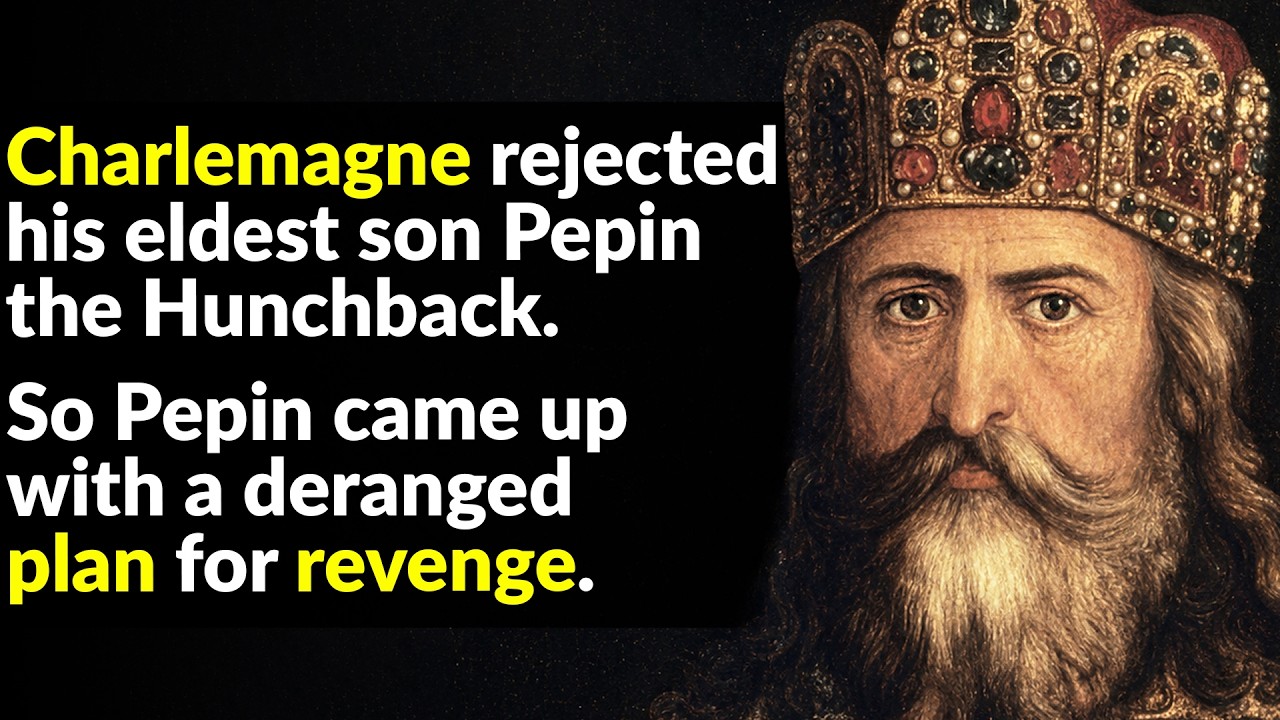
Feeling slighted, Charlemagne broke off his daughter’s engagement to her son, Emperor Constantine VI. The feud between Charlemagne in the west and the Byzantines in the east was getting heated. Charlemagne wasn’t just about battles and beheadings. In fact, he issued a sweeping reform known as the general warning.
It demanded schools in every monastery and cathedral, ensuring both priests and peasants could read scripture. After all, he needed someone to administer the lands that he conquered, and he wasn’t done conquering. With Italy under his thumb, Charlemagne looked north to Bavaria, where his cousin Duke Tassilo ruled. The Duke had once been a loyal Frankish ally, but now his loyalty wavered.
Charlemagne gathered his armies for an invasion, but before he could even yell charge, Tassilo surrendered. The feuds within his own family would get even worse. Tassilo’s fealty to Charlemagne didn’t last long, and neither did Charlemagne’s mercy. No sooner than Charlemagne returned home did he hear rumors that Tassilo was plotting with the Avars, the nomadic warriors who ruled the Danube plains.
Charlemagne, never one to tolerate betrayal, deposed Tassilo, but spared him from the gallows. Instead, he sent his cousin to a monastery and absorbed Bavaria into his kingdom. From his new base in Regensburg, Charlemagne stomped out any opposition to his rule in Bavaria. He struck from both Bavaria and Italy.
The spoils filled his treasury, but loyalty was not something he could buy with gold or blood. In 792, Charlemagne faced an immense betrayal. His eldest son, Pepin the Hunchback, turned on his father and plotted to overthrow him by any means. Bitter at being sidelined from the succession, he conspired with Bavarian nobles to kill his own father and brothers and pick the crowns from their severed heads.
The plot was audacious and doomed from the start. Before his treacherous son could strike, Charlemagne’s spies exposed the conspiracy. For his son’s co-conspirators, Charlemagne showed no mercy. He had them all put to the sword. But, for the perfidious prince, Charlemagne was merciful, kind of. Charlemagne banished his rebellious son to a monastery where only God could hear his schemes.
Even as his councils preached peace, Charlemagne returned to his old battlefield, Saxony. From 794 to 799, he led yearly campaigns against the still defiant Saxons. Even his own chroniclers used terms like burning, ravaging, devastating, and laying waste to describe Charlemagne’s campaigns in Saxony.
And he was about to add insult to injury. Charlemagne didn’t just beat the Saxons into submission. He replaced them. After deporting thousands of Saxons to Francia, he let in thousands of loyal Frankish nobles to take their place. Near the frontier, he built his grand palace at Aachen, complete with a magnificent chapel that still stands today as part of Aachen Cathedral.
His greatest accomplishment was still ahead. When Leo III became Pope in 795, enemies in Rome accused him of corruption. They attacked him in the streets, nearly gouging out his eyes and ripping out his tongue. Bleeding and terrified, Leo III fled north to the one man who could restore his power, Charlemagne.
Charlemagne was in the middle of another Saxon campaign when Leo III arrived at his camp, but the fleeing Pope wasn’t alone. Leo’s foes had followed and repeated their accusations in front of Charlemagne. Charlemagne listened calmly, calculating his next move, then sent Leo back to Rome under royal guard.
He wanted Leo III reinstalled in power and perhaps a favor in return. In November 800, Charlemagne made his first move in his imperial plan. He met Pope Leo III near Mentana at the exact milestone where ancient Roman emperors began their ceremonial entrance into the eternal city.
He then oversaw the hearing of charges against Leo III, but made a shrewd proclamation declaring that no mere mortal could judge guilt or innocence of the Pope. On December 23rd, Leo swore an oath declaring his innocence in all charges. With Leo III back in power in Rome, Charlemagne’s plan was almost complete.
Two days later on Christmas morning, Charlemagne and Pope Leo III stunned parishioners gathered at St. Peter’s Basilica. Instead of a regular mass, they were about to witness the most pivotal moment in history since the fall of Rome. In a move that left everyone’s jaw on the floor, Pope Leo III placed a crown on Charlemagne’s head and called him Emperor of the Romans.
The coronation had made Charlemagne the first emperor in the west since Rome’s fall in 476. From that day forward, he signed every royal document as Charles, most serene Augustus, crowned by God, great peaceful emperor governing the Roman Empire, and who is by the mercy of God king of the Franks and the Lombards.
In 806, Charlemagne issued the division of the realm. He has laid out which of his sons would inherit which lands. The only thing Charlemagne didn’t divide was the imperial crown, but his grand designs for his empire were not to be. Pippin of Italy passed in 810. The father of Europe was left with one son and one last legacy to shape.
Charlemagne’s coronation as emperor of a reborn Western Roman Empire put him in direct conflict with another empire, the Eastern Roman Empire. Instead of a destructive campaign, Charlemagne sought diplomacy. Charlemagne sent envoys to meet with Nikephoros, but the meeting never happened. Nikephoros was no Charlemagne with a sword, and he fell in battle before Charlemagne’s envoys could meet with him.
Thankfully, Nikephoros’s successor, Michael I, was a lot more receptive to Charlemagne and sent his own emissaries to Aachen, officially recognizing Charlemagne as emperor. To mark the moment, Charlemagne minted coins bearing his new title, uniting two worlds under one name. Charlemagne truly was the father of Europe, as in he might have fathered all of Europe.
With at least 18 children, possibly 20, his dynastic line would stretch on through the ages. Curiously, however, none of his daughters ever married, though a few of them mothered children out of wedlock. Still, he could rest assured that his empire would live on. On January 28th, 814, after seven decades of battles, diplomacy, and empire-building, Charlemagne’s body finally failed him.
Stricken by fever and pleurisy, the great emperor whispered his famous last words, “Into your hands, Lord, I commend my spirit.” The age of Charlemagne was over, but his legend had just begun. Long after his passing, Charlemagne’s legacy lived on. Royal houses across Europe traced their lineage back to him to legitimize their reign.
For centuries, popes sought the protection of the Carolingian rulers. Even as his empire splintered, each nation traced their origins back to Charlemagne, truly making him the father of Europe. Thanks for watching History Xposé. If you love uncovering the best stories in history, hit like and subscribe to keep exploring with us.
If you enjoyed this video, check out the videos on screen for more amazing history content.