Charles VI: The Mad King of France D
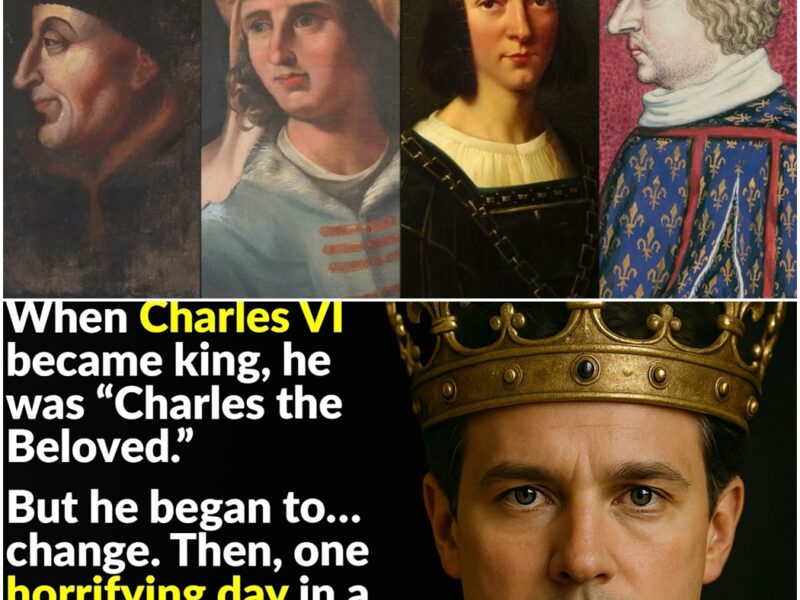
When Charles VI became king, he was Charles the Beloved, but he began to change. Then, one horrifying day in a forest near Le Mans, he finally snapped. Any king who starts out as Charles the Beloved and ends up as Charles the Mad had something go seriously wrong. He inherited one of the most powerful kingdoms in Europe, but as his mind grew more and more unhinged, his reign grew darker and darker until he very nearly wiped France off the map.
Charles VI was born into a chaotic time. The Hundred Years War with England was raging, but his father, the formidable Charles the Wise, was up to the task. He and his wife, the brilliant Joanna of Bourbon, were the definition of a power couple. The two of them managed to outfox the English at every turn, and it looked like they were close to winning the whole war.
But while they saw success on the battlefield, they faced tragedy at home. Charles and Joanna had horrific luck when it came to parenthood. They had three children, none of whom lived past the age of three. When Joanna gave birth to their fourth child, the couple must have been terrified they might lose another.
Little did they know the boy would survive, and he would destroy everything they’d worked for. Charles VI didn’t get to enjoy his childhood for long. His mother died when he was just nine. Then, 2 years later, his father was gone, too. That made him the king of France at the ripe old age of 11. A preteen ruling one of the most powerful kingdoms on the continent in the midst of a decades-long conflict.
What could possibly go wrong? Thankfully, Charles had several uncles, powerful dukes, who were kind enough or greedy enough to rule in his stead as his regents. Charles the VI’s steady hand helped France make major gains against the English, but his brothers were a different story.
Each of them looked out only for themselves, seeking personal profit above all else. The dukes quickly squandered the money that Charles the VI had built up for France. So, they did what most selfish despots would do. They raised taxes. But Charles the VI had promised to repeal taxes on his deathbed, and the people knew it. So, they revolted.
While Charles’s uncles were busy running France into the ground, Charles grew into a handsome young man. At 17 years old, he attended the wedding of some important French nobles, but he wasn’t just there for fun. He was there to find a wife. A Bavarian duke suggested a match between Charles and his daughter, Isabeau of Bavaria.
Charles’s advisers agreed, and the duke sent Isabeau to France to be presented to the king. The moment Charles the VI laid eyes on Isabeau, he fell head over heels. He couldn’t believe his luck. The woman his advisers had selected for him was beautiful, young, and brilliant. He was so intent on marrying her that they had a wedding just 3 days after their first meeting.
Charles ended up being one of the worst kings in France’s history. but to be fair, he didn’t really seem to want to be king in the first place. He could have taken his rightful place on the throne when he was 14, but he didn’t. He’d rather hunt and joust and enjoy life than be a boring old king. He let his uncles continue to run France into the ground while he gallivanted.
Finally, when he was 21, he terminated the regency and took over the kingdom himself. After a decade of selfish dukes, Charles’ first act was to bring back all of his father’s old advisers. With these keen old political minds, Charles actually improved life in France for the first time in years. That’s why early in his reign, the French people dubbed him Charles the Beloved for getting rid of his greedy uncles and bringing stability back to France.
If Charles had a heart attack right then and there, history would remember him as a great king. But he didn’t. On his mother’s side, there was a long history of serious mental illness. Charles’ grandfather was infamous for his debilitating mental breakdowns. His mother, Joanna, suffered from the same condition.
As the years went by, the people who had once called him Charles the Beloved started whispering another name, Charles the Mad. His mental illness came and went, and people could never quite tell what kind of king they were going to get. During one period, he couldn’t even remember his own name and had no idea he was king.
The glory days of his early reign quickly faded. He infamously began running wildly through the hallways of his Parisian palace in various states of undress. At one point, his advisers had to wall up the entrances to the palace lest the king run straight out into the streets. His erratic behavior grew nearly impossible to contain.
And that’s not to even mention the smell. In the Middle Ages, it’s not like everyone was walking around smelling of roses. But Charles took lack of hygiene to a whole new level. Once he refused to bathe or even change his clothes for five whole months. Each new episode made it seem like Charles’s madness couldn’t possibly grow any worse. And yet each time it did.
Many medieval kings were paranoid. But with Charles, it was different. He didn’t see would-be assassins around every corner. He believed he would simply shatter at any moment. Literally. At one point, he came to believe that he was made of glass. He grew obsessed with protecting his delicate body.
He even reportedly had his tailors sew iron rods into his clothing to reinforce his fragile frame. Meanwhile, through all of this, the Hundred Years’ War was still raging. And France was losing more of the ground Charles’s father had fought for with each passing day. Someone had to do something before it was too late.
No one in France had a harder job than Pierre Salmon, Charles VI’s secretary. It fell to him to manage Charles’s mood swings, try to keep the nobles in line, and save his own neck in the process. Fortunately, Salmon was very good at his job. And he managed to fight off the worst crisis for years. But not even an advisor like him could stop Charles VI’s reign from going up in flames, literally.
In 1393, Charles’s wife Isabeau planned a lavish masked ball to celebrate the wedding of one of her ladies in waiting. Unfortunately, the event turned into an utter disaster. Someone had the brilliant idea that Charles and five other lords should dress as wild men, mythical figures who lived in the woods.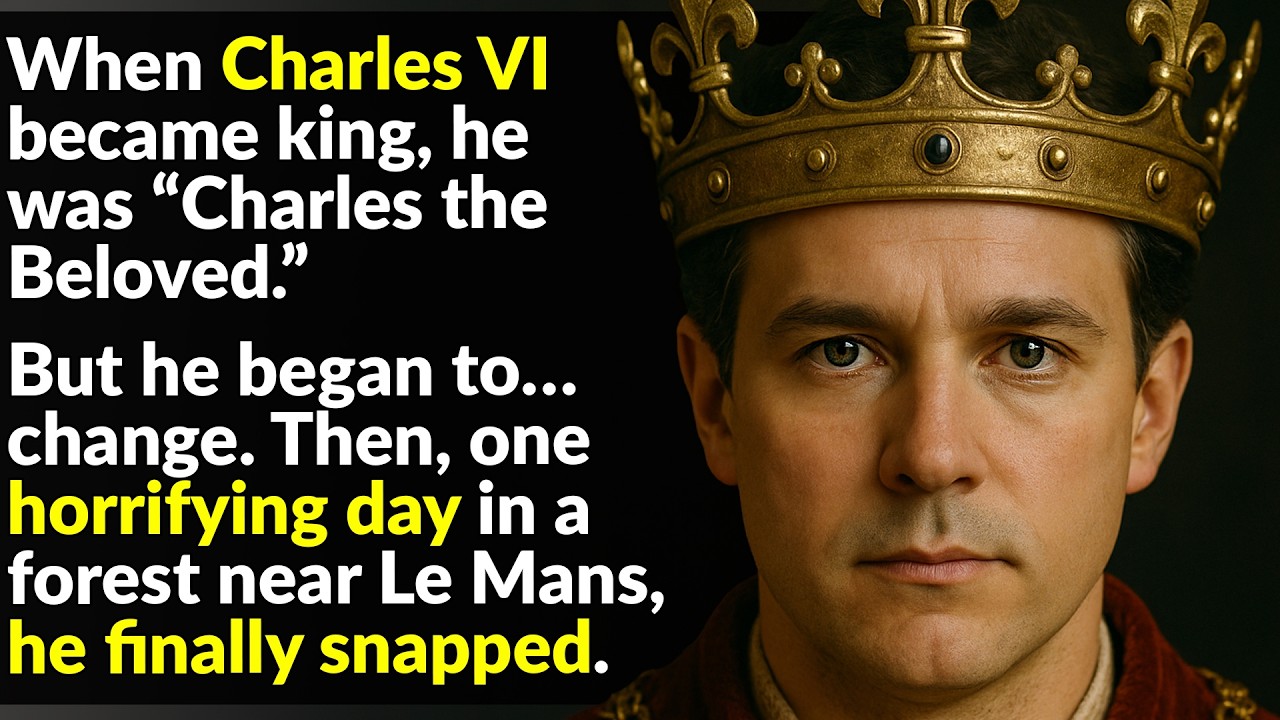
They clad themselves in swaths of linen cloth that they’d soaked in resin and covered in thin wisps of hemp. The outfits made them appear shaggy and wild, just like the wild men from the stories. Linen, resin, fine fibers of hemp, Charles and the five other lords were essentially ready-made fire starters.
Charles’s brother Louis showed up to the ball fashionably late and found six shaggy creatures dancing in the center of the room. The costumes were so thick with hemp that Louis couldn’t even see who the men underneath were. With the assuredness that only royals possess, he grabbed a torch from the side of the room and approached the dancers to get a closer look.
It only took seconds for him to realize he’d made a horrible mistake. The flames jumped from his torch to one of the dancers and quickly spread across the floor. One moment the party-goers were having the time of their lives watching their king and five lords arse about in their ridiculous costumes, the next panic filled the hall as the screams of burning men and terrified onlookers filled the air.
The Bal des Ardents, or the Ball of the Burning Men, was like a nightmare come to life. Four of the costumed lords died in the flames. Several knights who sprang into action to try and put out the fires ended up severely burned. Charles VI ended up surviving, all thanks to the heroic efforts of one woman.
As the flames started to spread, the Duchess of Berry acted fast. She gathered up the voluminous folds of her skirt and threw them over the king to shield him from the fire. Her quick thinking paid off and Charles emerged relatively unscathed, physically at least. Charles the Mad already had a tough enough time inspiring confidence, but the Ball of the Burning Men was a catastrophe unlike any other he’d endured thus far.
Even if the ball had gone off without a hitch, the people would have been disgusted by the display of extravagance. However, the fire seemed like a bad omen and the citizens of Paris prepared to revolt. Charles and his dim-witted brother Louis had to offer public penance to get the people to settle down.
Afterwards, Charles’s mental state completely deteriorated. Mere months later, insanity struck once more. His doctors were powerless. All anyone could do was wait and hope his mind returned. Six months later, it did, but this was the beginning of a pattern. For the next three decades of Charles’s life, he would suffer similar mental breakdowns that would take him out of commission for months at a time.
Pretty soon, it began to take a toll on his wife. The first few years of Charles and Isabeau’s relationship were mostly blissful. They were madly in love and even when they lost two children in infancy, Isabeau at least had her beloved husband to comfort her. However, as the madness began to creep in, Charles grew increasingly distant.
The queen became one of the most influential people in all of France as her husband’s mind withered away. She held on to hope that one day he might return to the vivacious man she’d met just a few years earlier. She rode the choppy waters of Charles’s madness as best she could. But then, one day, her own husband didn’t even recognize her.
Not only that, but she seemed to repel him. Yet, Charles still craved female companionship. So, his advisers provided him with a mistress, Odette de Champdivers. The daughter of a horse trader, one day, Odette suddenly found herself the mistress of the most powerful man in France. As Isabeau presided over a regency council, Charles’s brother, Louis, the Duke of Orleans, gained more and more influence.
The queen and the Duke began to dominate affairs, and people noticed. Pretty soon, a scandalous rumor of an affair was being whispered in every corner of the court. Though many suspected it, no concrete evidence ever came to light. Possibly because Louis met his grim fate before it ever could. Louis must have felt like he was on top of the world.
His power grew as his brother’s insanity worsened, and he was allegedly sharing his bed with the queen herself. But, things can change in an instant. One night in 1407, some poor Parisian stumbled upon Louis’s corpse. Someone had slain the king’s own brother in the streets of Paris, and as a sign of just how little power Charles held, the man responsible didn’t even deny it.
John the Fearless, the Duke of Burgundy, basically admitted to the crime, saying that Louis was a tyrant who squandered France’s money. More likely, John wanted the throne for himself, and Louis was in the way. Next, England’s King Henry V took advantage of the chaos in France and invaded. He pushed back the French forces until he finally defeated Charles at the disastrous Battle of Agincourt.
Despite having half as many men, Henry crushed the French forces. Henry V spent the years after Agincourt winning battle after battle in France, taking back all the territory that Charles’s father had conquered years earlier. His success culminated in 1420 when he forced Charles to sign the Treaty of Troyes.
In it, Charles disinherited his own son and made Henry V his heir. That meant as soon as Charles died, Henry would become the King of England and France, uniting them as one kingdom. John the Fearless saw the English as his ticket to power. So, he joined forces with them and captured Paris, Charles included.
His only mistake was letting Charles’s young son, Charles VII, escape. After the Treaty of Troyes, the 17-year-old Charles declared his father unfit to rule and named himself regent. The whole situation in France was getting extremely messy. Then, two sudden deaths changed everything. Charles VI of France and Henry V had almost nothing in common.
Charles was feeble, insane, and ineffective. Henry was bold, warlike, and formidable. But, all of that meant nothing in the end as the two of them ended up dead within weeks of each other. Henry had dysentery to blame, contracted after many long years on campaign. Charles, on the other hand, simply wasted away after three decades of madness.
So, the question was, what now? According to the Treaty of Troyes, Henry V’s son, the infant Henry VI, was the king of England and France. A baby wasn’t going to stop Charles’ son from taking back his birthright. Within a few years, and with the help of Joan of Arc, Charles VI’s son, now called Charles the Victorious, repelled the English and took back the throne, officially becoming Charles VII of France.
The French rejoiced at their new king and tried their best to pretend that the nightmarish rule of Charles the Mad had ever happened. But, one incident from his reign was too disturbing to forget. Charles the Beloved lasted about 5 years as a good king before the madness began to creep in. The first signs of his mental illness appeared after assailants attacked his close friend and advisor, Olivier de Clisson.
The first thing on Charles’ mind was vengeance. The assailant, Pierre de Craon, had escaped retribution and taken refuge in Brittany. The duke there refused to hand him over, so Charles gathered a small army and prepared to take him back by force. However, not long after leaving Paris, those closest to Charles began to notice he was acting strange.
His advisers noted that he appeared to have some kind of fever. He spoke often, but sometimes the words just didn’t make sense. As the army made its way across the French countryside, Charles grew impatient and agitated. Then a few days into the march in a forest near Le Mans, a strange figure appeared out of the woods.
The man, a leper, managed to sneak up to the procession unnoticed. He grabbed the bridle of the king’s horse and in a frantic and crazed voice gave an ominous warning. “Ride no further, noble king. Turn back. You are betrayed.” Charles’ guards pushed the man back, but he continued to follow the king from a distance shouting the same warning over and over.
Charles was already anxious and the leper’s cries seemed to push him over the edge. When a sudden clang of metal sounded made by a page dropping his lance, the king’s mind simply snapped. He panicked, drew his sword, and cried out, “Forward against the traitors. They wish to deliver me to the enemy.
” Charles VI began swinging his sword wildly at anyone within arm’s reach. It took an entire group of soldiers to pull him off his horse and hold him to the ground until he finally stopped resisting. He then fell into a coma that lasted days. Once the king finally lay still, his companions looked around in horror.
Charles the Beloved had just killed several men, including one knight. None of them yet realized that this was not some momentary aberration. It was the beginning of the end. Thanks for watching History Xposé. If you love uncovering the best stories in history, hit like and subscribe to keep exploring with us.
Don’t forget to visit our main page, Factinate, for more incredible facts about everything.