Did George V Sacrifice His Own Cousin? D
In the early hours of July the 17th, 1918, inside the windowless basement of a seized merchant’s house in Yekaterinburg, 11 people were crowded into a dead end. A deposed Tsar, his Empress, their five children, including a fragile 13-year-old boy, and four loyal servants. Within minutes, a Bolshevik firing squad ensured none of them would leave that room alive.
Nearly a thousand miles away, behind the walls of Buckingham Palace, a king sat on a throne that he had, just months earlier, been given the chance to share with his cousin. He had said no. That single fact has haunted historians for over a century. Not because the answer is obvious, but because every time the evidence seems to point in one direction, something else surfaces and points somewhere else entirely.
The documents exist. The letters exist. And what they reveal complicates the version of events most people have heard for generations. To understand why, we have to look at the bizarrely entangled world of the two men at the center of the collapse. George V of Britain, and Nicholas II of Russia. Both were grandsons of Queen Victoria.
Both raised in a world where royal bloodlines were not merely family. They were a governing principle. A mutual protection agreement written in the language of dynasty. They grew up attending the same gatherings, writing each other letters, posing for photographs in near identical military uniforms, with near identical beards.
People who met both men sometimes genuinely could not tell them apart. There are accounts of foreign diplomats addressing one as the other. Of staff at royal residences quietly correcting the mistake of guests who had shaken the wrong man’s hand. That detail matters more than it might seem. Because the world they inhabited had one foundational rule.
You protected your own. Blood meant obligation. Obligation meant action. That was the entire logic of the system. The justification in fact for why any of these families sat on any of these thrones at all. So, here is the first question this story demands. When the system was tested, when one cousin fell and the other had power, what happened to the obligation? By March 1917, Russia had been broken by three years of war, military catastrophe, famine, a population that had stopped believing anything the Tsar promised. Nicholas II abdicated on March 15th after 304 years of Romanov rule collapsed in the space of a few days. The family became prisoners inside their own country almost immediately. And from London, George V now the most powerful royal left standing in Europe
watched his cousin’s world disappear. The question is what he decided to do about it. For a long time, historians thought they knew the answer. Britain had tried to help. Russia had refused. Events moved faster than diplomacy could follow. The tragedy belonged to Moscow and Petrograd, not to London.
That version of events held for decades. Then a set of letters emerged. And those letters pointed somewhere entirely different. Not toward Moscow, toward Buckingham Palace. On March 19th, 1917, just four days after the abdication, British Foreign Secretary Arthur Balfour formally offered the Romanovs asylum in Britain.
The offer was official. It had ministerial backing. It was on the record. The Romanovs could have been on a ship within weeks. So, why weren’t they? Lord Stamfordham was George V’s private secretary. The man whose entire function was to translate royal wishes into diplomatic language without leaving royal fingerprints.
Beginning in late March 1917, he began writing letters to the Foreign Office expressing concern about public opinion, about the strength of labor movements, about whether this was really the right moment to be seen sheltering a deposed autocrat. Then came the letter that changes everything. In one explosive memo, Stamfordham wrote that the arrival of the former Tsar risked serious harm to the crown.
Let that specific phrasing sink in. He didn’t write about harm to the British war effort or the safety of the nation. He was talking entirely about the monarchy’s image. About branding and self-preservation. About what it would look like, not what it would cost, not what it would risk strategically.
But, what it would look like for the royal family to be associated with a cousin who had become the symbol of everything European democracy was trying to dismantle. Private secretaries do not write to foreign ministries about matters of this gravity on their own initiative. They write on behalf of the monarch they serve. The signature was Stamfordham’s.
The calculation in that letter belonged to the king. By the end of April 1917, the asylum offer was dead. No formal retraction, no announcement. It simply stopped being pursued. Allowed to evaporate quietly with no one publicly responsible for ending it. The Romanovs were not told. They were left to assume that help was still coming. It wasn’t.
More later. Here is where many historians stop and say, “George V had no real choice.” And the case for that argument is stronger than you might expect. Britain in 1917 was a country under enormous internal pressure. Over 400,000 men had died at the Somme the previous year alone. Coal miners were striking.
Munitions workers were striking. Republican and socialist movements, previously fringe, were gaining genuine traction in working-class communities across the country. George V had, that same year, changed the royal family’s name from the House of Saxe-Coburg and Gotha to the House of Windsor, specifically because public fury about German connections had become impossible to manage.
The British monarchy was not as secure as it appeared from the outside. Into that environment, imagine the arrival of Nicholas II, a deposed autocrat personally associated in the British press with repression, incompetence, and military catastrophe. Whose German-born wife Alexandra had been depicted, even in Russia, as a foreign agent undermining the war effort from inside the palace.
The political cost of bringing this family to Britain would have been real. It would have handed every anti-monarchist publication in the country exactly the ammunition they needed. It might, genuinely might, have destabilized the crown at its most vulnerable moment in living memory. You begin to understand the calculation.
And then you discover something that makes the calculation look rather less defensible. The Foreign Office had initially supported the asylum offer. Lord Hardinge, the permanent under secretary, argued directly that Britain had given its word and that withdrawing it would damage British credibility internationally.
He pushed back against the palace’s concerns in writing. Senior ministers had backed the offer when it was first extended. The resistance was real. The support for helping the Romanovs was real. But the palace kept pushing. Stamfordham’s letters kept arriving. The king’s apprehension, that specific word appears in the correspondence, kept being communicated through the proper channels.
And gradually, the ministers who had supported the offer began finding reasons to reconsider. The political atmosphere, they concluded, had shifted. For decades, the withdrawal of the asylum offer was described as a government decision. A ministerial judgment about foreign policy, entirely separate from royal preference.
The letters do not support that account. The government moved because the palace moved first. The official version had the causation exactly backwards. Eem. But here is where the evidence becomes genuinely complicated, and where this story refuses to resolve neatly. Even if Britain had maintained the asylum offer, there is a serious argument that it would not have mattered.
The Russian Provisional Government was itself deeply ambivalent about releasing the Romanovs. Not because of British pressure, but because of their own political survival. They had come to power on a wave of popular anger directed at Nicholas personally. Some within the government wanted the family gone quickly as a potential counter-revolutionary rallying point.
Others feared that helping them leave would look like the revolution protecting the dynasty it had just deposed. The internal debate never resolved, and in October 1917, before it could, the Provisional Government itself fell to the Bolsheviks. So, perhaps the British hesitation was tragic, but ultimately inconsequential.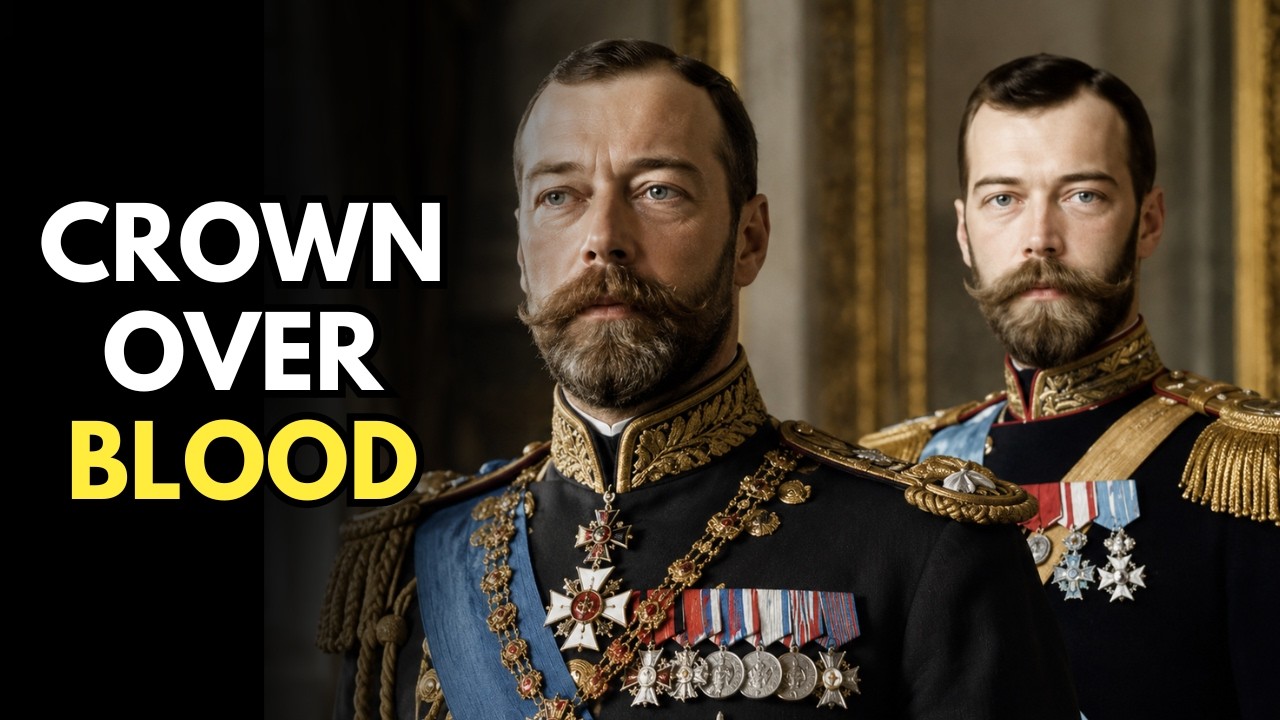
Perhaps the window had already been closing, regardless of what anyone in London decided. You start to feel sympathy for George V. And then you look at the timeline. The provisional government did not fall until October 1917. The asylum offer died in April 1917. That is a 6-month gap. 6 months during which the Romanovs were still in the hands of a government that was, at least theoretically, open to discussion.
6 months during which an extraction, complicated as it would have been, remained within the realm of the possible. The evidence suggests the window began closing when Buckingham Palace decided it no longer wanted it open. And the Bolshevik Revolution, which made rescue genuinely impossible, arrived 6 months after the decision that made rescue genuinely unlikely.
That sequence matters enormously. Because the argument that rescue was always impossible relies on circumstances that did not fully exist until after the critical decision had already been made. There is a layer of this story that gets lost entirely inside the political analysis. The Romanovs were a family, a mother who wrote letters from captivity about waiting, about hoping, about believing for longer than was perhaps rational, that her cousin by marriage, the most powerful monarch left in Europe, would find a way to act. A man who kept a diary in captivity and wrote about the weather, about the books he was reading, maintaining a composure that historians have described alternately as admirable and as heartbreaking beyond measure. Five children who had no part in any of the decisions that brought them to this point. They were moved from Tsarskoye Selo to
Tobolsk in August 1917. Then to Yekaterinburg in April 1918. Each move took them further from any extraction point. Each move reflected Bolshevik control tightening around them like a fist. And through all of it, no word came from London. Not a rescue, not an attempt. Not even as far as the records show, a serious inquiry into whether anything might still be possible.
The family that George V had grown up alongside, the man whose face was almost indistinguishable from his own, was being moved toward a basement in a city in the Ural Mountains. And the correspondence from Buckingham Palace had gone quiet. If the history in this script matters to you, if you want to keep examining the cases where the official record and what the documents actually show are not the same thing, this is exactly what this channel was built for.
Subscribe. Because there are dozens of stories like this one. Most of them are still waiting. Those who defend George V have one argument that deserves genuine respect. He was not operating with the knowledge we have now. He did not know in the spring of 1917 that the provisional government would fall by October.
He did not know that the Bolsheviks would consolidate power as absolutely as they did. He did not know that the execution order would come in July 1918. From inside the moment, stepping back from the asylum offer might have appeared cautious rather than fatal. A temporary withdrawal while conditions stabilized.
A pragmatic pause rather than a permanent refusal. That is the most charitable reading. And it is not without merit. But then there is King Alfonso the 13th of Spain. In late 1917, after the public asylum offer had been quietly abandoned, King Alfonso, ruling a neutral country with no stake in the Allied war effort, could be boy began working desperately behind the scenes to broker a private extraction.
His government approached London to ask whether Britain would co-sponsor a quiet back channel rescue, something that could move the family out without public announcement, without political exposure, through diplomatic channels that would keep the whole operation away from the press. The answer that came back from Whitehall was a flat, unyielding no.
Not the timing is difficult. Not we are exploring alternatives. Not even we remain committed in principle. No. One word. One door permanently closed. Delivered at a moment when a private arrangement remained theoretically possible. That response has never been fully explained. Today, the historical community is fiercely divided.
On one side, a camp of researchers looks at the Stamfordham letters and sees a smoking gun of personal betrayal. Evidence that royal pressure was the decisive variable. That the government’s position changed because the palace changed it. And that no constitutional convention can obscure that chain of causation. Others push back hard, arguing we are judging George with the benefit of hindsight from a comfortable future.
That the political dangers he faced were real. And that condemning him requires us to ignore the genuine complexity of the moment. But the darkest and frankly most credible consensus emerging from the archives lies right in the middle. George V was not a monster. He was a chillingly pragmatic politician who weighed what his cousin’s life was worth against what saving it would cost the crown, and he decided the cost was too high.
In the serious side, here is what the evidence allows us to say with confidence. Britain made a formal offer. The palace objected. The offer died. The Spanish back channel was blocked. Six months later, the Bolsheviks took power. 16 months after that, the family was executed.
What the evidence does not give us is a signed order, a direct command. George V was too careful or too well served for that. But, here is what a careful reading of the pattern shows. The concern in the Stamfordham letters was not about logistics, not about wartime transport difficulties, not about Russian political instability.
It was about the crown. About what the arrival of a deposed and unpopular monarch would mean for the British royal family’s standing with its own people. That is a specific calculation. A calculation about self-preservation dressed in the language of political responsibility. And when you see that the person most worried about the asylum offer was the person with the most personal stake in the monarchy’s survival, the charitable readings begin to collapse under their own weight.
The suppression of this fuller picture did not require a conspiracy. It required something quieter and more durable, institutional habit. Governments do not publish records that implicate the monarch in politically sensitive decisions. The constitutional convention that the sovereign acts on ministerial advice ensures that ministerial advice absorbs the accountability.
While the royal preferences that shaped it remain archived and managed. George V lived until 1936. His reputation intact. His granddaughter Elizabeth II reigned for 70 years. For the better part of a century. The British monarchy cultivated an image of duty, decency, and selfless service. The story of a king who calculated that his throne mattered more than his cousin’s life did not fit inside that image.
And so the Stamfordham letters stayed in the archive. The direction of pressure stayed out of the official narrative. The version of events that circulated publicly. Britain tried. Russia declined. Tragedy followed. Carried just enough truth to function as a permanent shield against the full aversion.
That is how institutional memory works. Not through outright lies, through selection, through the quiet practice management of which documents get discussed and which ones remain exactly where they are. Here is where fairness requires something uncomfortable. George V was not a monster. He was a man under extraordinary pressure who made a decision that many people in his position might also have made.
The political risks he feared were real. The fragility of the British monarchy in 1917 was real. The calculation he performed had a logic that is not difficult to reconstruct. But understanding a decision is not the same as excusing it. Other paths existed. A private arrangement through a neutral country.
The kind Alfonso XIII was trying to build. A back channel negotiation that kept the possibility alive without public exposure. A A to absorb the cost and honor the obligation that the entire system of royal solidarity and they were supposed to guarantee. None of those paths were seriously pursued. And the question that survives every sympathetic account of his position is simply this.
Were the reasons for an action genuinely unavoidable? Or were they the most convenient reasons available to a man who had already quietly made his choice? We cannot prove he made that calculation in cold terms. We can only observe that he behaved as though he had. Montefiore and say behave gift. This story is not really about George V.
It is about what power does to loyalty the moment loyalty has a cost. The British monarchy in 1917 proclaimed itself bound by blood, by duty, by obligations that transcended politics. Those were not decorative words. They were the justification for the entire institution. When those words were tested against an actual human cost, not symbolic, not political, but the lives of seven specific people in a specific basement, they turned out to be conditional.
Conditional on the cost being manageable. The moment the cost exceeded what the institution was willing to pay, the words dissolved. And the institution that had spoken them spent the next 100 years ensuring the dissolution stayed out of the official record. George V chose. He was never publicly asked to account for that choice.
The institution that protected him was the same one he had protected when he made it. That exchange, unspoken, undocumented, but entirely legible in the record for anyone willing to read it, is what this case is actually about. More than 100 years have passed. The photographs still exist. Two men, nearly identical in appearance, standing together in a world they both believed would last.
One died in his bed in 1936. His reign secure, his legacy carefully tended. The other died with his wife and five children in a sealed room in the Ural Mountains. In a city he had never been to before the revolution brought him there. Between those two endings lies a chain of decisions. Some made in Moscow, some made in Petrograd.
And some made in rooms in London that were very carefully designed to leave no trace. We know the Romanovs needed help. We know Britain considered giving it. We know the consideration ended. We know that when King Alfonso the 13th tried to open another door, that door was closed from the London side. What we cannot prove, what the record was specifically managed to prevent us from proving, is the precise human decision at the center of it all.
But the pattern of the evidence points clearly enough. When his cousin needed him most, George V stepped back. We can weigh his pressures. We can understand his fear. We can acknowledge that another man in the same position might have made the same choice. What we cannot do, if we are being honest, is turn is pretend that the choice had no consequences.
The Romanovs did not die because of what George V did. They died in part because of what he didn’t do. And power throughout all of history has always been very good at making sure that the things it didn’t do are the hardest things to find in the record. That record is what this channel is here to read.
If stories that the official version left deliberately incomplete are the ones you want to keep following, subscribe. Because there are many more of them, and most of them are still waiting to be told.