Duke of Norcliffe Offered to Pose as Her Suitor to Frighten Off a Brute — He Never Meant to Pretend D
“You will dance with me,” Sir Roland told her, his thick fingers already closing on her wrist. “And you will smile while you do it, or I shall make a scene that ruins you. And either way, you are mine before the season is out.” The Duke of Northcliffe, crossing the crowded ballroom with a glass of wine he did not want, heard the words and saw the woman flinch, and changed his course before he had consciously decided to.
He had noticed her earlier, Christabel Ray, someone had named her, a gentleman’s daughter of modest fortune and no powerful connection, noticed her not for any reason he could have stated, only that there was something in the straight set of her shoulders and the careful steadiness of her face that had caught at him across the room.
Now he understood the steadiness. It was the steadiness of a woman holding herself together under siege. Sir Roland Vane had her wrist, and Sir Roland Vane, Leopold knew, was a brute of the worst kind, the kind who wore his cruelty as charm and counted on a young woman’s terror of scandal to keep her silent while he closed in.
“Miss Ray,” said the Duke of Northcliffe, arriving at her side as smoothly as if he if he had been expected. “There you are. You promised me this dance, I believe, before half the room laid claim to you.” It was a lie. They had never spoken. He watched her understand that it was a lie, and watched her decide, in the space of a heartbeat, to seize it like a rope thrown to a drowning woman.
“Your Grace,” she said, “of course. Forgive me, Sir Roland, I had quite forgotten myself.” Vane did not let go of her wrist at once. He looked at the Duke, at the breadth of him, the cold dark eyes, the unmistakable weight of a man who outranked him in every particular, and Leopold looked back at him with the pleasant level expression of a man who is perfectly willing to make this difficult, and after a long moment Sir Rowland’s fingers opened.
Christabel’s hand slid free. The Duke offered her his arm, and she took it, and he felt the faint tremor in her gloved fingers as they walked away. “You did not promise me a dance,” she said quietly when they had reached the floor. “No,” the Duke agreed. “Then I am in your debt, and I dislike debts. You should not have troubled.
He will only” She stopped, and her chin lifted in that brave, exhausting way he was coming to recognize. “He will only find me again. He always does. He has decided I am to be his, and a man like that does not give up a thing because it is unwilling. He gives it up only when it is impossible.” The Duke turned her in the dance.
“Then,” he said, “we had better make it impossible.” She looked up at him wary. “I do not take your meaning, your grace.” “A man like Vane,” Leopold said, “fears very few things. He does not fear your refusal. He has decided does not count. He does not fear your father, who has not the standing to check him, but he fears a rival he cannot bully.
He fears looking the fool. And he fears, above all, a man of higher rank who has plainly placed his interest where Sir Rowland wishes to place his own.” He paused. “Let him believe you are courted by me. Let him believe the Duke of Northcliffe has fixed his attention on Miss Christabel Ray. He will not dare cross me for you because the cost to his pride and his standing would be ruinous, and bullies do not spend where it costs them.
He will withdraw, and you will be free of him.” She He silent a moment, turning it over. “You are offering,” she said slowly, “to pretend to court me, to frighten him off?” “I am.” “And when he has gone? When the pretense has served?” The Duke of Northcliffe looked down at the brave, weary, weary face turned up to his, and he found that the answer he had been about to give, “Then we shall quietly let it lapse, and no harm done,” would not come out of his mouth, because it was not true.
He had crossed that ballroom on an impulse he had called gallantry, and somewhere between her flinch and the tremor in her gloved hand, and the proud lift of her chin, the impulse had quietly become something he had no intention of letting lapse at all. But she was frightened, and she was in his debt, and she would not believe him if he said it now.
She would think it a courtesy, or a continuation of the game. “When he has gone,” the Duke said carefully, “we shall see how matters stand. For the present, will you allow it? It costs you nothing but to be seen in my company, which I promise to make as little an ordeal as I am able.” A small, surprised flicker of humor crossed her face.
“You are very sure of yourself, your grace.” “I am very sure of him,” Leopold said. “Of myself, I am beginning to be a good deal less certain than I was an hour ago.” She did not ask what he meant. The dance ended, and he returned her to her aunt, and he made a point, a deliberate, public, unmistakable point of bowing over her hand a fraction longer than courtesy required, and of saying, audibly, that he hoped to call upon her the following day.
Across the room, Sir Roland Vane watched, and his heavy face darkened, and he did not approach her again that night. The Duke called the next day, and the day after. It was, he told himself at first, the maintenance of the pretense. A courtship to frighten off a brute must look like a courtship.
One could not be seen to neglect it. So, he called, and he drove out with her, and he stood up with her at every ball, and he made certain that wherever Sir Rowland Vane’s small malevolent eyes might fall, they fell upon the Duke of Northcliffe’s evident and growing interest in Miss Christabel May. The difficulty was that the interest was neither evident nor growing.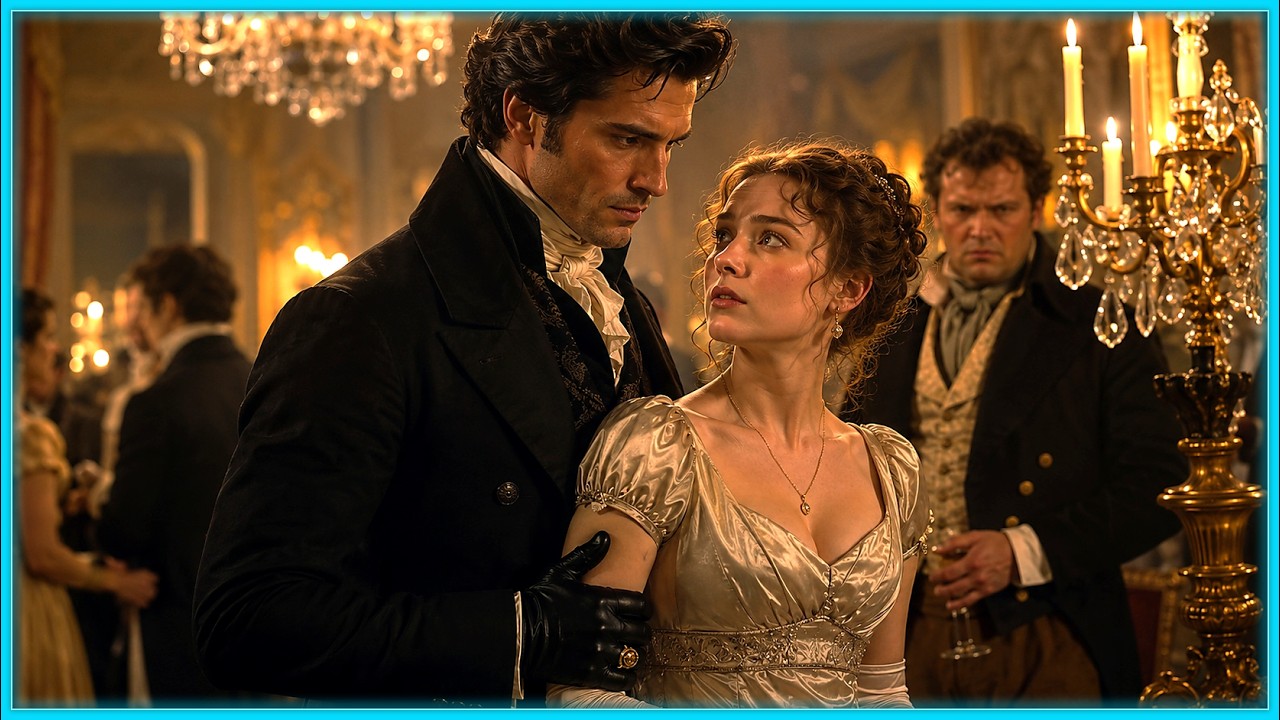
It was simply true. It had been true, he suspected, from the moment he heard, “You are mine before the season is out,” and felt something in him go cold and still and resolved. Everything since had only been his discovering, day by day, the particulars of a thing already decided. He discovered that she was clever, with a dry quick wit she had learned to keep folded away because men like Vane punished it.
He discovered that she loved her father, a gentle ineffectual scholar quite unequal to protecting her, and that she had spent years protecting him instead, managing the household and the small fortune, and her own busy acres without once asking to be rescued. He discovered that under the careful steadiness was a warmth that bloomed slowly when she began at last to believe she was safe, that she laughed when she let herself, with her whole face.
He discovered, in short, that he had set out to perform a courtship and was instead simply helplessly conducting one. Sir Rowland Vane withdrew as the Duke had predicted. He was not a man to spend his pride on a contest he was certain to lose. Within a fortnight he had transferred his attentions and his menace elsewhere, and Christabel walked into ballrooms for the first time in a year without the cold weight of his eyes finding her at the door.
She was free of him. Which meant the pretense had served. Which meant by the terms of their bargain that it might now quietly lapse. The Duke of Northcliffe had no intention whatever of letting it lapse and was trying to find the courage to say so when Christabel said it for him. They were walking in the long gallery of his estate.
She had come with her aunt to see the famous paintings which was a proper enough excuse and she stopped before a window where the late candlelight of the sconces mixed with the last grey daylight and she said without looking at him, “He is gone, your grace.” “Sir Rowland, he troubles me no longer. You have done what you offered to do and more handsomely than I had any right to expect.
” She turned to face him and her chin was up and he saw that she had braced herself for this the way she braced herself for everything. “So you are released. The pretense has served. I should not like you to feel bound by a gallant impulse on a single evening to continue a thing that was never meant to be real. You may let it lapse.
I shall not think the worse of you. I shall think only that you are the kindest man I have met in a hard year.” The Duke looked at her for a long moment in the mingled light. “Miss Ray,” he said, “Christabel, I must tell you something and I find I am as nervous of it as I have been of anything in my life which is absurd in a man of my years and station and I beg you to bear with me.” He drew a breath.
“I never meant it as as a pretense. She went still. “Your grace?” “From the first evening when I told Vane you had promised me a dance, it was a lie but the only lie in the whole of it. Everything after was true. I called upon you because I wished to. I drove out with you because the hours were the best of my week.
I stood up with you at every ball not to frighten a brute, though I was glad enough to do that, but because I could not bear to see you stand up with anyone else. I told you that first night that I was a good deal less certain of myself than I had been an hour before, and I have grown less certain every day since cuz I have been falling in love with you the entire time I was pretending to, and I have been too great a coward to say so for fear you would think it only the game. He stopped.
It was never the game, not for 1 hour of it. I never meant to pretend, Christabel. From the moment I crossed that room, I meant it. She stared at him. He watched her search his face for the courtesy, for the gallantry, for the kind lie she had braced herself to be told, and watched her find instead only the plain alarming truth.
“You meant it,” she repeated very low. I have never meant anything more. I set out to make Vane believe I had fixed my heart on you to drive him off. The difficulty, the whole difficulty, the only difficulty is that I had. There was nothing to pretend. I have been courting you in earnest from the first and calling it a rescue because I had not the courage to call it what it was. He took a step toward her.
I am asking you now with no brute to frighten and no bargain to serve and nothing in it for either of us but the truth. Will you let me court you properly? Not to protect you, only to win you, if you will be won. For a moment, Christabel Ray could not seem to speak, and then the careful steadiness she had worn like armor for a whole hard year simply came down all at once, and what was underneath it was not steady at all, but luminous.
“I had told myself,” she said, and her voice was not quite even, “that it was a kindness. That I must not let myself, because it was only ever meant to frighten him, and you were only ever being good to me, and a woman in my position who let herself believe otherwise was a fool who would be hurt.
” She laughed, a small, wet, helpless laugh. “I have been so very careful not to fall in love with you, Your Grace. It has been the hardest work of my life, and you are telling me I needn’t have troubled.” “You needn’t have troubled,” said the Duke of Northcliffe, “at all.” “Then I have wasted a great deal of effort.
” She put her gloved hand against his chest, not to push him away, he understood, but to feel the truth of him, the way she had been afraid to feel it for weeks. “Yes, you may court me properly. Though I warn you, I shall be very hard to win, having had so much practice at being unwilling.” “I have nothing but time,” said the Duke, covering her hand with his own, “and no wish to spend it on anyone else.
” He courted her properly through the rest of that season and into the autumn, openly, gladly, with no pretense left to keep, and the county, which had begun by murmuring that the Duke of Northcliffe had taken up a girl of no fortune to spite Sir Roland Vane, ended by agreeing that it had never seen a man so plainly, comfortably, unhurriedly in love.
He married her at his own chapel before the year was out, her gentle, scholar father weeping happily in the front pew, and Sir Roland Vane was not invited and was not missed. And in the warm years that followed, when she laughed with her whole face across his table, the Duke of Northcliffe would sometimes recall the evening he had crossed a crowded ballroom on what he had told himself was an impulse and offered a pretense to set her free.
He had never meant it as a pretense. He had only needed, as she had, a little time to believe the truth. And the truth, once believed, was the warmest and most certain thing he had ever known. That he had not rescued her at all in the end, so much as found her and had the great good sense never to let her go.