Edward IV’s Ruthless Game Of Thrones D
Just before his agonizing death, Edward IV found the strength for one final act. If only he’d known what a terrible mistake he was making. Edward IV was the closest thing to a medieval superhero. He was a fierce warrior who took England’s throne for himself twice. He died as the king of England, but this is no success story.
His greed, arrogance, and lack of foresight saw everything he ever accomplished collapse almost the moment he gave his last breath. [Music] Though he’d end up king of England, Edward was born across the channel in Ruan, Normandy, the eldest son of Richard, the Duke of York, and Cesaly Neville. The couple went on to have many more children, all of whom would become major players in the looming wars of the roses.
In England, the 22-year-old King Henry V 6th held the throne. Henry was feeble, indecisive, and prone to crippling fits of madness. So, while Edward’s family had no crown to their name, there was a feeling in the air that anything could happen. Henry V 6th was severely unstable and it wasn’t long before he started losing English territory left and right.
Some people started to whisper that maybe England should have a new king. Maybe someone like Edward’s father, Richard of York. Richard was strong, decisive, and a direct descendant of King Edward III. Pretty soon, his intentions for the throne were clear. At Edward’s birth, his father was the governor of all English lands in France.
However, soon after, King Henry unceremoniously dumped him with his rival, the Duke of Somerset, replacing him as governor. For Edward, that meant packing up his life and moving to the Welsh Marches, where his dad held substantial land. To add insult to injury, Somerset did a terrible job.
Seeing that England was vulnerable with a king like Henry, France went on the offensive, slowly taking back territory on the mainland. In 1453, they went for the jugular and reclaimed Gaskin, a territory that the English had controlled for over three centuries. It was a terrible loss for England, but an amazing opportunity for Edward and his family.
When Henry V 6 learned that he’d lost Gaskiny, his mind simply broke. He fell into a catatonic stuper and remained like that for more than a year. For the Yorks, that was the final straw. Though only 12 years old, Edward rode right beside his father as they entered London to attend the Great Council, a formal assembly called to determine England’s path forward.
By the end of the great council, Richard of York effectively had control of the English government. Edward was still a boy, but he was about to grow up very fast. [Music] King Henry V 6th eventually woke up from his days, and he found a very different kingdom waiting for him. The nobles had split down the middle, the Lancastrians who supported Henry, and the Yorks who supported Richard.
Though not yet in open conflict, it was in this viper’s den that young Edward cut his teeth. He was a force to be reckoned with in the kingdom before he was 17 years old. It was a good thing, too. The Wars of the Roses were about to start in earnest, and the Yorks were going to need all the help they could [Music] get. In 1460, the Yorkists took London.
Not long after, Edward was one of three commanders behind a decisive Yorkist victory at Northampton, capturing King Henry in the process. But Edward and his family were about to learn just how hard it was to take a crown off a king’s [Music] head. After Edward captured the king, his father marched into the palace of Westminster and declared himself the king of England in front of the kingdom’s assembled lords.
He got crickets in response. York realized that taking England wasn’t going to be quite so simple. Eventually, the two sides reached a compromise. Henry would remain king, but Richard of York was to be his successor. It was a half measure at best. Little wonder the deal went up in flames almost immediately.
Though the Yorks made their deal in London, Lancastrian nobles in the countryside weren’t so easily convinced. Rebellions flared up all across the country, and Richard of York had to act fast. He sent his eldest son, Edward, to Wales to suppress a revolt there, while he took another son, Edmund, to the north to do the same.
Edward didn’t realize it yet, but he’d never see his father again. The Battle of Wakefield was a catastrophe for the Yorkkeist cause. Not only did they lose, but both Richard of York and his son Edmund lost their lives in the fry. Suddenly, the House of York’s hopes rested squarely on 18-year-old Edward’s shoulders.
Edward IV was what all nobles wished they could be. At 6’4, he towered over his contemporaries, especially while clad in his gleaming armor. Edward was likable, handsome, and bursting with energy. His advisers had him play up these characteristics and ensured he always wore the finest clothes. Edward couldn’t have been more different from the feeble, absent-minded Henry.
But dressing the part was just half the battle for Edward. The other half of the battle was battle. Edward had amassed enough power to proclaim himself king in March of 1461, but he still had those pesky Lancastrians to deal with. On March 29th, in the middle of a raging snowstorm, Edward led his men against them. Ironically, the Duke of Somerset, the son of the man who usurped Richard of York’s governorship all those years ago, led the enemy forces.
Edward would cement his claim as king that day, though it would come at a terrible cost. The snow was tinted red with blood at the Battle of Toteen, perhaps the most brutal battle to ever take place on English soil to that point. Estimates range from 9,000 to 20,000 casualties. Edward returned triumphant to London for his official coronation as King Edward IVth of England.
He’d achieved what his father never could, but he couldn’t get comfortable yet. Henry V 6th remained at large. Even worse, Henry’s wife, Margaret of Anonju, had fled to Scotland with their son. While Henry was incapable, his wife was one of the most cunning and ruthless women in Europe.
Margaret of Anonju had lost this round against Edward, but she was far from finished. Though she eventually escaped to cross the English Channel, Edward did manage to capture Henry V 6th. Unfortunately, Henry was such a weak king that that didn’t actually mean much. There was no sense in killing him because that would just mean his son would take his place.
So instead of giving the Lancastrians a younger, stronger figurehead, Edward simply locked Henry up in the Tower of London and threw away the key. Taking the crown was one thing. Making anyone listen to you was another. For the most part, England’s nobility simply stayed neutral, though many stayed loyal to Henry.
As such, Edward had a hard time running his kingdom. At first, he had to rely heavily on his closest ally, Richard Neville, the Earl of War. Neville was one of the richest and most powerful men in the country, and the alliance between York and Warick went back to the days of Edward’s father.
Though Edward IVth would soon learn, your most powerful ally can become your most dangerous enemy. By 1464, Edward had all but eliminated the Lancastrian threat to his throne. But that didn’t mean his problems were at an end. Now, he had to deal with the standoff between two other political powerhouses, France and Burgundy.
Edward knew that he needed to ally with either France or Burgundy. He preferred the latter, his sister had married the Duke of Burgundy, after all. But Neville wanted to go the French route. Edward relented and allowed Warrick to begin negotiating a marriage between Edward and a French princess. But little did he know, while Neville was out making deals, Edward was keeping an enormous secret, one that would see the Wars of the Roses, all but dead and buried at this point, begin raging once again. Just as he was closing in on a marriage deal between Edward and the French king, Richard Neville made a shocking discovery. Edward had already gotten married in secret to Elizabeth Woodville, who was not only a widow with two sons, but even worse, a commoner. It was an unbelievable betrayal, and it begs the question, what on earth was
Edward thinking? Well, everyone said that Elizabeth Woodville was the most beautiful woman in all of Great Britain. Even more, she was allegedly charming and intelligent to boot. She was a medieval Helen of Troy. And while her face may not have launched a thousand ships, it nearly cost Edward IVth everything.
Edward was right to try and keep the wedding a secret because once word got out, the consequences were immediate. There’s a reason that people called Richard Neville the kingmaker. He supported Edward throughout the entire Wars of the Roses. In his mind, he might as well have placed the crown on Edward’s head himself.
Not only was all that effort with the king of France a waste of time, but the Woodvilles offered absolutely no diplomatic advantage. The king and the kingmaker were officially at odds, and Neville soon found someone else to team up with, someone from Edward’s own family. Edward IVth was Richard of York’s eldest son, but there were still several other York boys on the scene, and they weren’t all happy their older brother was taking all the glory.
After the Woodville fiasco, Neville formed an alliance with Edward’s brother, George, the Duke of Clarence. To solidify the partnership, Neville proposed a marriage between George and his daughter, Isabel. Edward could see the writing on the wall. His brother and ex-friend teaming up was bad news.
He blocked the marriage proposal, but he was in for a rude awakening. George and the Nevilles sailed off to Cali and went through with the marriage anyway. Next, they announced that they were assembling an army to remove the Woodvilles from power, whom they deemed Edward IVth’s evil counselors. For a while, it seemed like this new alliance would succeed.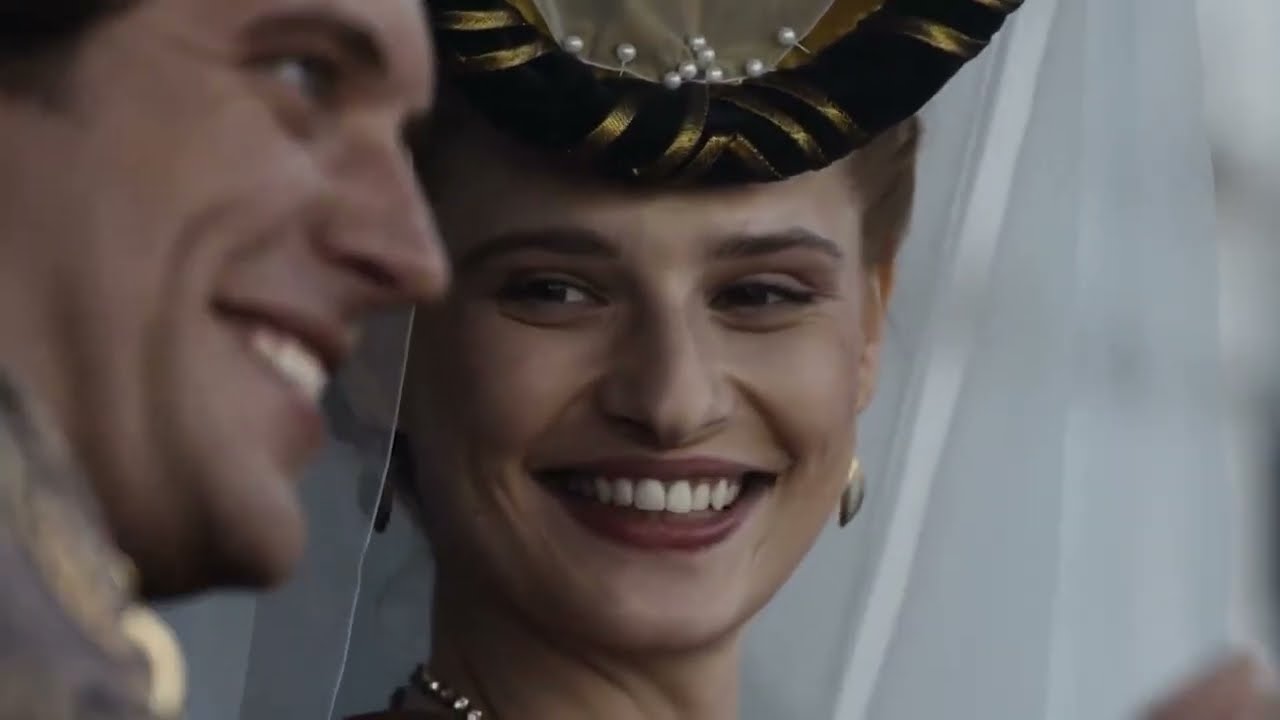
They defeated a royal army in battle, imprisoned Edward in Medelum Castle, and had Elizabeth Woodville’s father and brother both executed. But many in England were ready to put the Wars of the Roses behind them. And no further support for George and Neville’s alliance materialized. They had to release Edward after just a couple of months.
And at that point they must have realized they were in trouble. Within a year George and Neville had to flee to France. This is when a fascinating new opportunity presented itself. Margaret of Anonju had been in France all this time, raising her son and plotting her revenge. Richard Neville had personally helped tear Margaret of Anonju’s husband off the throne.
And now he was offering to help put him back on. Margaret knew an opportunity when she saw it, but she couldn’t let Neville off the hook completely. Before agreeing to an alliance, she made him kneel in front of her in silence for 15 minutes. Once he rose, the alliance became real, and Edward IVth had a serious problem on his hands.
The Wars of the Roses hadn’t ended. They were just on pause. By September 1470, Neville returned to England and announced his intention to free Henry V 6th, still imprisoned in the Tower of London, and restore him to the [Music] throne. Few people in England held much love for the New York regime. Within a matter of weeks, he’d assembled an army of over 30,000.
Edward was running out of allies. [Music] Swallowing his pride, he fled his kingdom to seek asylum in Bruge. He was down, but not out. Margaret of Anonju and Richard Neville achieved what had once felt impossible. They restored Henry V 6th. Unfortunately, they immediately realized that they might have made a terrible mistake.
Henry was still the same old Henry, and he was useless in helping consolidate control. There’s also the fact that Neville had fought for York for many years, and many of his new Lancastrian allies hated his guts. Edward returned to England by March 1471 with support from the Duke of Burgundy. He gathered an army of his own.
Next, he got his treacherous younger brother, George, the Duke of Clarence, to defect back to his side. By April, he was able to march into London unopposed and take Henry V 6th [Music] prisoner. Henry’s return to the throne lasted all of 6 months. Soon after Edward retook London, his forces won two incredibly pivotal battles.
First, at the Battle of Barnett, his men killed Richard Neville, the Kingmaker. Then mere weeks later at the battle of Chukesbury, Henry V 6th’s son, Edward of Westminster, met the same fate. Just like that, Henry’s most powerful support and his heir to the throne were taken off the board.
Henry V 6th mysteriously died in the Tower of London just days later. Records from the time state that he succumbed to melancholy upon hearing of his son’s death. How incredibly convenient for Edward. The restored King Edward IV yet again had to deal with rebellions and yet again some familiar faces were behind it.
His brother George had switched sides once and he still hadn’t learned his lesson. Edward finally accused George of treason and had him secretly executed in the Tower of London. It was time for Edward to finally get to do some king stuff, like declaring war on France. And it couldn’t have gone better. King Louie didn’t feel like fighting.
So, he signed the Treaty of Pikini. Not only did this finally put a formal end to the H 100red Years War, but Louie paid Edward 75,000 crowns to call off his dogs, plus another 50,000 a year as a pension. Edward IV also tried to usurp the Scottish throne and install a puppet, the Scottish king’s brother, Alexander Stewart.
This plan didn’t work out so well. Stuart chickenened out at the last minute, forcing Edward to retreat back to England with nothing to show for his expensive campaign. [Music] Edward accomplished a lot in his life. Perhaps made even more impressive by the fact that he barely made it to age 40. He fell fatally ill in 1483 and his condition deteriorated fast.
However, before he died, he did update his will. The most important change was naming his younger brother Richard as protector of England. Since his eldest son was only 12, Edward thought that this would solidify his legacy. Little did he realize he’d actually ensured the end of everything he’d ever achieved. Within days of Edward’s death, his brother Richard captured his sons and locked them in the Tower of London.
Then he had Edward’s marriage declared illegitimate, removing the two boys from the line of succession and had himself crowned King Richard III. No one ever saw the princes in the tower ever again. Richard III’s shady method of claiming the throne left a bad taste in everyone’s mouth.
And that’s all it took for old tensions to resurface. Less than two years later, an upstart named Henry Tudtor defeated Richard at the Battle of Bosworth Field. Then, to bring everything full circle, he married Edward IV’s daughter, Elizabeth of [Music] York. This marriage finally united York and Lancaster and put the Wars of the Roses to bed for good.
There’s one final twist in Edward IV’s story. To justify his decision to marry the commoner Elizabeth Woodville, he cited previous examples of royals marrying commoners. For instance, Henry V 6th’s mother, Catherine of Valwis, had married her common chamberlain. That man’s name was Owen Tudtor. that gave all future Tudtors a claim to the English throne.
A claim that Henry Tudtor, now King Henry VIIIth, used to pull the House of York down once and for [Music] all. Thanks for watching History Expose. If you love uncovering the best stories in history, hit like and subscribe to keep exploring with us. Don’t forget to visit our main page, Factate, for more incredible facts about everything.