Every Italian Armored Car, Truck & Motorcycle of World War II Explained D
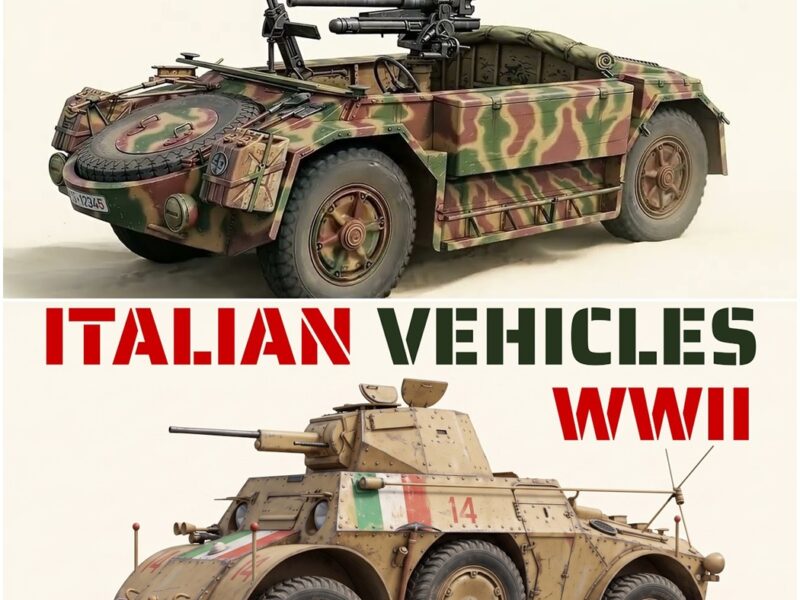
Italy’s World War II vehicle fleet was far more diverse than tanks alone. Across North Africa, the Balkans, Russia, and the Italian mainland, armored cars, desert scouts, trucks, artillery tractors, and motorcycles kept the army moving. This episode follows the wheeled machines that carried reconnaissance, supply, command, and firepower across some of the war’s harshest battlefields.
Armored cars. The Lancia 1ZM was one of Italy’s earliest armored car still seen during the Second World War. Its tall armored body, riveted plates, and old-fashioned turret made it look like a survivor from another era, but it remained useful for patrol, colonial security, and rear area duties. The Fiat 611 was a heavy armored car with a large, boxy body and a strong interwar appearance.
Built for colonial warfare, it carried serious firepower for its class, but its weight and size made it better suited to controlled roads than fast, mobile desert operations. The AB40 introduced the basic layout of Italy’s most famous wartime armored car family. With four large wheels, a compact armored hull, and machine gun armament, it was designed for reconnaissance, patrol, and security missions where speed and visibility mattered more than heavy armor.
The AB41 became Italy’s best-known armored car of the war. Its 20-mm gun, twin driving positions, and rugged four-wheel design made it valuable in North Africa, the Balkans, and on the Eastern Front, where Italian crews needed mobility over long distances. The AB43 was a later development of the Autoblinda series with stronger firepower and improved battlefield value.
It kept the familiar four-wheel armored car shape, but gave Italian and later German units a harder-hitting reconnaissance vehicle. The AB41 Ferroviaria was a railway version of the famous Italian armored car. Fitted for movement on rails, it was used to patrol and protect vulnerable railway lines where speed, armor, and quick response were more useful than heavy battlefield protection.
This unusual vehicle mounted a 47-mm gun on an AB41 armored car chassis. It was an attempt to give a wheeled platform more anti-armor power, creating a compact mobile gun vehicle that looked closer to a small wheeled tank destroyer than a normal scout car. The Lancia Lynx was Italy’s small armored scout car inspired by British reconnaissance designs.
Its low body, compact size, and four-wheel layout made it useful for liaison, patrol, and fast scouting missions where a full armored car was too large. The SPA Viberti AS43 was a late-war armored car with an angular hull and open-topped fighting compartment. It combined mobility with practical firepower, but appeared too late and in too few numbers to change Italy’s battlefield situation.
Desert reconnaissance and special vehicles. The Camionetta Desertica Modello 1943 was built for long-range desert reconnaissance. It had an open body, mounted weapons, and space for fuel, ammunition, and supplies, giving Italian patrols a fast and flexible vehicle for operations across North Africa.
The AS42 Sahariana was one of Italy’s most distinctive desert vehicles. Low, open, and covered with fuel cans and equipment racks, it was designed for deep reconnaissance and raiding where endurance and visibility were just as important as armor protection. The AS42 Metropolitana adapted the Sahariana concept for European conditions.
It kept the low open body and strong mobility, but was less focused on extreme desert range, making it suitable for reconnaissance, patrol, and security duties outside North Africa. This version of the AS42 carried a Breda 20-mm cannon, giving the lightweight desert vehicle useful firepower against soft targets, aircraft, and light armored vehicles.
Its open fighting position made it fast and flexible, but also left the crew exposed. The 47-mm armed AS42 gave Italian reconnaissance units a stronger punch against light armor and fortified positions. It combined the speed of the Sahariana platform with a heavier weapon, creating a vehicle built for aggressive patrols and sudden attacks.
This AS42 variant carried the Solothurn anti-tank rifle, a long and recognizable weapon mounted on the open desert vehicle. It was meant to give patrol crews a chance against light armor while preserving the speed, range, and stripped-down profile of the Sahariana. The Fiat SPA Autocannone Sahariano Modello 1937 was a desert truck designed for long-range movement in harsh conditions.
With large tires, open utility features, and a practical cargo layout, it supported supply, patrol, and transport missions across North Africa. Protected and armored transport vehicles. The S37 Autoprotetto was an armored personnel carrier built from the TL37 artillery tractor chassis. Its tall armored troop compartment gave Italian soldiers protection from small arms and fragments, making it useful for convoy escort, security, and infantry transport.
This S37 variant added a greater machine gun for stronger defensive fire. It kept the armored transport body, but gave the crew better ability to respond during ambushes, road security missions, and escort duties in contested areas. The command version of the S37 used its protected body to carry officers, radios, and coordination equipment.
Instead of acting mainly as a troop carrier, it served as a mobile command post near the front. The Lancia 3RO Blindato was an armored version of the heavy Lancia truck. Its improvised armored body turned a cargo vehicle into a protected transport or fighting platform, often used when available trucks had to become battlefield machines.
The Fiat 665 NM Protetto was a protected military truck with armor added around the cab and troop area. It was built to move soldiers under fire, especially in security and anti-partisan operations, where normal soft-skinned trucks were too vulnerable. The SPA Dovunque 35 Protetto used the rugged Dovunque truck as the basis for an armored transport.
Its all-terrain chassis and protected body made it suitable for rough roads, convoy protection, and troop movement in difficult operational zones. Command and staff cars. The Fiat 508M was a compact military car used for liaison and staff transport. It was small, practical, and easy to handle, making it useful for officers, couriers, and rear area movement, where speed and economy mattered more than protection.
The Fiat 508CM Coloniale was adapted for colonial and rough terrain service, With higher ground clearance and a military body, it served in North Africa and other difficult environments, carrying commanders, messages, and light supplies across dusty roads. The Fiat 1100 Coloniale gave Italian forces a slightly larger staff and liaison vehicle.
Its civil roots made it comfortable and efficient, while military modifications helped it survive rough roads, hot climates, and wartime transport demands. The Alfa Romeo 2500 Coloniale was one of Italy’s more refined military staff cars. Powerful and elegant compared with ordinary utility vehicles, it was used by senior officers who needed speed, range, and reliability on command routes.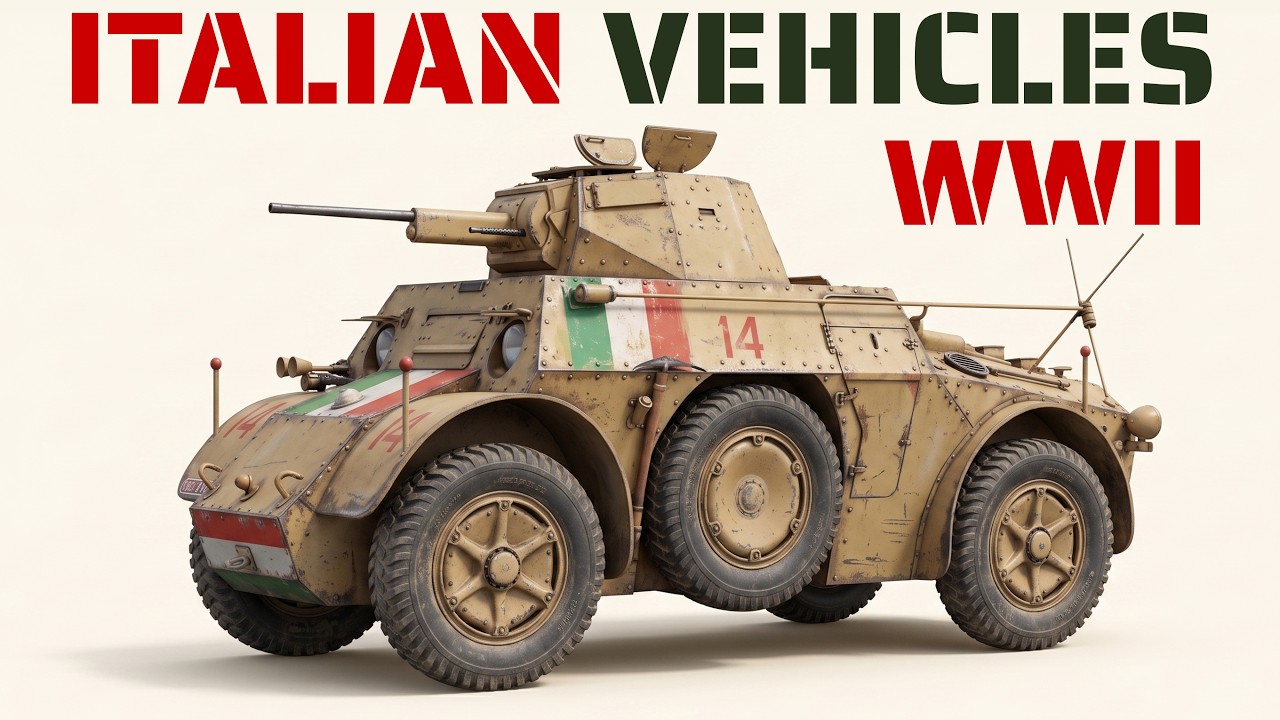
The Lancia Aprilia Coloniale brought advanced civilian engineering into military service. Its smooth body shape and reliable performance made it useful as a staff car, especially where officers needed fast road movement without the size of a heavy command vehicle. The Fiat 2800 was a large and prestigious staff car used by high-ranking Italian officials and commanders.
Its long body, formal appearance, and comfortable interior made it a symbol of authority rather than a front-line combat machine. Trucks and cargo vehicles. The Fiat 626 was one of Italy’s most important medium trucks of the war. It carried supplies, troops, fuel, and equipment across many fronts, becoming a basic logistical workhorse for an army that depended heavily on road transport.
The Fiat 666 was a heavier truck designed for larger loads and tougher military supply tasks. Its size and payload made it valuable for moving ammunition, artillery equipment, and bulk cargo wherever Italian forces needed sustained operational support. The Lancia 3RO was one of Italy’s best heavy trucks, respected for its strength and reliability.
It served as a cargo carrier, troop transport, artillery tractor, and even as the basis for armed conversions, making it one of the most versatile Italian vehicles. The Lancia RO was an earlier heavy truck that remained in wartime service. Its sturdy construction and military usefulness kept it active in logistics and transport roles, even as newer trucks entered production and battlefield demands increased.
The Lancia 3RO NM was a military version of the 3RO, adapted for army use. It kept the strong heavy truck character of the original while serving in supply columns, artillery support, and long-distance movement on demanding roads. The SPA Dovunque 35 was a six-wheel drive truck built for difficult terrain.
Its name suggested it could go everywhere, and it became valuable for moving troops and supplies where ordinary trucks struggled with mud, sand, or mountain roads. The SPA Dovunque 41 was a later and heavier development of the Dovunque family. It offered improved carrying ability while keeping all-terrain capability, making it useful for military logistics in conditions where mobility was just as important as payload.
The SPA Fiat AS.37 was a rugged truck designed for desert and colonial operations. Its open utility layout, large wheels, and practical cargo body made it suitable for reconnaissance support, supply missions, and movement across rough North African terrain. The Breda 51 was a heavy military truck often associated with artillery towing and transport.
Its strong chassis allowed it to carry demanding loads, making it part of the support network behind guns, troops, and heavy battlefield equipment. The Breda 52 was closely linked to heavy weapons transport and gun truck conversions. It provided the strength needed for large loads and became especially notable as a platform for powerful mounted artillery pieces.
The Isotta Fraschini D80 was a heavy truck used for cargo and military logistics. Its large solid appearance reflected its role as a dependable transport vehicle for supplies, troops, and equipment across Italy’s wartime road networks. The Alfa Romeo 800 was a medium-heavy truck with a distinctive rounded cab and practical cargo bed.
It served in transport and supply roles, helping move men and material in an army where trucks were essential to every front. The Alfa Romeo 430 was a smaller military truck used for general transport tasks. It was useful for lighter cargo, staff movement, and logistical duties where a full heavy truck was not necessary or harder to operate.
The OM Taurus was a strong Italian truck used for military cargo movement. Its practical design made it useful in supply columns, carrying the loads that kept units equipped, fueled, and able to continue operations. The Fiat 618 Coloniale was a light truck adapted for colonial service. It was useful for smaller loads, patrol support, and local transport, especially in regions where roads were poor and larger trucks were not always practical.
The SPA 38R was a light military truck used for transport, towing, and support work. It was not glamorous, but vehicles like this formed the daily backbone of military movement, carrying supplies and equipment where they were needed. Artillery tractors, gun trucks, and utility vehicles. The Fiat SPA TL37 was one of Italy’s most important artillery tractors.
Compact, rugged, and highly maneuverable, it towed guns, carried crews, and worked in terrain where normal trucks struggled. The Fiat SPA TM40 was a heavier artillery tractor built for larger towing jobs. It gave Italian forces the ability to move heavier guns and equipment, filling the gap between ordinary trucks and specialized battlefield tractors.
The Pavesi P4 was an unusual artillery tractor with a distinctive articulated design. Its large wheels and flexible chassis helped it cross rough ground, showing Italy’s early interest in specialized vehicles for moving heavy guns off normal roads. The Breda 32 was a heavy artillery tractor used for towing major guns.
Its strong mechanical layout and large wheels made it an important support vehicle for artillery units that needed dependable movement despite difficult terrain and heavy loads. The Breda 52 continued the role of heavy artillery movement with improved capability. It served the demanding world of gun transport, where power, traction, and durability mattered more than speed or comfort.
The OM Autocarretta was a small mountain and utility vehicle designed for narrow roads and rough paths. It could carry supplies where larger trucks could not go, making it especially useful in mountainous terrain and remote positions. This powerful gun truck mounted the 90/53 anti-aircraft gun on a Lancia 3RO chassis.
It gave Italian forces a mobile heavy weapon that could threaten aircraft, armor, and ground targets, though it remained large, exposed, and specialized. The Breda 52 version of the 90/53 Autocannone used a heavy truck chassis to carry the same formidable gun. It was an impressive mobile artillery platform, combining road movement with one of Italy’s most respected heavy weapons.
The Autocarretta Ferroviaria Blindata Mod 42 was a small armored rail vehicle used for railway security. Its compact, protected body allowed it to patrol tracks, guard transport lines, and respond to threats along vulnerable railway routes. Motorcycles and three-wheeled vehicles. The Moto Guzzi Alce was one of Italy’s best-known military motorcycles.
Rugged, simple, and widely used, it carried dispatch riders, scouts, and military police across roads and tracks where speed and low fuel use were essential. The Moto Guzzi Tri Alce was a three-wheeled utility motorcycle designed to carry more than a standard bike. With its cargo platform and military practicality, it filled the gap between motorcycle mobility and light truck transport.
The Benelli 500 M 36 was a military motorcycle used for liaison, dispatch, and reconnaissance duties. Its sturdy frame, exposed engine, and classic wartime motorcycle profile made it a useful, fast-moving tool for communication between units. The Bianchi 500 M was another Italian military motorcycle built for reliability and service use.
It carried riders through routine military duties from message delivery to patrol work in a war where communication often depended on machines like this. The Gilera 500 LTE was a strong military motorcycle with a respected Italian engine tradition. It served in dispatch and liaison roles, giving units a quick and flexible vehicle when roads were open, but larger transport was unnecessary.
Italy’s wheeled vehicles of World War II tell a different story from the famous tank battles. These machines were not always heavily armed, and many were never meant to fight head-on. Yet, they shaped the daily reality of the Italian army. Armored cars searched ahead of columns. Desert scouts crossed open ground with fuel cans and machine guns.
Trucks carried ammunition, water, food, and men. Artillery tractors pulled the guns that supported the front. Command cars moved officers from headquarters to the battlefield. Motorcycles carried messages when radios were limited or unreliable. Some designs were modern and clever. Others were outdated, improvised, or produced in small numbers.
But, together, they show how much of war depends on movement, supply, reconnaissance, and communication. Beyond the tanks, these were the vehicles that kept Italian forces moving.