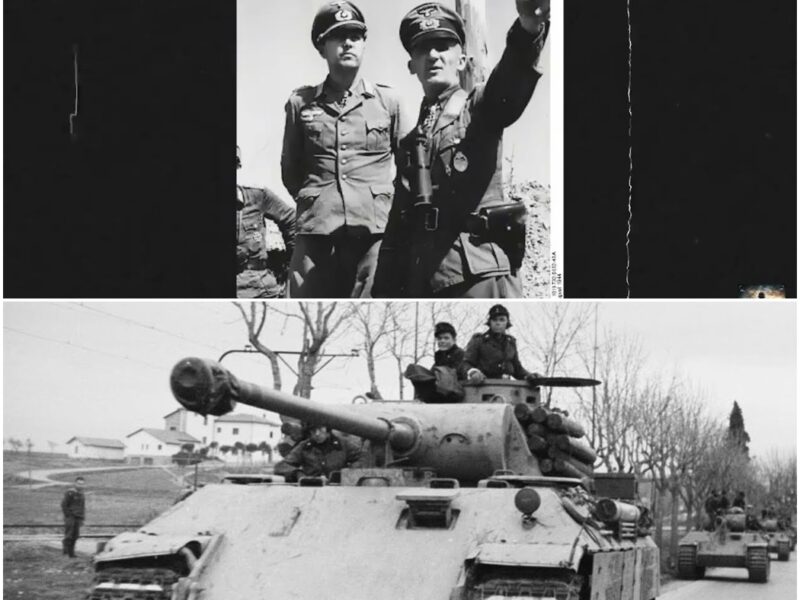
Germany Sent Panthers to Crush the Shermans—Then Arracourt Happened D
September 19th, 1944, 0745 hours, Hill 265 outside Arracourt, Lorraine. Through the morning mist that clung to the French countryside, tanks of the 113th Panzer Brigade moved into position for what should have been a devastating ambush. 12 Panthers, each mounting the fearsome 75 mm KwK 42 gun, watched five American Sherman tanks crossing open ground below, seemingly unaware of the trap awaiting them.
The mathematics of tank warfare seemed predetermined. The Panther’s long 75 mm gun could destroy a Sherman at 2,000 m. Its frontal armor, 80 mm thick and angled at 55° for an effective thickness of 140 mm, was impervious to the Sherman’s 75 mm gun except at suicidally close range. The Sherman, with just 50 mm of frontal armor, could be penetrated by the Panther at distances where return fire was futile.
Yet, within 4 hours, eight of those 12 Panthers would be burning wrecks. The five Shermans of Lieutenant Colonel Creighton Abrams’ 37th Tank Battalion would advance unscathed. By day’s end, September 19th, the fields around Arracourt would be littered with 49 destroyed German tanks, while American losses stood at minimal.
Over the next 10 days, until September 29th, the 4th Armored Division would destroy or damage 200 German armored vehicles while losing 48 of their own, a kill ratio that defied every principle of tank design the Germans held sacred. What unfolded at Arracourt wasn’t just a tactical defeat.
It was the systematic demolition of the Wehrmacht’s last illusion, that technical superiority could overcome what they had dismissed as American mechanical mediocrity backed by industrial mass production. The shocked German survivors would discover they hadn’t been fighting tanks. They had been fighting an integrated weapon system that redefined modern warfare.
The German counteroffensive had been born from Hitler’s personal rage at the American breakout from Normandy. In early September 1944, as Patton’s Third Army raced across France, the Führer ordered an immediate counterattack to crush the American spearheads and restore German prestige. The newly formed 113th Panzer Brigade, along with the 111th Panzer Brigade and elements of the 11th Panzer Division, would smash into Patton’s extended flank in Lorraine.
The 113th Panzer Brigade fielded 45 Panthers and 45 Panzer IV tanks under Oberst Hans-Heinrich Freiherr von Sekendorff. The 111th Panzer Brigade, commanded by Generalmajor Heinrich Günther von Schellendorf Bronsart, brought similar strength. These units represented Germany’s last operational reserve in the west, hastily assembled, inadequately trained due to fuel shortages, but equipped with tanks that on paper far exceeded anything the Americans possessed.
The Panther tank embodied German engineering philosophy. Its 75-mm KwK 42 L/70 gun fired armor-piercing rounds at velocities exceeding 1,000 m/s. At standard combat ranges, it could penetrate 140 mm of armor at 1,000 m, enough to destroy any Allied tank frontally. The Sherman’s M3 75-mm gun, by contrast, could only penetrate 88 mm at 500 m, and needed to close within 100 m to have any chance against a Panther’s front armor.
German doctrine emphasized the tank duel, long-range engagements where technical specifications determined victory. At the Panzer training schools, crews spent months perfecting gunnery at extended ranges, studying ballistic tables, and practicing the geometry of the perfect ambush. The Panther was the ultimate expression of this philosophy.
Unknown to the Germans massing for their counteroffensive, the Americans had developed a completely different philosophy of armored warfare, one that made individual technical specifications almost irrelevant. Colonel Bruce Clark, who had helped develop American armored doctrine at Fort Knox, had written in training manuals that emphasized speed, coordination, and combined arms over individual tank performance.
The US Army’s approach stressed that tanks rarely fought alone. They operated as part of teams including infantry, artillery, tank destroyers, and air support. Lieutenant Colonel Creighton Williams Abrams, Jr., commanding the 37th Tank Battalion, embodied this philosophy. A 1936 West Point graduate who had transferred from cavalry to armor, Abrams viewed tank warfare not as duels between machines, but as maneuver warfare where speed, aggression, and coordination mattered more than armor thickness. His battalion had trained relentlessly in combined arms tactics, practicing rapid target acquisition and firing on the move, rather than long-range precision shooting. The 4th Armored Division had developed specific tactics for fighting Panthers. They knew frontal penetration was impossible, so they practiced flanking maneuvers, smoke deployment, and artillery coordination to suppress
German tanks while Shermans maneuvered for side shots. They turned the Sherman’s supposed weaknesses, lighter weight and mechanical reliability, into advantages that enabled rapid maneuver and sustained operations. September 18th, 1944. The German counteroffensive began with the 113th Panzer Brigade advancing on Arracourt, expecting to sweep aside scattered American forces.
German reconnaissance had reported only sporadic American presence, some infantry, tank destroyers, perhaps a company of Shermans. But American intelligence was far superior to what the Germans realized. Ultra intercepts had revealed the German concentration days in advance. Artillery spotting planes tracked every German movement.
The Americans knew exactly where the Germans were, while the Germans advanced blind into what they believed was weak resistance. At 0800 hours on September 19th, 15 Panthers of the 113th Panzer Brigade advanced in textbook formation near Rechicourt. They never saw what hit them. American forward observers had been tracking the German advance for 30 minutes.
As the Panthers crossed pre-registered grid coordinates, 12 batteries of American artillery, 144 guns, opened fire simultaneously. The barrage that fell on the German tanks was unlike anything they had experienced. The Americans had perfected time on target fire missions where shells from multiple batteries, fired at different times from different distances, arrived simultaneously.
Three Panthers were destroyed in the first minute, not by tanks, but by artillery. The survivors pushed through, shaken by the accuracy and intensity of American indirect fire. As German Panthers occupied Hill 265 overlooking Arracourt, they prepared to ambush Abrams approaching Shermans. At 1,200 m, perfect range for the Panther’s gun, the Germans opened fire.
The first round missed. Before the German gunner could reload, all five Shermans fired simultaneously, not at the Panthers, but at the ground in front of them, throwing up massive clouds of dust and smoke. Then they scattered. Within seconds of the Panthers revealing their positions, American forward observers called in artillery.
White phosphorus shells burst among the German tanks, blinding optics with burning smoke. High explosive rounds damaged tracks and vision blocks. The Panthers, designed for precision shooting at long range, found themselves blind and under constant bombardment. Through the smoke came the Shermans, not frontally, but from three directions simultaneously.
They had used terrain the Germans hadn’t properly reconnoitered, dead ground that allowed covered movement. The Shermans emerged at ranges under 500 m, where their guns could penetrate the Panther’s 40-mm side armor. The engagement demonstrated a critical advantage. The Sherman’s hydraulic turret traverse could rotate 360° in 15 seconds, while the Panther’s manual traverse needed 60 seconds, four times slower.
At close range, this differential proved lethal. American crews, trained to load and fire in under 4 seconds, could pump multiple rounds into German tanks before they could respond. One of the best documented engagements occurred when Captain William A. Dwight’s Sherman platoon encountered German Panthers near Lizy.
According to the official after-action report, Dwight’s gunner, Sergeant Donald Decker, destroyed four Panthers in rapid succession at ranges under 800 m. Decker’s account, preserved in military archives, provides tactical detail. “We came around the corner of a small wood, and there were three Panthers in the open about 600 yd away.
They were traversing toward us, but we got the first shots off. I put three rounds of AP into the first one’s side before he could get his gun around. The second one I hit in the rear as he tried to back up. The third managed to fire once, but missed high before we knocked him out.” This engagement demonstrated the American advantage in rapid engagement.
While German crews followed elaborate firing procedures, commander identifies target, provides range estimation, gunner adjusts sights, loader selects appropriate ammunition. American crews operated on instinct developed through thousands of practice rounds. They sacrificed long-range accuracy for close-range speed.
And at Arracourt’s typical engagement ranges of 500 to 800 m, speed mattered more than precision. On September 20th, the Germans launched a major attack with elements of both the 113th and 111th Panzer Brigades. Oberst von Seconddorff personally led the assault with 40 Panthers and supporting infantry. The attack initially seemed promising.
German tanks advanced under cover of morning mist, catching some American outposts by surprise. But the American response demonstrated their systematic superiority. Within minutes of contact, every American unit in the sector knew the German positions. Radio nets that connected every Sherman to higher headquarters enabled instant coordination.
Artillery forward observers embedded with tank units called in immediate suppressing fire. Most critically, the weather began to clear, allowing intervention by the 19th Tactical Air Command. Major Charles “Bazooka Charlie” Carpenter, flying an L-4 Grasshopper observation aircraft armed with six bazookas, engaged German tanks directly.
In an interview with Stars and Stripes published September 25th, 1944, Carpenter stated, “Word must be getting around to watch out for Cubs with bazookas on them. Today, they saw me coming and began to dodge. It’s kind of hard to hit a tank going 60 mph across a field.” The combination of tanks, artillery, and air power created interlocking fields of fire that trapped German formations.
Panthers that stopped to engage Shermans were bracketed by artillery. Those that moved were attacked by fighter-bombers. Those that sought cover were flanked by fast-moving tank destroyers. September 21st brought catastrophic losses to German command. Oberst von Sekendorff, leading from the front in accordance with German tradition, was killed when his command Panther was destroyed by artillery fire.
His death immediately paralyzed the 113th Panzer Brigade. Subordinate commanders, trained to follow orders rather than exercise initiative, didn’t know how to respond. The next day, September 22nd, Generalmajor von Schellendorf Bronsart of the 111th Panzer Brigade was also killed in action. The loss of both brigade commanders within 48 hours devastated German command and control.
In contrast, American doctrine emphasized command flexibility. When commanders fell, subordinates immediately assumed control without missing a beat. Captain James Leach, commanding Company B of the 37th Tank Battalion, demonstrated this flexibility during the September 22nd engagement at Juvelize. When his radio was knocked out by a near miss, his platoon leaders continued executing the plan independently.
Seven of Leech’s Shermans destroyed 17 German tanks while losing only one, a feat that earned Leech the Distinguished Service Cross. As weather cleared September 21st to 23rd, the full weight of American air superiority manifested. 19 Tactical Air Command under Major General Elwood Pete Quesada had perfected close air support to a degree the Germans couldn’t match.
P-47 Thunderbolts carrying bombs and rockets operated in continuous waves over the battlefield. The integration between ground and air forces was seamless. Forward air controllers rode in Sherman tanks using the same maps and grid references as ground units. When tanks encountered strong resistance, controllers could vector fighter-bombers onto targets within minutes.
The P-47s could distinguish friend from foe at high speed. American tanks marked their positions with colored panels and smoke. German accounts from captured documents describe the terror of constant air attack. Panthers designed to dominate ground combat were helpless against attacks from above. Their 16-mm top armor, adequate against artillery air bursts, couldn’t withstand direct hits from 500-lb bombs or 5-in rockets.
Even near misses could damage optics, jam turrets, or wound crew members through concussion. The psychological impact exceeded physical destruction. German tank crews couldn’t concentrate in daylight without risking air attack. Movement became possible only at night or in bad weather. The constant presence of American aircraft, observation planes, fighters, and bombers created a sense of being perpetually watched and targeted.
The engagement at Juvelize on September 25th demonstrated American tactical superiority at its peak. Company C of the 37th Tank Battalion, commanded by Captain Spencer, faced a German force of approximately 30 tanks advancing across open ground. Spencer had just seven operational Shermans. Rather than meeting the Germans head on, Spencer executed a tactical masterpiece.
He positioned his tanks in hull-down positions behind a low ridge, exposing only their turrets. As the Germans advanced, Spencer’s tanks opened fire not to destroy, but to disrupt and channel the German formation. Simultaneously, Spencer called for artillery smoke rounds to blind the German tanks. While the Germans struggled through smoke and incoming fire, Spencer sent three Shermans on a flanking maneuver through a small valley the Germans hadn’t reconnoitered.
These tanks emerged on the German flank at point-blank range, destroying eight Panthers in 3 minutes. The German formation, hit from two directions and blinded by smoke, fell apart. Total German losses: 17 tanks destroyed, eight damaged. American losses: one Sherman damaged, quickly repaired. By September 24th, the battle was revealing fundamental flaws in German armor doctrine.
The Panther, for all its technical superiority, suffered from crippling mechanical problems that multiplied under combat conditions. The US Army’s Ballistic Research Laboratory would later document that in 30 analyzed engagements, Shermans achieved a 3.6 to 1 kill ratio over Panthers, not through superior firepower, but through superior availability.
The Panther’s final drive, overstressed by the tank’s 45-ton weight, failed frequently. Transmissions designed for a lighter vehicle couldn’t handle the strain. The interleaved road wheel system, while providing excellent weight distribution, became clogged with mud in Lorraine’s wet terrain. When mud froze overnight, it could immobilize tanks completely.
In contrast, the Sherman’s mechanical simplicity proved its greatest asset. The tank could run for hundreds of miles between major maintenance. Track tension could be adjusted in minutes. Engines could be replaced in 4 hours. Transmissions designed with plenty of reserve strength for the Sherman’s 33-ton weight rarely failed.
When components did break, standardized parts meant quick replacement from readily available supplies. American maintenance units performed miracles that seemed impossible to the Germans. The 37th Tank Battalion’s maintenance platoon, led by experienced NCOs trained at Fort Knox, kept 90% of Shermans operational throughout the battle.
German units were fortunate to maintain 50% readiness. By September 26th, more Panthers were disabled by mechanical failure than by enemy action. The Battle of Arracourt was ultimately decided by logistics. Both armies faced severe fuel shortages as supply lines stretched across France, but the American response differed fundamentally from the German situation.
General Patton’s Third Army operated on strict fuel rationing. Armored divisions received 25,000 gallons daily when 75,000 was optimal. Yet, this limitation sparked American innovation. The Red Ball Express, the legendary truck convoy system, moved 12,000 tons of supplies daily over routes exceeding 300 miles.
When official supplies proved insufficient, Patton authorized unauthorized fuel acquisition. Units sent foraging parties to requisition fuel from other commands. The German supply situation was catastrophic. The hastily formed Panzer Brigades had been promised adequate fuel and ammunition, but reality proved different.
Panthers consumed fuel at 2.5 gallons per mile cross-country, meaning a full 200-gallon tank provided only 80 miles range. With supply lines under constant air attack and fuel production crippled by strategic bombing, German tanks often sat immobile waiting for fuel that never arrived. Ammunition posed another crisis.
American Shermans carried a mixed load of armor-piercing, high explosive, and white phosphorus rounds, allowing engagement of various targets. Artillery ammunition flowed continuously from Normandy depots. German Panthers, primarily supplied with armor-piercing rounds, couldn’t effectively engage infantry or soft targets.
When ammunition ran low, German crews had no ability to resupply under combat conditions. The devastating effect of American artillery reached its peak on September 26th, when the Germans attempted another major assault. The Fourth Armored Division’s artillery, reinforced by core-level assets, could mass the fire of over 150 guns on a single target within minutes of request.
The American fire direction center system represented a revolution in artillery employment. Forward observers equipped with radios and precise maps could call for fire using simple grid coordinates. Fire direction centers, using pre-calculated firing data and mechanical computers, could translate observer requests into firing commands in seconds.
Multiple batteries could engage simultaneously, with shells arriving on target at the same instant through time on target calculations. German forces, accustomed to Eastern Front warfare where artillery was often scarce and poorly coordinated, were psychologically shattered by the volume and accuracy of American fire.
Every German concentration was immediately bracketed by artillery. Every assembly area was saturated with shells. Movement in daylight invited immediate bombardment. The official history records that on September 26th alone, American artillery fired over 15,000 rounds in support of the 4th Armored Division.
German artillery, limited to a few dozen guns with minimal ammunition, could manage only sporadic counterbattery fire that American sound ranging equipment quickly located and suppressed. The Battle of Arracourt demonstrated the effectiveness of American tank destroyer doctrine. The 704th Tank Destroyer Battalion, equipped with M18 Hellcats mounting 76 mm guns, operated according to the seek, strike, and destroy philosophy developed at Camp Hood, Texas.
The M18 Hellcat represented opposite design philosophy from the Panther. Where the Panther emphasized armor and firepower, the M18 prioritized speed and mobility. With a top speed of 55 mph, the fastest tracked vehicle of World War II, and powerful 76 mm gun, Hellcats could appear suddenly, engage targets, and disappear before return fire arrived.
On September 27th, a platoon of M18s commanded by Lieutenant Edwin Liper executed a textbook tank destroyer action. Concealed in a tree line, they allowed a column of German tanks to pass, then engaged from the rear where armor was thinnest. In 12 minutes, Lyper’s platoon destroyed five Panthers and three pans of IVs before relocating to avoid counterfire.
Not one M18 was hit. The tank destroyers’ contribution went beyond direct kills. Their presence forced German tanks to constantly watch their flanks and rear, slowing advances and disrupting formations. The speed of M18 meant they could respond to threats faster than German reserves could exploit breakthroughs.
By the battle’s end, the 704th Tank Destroyer Battalion claimed 39 confirmed kills against four M18s lost. The battle’s climax came on September 29th, when General Hasso von Manteuffel, one of Germany’s most capable panzer commanders, personally led the last major German assault. Manteuffel had arrived September 27th to assume command of the shattered brigades, bringing his considerable tactical expertise to bear.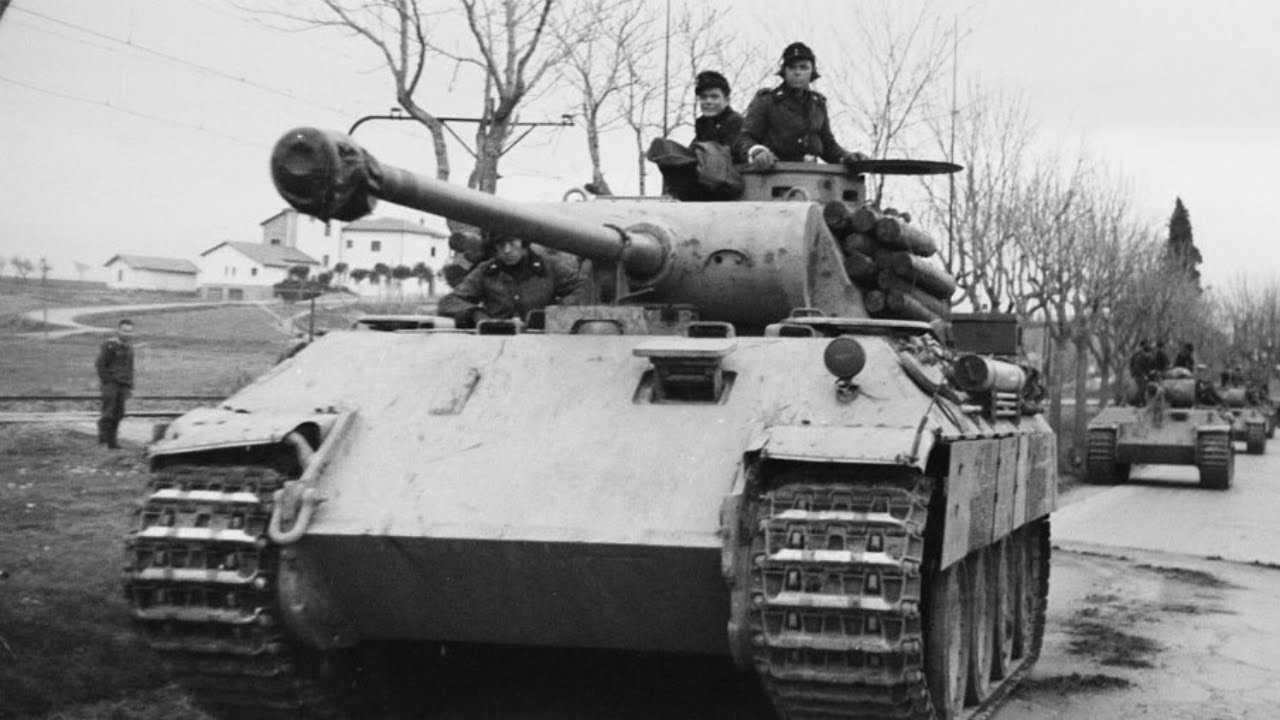
Manteuffel’s attack began at 0600 hours with the last operational Panthers, approximately 30 tanks, advancing in conjunction with infantry from the 11th Panzer Division. The assault demonstrated professional competence despite material disadvantages, using terrain effectively and maintaining good coordination between tanks and infantry.
But the American response was overwhelming. Colonel Bruce Clarke, commanding Combat Command A, had anticipated the attack through intelligence intercepts. American tanks were positioned in prepared defenses with pre-planned artillery concentrations. As German forces advanced, they entered a carefully prepared kill zone.
The destruction was methodical. Artillery separated German infantry from their tank support. Tank destroyers engaged from the flanks while Shermans held the center. As morning fog lifted, P-47s arrived in strength, adding their firepower to the maelstrom. By noon, Manteuffel’s attack had failed completely.
22 German tanks lay destroyed or abandoned. The remaining forces withdrew toward the German border. When the Battle of Arracourt ended on September 29th, 1944, the results were staggering. From an initial strength of 262 tanks and assault guns, German forces retained only 62 operational vehicles, a loss rate of 76%.
The 113th Panzer Brigade had ceased to exist as an effective unit. The 111th Panzer Brigade was similarly devastated. The 11th Panzer Division, one of the Wehrmacht’s veteran formations, was reduced to regiment strength. American losses, while not insignificant, were far lighter. The 4th Armored Division lost 48 tanks during September 1944, with 25 tanks and seven tank destroyers lost specifically during the Arracourt battles.
Most damaged American tanks were quickly repaired and returned to service. Crew casualties remained relatively low due to the Sherman’s better escape hatches and internal layout that facilitated quick evacuation. The kill ratio, approximately 3.6 to 1 and favor of American forces, contradicted everything German doctrine predicted.
The Panther, superior in armor and firepower, had been decisively defeated by the supposedly inferior Sherman. But the victory hadn’t come through tank versus tank combat. It came through superior integration of combined arms, better tactical flexibility, superior logistics, and overwhelming artillery and air support.
The US Army’s immediate after-action analysis of Arracourt provided crucial insights that would influence armored warfare doctrine for decades. The Armored Force Board at Fort Knox compiled detailed reports from every participating unit, creating a comprehensive picture of modern armored warfare. First, the battle proved that technical specifications alone didn’t determine combat outcomes.
The Panther’s superior gun and armor meant little when American forces refused to fight on German terms. By using artillery to suppress, aircraft to attack from above, and maneuver to strike from flanks, American forces negated German technical advantages. Second, mechanical reliability proved more important than maximum performance.
A Sherman that could fight every day was worth more than a Panther that spent half its time in maintenance. The ability to sustain operations, to keep tanks running and fighting continuously, multiplied combat power in ways that armor thickness couldn’t match. Third, crew training and tactical flexibility trumped individual heroics.
American tank crews, products of standardized training at Fort Knox, operated with consistent competence. They could perform any role in the tank, coordinate with other arms instinctively, and adapt to changing situations without detailed orders. German crews, increasingly green due to losses and hasty training, couldn’t match this institutional competence.
Fourth, logistics determined strategic possibilities. The American ability to supply fuel, ammunition, and spare parts, even at the end of a 400-mile supply line, enabled continuous operations. German forces, unable to maintain adequate supply, saw their tactical options progressively constrained until immobility meant inevitable defeat.
Lieutenant Colonel Creighton Abrams, whose tactical leadership proved decisive throughout the battle, provided a comprehensive assessment in his after-action report. Abrams emphasized that victory came not from any single factor, but from the systematic application of combined arms doctrine. His 37th Tank Battalion had demonstrated that aggressive action, supported by artillery and airpower, could defeat technically superior opponents.
Abrams would later become Chief of Staff of the US Army, and his experiences at Arracourt influenced American armored doctrine through the Cold War. The M1 Abrams tank, named in his honor, embodied lessons learned at Arracourt, emphasizing reliability, crew survivability, and systems integration over pure technical specifications.
On the German side, General Hasso von Manteuffel provided perhaps the most telling assessment. In post-war interrogations, Manteuffel stated that Arracourt demonstrated the bankruptcy of German tactical doctrine. The Wehrmacht’s emphasis on technical superiority and individual warrior prowess had proven inadequate against American systematic warfare.
The Americans had industrialized combat, turning war into a production process where superior organization and logistics guaranteed victory. The Battle of Arracourt represented a triumph of American intelligence gathering and processing. Ultra intercepts had provided strategic warning of German concentrations.
Tactical reconnaissance, conducted by armored cavalry and light aircraft, provided continuous updates on German positions and movements. The integration of intelligence from multiple sources created unprecedented battlefield awareness. Colonel Oscar Koch, G-2 intelligence officer of the Third Army, had developed innovative techniques for intelligence fusion.
His staff correlated Ultra intercepts with aerial reconnaissance, prisoner interrogations, and captured documents to create comprehensive enemy assessments. At Arracourt, American commanders often knew German intentions before German subordinate units received their orders. This intelligence advantage multiplied American combat power.
Knowing where Germans would attack allowed positioning of reserves. Understanding German fuel shortages enabled tactics that forced excessive maneuvering. Awareness of German mechanical problems suggested aggressive pursuit that prevented recovery and maintenance. The unglamorous but crucial role of maintenance units deserves special recognition.
The 126th Ordnance Maintenance Battalion, supporting the 4th Armored Division, performed mechanical miracles throughout the battle. Operating from forward positions under occasional artillery fire, maintenance teams kept American armor running at unprecedented operational rates. Master Sergeant John Faulkner, a maintenance platoon sergeant, described the system in a 1945 interview with Yank magazine.
We had assembly line maintenance down to a science. Track repair, 1 hour. Engine swap, 4 hours. Transmission replacement, 6 hours. We had spare parts stockpiled at company, battalion, and division level. If something broke, we could fix it or replace it within a day. This maintenance capability meant damaged tanks quickly returned to action.
A Sherman hit on Monday could be fighting again by Wednesday. German Panthers, requiring specialized tools and scarce spare parts might remain disabled for weeks if they could be recovered at all under American artillery and air attack. Combat effectiveness depended significantly on medical support and here too the Americans held decisive advantages.
The fourth armored division’s medical battalion could process casualties from collection to surgery within an hour, the golden hour that dramatically improved survival rates. Tank casualties presented unique challenges. Burns, traumatic amputations, and blast injuries required immediate specialist care.
American medical doctrine emphasized far forward surgical hospitals staffed with specialists. Plasma, morphine, and sulfur drugs were available at company level. Helicopter evacuation, though still experimental, saved critically wounded tankers who would have died awaiting ground ambulances. The psychological impact of comprehensive medical support cannot be overstated.
American tankers fought aggressively knowing that wounds weren’t death sentences. German tankers, aware that medical support was minimal and evacuation uncertain, fought more cautiously. This medical confidence translated directly into tactical advantage. Weather played a crucial but complex role at Arracourt.
The morning fog of September 18th to 21st initially seemed to favor German attacks masking their approach and negating American advantages in artillery observation. But fog also eliminated the Panthers long-range advantage forcing combat at ranges where Shermans could effectively engage. When weather cleared September 21st to 23rd, American advantages multiplied.
Clear skies brought overwhelming air support. Good visibility enabled artillery observers to engage distant targets. The autumn sun dried muddy terrain, improving mobility for the lighter Shermans, while Panthers still struggled with their heavier ground pressure. Rain returned September 24th to 26th, creating mud that particularly affected German operations.
The Panther’s interleaved road wheels, designed to distribute weight, became clogged with mud that froze overnight. Several Panthers were immobilized not by combat damage, but by frozen mud locking their running gear. Shermans with simpler track systems could break free with their own power or quick maintenance.
American signal communication superiority provided another decisive advantage. The Fourth Armored Division operated multiple radio networks simultaneously. Command nets, fire support nets, logistics nets, and air support nets. Every Sherman tank had two radios, allowing monitoring of multiple frequencies.
The SCR-528 radio in American tanks provided reliable voice communication at ranges exceeding 10 miles. The companion SCR-506 allowed communication with supporting arms. These FM radios, resistant to interference and interception, enabled secure tactical coordination that German forces couldn’t match.
German communications, dependent on fewer radios with shorter ranges, frequently failed in combat. The Fu 5 radio set in most Panthers had a practical range of only 2 miles. When command tanks were destroyed, priority targets for American gunners, subordinate units lost communication entirely. This communications breakdown accelerated German tactical collapse.
The Battle of Arracourt validated the massive American investment in training infrastructure. Fort Knox, the Armored Force School, had developed the world’s most comprehensive tank crew training program. Every American tanker at Arracourt had completed 17 weeks of basic and advanced individual training, 13 weeks of crew collective training, 8 weeks of unit combined arms training, live fire exercises with full ammunition allocations, maintenance training on every tank component. This training created standardized excellence. Any American tank crew could operate effectively with any other, knowing that procedures and tactics were consistent. The loss of individual crew members, while tragic, didn’t eliminate effectiveness because every member could perform every role. German training had collapsed by 1944. Fuel shortages meant minimal driving practice.
Ammunition shortages limited gunnery training. The complex Panther required extensive training that couldn’t be provided in the hasty formation of new units. Many German tankers at Arracourt had less than 100 hours of actual tank experience compared to American crews with 1,000 plus hours. Arracourt must be understood within the broader strategic situation of September 1944.
The Wehrmacht was collapsing on all fronts. Soviet forces had destroyed Army Group Center and were approaching German borders. Allied forces had liberated France and Belgium. Strategic bombing had devastated German industry. Romania had switched sides, cutting off crucial oil supplies. The counteroffensive at Arracourt represented one of Germany’s last attempts to regain initiative in the West.
Its failure meant that Germany could no longer mount significant offensive operations. The destruction of precious Panthers and experienced crews, irreplaceable by this stage of the war, accelerated German collapse. For the Americans, Arracourt validated their entire approach to warfare. The combination of industrial production, systematic training, technological integration, and tactical flexibility had proven superior to German quality and doctrine.
The battle demonstrated that American methods could defeat any enemy anywhere, a lesson that would influence US military doctrine through the rest of the 20th century. The Battle of Arracourt cannot be understood without recognizing the industrial base that made American victory possible. The Detroit Tank Arsenal, also known as the Fisher Tank Arsenal, embodied American production philosophy.
Built in just 6 months, the facility could produce 1,000 tanks monthly by 1944. The production system emphasized standardization and reliability over maximum performance. Every Sherman used interchangeable parts. Every transmission was identical. Every engine could be swapped with another. This standardization meant that maintenance units could stock parts knowing they would fit any Sherman they encountered.
German production, by contrast, suffered from constant modifications and improvements that complicated manufacturing and maintenance. Panthers produced at different factories or different times might have incompatible parts. The pursuit of technical perfection created logistical nightmares that multiplied as Germany’s industrial base crumbled under strategic bombing.
By September 1944, American factories were producing 2,000 Shermans monthly versus German production of fewer than 400 Panthers. This five-to-one production ratio, combined with superior reliability that multiplied effective strength, created overwhelming numerical superiority at the tactical level.
At Arracourt, local American superiority often exceeded three to one, despite theoretical German concentration. Beyond statistics and tactical analysis, lay the human reality of armored combat. Tank warfare was not the clean mechanical duel often portrayed, but a terrifying experience of fire, explosion, and death.
The crews who fought at Arracourt, American and German, displayed extraordinary courage in conditions of extreme danger. The Sherman, despite its victories, remained vulnerable to catastrophic destruction. A Panther’s shell penetrating a Sherman could ignite ammunition, creating an inferno that gave crews seconds to escape.
The tank’s nickname Ronson, after the cigarette lighter advertised as lights first time, every time, reflected this deadly reality. German tankers faced equal horrors. Panthers hit by white phosphorus shells filled with toxic smoke. Crews had to choose between staying inside and suffocating or evacuating under machine gun fire.
Tank commanders, who often fought with open hatches for better visibility, were particularly vulnerable to artillery air bursts that sprayed shrapnel into turrets. The wounded faced agonizing experiences. Burns were common. Contact with hot metal, flaming fuel, or burning phosphorus created injuries that period medicine struggled to treat.
Traumatic amputations from shell fragments were frequent. Concussion from near misses could cause permanent brain injury without visible wounds. Yet amid this horror, moments of humanity emerged. American medics treated German wounded alongside their own. Tank crews risked their lives to extract enemies from burning vehicles.
Local French civilians, despite suffering under German occupation, provided aid to wounded of both sides. The Battle of Arracourt generated numerous German prisoners who provided valuable intelligence through interrogation. These interrogations, conducted according to Geneva Convention protocols, revealed the depth of German supply and morale problems.
Captured tank crews described fuel shortages that limited tactical options. They reported receiving only basic training due to fuel conservation. They complained about mechanical problems that left half their tanks non-operational before combat. Most significantly, they expressed shock at American material superiority.
The volume of artillery, the constant air attacks, the seemingly unlimited ammunition. American treatment of prisoners followed strict protocols that often surprised Germans accustomed to Eastern Front brutalities. Prisoners received medical treatment, adequate food, and protection from harm. This humane treatment, contrasting with Nazi propaganda about American barbarism, often loosened tongues during interrogation.
The intelligence gained from prisoner interrogations provided tactical advantages throughout the battle. Knowing German fuel status allowed timing attacks when tanks couldn’t maneuver. Understanding mechanical problems suggested aggressive pursuit that prevented maintenance. Awareness of command casualties enabled exploitation of leadership voids.
The Battle of Arracourt devastated the French countryside around this small Lorraine town. French civilians, who had endured four years of German occupation, found themselves caught between opposing armies in their liberation. The mayor of Arracourt, speaking to American reporters after the battle, described the experience.
“The noise was incredible. Shells exploding constantly, tanks firing, aircraft overhead. Many houses were destroyed, but we knew this meant liberation was coming. When we saw the burnt German tanks, we knew the Americans had won.” Civilian casualties, while not precisely documented, were significant.
Artillery and tank fire didn’t distinguish between military targets and civilian homes. The town of Arracourt itself changed hands several times, each transition bringing destruction. Yet, most civilians, when interviewed post-war, expressed gratitude for liberation despite the cost. French Resistance members provided crucial intelligence to American forces.
They reported German movements, identified supply dumps, and guided American units through local terrain. This civilian intelligence network, built over years of occupation, gave Americans advantages that map reconnaissance couldn’t provide. The Battle of Arracourt’s influence extended far beyond its immediate tactical success.
The battle became required study at the US Army’s Command and General Staff College, where future officers analyzed its lessons. The integration of combined arms demonstrated at Arracourt became the template for American military operations. The battle influenced tank development philosophy. While the Soviets and Germans continued emphasizing heavier tanks with bigger guns, Americans focused on reliability, standardization, and systems integration.
The M26 Pershing and later M48 Patton tanks prioritized these characteristics over pure technical specifications. NATO doctrine during the Cold War explicitly drew on Arracourt lessons for defending against Soviet armored superiority. The concept of using artillery, air power, and maneuver to defeat technically superior but numerically overwhelming forces came directly from the 4th Armored Division’s success against German Panthers.
Modern military historians consider Arracourt a watershed moment in armored warfare. The point where industrial age mass production warfare gave way to information age integrated warfare. The American ability to coordinate multiple weapons systems in real-time presaged modern network-centric warfare, where information superiority multiplies combat power.
Post-war German military studies of Arracourt were brutal in their self-criticism. The Bundeswehr’s historical section, analyzing the battle in the 1950s, concluded that German forces had failed at every level, strategic, operational, and tactical. Strategically, committing the last operational reserves to a secondary theater while the Eastern Front collapsed showed fatal misallocation of resources.
Operationally, the hasty assembly of Panzer brigades without adequate training, logistics, or combined arms support guaranteed failure. Tactically, rigid adherence to long-range tank combat doctrine ignored battlefield realities that demanded flexibility. German veterans interviewed in the 1960s and 1970s consistently emphasized their shock at American capabilities.
They had expected to face an army reliant on material superiority, but tactically inferior. Instead, they encountered forces that excelled in every aspect of modern warfare, tactics, technology, logistics, and leadership. Over decades, the Battle of Arracourt has acquired mythic dimensions that sometimes obscure historical reality.
The image of five Shermans defeating dozens of Panthers, while based on specific engagements, shouldn’t obscure the broader truth that American victory came through systematic superiority rather than individual heroics. The Sherman tank, often disparaged in popular history, proved at Arracourt that wars are won by weapon systems, not individual weapons.
The Panther, for all its technical excellence, failed because it was just a tank. The Sherman succeeded because it was part of an integrated combined arms team that included artillery, air support, infantry, and logistics. The battle demonstrated that military effectiveness comes from the synthesis of multiple factors: training, doctrine, logistics, technology, and leadership.
No single element, no matter how superior, can overcome systematic disadvantage in all other areas. This lesson remains relevant as modern militaries balance technological advancement with systemic capability. The Battle of Arracourt, from September 18th to 29th, 1944, stands as more than a tactical victory.
It represented the validation of American military philosophy developed between the World Wars. The idea that industrial democracy’s strengths could be translated into military superiority through systematic application of combined arms warfare. German forces arrived at Arracourt confident in their technical superiority and tactical doctrine.
The Panther tank, with its powerful gun and thick armor, seemed to guarantee success against the lighter Sherman. German crews, inheritors of Prussian military tradition, believed their warrior skills would overcome American material abundance. They discovered instead that modern warfare had evolved beyond their understanding.
The Americans weren’t fighting tank duels. They were conducting integrated operations where tanks were merely one component. Artillery, air power, intelligence, logistics, and communications combined to create overwhelming superiority that no amount of armor thickness could overcome. The shocked German survivors carried back a truth that no propaganda could counter.
They had encountered a form of warfare they couldn’t match. Not because American tanks were better, they weren’t. Not because American soldiers were braver, courage was universal. But because the Americans had created a system of warfare that turned every advantage into multiplied combat power. Lieutenant Colonel Abrams and his 37th Tank Battalion had demonstrated that victory in modern warfare came not from individual superiority, but from systematic integration.
The five Shermans that seemed like easy prey to German Panthers that September morning had behind them the full weight of American industrial democracy. A force that would grind Nazi Germany into unconditional surrender within eight months. At Arracourt, German tankers learned what their comrades in POW camps were simultaneously discovering.
American strength lay not in any single weapon or tactic, but in the ability to organize, supply, and coordinate overwhelming force at the point of decision. They had challenged the arsenal of democracy and discovered it was not just an arsenal, it was an entire system of warfare they were powerless to defeat.
The fields around Arracourt, littered with burned-out Panthers, told the story. Technical superiority had met systematic superiority and systematic superiority had won. The German tankers who survived carried this lesson back to a crumbling Reich. They had seen the future of warfare and it was American.