Germany’s Elite Armored Force: How the British Shattered Panzer Lehr in Normandy D
Panzer was supposed to be the answer to every problem the German army had by 1944. Not scraped together from replacement pools, not stitched from tired veterans pulled off other fronts, but built new from the ground up out of the instructors and demonstration troops who taught the rest of the Vermacht how to fight with tanks.
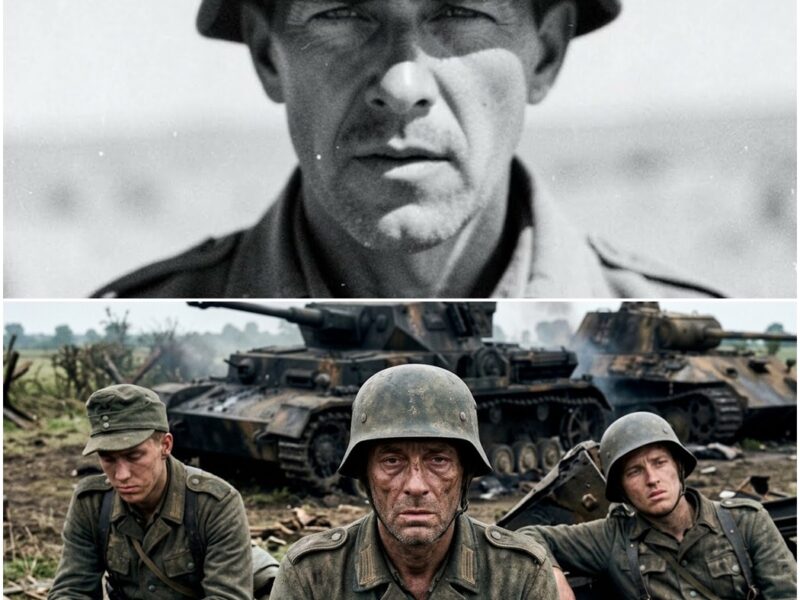
On the day it went into Normandy, it fielded roughly 190 tanks and assault guns, close to 15,000 men, more halftracks per company than any other division in the entire German army, and officers who had spent years training panzer crews rather than burying them. Within 8 weeks, it had ceased to exist as a fighting formation, not driven back, not withdrawn, not folded into a neighboring unit while it licked its wounds. erased.
A division built to be the finest armored instrument Germany could produce was reduced to scattered survivors digging through rubble for their own dead. And it did not take a legendary tank jewel or a single decisive battle to do it. It took weeks of relentless, grinding, unglamorous attrition followed by an ending so total that the man commanding the division compared his own front line to the surface of the moon.
This is the story of how that happened. And remember the name Panza lair because there will not be much of it left by the time we are done. Let’s go back to where this division came from because the beginning tells you everything about how much Germany believed in it. Panza Lair was formed in January 1944 and it was not built the way most German divisions were built by that point in the war.
It was assembled out of lair units, literally demonstration and training formations. the Panza troops whose entire job had been showing other soldiers how armored warfare was supposed to work. Take a moment to actually sit with what that means. By 1944, the German army was creating divisions out of teenagers, convolescing wounded men and clarks pulled from desk jobs.
Panzer instead was built from the instructors, the men who had spent the war refining doctrine rather than bleeding for it. That is an extraordinary decision for a country running out of soldiers to make. And it tells you exactly how much importance Berlin placed on this one unit. Its infantry regiments were drawn from the Panza Grenadier Lair Regiments.
Its tank battalions crewed by men pulled from the very training establishments that certified every other Panza crew in the German army. These were not green recruits learning under fire for the first time. Many of these men had spent years demonstrating tactics on training grounds in Germany, refining exactly how a Panza company should move, how it should support infantry, how it should exploit a breakthrough.
When the call came to convert that theoretical expertise into a fighting division, Germany did not hesitate. The result was a division stuffed with experienced officers, highquality non-commissioned officers, and equipment levels that other Panza divisions could only dream about.
Where a typical Panza division in Normandy might be desperately short of halftracks and forced to move its infantry on trucks or on foot, exposed and vulnerable the moment they dismounted under fire, Panzer’s Panza Grenaders rode into battle in armored vehicles at a rate matched almost nowhere else in the German order of battle.
The division carried around 190 tanks and assault guns on its books. A mix of Panza Fours, Panthers, and a battalion of Sturm Gashutz assault guns alongside roughly 15,000 men organized into two Panza Grenadier regiments, an artillery regiment, a reconnaissance battalion, and supporting engineer and anti-tank units.
This was not a division. It was a demonstration of what the German army believed armored warfare could still achieve in 1944 if you gave the concept enough resources and enough trained men. Compare that equipment table to an ordinary infantry division scraping by on horsedrawn transport in the same summer and you understand exactly why German war planners spoke of panzer lair the way British planners spoke of their own guards armored formations.
It was the standard everyone else was measured against and everyone else fell short. Command of this showpiece went to Fritz Bioline, a general who had cut his teeth as Irwin RML’s chief of staff in North Africa before taking over armored commands of his own. Bioline was not some rear area political appointee. He had watched desert warfare chew through German armor firsthand.
Had learned the hard lessons of logistics and attrition under Raml during the long retreat from Elamagne and arrived in Normandy believing his division was ready for anything the Western Allies could throw at it. He had seen what happened when supply lines stretched too thin. When air superiority tipped the balance of an entire campaign, when a welle equipped force could still be ground down by an enemy willing to trade material for time.
If you wanted a commander who understood exactly what modern mechanized war could do to even the finest division. Bioline was as good a choice as Germany had. He would need every bit of that experience because what was coming for Panzer Lair in the summer of 1944 was not going to look anything like North Africa.
In the desert, space had been the one resource neither side lacked. A division that took a beating could withdraw hundreds of miles and regroup. In Normandy’s narrow bokeage country, hemmed in by hedge, sunken lanes, and a coastline packed with Allied firepower. There would be nowhere to trade space for time.
Every mile mattered and there was no room left to give. If you’re finding this breakdown of how an elite German division was ground into nothing useful, take a second to hit subscribe because we cover the eastern and western fronts every week. The units, the commanders, and the operations that actually decided the war.
Panzaair moved into Normandy in the days immediately after the 6th of June, ordered forward from its assembly areas near Chartra and Lear as part of the German high commands attempt to seal off the invasion before it could break out of its beach head. And almost from the moment it arrived, the war it found itself fighting was nothing like the one it had trained for.
Allied fighter bombers ranged constantly over the roads of Normandy, and Panzer’s march to the front became its first education in what this campaign would actually cost. Columns of tanks and halftracks that would have moved freely on a training ground in Germany now had to creep forward at night, disperse constantly, and absorb strafing runs from aircraft that owned the daylight sky completely.
Bioline later estimated that the division lost a meaningful number of vehicles simply getting to the front. Tanks and trucks destroyed by air attack before they had fired a single shot in anger. Sit with that for a moment because it tells you something. The standard telling of this story often skips past.
Panzer’s destruction did not begin in the fighting around Normandy’s towns and hedge. It began on the approach march in the first bleeding of a division that had not yet fired a shot. Once in position, the division was thrown straight into static defensive fighting around the town of Tilly and the surrounding Boage country, holding ground against the British second army in a sector that would become one of the grinding attritional stalemates of the entire Normandy campaign.
This was supposed to be an offensive weapon, a division built to spearhead armored thrusts and punch through enemy lines the way German Panzer divisions had done in 1940 and 1941, driving deep into open country while the enemy scrambled to respond. Instead, it found itself dug into hedro country, holding fixed positions against an enemy with more artillery, more aircraft, and no shortage of ammunition.
Here is the detail that matters and that almost nobody appreciates when they talk about Panzer’s destruction. This division did not die in one dramatic afternoon. It died slowly over weeks under a hammer that never stopped falling. British and Commonwealth artillery in Normandy was some of the heaviest, most coordinated indirect fire of the entire war, backed by naval guns offshore, still within range of the coastal sectors and constant Allied air superiority overhead.
For a German armored division dug in around Tillisur Soul through the middle of June 1944, that meant days and nights of near continuous shelling, ground attacks by British infantry and armor probing the line, and aircraft hunting anything that moved during daylight. A tank crew that survives a single artillery barrage has been tested.
A tank crew that survives that same intensity of fire day after day for weeks is being worn down in a way no single battle report can capture. The men of Panzer’s Panza Grenadier regiments dug into positions around villages like Lingerva and Verier fought through repeated British attempts to push the line forward. Holding on stubbornly in fighting that chewed through junior officers and experienced squad leaders at a rate the division’s replacement system had no hope of matching.
Baine held the line and holding the line was slowly killing his division from the inside. Think about what defensive static warfare does to a division that was purpose-built for the offense. Panza’s tanks were not maneuvering, not exploiting gaps, not doing the thing they had been trained and equipped to do.
They were dug in as pillboxes, absorbing fire, losing vehicles to artillery and air strikes that a moving attacking force might have avoided entirely. Every Panther or Panza 4 knocked out in a defensive position around Tillisol was a tank lost for a purpose the division had never been designed to serve.
And unlike the men Bayine had commanded in North Africa, where replacement tanks and parts, however scarce, could sometimes still reach the front across the Mediterranean, Germany’s factories in the summer of 1944 were being bombed around the clock by the Allied strategic bombing campaign and could not begin to keep pace with what Normandy was consuming.
Every machine lost in that attritional fighting around Tilly was, in practical terms, lost forever. There was no dep depot in France stacked with spare Panthers waiting to be shipped forward. There was a production line in Germany already straining to meet demand from three fronts at once and a rail network being systematically dismantled by Allied bombers before those replacements could ever reach the units that needed them.
Through the middle of June and into July, the British Second Army kept the pressure on across this sector, launching a series of operations designed less to achieve one single breakthrough than to keep grinding down whatever German armor stood in front of them. The fighting around Tillisu itself changed hands multiple times through midJune.
the town devastated by repeated exchanges of artillery fire as both sides fought for a position that on a map looked like little more than a crossroads village, but that in practice anchored a critical stretch of the German defensive line. Operations like Epsom in late June, launched by the British Second Army with fresh armored and infantry divisions, pulled German reserves, including elements fighting alongside and near Panza Lair, into brutal fighting for villages and river crossings along the Odon River that changed hands more than once, soaking up German armor that might otherwise have been rotated out of the line to rest and refit. This is the part of the story that rarely gets the attention it deserves because there is no single dramatic setpiece battle to point to, no equivalent of a famous tank jewel that decides everything in an afternoon. What there is instead is a slow, deliberate British method. Apply constant pressure across a broad front. Force the Germans to commit their armor to hold ground
rather than husband it for a counterattack. Use artillery and air power to punish anything that moves or masses. and let the accumulated weight of weeks do what a single attack cannot. Read that again because it is the whole story in miniature. The British second army was not trying to destroy Panza lair in one stroke around Tilly.
It was trying to bleed it day after day until the division that had arrived in Normandy as one of the best equipped formations in the German army was no longer capable of the kind of offensive punch it had been built for. And crucially, this method did not require the British to win every individual engagement.
Panzer Lair’s crews and infantry frequently fought well in these small brutal fights for hedgerros and farm buildings, inflicting real casualties on the attacking British units. But that almost did not matter. Even a tactical draw, even a local German success that held a village for another day cost Panzer tanks, ammunition, and experienced men it could not replace.
while the British divisions doing the attacking could be rotated, reinforced, and resupplied from a logistics system that stretched back across the channel to the factories of Britain, Canada, and the United States without ever facing a single bombing raid on the scale Germany’s rail network was absorbing.
By the time this phase of fighting wound down in early July, Panzer had already lost a meaningful share of its original tank and vehicle strength, not to a single catastrophic engagement, but to the accumulated cost of weeks in the line under relentless bombardment and constant small-cale combat.
Estimates of the division’s tank strength by early July put it well below the nearly 190 vehicles it had carried into Normandy less than a month earlier. a steady bleed rather than a single dramatic loss, but a bleed that added up all the same. Bayines’s division was still in the fight, still a functioning formation, still capable of mounting local counterattacks when the situation demanded it.
But it was no longer the fresh, fully equipped showpiece that had rolled into Normandy in June. This is the trap that had been closing around Panzer from almost the first week of the campaign. And it had nothing to do with any single brilliant maneuver on the part of the British commanders facing it. It was simple mathematics.
The same mathematics that has decided the fate of elite formations on every front of this war. A division built for a war of movement had been forced into a war of endurance, and endurance was not what it had been designed for. Through the first weeks of July, the pressure never let up.
British and Canadian forces continued pushing on Khan and the surrounding sectors. And while much of that fighting fell on other German divisions defending the city itself, the broader effect on the whole German position in Normandy was the same relentless grind. Every division holding the line, Panzer included, was being asked to do more with less, to hold ground with fewer tanks than it had started with, fewer experienced crews, and a supply system that could not make good the losses.
German commanders across the theater were beginning to describe the fighting in terms that echoed each other almost exactly. A battle of material, a war being lost, not on any single battlefield, but in the arithmetic of production and replacement. Panzer’s own war diary through this period reflects exactly that mood.
Tank strength returns falling steadily, casualty reports mounting, and requests for replacement vehicles and crews going unanswered or answered only in a trickle, nowhere near what the fighting demanded. And then, just as this grinding phase of attrition had already hollowed the division out from the inside, the front shifted, and Panzer Lair found itself directly in the path of something else entirely.
In late July 1944, the American First Army under Omar Bradley was preparing Operation Cobra, the breakout offensive intended to finally crack open the Normandy stalemate and send Allied armor pouring into open country beyond the Boage. And here is the detail that surprises people who assume this story stays a purely British affair from beginning to end.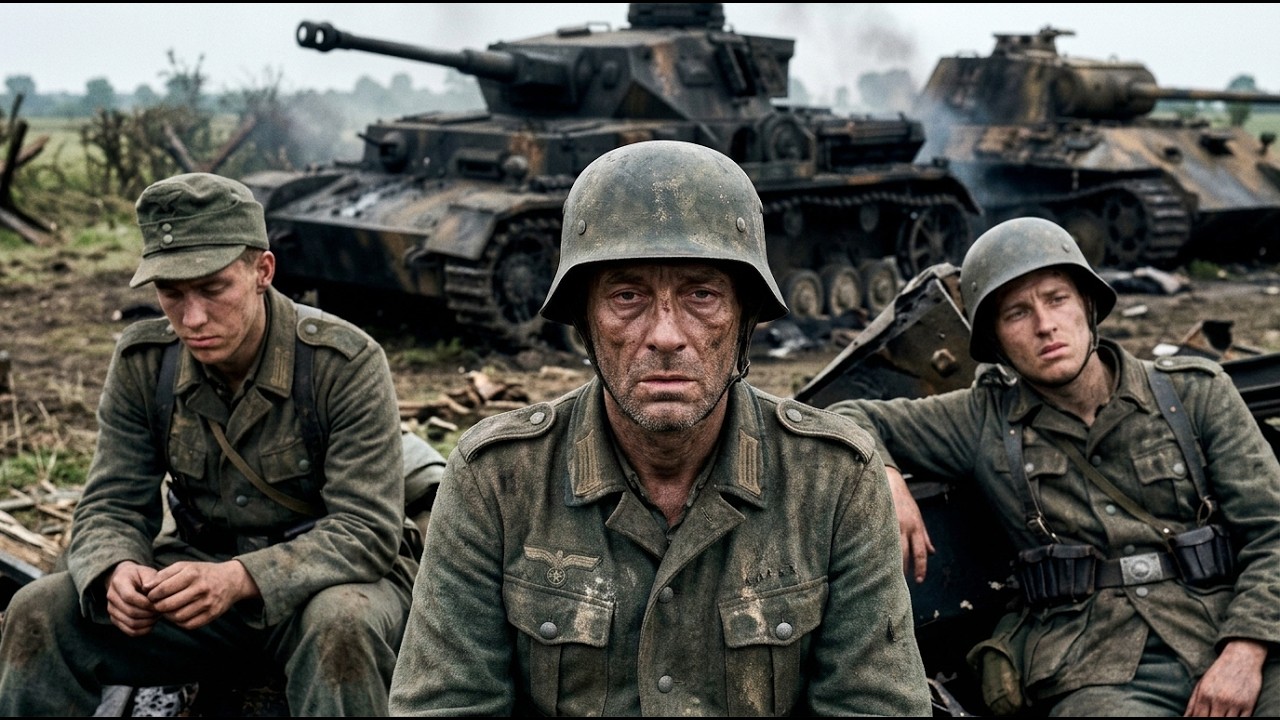
The blow that finally shattered what remained of Panzer came not from the British second army that had spent weeks wearing the division down, but from the Americans in one of the most concentrated aerial bombardments directed against a single ground formation in the entire war. It matters to say this plainly because getting the sequence right is the whole point of understanding how this division actually died.
The British attrition through June and July had already stripped Panzaair of a meaningful share of its strength and just as importantly had pinned it in place holding a defensive sector it could not safely abandon without risking a collapse of the entire German line. That is precisely the condition operation Cobra was designed to exploit.
Panzer held a section of the front near Sanlow directly in the path of the planned American breakout. And by the time the bombers arrived overhead on the 25th of July, the division was already a fraction of the force that had arrived in Normandy 7 weeks earlier. What happened next is difficult to describe in any way that does not sound like exaggeration.
And yet the numbers back it up completely. On the 25th of July, American heavy and medium bombers, more than a thousand aircraft in total across the day’s operations, dropped a saturation bombardment onto the German positions along a narrow strip of the front, concentrating an enormous tonnage of high explosive onto a strip of ground barely a few miles wide and only a mile or so deep.
Think about the arithmetic of that for a second. The same way you would think about a Soviet concentration of force on the Eastern front. Because the principle is identical, even though the tool is different. Instead of massing artillery and armies onto one narrow sector, the Americans masked aircraft and bomb tonnage onto one narrow sector.
And the effect on the men and machines caught underneath it was every bit as decisive as any ground offensive. There is a bitter irony worth pausing on here, too. An early wave of that bombing fell short of its intended target and struck American troops waiting to advance, killing and wounding hundreds of their own soldiers, including a senior American general caught in the strike.
Even with that tragic error, the weight of ordinance that did land on the German positions was so overwhelming that it barely mattered to the outcome. Facing Panza, bunkers were caved in, vehicles were flipped and buried under collapsed earth. Communication lines were severed before the ground assault ever began, leaving surviving German units unable to coordinate or even understand what had happened to the units on either side of them.
Baaline himself, describing the aftermath, said that his front line looked like the face of the moon, cratered and unrecognizable, with entire units simply gone, not retreated, not regrouped, just gone, buried or vaporized in place where they had been dug in. He would later describe driving forward after the bombardment to try to reestablish contact with his forward positions and finding nothing left to contact.
No functioning command posts, no coherent line, just craters, wrecked vehicles, and silence where a defensive position had stood that morning. Read that description again because it is not the language of a division retreating in good order. It is the language of a division that had a significant portion of its remaining combat power annihilated in a matter of hours by firepower it had no way to answer.
No anti-aircraft capabilities sufficient to challenge and no shelter deep enough to survive. This is where you have to hold two pictures side by side to understand what actually happened to Panzer. The first picture is the division as it stood in early June. Nearly 200 tanks and assault guns, 15,000 men, the best equipped formation of its kind in the entire German army, commanded by officers who had trained the rest of the Vermacht in exactly this style of warfare.
The second picture is the division as it stood on the afternoon of the 25th of July after 7 weeks of British attritional grinding around Tillis had already worn it down and after a single morning of American carpet bombing had shattered what remained of its forward positions. Bayine reported that his division in the wake of Cobra had been reduced to only a handful of operational tanks, in some accounts as few as a dozen or so armored vehicles still capable of fighting.
Out of the nearly 200 it had carried into Normandy less than two months before. A division that had once represented the very best the German army could field for armored warfare could no longer muster enough tanks to matter tactically on any battlefield. That is not attrition in the ordinary sense of the word.
That is the destruction of a fighting formation as a coherent functioning entity in the space of roughly 7 weeks from the moment it first crossed into Normandy. What makes this story genuinely instructive rather than just a grim statistic is understanding why the combination worked the way it did.
A single overwhelming bombardment against a division at full strength, fresh, well dug in with reserves and replacement parts still reaching the front might have been absorbed, however painfully. Divisions have survived heavy bombardments before and gone on fighting, digging out their survivors and reforming a line.
What made Cobra so completely decisive against Panzer specifically was the fact that the division had already spent seven weeks being bled white in the fighting around Tillisol. It had already lost a large share of its original tank strength to that earlier attritional campaign. It had already lost experienced crews and junior officers it could not replace because Germany’s factories and training pipelines in the summer of 1944 were being bombed and strangled and simply could not produce men and machines fast enough to offset losses on this scale. The division that absorbed the Cobra bombardment was not the same division that had rolled confidently into Normandy in June. It was already a shell of that formation, pinned in place by the very fighting that had worn it down, unable to disperse or withdraw, because doing so would have opened a gap in the German line that other equally stretched divisions could not have covered. It was that pre-weakened, immobile state that turned a devastating bombardment into a
genuinely annihilating one. This is the pattern worth remembering and it is worth stating plainly because it applies far beyond this single division on this single front. Overwhelming firepower is decisive not simply because of its raw tonnage but because of the condition of the target it lands on.
Grind a division down first, strip away its ability to maneuver or withdraw, pin it in a fixed position it cannot abandon, and then deliver the final blow, and the effect multiplies far beyond what either phase could achieve alone. Neither the British attrition around Tillisurel nor the American bombing at Salo on its own would necessarily have finished Panza as completely as the two combined.
It was the sequence, weeks of grinding followed by a single hour of overwhelming concentrated destruction that turned an elite division into wreckage. In the days that followed Cobra, what remained of Panzer tried to do what German formations across Normandy were now attempting everywhere, falling back in scattered groups, trying to reform some kind of coherent defensive line as American armor under Bradley.
And soon after, George Patton’s newly activated third army poured through the gap that had been torn open near Sanl. But a division reduced to a dozen tanks and a fraction of its infantry strength cannot function as a division in any meaningful sense. It becomes at best a collection of survivors fighting as scattered battle groups.
Exactly the kind of fragmentation that turns an elite formation into something that exists on paper far more than it exists on the ground. Small groups of Panzer survivors fought delaying actions along the roads leading away from Sono, using whatever vehicles and weapons remained to slow the American advance for a few more hours or days, buying time for other German units to escape a rapidly forming trap.
In exactly the same thankless, sacrificial role that elite divisions on other fronts had been reduced to once their main strength was gone. Panzer’s remnants were pulled back and folded into the broader collapse of the German position in Normandy through August. Caught up eventually in the chaos around the file’s pocket where entire German armies including the seventh army and elements of fifth panzer army were being encircled and destroyed as British, Canadian, Polish and American forces closed the ring around retreating German forces across the whole of northern France. The scale of destruction in that pocket alone, tens of thousands of German soldiers killed or captured, thousands of vehicles destroyed or abandoned on roads jammed bumperto-bumper under constant air attack was itself one of the greatest single disasters to befall the German army in the entire war. And what little remained of Panzer’s fighting strength was consumed as part of that wider
collapse, fighting its way out or failing to alongside formations that had once been its equals and were now just like it wrecks of their former selves. The division was in a strict administrative sense not entirely finished after Normandy. Like many shattered German formations, it would be pulled out of the line, sent back for what reconstitution Germany’s dwindling resources could still provide through the autumn of 1944 and thrown back into action later in the year, including during the Arden offensive in the winter of 1944 into 1945, where a rebuilt Panzer fought again under the Panzer name, advancing toward Baston alongside other German armored formations in Hitler’s last major offensive. in the West. But hold that fact carefully because it is the same trap that closes around nearly every elite formation once its original core has been destroyed. A division rebuilt from replacement drafts
and salvaged equipment after its veteran core has been wiped out is not the same division, no matter what name it still carries on paper. No matter what insignia its surviving vehicles were. The officers who had trained Panza crews across Germany before the war. The experienced non-commissioned officers who had given Panzer Lair its edge in June 1944.
The tank crews who had learned to fight together under fire around Tilly Sull and survived the roads out of Saloo. Most of that irreplaceable core was gone by the end of July. What went on to fight under the Panza lair name through the rest of 1944 and into 1945 was in every meaningful sense a different formation wearing the same insignia staffed increasingly by hastily trained replacements rather than the demonstration troops who had given the division its original reputation.
eventually ground down again in the fighting around Baston and the subsequent German retreat and finally destroyed for good in the collapsing German position in the west in the spring of 1945 surrendering what remained of it to advancing American forces in the final weeks of the war in Europe.
So let’s bring this back to where we started to that gap between the reputation Panzer carried into Normandy and the fate that actually met it. This was a division built with more care and more resources than almost any other formation in the German army in 1944. Staffed with the instructors who had taught Panza warfare to everyone else.
Equipped at a level ordinary divisions could only envy. Commanded by a general who had already learned the hardest lessons of mechanized war in North Africa under one of Germany’s most celebrated field commanders. And none of that changed the outcome by a single day because the destruction of Panza lair was never going to come from one dramatic tank battle where the finest German crews met their match in a fair fight against equally matched opponents.
It came instead from a two-stage process that ground the division down and then delivered the blow that finished it. First weeks of relentless unglamorous attritional pressure from the British second army around Tilly Cersell and the surrounding Bokehj. kind of fighting that produces no single headline battle, but slowly, methodically strips away tanks, crews, and combat power that Germany’s collapsing war economy could no longer replace, no matter how urgently Berlin wanted this particular division kept at full strength. Then once that attrition had already hollowed the division out and pinned it in a fixed defensive position it could not abandon a single morning of concentrated American air power during operation Cobra delivered a blow so total that bailine himself could only compare his own front line to the cratered surface of the moon. A division that had entered Normandy with the best equipment in the German army reduced within 7 weeks to a dozen tanks and scattered survivors.
elite status, the newest tanks, the best trained crews, the most experienced officers. None of it changes the underlying mathematics of a war fought against an enemy that can concentrate overwhelming force wherever and whenever it chooses, on land or from the air, while your own losses simply cannot be replaced.
A single brilliant division can hold one sector for a while, however heroically its men fight, however many British attacks it turns back in the hedge around Tillisol. But it cannot outlast an opponent who can grind you down for weeks with artillery and infantry and then follow that grinding with an aerial hammer blow you have no way to survive, no matter how many tanks you started with.
Panzer proved as completely as any division in the entire war that you cannot build your way out of that arithmetic, no matter how good your tanks are or how experienced your officers were before the shooting started. The finest armored division Germany could field in the summer of 1944 arrived in Normandy with nearly 200 tanks and 15,000 men.
The pride of the German training establishment turned into a fighting formation and left it seven weeks later as a handful of survivors, a dozen operational vehicles, and a name that would go on being used through the rest of the war, but that no longer meant what it once had, no matter how many replacement drafts were poured into it afterward.
If you want to see how another so-called elite German formation was taken apart on a different front entirely, the video on screen breaks down exactly that. Go watch it now.