Henry VIII’s Biggest Rival Was A Woman D
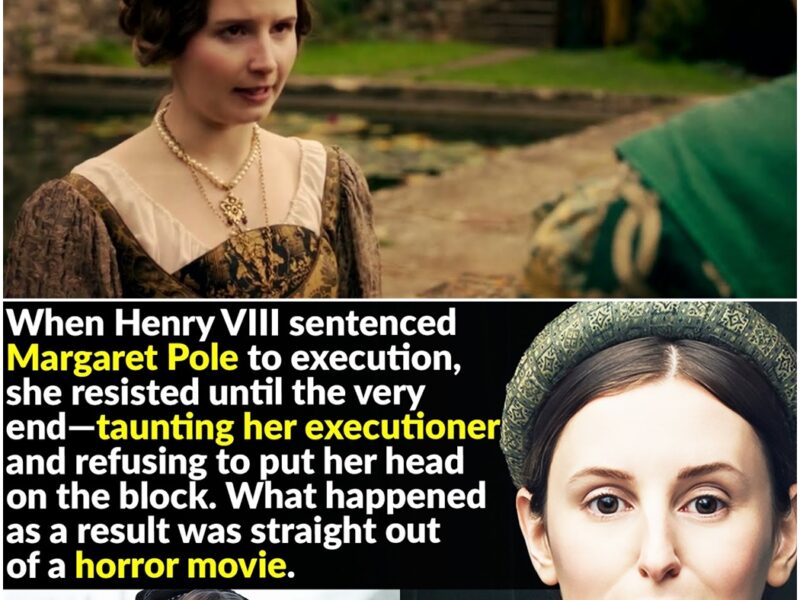
When Henry VIII sentenced Margaret Pole to execution, she resisted until the very end, taunting her executioner and refusing to put her head on the block. What happened as a result was straight out of a horror movie. Margaret Paul was born on August 14th, 1473 to the Duke of Clarence, George Planter Janette, and Isabelle Neville.
The setting of her birth was the lovely Farley Castle in Somerset, England. So, why did Margaret get to live in a castle? Well, it’s probably because her family was swimming in royal blood. On her father’s side, Paul had a duke for a grandfather and two very important uncles. Her uncle Edward IVth was the king of England when Margaret was born and her other uncle Richard III was the one that would eventually replace him.
Back then being so close to royalty could actually end in disaster. In 1475, Paul’s mother gave birth to a boy. This was Edward. The next year, mom was pregnant again and gave birth to another son, Richard. Each son honoring a powerful uncle. Sons were what royalty usually wanted. So, this family was rounding out nicely.
But sadly, there was nothing but heartbreak ahead. Just 2 and 1/2 months after Paul’s mother gave birth to her second son, Richard, tragedy struck. She died at the age of 25. This happened quite suddenly and it made Paul’s father suspicious. Paul’s father, George, suspected that Isabelle’s lady in waiting, Anchoret Twinyho, had poisoned his wife with a drink.
George soon brought Twinho to trial, and considering his connections to the royal court, there was no chance she would get a fair one. Her execution took place in April of 1477. If you believe in karma, Margaret and her family were about to get theirs. Margaret Paul had lost her mother. And then another disaster struck. Her youngest brother, Richard, passed on when he was just two months old.
It was now just her, her brother, Edward, and her father, George. And now, dad was acting strange. With such a series of serious losses, George’s reaction was twisted. First, there was his vendetta against his wife’s lady in waiting. Next, he went after his brother, the king.
George came up with various ways to plot against King Edward IVth. When Edward got wind of it, Pole’s father was in big trouble. When you plot against a king, you risk everything. And that’s exactly what happened. King Edward IV had his own brother executed for treason. Over the course of a year and a half, Margaret Pole had lost her mother, brother, and father.
Now she and her brother Edward were very much alone and her situation was about to get even worse. When Margaret turned 10, the king of England, her uncle Edward, passed and his brother Richard III replaced him. Having another uncle on the throne should have meant security and comfort for the surviving Planttoettes, but then he betrayed them.
One of Richard III’s first move as king was to remove Margaret and her brother from the royal line. They went into the care of one of their aunts. It seemed like they would go on to live quiet lives. But then something dramatic happened. In 1485, the battle of Bosworth took place here. Henry Tuda defeated the king and took both his life and the crown.
With Henry Tuda, now Henry VIIIth as head honcho, Margaret and her brother had very little connection to anyone royal. Now they were really in trouble. Luckily, the new king married Paul’s first cousin, Elizabeth of York, which brought Margaret and her brother closer to royalty. Margaret and her brother lived with the mother of the king as wards of the crown.
Sounds like a sort of posh orphanage. But trouble was not far behind. Henry VIIIth had not forgotten that Margaret’s father had plotted against a king. He also knew that Margaret and her brother had a more direct connection to the throne than he did. For this reason, King Henry VIIth did not trust Margaret and her brother, and he was going to deal with them harshly.
As it turned out, the king was more worried about Margaret’s brother than about her. and the consequences of his paranoia were brutal. To keep an eye on Edward, who was still just 10 years old, they moved him to the Tower of London. This was a place where many saw a violent end. While Edward suffered in prison, Margaret Paul had her own cross to bear.
As she became a teenager, people started talking about who she would marry. Of course, this wasn’t about love. This was about politics. And the king had a selfish idea of who Margaret’s husband should be. The match that the king had in mind for Margaret was perfect for him, but not so much for Margaret.
The king chose his cousin, Richard Paul, who was one of his most loyal servants. Margaret went off with her husband to his manor and got ready to live happily ever after. Unfortunately, married life wasn’t quite all that it was chocked up to be. Margaret’s husband Richard did well while the tutors were in power and Margaret did her duty as well.
Her first two children were boys. Henry in 1942 and Arthur just 2 years later. As she was tending to her babies, she got horrible news. As Margaret’s family grew, her younger brother was still locked up in the Tower of London. By then, he was a young adult and he somehow became mixed up in an escape attempt.
Well, the prison break was a failure, and Edward would receive a severe punishment. Now, he and his fellow escapees were standing before the Earl of Oxford, awaiting their punishment, and the Earl didn’t hold back. They beheaded Edward on Tower Hill. Margaret was now the only surviving member of her family.
Margaret Paul barely had time to mourn her brother. After all, she still had to make babies. She added three more to her initial two, a girl and two more boys. It was a full house, and the kids kept Margaret very busy. Well, she was about to get busier. Even though she had five kids on her hands, the king thought Margaret would have time for another job.
He appointed her to be a lady in waiting for Catherine of Aragon, who had just married the heir to the throne, Arthur, Prince of Wales. Margaret Paul may have been dreading serving as a lady in waiting, but she was in for a pleasant surprise. It turned out that Margaret and Catherine had loads in common, and they quickly became besties.
Margaret had finally found a stable life. Sadly, fate was not on her side. Margaret’s stable life with Catherine had a time limit, and it would only last as long as Catherine’s marriage to the Prince of Wales. Even though the prince was still a teenager, he had a weak constitution.
He passed just one year after marrying Catherine, and Margaret lost her cushy job. At least Margaret had her husband to fall back on. Well, that also had a time limit. In 1505, Margaret’s husband, Richard, passed due to an unnamed illness. She was now a widow with five children to feed, clothe, and care for.
Not only was she left to fend for herself and her kids, Margaret Pole also had to scrge up the money for her husband’s funeral, the king kindly gave her the sum she needed to bury her husband. But there was a catch. Shockingly, the king said it was a loan and she would have to pay it back. Margaret was now seriously broke.
Due to her financial strain, Margaret sent her two older sons to live in other houses of nobility. That left her with her daughter Ursula and her two younger sons, Reginald and Jeffrey. Sadly, she still didn’t have enough money. So for Reginald, she got creative. Instead of pawning off Reginald to other noble houses, Margaret turned to the church.
She handed Regginald over to the church and also handed over all financial responsibility. We’ll soon see that this decision would come back to haunt her. Margaret Pole figured she could survive taking care of her two remaining children. She found a place for them to live and prepared to live out her remaining days as a caring mother.
But then in 1509, something happened that changed everything. Margaret’s best friend, Catherine, was now once again in need of a lady in waiting. You see, after becoming a widow, she turned around and married her deceased husband’s brother. This was Henry VIII. And in 1509, he became king. Margaret must have been over the moon to be back with her bestie.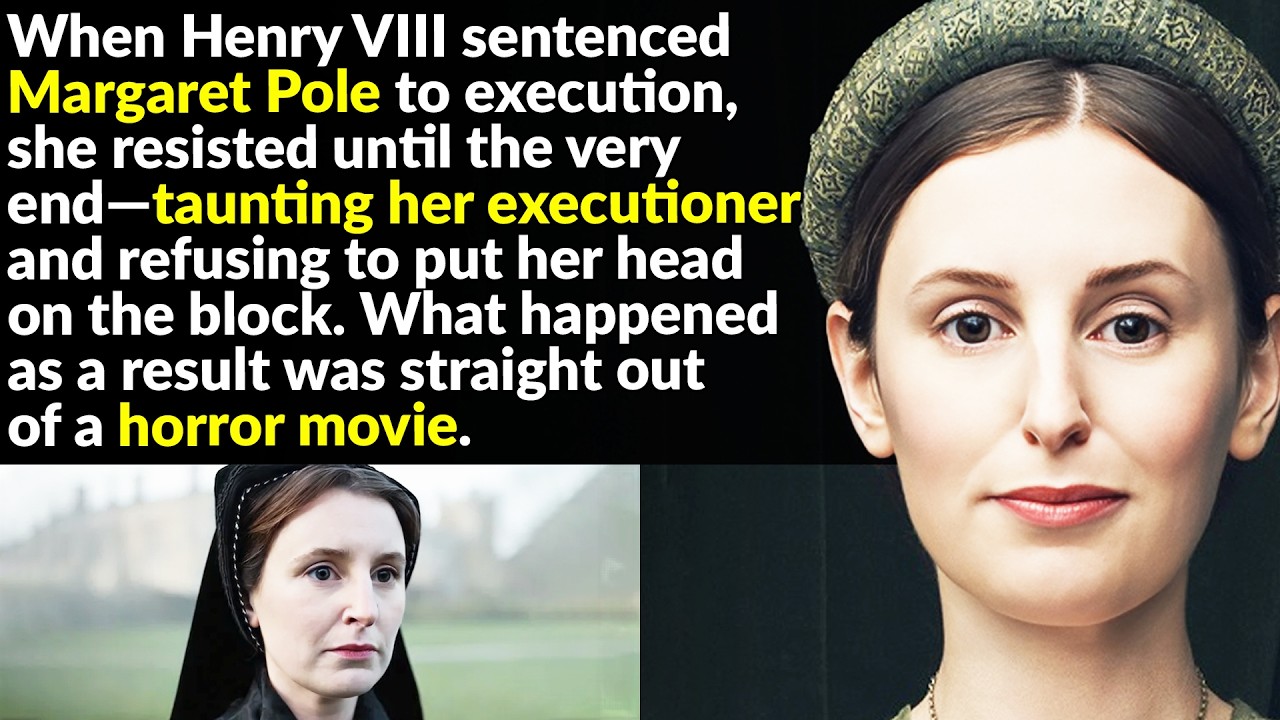
The king also gave Margaret a rather generous allowance, and there was more to come. Back when her brother went to the Tower of London, they took away all of his property. Since she was in with the new king, she boldly asked for that property back. While the king made her pay a small sum to get the land back, she did get it.
Margaret had big plans for her land. By 1517, Margaret was feeling financially comfortable and she thought it was time to build her own place. But she didn’t just want a house, she wanted a castle. She paid to have Wobbling Castle built in Hampshire. Being a land owner had some perks.
Now that she was the owner of her castle, she also got a new title. She was now the countess of Ssbury. In 1538, she was number five on the list of the wealthiest peers in England. Problems started when King Henry VIII became unhappy with his marriage. For one thing, Catherine had not had the bouncing baby boys that all kings want.
The other problem was that Henry had his eye on his sister’s lady in waiting, Anne Berlin. Margaret’s position as governness and lady in waiting was now in serious jeopardy. King Henry’s solution to his troubled marriage was to get it anulled. As this was something new, the Pope wouldn’t let Henry divorce Catherine.
So Henry took matters into his own hands. Instead of getting a new pope, he got a new religion. This was the beginning of the Church of England, and Henry was at the head of it. Margaret was once again out of a job. She spent months in bed, and when it was all over, she had changed her mind about King Henry.
Margaret Paul was now saying she supported the king’s analment, but her son wasn’t. Reginald stirred up some trouble by breaking with the king over his enulment. He then went even further by calling the king a few colorful names. Robber, murderer, and enemy to Christianity. Reginald was playing with fire.
Margaret had seen firsthand what happened to her family members when they went against the king. And now, because of her son’s behavior, the king wanted to talk to Margaret. In short, he wanted her to deal with her son. Margaret sent Reginald a letter asking him to stop and telling him that she couldn’t bear the king’s wrath.
There’s a good reason why her letter may have fallen on deaf ears. Remember, Margaret had given Reginald up to the church. Some believe that Reginald had not forgiven his mother for this, so he might not have cared if his mother was facing the wrath of the king. Lucky for Margaret, the king’s wrath was about to fall on someone else.
Remember, King Henry had enulled his marriage to Catherine to marry Anne Berlin. Well, after a few years, those tides turned and now he wanted to replace Berlin with Jane Seymour. Many watched in horror as the king had Berlin executed after just 3 years of marriage. But Berlin’s ousting was actually good news for Margaret.
They let her back into the court. Margaret Pole was only let back into the court to assist the king’s new wife, Jane Seymour. Her life at court seemed always to be on the brink of disaster, depending entirely on who was by the king’s side and what his mood was. And her misbehaving children made her life even more dangerous.
Margaret’s son, Reginald, was not a priest. But in 1537, the Pope made him a cardinal. However, there was a disturbing twist. Reginald had to help organize a revolt called the pilgrimage of grace. This revolt was directly against King Henry, and it could only mean trouble for Margaret. Things got even worse when her other son joined in.
Reginald had been writing letters to his brother, Jeffrey. Because these letters were about the revolt against the king, they took Jeffrey in for questioning. Jeffrey couldn’t bear the interrogation, so he implicated the man who was at the head of the King’s Church of England. This ended up being a huge mistake.
The man at the head of the Church of England was Henry Courtourtney, and he had been friends with the king since childhood. Jeffrey had thrown him under the bus by saying that he also disagreed with the king’s policies. The king was getting angry, and we all know where that leads. The king’s first act of anger was to behead his childhood friend, Courtourtney. But he didn’t stop there.
He then had Margaret’s oldest son, Henry, executed. For Margaret, the punishment was prison. They sent her to Cowre House. But she wasn’t simply going to serve her time. They had other plans for Margaret. Margaret’s prison was actually the home of William Fitz William.
The plan was to interrogate her over three days. Fitz William and Thomas Goodrich, the bishop of Elely, had the job of questioning Margaret. Apparently, two men were not enough for the job. After 3 days of interrogation, what Fitz William and Goodri found was surprising. They agreed on one thing. They called Margaret earnest, vehement, and precise.
They also noted that her inner strength was more like a man’s than a woman’s. As it turned out, Margaret also had a strange influence on the entire household. Remember Margaret’s prison was the house of William Fitz William? Well, Fitz William’s wife was so disturbed by Margaret that she had to leave the house.
Fitz William himself also wanted her out, saying that she troubles my mind. Somehow, Margaret’s son, Jeffrey, the one who started all of this, received a pardon. Margaret, on the other hand, once again lost all her land and her title. The king gave her estate to his personal secretary, Sir Thomas Reley. Margaret was back to square one.
But what proof did they have that Margaret was guilty? Thomas Cromwell, the king’s notorious right-hand man, had evidence that Margaret was not in support of the Church of England. He said that they had found a tunic that had embroidered on it the five wounds of Christ.
Certainly, this proved that she was still supporting the Catholic Church, but there may have been a totally different story behind it all. Thomas Cromwell was not always one to do everything by the book, and he may have betrayed Margaret in the worst way. It was quite likely that he hadn’t found the tunic in Margaret’s things.
It could be that he had planted it there simply to incriminate her. Either way, things did not look good for Margaret. Margaret Paul had been in and out of trouble with the king for many years now, and now it seemed like he’d had it. He doled out the worst punishment he could think of, execution.
It looked like the end of Margaret’s life, and yet it wasn’t. To wait for her execution, Margaret went to the Tower of London. Waiting for execution is no one’s idea of a good time, but there were some perks for Margaret. She met up there with her grandson Henry. Also, there is evidence that life in the tower was not all bad.
Maybe King Henry felt bad for sending Margaret to the tower because he paid a handsome price to keep her comfortable. In addition to servants and money, he also sent her warm gowns and shoes. She even got a chance for some sweet revenge. The man who was most responsible for sending Margaret to the tower, Thomas Cromwell, also fell out of favor with the king.
While Margaret was enjoying her warm gowns and shoes in the tower, Cromwell met his sad end. The king had him executed in 1540. But sadly, Margaret was next. 2 and 1/2 years after entering the Tower of London, Margaret, now 67 years old, got a message. This was on May 27th, 1541. The message simply said that she had less than an hour to live.
This was it, the end of her life. The tower had a chief executioner who had the heartless job of removing people’s heads for a living. At this time, he was busy dealing with the rebels in the north. to take his place. There was a young man who didn’t have the experience necessary for the job. Margaret’s fate was in his unsteady hands.
Margaret Paul was not about to take her punishment lying down, so she refused to put her head on the provided block. She said that only traders put their heads in there and she was not a traitor. She even taunted the executioner, saying that he would have to try to get her head any way he could. At this point, all hopes for Margaret getting a quick and relatively painless end to her life were over.
The combination of Margaret’s taunts and the inexperience of the executioner meant that the first swing of the axe got her in the shoulder instead of the neck. What happened next was right out of a horror movie. Because this young executioner lacked the necessary skills to do the job quickly, Margaret suffered horribly.
In the end, it took 11 swings of the axe to get Margaret’s head separated from her body. Margaret Paul had given her life fighting for the Catholic Church, and her family had also suffered. The Catholic Church eventually recognized how much suffering Margaret experienced just for standing up against King Henry and his church of England.
In 1886, Pope Leo I 13th made her blessed Margaret Paul a martyr for the church. Thanks for watching History Expose. If you love uncovering the best stories in history, hit like and subscribe to keep exploring with us. Don’t forget to visit our main page, Factnonate, for more incredible facts about