How the SAS Mastered Jungle Warfare in Malaya – The Untold Story D
Ruthless communist terrorists are targeting innocent civilians. Murder and mayhem sweep the nation. An insane rebel leader known for slaughtering babies in the womb kills and plunders before disappearing into jungle swamps. This is a job for Britain’s SAS. But they will need to train hard, develop new tactics and techniques, and penetrate deep into the most inhospitable terrain on Earth, the Malayan jungle.
Using all their training and superhuman feats of endurance, can they corner and capture their prey? Malaya, the heart of Southeast Asia, and for centuries the wealthiest colony in the British Empire. Stretching from Thailand down to Singapore, Malaya is the world’s largest
producer of tin and rubber. Malaya is the jewel of the British colonial crown. It’s a cash cow. It it it it’s not something that that that London was keen to lose. But after years of colonial rule, the people of Malaya want independence. Through the spring of 1948, you got a bunch of terrorist attacks on uh rubber plantations.
The British authorities eventually twigged that they were facing a a potentially potent threat from the Malayan Communist Party. They killed five people in one day, including three European uh plantation managers. And this caused the British to declare a state of emergency. The person leading this rebellious uprising is Chin Peng, a charismatic young idealist trained by the British in the art of jungle warfare.
Fighting for an independent communist state, he is backed by China and enjoys widespread support from the Malayan people. Chin Peng was a formidable opponent. Uh let’s not forget that he had the best training from some of the best people in Southeast Asia, he and his men. He knew his people. They had a high level of jungle skills.
Chin Peng’s army of CTs, or communist terrorists, hit the British where it hurts, in their pockets, targeting rubber plantations and tin mines. They were targeting the planters, lit- literally just a murder campaign, assassination campaign, to get rid of them. Most of the people with what becomes called the Malayan National Liberation Army believe they’re fighting for independence or to accelerate independence.
In autumn, the British hit crisis point. Sir Henry Gurney, a distinguished diplomat and now British High Commissioner for Malaya, is traveling to a meeting outside the capital, Kuala Lumpur. But the terrorists are waiting. Britain’s most senior official in the colony has been murdered.
When Gurney is assassinated, that redoubles the determination in London to get something done. But what can the British do? The communist terrorists have a huge ally, the immense Malayan jungle. Once these insurgents had retreated to the jungle, pushed out of the settlements, you’ve got a big problem because you have an ocean of trees and jungle.
And locating those people, those fish as it were in that in that ocean, is extremely difficult. Running all the way down the peninsula from the border with Thailand to Singapore, it includes the oldest rain forest on Earth and is hot, humid, and virtually impenetrable. It’s such a formidable site, you can’t see anything. It’s wet, it’s dank, it’s full of nasties, insects, snakes, uh trees which have big thorns on them which we sort of nicknamed bastard trees.
Uh yeah, it’s just formidable place to operate in. This is the perfect terrain for Chin Peng’s rebels. What the British were facing then was terrorism, guerrilla warfare, and large unit operations across the country. You’re facing the prospect of very difficult terrain over thousands of square miles, and you’ve got a very limited manpower.
Many of the communists had fought the Japanese during the Second World War. Experts in jungle warfare, they know the terrain inside out, and are well prepared with extensive food and ammunition dumps. They are also aided and abetted by villagers and tribesmen. They aren’t communists, but they support Chin Peng as a means of gaining independence.
Initially, the insurgents are very closely linked with the villagers on the forest frontier. This is very close symbiotic relationship, and a lot of genuine support. These people are wartime heroes to many people. From their remote jungle bases, Peng’s men launch a series of lightning attacks before melting away without a trace.
They started to stress slightly smaller scale actions, not more than ever a hundred men, often just 10-15. Attacking a plantation to try and burn it. To create economic sabotage. Ambushing convoys or police stations to get weapons. In the face of growing public support, the colonial government need a plan to fight this insurgency.
They come up with a two-pronged attack. First, they need to separate the terrorists from their supporters. They force whole communities to move across the country and away from areas of communist influence. Half a million Chinese are resettled into villages to about 10% of the population of Malaya within 18 months.
Second, they need a fighting force capable of taking the fight to the enemy deep in the Malayan jungle. Britain looks to one of her most experienced jungle fighters for answers. Lieutenant Colonel Mad Mike Calvert. Calvert made his name in the legendary Chindits. A specialist force that pioneered long-range jungle penetration during World War II.
Calvert was highly regarded even in the war office amongst the traditionalists. The Chindits were the first force to take to the Japanese and win. He had written a pamphlet on behind the lines operations then, which was widely circulated amongst the army. He was jungle fighter extraordinaire, if a little unorthodox.
He ended the war as a commander in special forces. As Britain’s number one jungle expert, Calvert gets the call to come out to Malaya and find a solution. He had a an analytical mind. So, there was nobody better qualified to understand special forces operations and to actually get to grip with the jungle environment.
His first task is to recruit men. Operating outside the official channels, he an unruly mob of colonial misfits. He then bonds them together using highly unorthodox methods. He decided that the best way to make them gel, develop camaraderie, was to have a few beers. Um and not only do that on a regular basis, but to excess.
Bizarrely, Calvert sees this as part of the selection process. If they can handle the booze, they can handle anything. He figured that in the jungle environment, you’re bound to be susceptible to all sorts of diseases, malaria, um venomous insects. So, if you can operate completely hammered, um then he figured that whatever’s inflicted on you in the jungle, then you’ll be able to cope with that.
Calvert would often turn up himself drunk on parade, testing his men by punching them in the stomach. If any fell over, they would instantly be kicked out. For those that made it past these basic selection tests, he created his own unique style of training. First up, mastering those cornerstones of jungle warfare, concealment and stealth.
They would have people going around with pairs of goggles and air pistols. And as concealment exercises, they would be shooting each other. Yeah, keep kicking. The aim is to hide and then stealthily creep up and shoot your opponent. You idiots. Yeah, you soon going to learn if you’re getting shot with pellets in the face that how to conceal yourself a little better.
And if pellets weren’t painful enough, the message was driven home with live grenades. One of Calvert’s biggest challenges is to get the military to think differently about jungle warfare. Conventional thinking in the 1950s is that you can only last a few days. The medical consensus was at the time that you couldn’t extend the operations of the soldiers on the ground in the jungle because of the environment beyond 10 days.
Because of this, the conventional military approach to jungle fighting is to use large units sweeping through the jungle for short periods. But this process is noisy and ineffective because it tips the enemy off. Calvert now draws on his own experience in the Chindits. His approach is the exact opposite, to use small patrols for long periods.
Calvert’s premise for having very small units of two to three men was that in particularly dense jungle, where there aren’t wide open trails, if you’re actually going to move through the jungle, you need to make as little noise as possible. You need to be well concealed. So, if you’ve got a minimal number of people but with a maximum amount of firepower, then you’re going to be effective.
But how do you maximize a patrol’s time in the jungle when it can take weeks just to march to an objective? Calvert pioneers a radical but dangerous solution. Parachuting into the jungle. Normally what happened was that the parachute canopy would get caught in the tree canopy. This could leave soldiers dangling helplessly hundreds of feet from the ground.
Once they were dangling from the the forest canopy, they could detach themselves from the parachute harness and use ropes to shimmy down to the jungle floor. So, they actually developed tree jumping as a special technique, which was a total innovation, of course. These airborne drops, known as tree jumping, often lead to horrific injuries.
Tree jumping. Parachutist nightmare. It’s inherently dangerous. The whole The whole thing’s ludicrous. Nightmare. Madness, even. Some of you going to land in in 100-ft canopy. Some may be lucky and get snagged up at 50 ft. You You could be very unlucky and get snagged up with a broken neck or or leg.
Those that didn’t break their limbs need to learn how to survive. Calvert’s approach was to establish bases in the heart of the jungle which can be resupplied by air enabling the men to spend months on the ground. There will be parachute drops um and later um at the end of 1951, Calvert again adopted the Chindit experience of using helicopters which was very much experimental.
Using these camps as bases, small units can dominate large areas of jungle by repeatedly patrolling them so preventing the terrorists from establishing bases. But getting into the jungle is the easy bit. The men now need to learn how to survive and operate in this environment. It is the most hostile environment on earth to fight a campaign of war in.
Um that’s why the SAS train there. It’s dark and there are creepy crawlies and there are animals that maybe you can’t see. It enhances all your skills, your soldiering skills, your your smell, sight, your taste. There are snakes, uh there are things that can sting you and of course there were giant leeches uh particularly in the swamps which could suck a pint of blood at a time, you know.
All these things are a major factor when you’re when you’re a combat troop on the ground. A further complication in the hunt for communist terrorists is that there are no proper maps. What they have are often crude aerial photos. In some cases, white patches labeled clouds blank out miles of terrain.
Navigation was very difficult in the jungle. You couldn’t move in straight lines. You had to develop intuition. You know, it was something, you know, you couldn’t just learn from a compass and a map. Knowing that the terrorists only survive deep in the jungle by depending on local tribes, Calvert’s next innovation is to encourage his men to befriend the tribes people and learn from them.
Local knowledge is extremely important. It’s how the SAS made their name, basically. Hearts and minds. If you can win them over to your side, then you have the advantage of eyes and ears, as it were, and also the resources they can supply you, um, in terms of things like food, if needs be. The tactic of winning hearts and minds has been widely adopted by special forces ever since and is now recognized as a vital element when planning an operation.
Operating in small numbers, Calvert’s troops learned to move quickly and quietly through the jungle. They started to understand that you move through the jungle silently. You took your time. You know, you didn’t rush it. They also become highly skilled trackers. Anyone who moves and lives in the jungle leaves some kind of sign, as they called it.
And some of them became real experts. Some legendary, even when I was in the regiment. Learning their way around the jungle, they are now as good as their communist enemy, developing skills and instincts that come from living close to nature. They started to develop you a feeling for the jungle that it wasn’t this alien hostile environment that they were separate from.
They started to feel they were actually part of it. Above all, it was here in the jungle that they would learn the most critical of skills that has now become a hallmark of the SAS. They developed this tremendous sense of patience, you know, because they felt at ease now in the jungle. They could wait for 60 days, you know, and lay that ambush for 60 days waiting for the enemy to come along.
And that was quite remarkable, really. By 1952, Calvert’s Scouts are in good shape. All his training is starting to work. They started developing this esprit de corps. They started feeling proud of being in this elite unit. They had started to get battle discipline. It is now that the Malayan Scouts are allowed to adopt the name of the most famous regiment of them all, the Special Air Service, or SAS.
Malaya was the most successful, and it was the original and the most successful counterinsurgency campaign that Britain was ever involved in. The SAS enjoys increasing success in deep strike, search and destroy jungle missions. The SAS made 108 kills, but those kills were high quality.
You know, they were CT leaders. They actually disrupted the CT’s campaign by A, attacking their lines of communication, and B, making sure that the jungle was no longer the safe refuge it had been to start off with. [laughter] By 1954 across Malaya, the twofold plan of population resettlement and deep penetration jungle ops is paying off.
As early as 1955, the insurgents realize there’s no obvious way of them increasing the insurgency again. They appear to be declining year on year. They’re in trouble. And that’s the year they come out and try and negotiate a peace. But it comes too late. Britain pulls the rug from under the terrorists by giving the Malayan people what they want, independence.
But independence isn’t enough for Chin Peng. He now reveals himself for what he really is. Not a freedom fighter, but an extremist fighting for a Chinese-backed communist state. Chin Peng’s forces remained a thorn in the side of the government. They remained a threat. As long as they were existing in their in physical form, as human beings in the in in the in the jungle, they were a threat.
One such threat is Chin Peng’s henchman, Ah Hoy. We know he may have been an important leader in groups of up to 50 strong. And that he rose to being a member on the state committee, which means there was a $20,000 reward on his head. Ah Hoy, the communist Ah Hoy has a fearsome reputation. Nicknamed the Baby Killer, he once terrified villagers into supporting him by cutting the unborn fetus from the pregnant wife OF AN INFORMER.
[screaming] OPERATING FROM THE LARGE COASTAL swamps of Teluk Anson, just 50 miles north of Kuala Lumpur, his control over the rich rice-producing regions means he has ready access to food and can keep fighting. Maintaining the fiction that Malaya is still in British hands, he continues his hit-and-run campaign of terror against colonial rubber plantations.
He needs to be stopped. This is a job for the SAS. But with Mike Calvert posted back to British forces in Germany, the job of flushing Ah Hoy out of the swamps falls to SAS Major Harry Thompson. Major Harry Thompson was a Scotsman um and a very flamboyant character, known for his sort of, you know, showman-like approach.
The mission is code-named Operation Sweep. Its task, take out Ah Hoy and any other CTs operating in that area. British policy is to target the committee members of the Communist Party who are the brains, the operating part of the mechanism. Their idea is it’s no good just killing more and more men as part of a policy of attrition.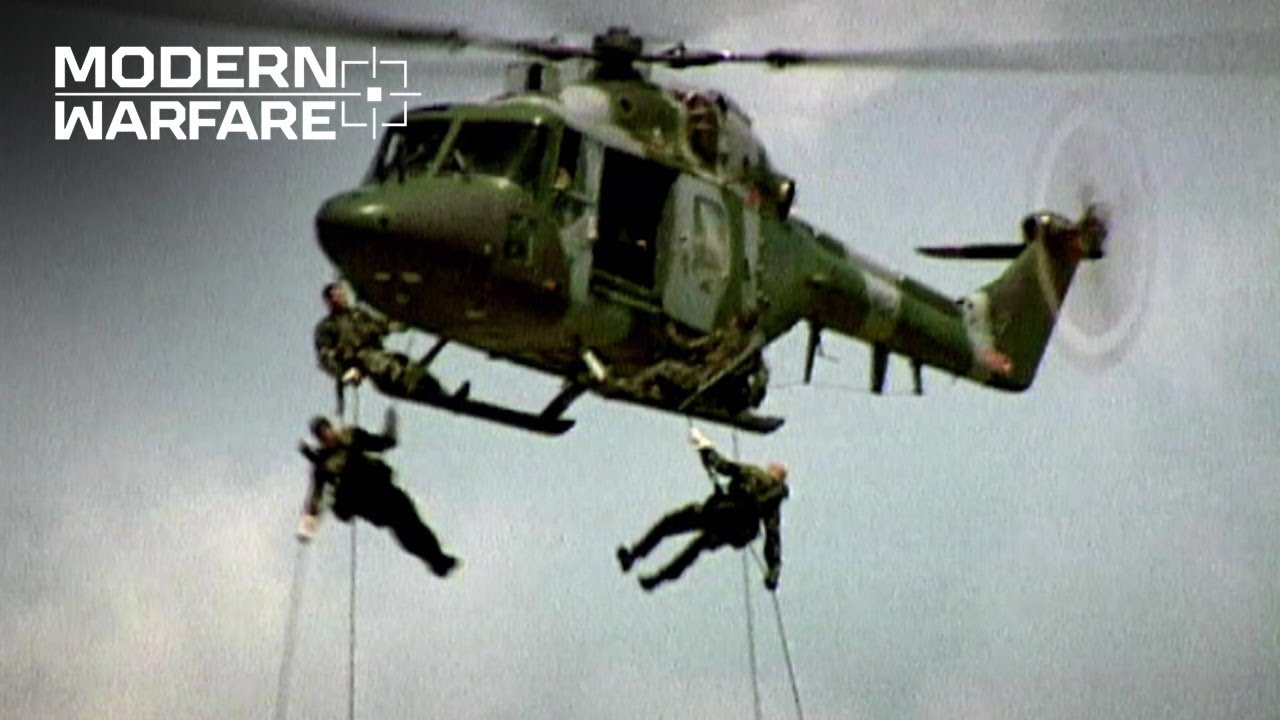
You have to remove the leaders. Planning the op is a formidable task. Thompson’s first problem is finding Ah Hoy. Intelligence reveals his gang are well protected, entrenched deep within a formidable swamp that backs onto dense jungle. This presents Thompson with a complex challenge. Anybody who’s done any military training, or any activity in the jungle, knows that your horizon can be measured in terms less of of meters than centimeters.
It’s extremely difficult to work in that environment, and that’s at the best of times. It is estimated that it takes over 6,500 hours of patrolling to even spot an insurgent, let alone kill one. Thompson believes the best way to corner Ah Hoy is the SAS way, using small units, stealth, and surprise.
The key is to get close to him before he realizes they’re even there. Critically, only the SAS have the experience and expertise in a specialist method of insertion, tree jumping. The advantage of parachuting, of course, was that you could get there very quickly, and you could drop very quickly into the forest.
Uh the drop zone is only 40 45 seconds, so you’re not in the air for very long. So, it’s unlikely people will will see you. Another advantage of tree jumping is that it will also enable the SAS to catch Ah Hoy by surprise. By approaching from his blind side, the jungle. They’re also cutting off his escape route.
The guerrillas would have expected them to come from the coast. Instead, they came from inland, from the headwaters of the river. They’re moving downstream. This will force the terrorists to move towards the coast, where there will be nowhere to hide. This was all about being unconventional and, you know, approaching the enemy in a way that was completely unexpected.
Thompson has a trick up his sleeve. Access to a new piece of technology that he believes will make parachute insertions more successful. The Blackburn Beverly. Introduced in 1955 and by chance in Malaya on a promotional tour. The Blackburn Beverly is a cargo plane and has never been used for parachuting.
Until now, jumps were done through the side door, one at a time. As a result, the troop could be strung out in a chain, often overshooting the drop by miles. The uh Blackburn had a ramp. So, the ideal thing about that was you could dispatch two sticks off the back of the ramp uh in half-second intervals.
So, you could get more men in the air at half the half the time. Yeah, it was excellent excellent piece of kit to use. On a winter’s morning, 70 men of B Squadron SAS prepare to board two planes. Commanding one troop is a young 24-year-old, Peter de la Billière. DLB, as he became known, goes on to become one of Britain’s 20th century military greats.
Peter de la Billière was um a captain at that time. He was a troop commander in in D Squadron. Leading one of the other troops is Harry “the Bosun” Sandilands. Bosun Sandilands, he was a sergeant, of course, not an officer, and he’d had a lot of experience in Malaya. He was an expert tracker. Uh he was a man who was, you know, fitted very well in the jungle environment.
It is a short half-hour flight to the drop zone. Thompson hits on an idea to maintain the element of surprise. The airplanes could be heard from a long way off. So, what they did was, as soon as they took off from base, they went straight into their parachute dropping speed. By slowing to dropping speed, the sound of the engine will remain constant.
This is designed to fool any listening terrorists. They wouldn’t have to change gear, as it were, they came into the drop zone. So, anybody listening or watching would think they were just on a regular flight. Hoping this tactic will pay off, the SAS approach the drop zone. With about 5 minutes approaching the DZ, you get told to stand up.
You check, check, and double-check. Then the red light goes on. And when the red light goes on, that tells you normally about 30 seconds or a minute to to the drop zone. After just 30 minutes in the air, it is time to deploy. When the green light comes on, you know you’re off and then some of you get dispatched.
But, jumping into trees is always risky. Straight away, their problems begin. There was one serious casualty, Trooper Mulcahy. He unfortunately fell on a uh a mangrove root. His back was just snapped like a twig. And he also had broken ribs. And of course, this was a casualty that couldn’t be fixed in situ.
Mulcahy needs immediate medical attention. But to get him to a hospital from this remote location requires a casualty evacuation by helicopter. Now of course, there was no landing zone for the helicopter. So that meant that they had to chop a landing zone out of the jungle, which would take time.
It was very hard work. And of course, it would attract the attention of any guerrillas who happened to be in the area. In his command post, Major Thompson and his officers are tuned into the patrol’s frequency awaiting news. When a request for an evacuation comes in, they know that the whole mission may be compromised.
But they have no choice. They’ll have to send in a helicopter. They must have felt that the operation had been blown at that stage. And yet, you know, being the SAS, they decided to continue. With Trooper Mulcahy on board, the helicopter departs. Although fearing the mission is blown, de la Billière and Sunderland gather their men, check their weapons, and head off into the unknown.
Once again, the SAS find themselves up against a fearsome enemy, the jungle. It’s nothing like the jungles you see in the movies. It’s nothing like sort of the Daktari type movies or I’m a celebrity get me out of here type thing. It’s It’s impenetrable. It’s thick. Everything you touch is wet. The conditions are atrocious.
They slosh through leech-infested water, at times up to their necks. The rain pelts down incessantly, dripping from tall trees, and mosquitoes attack continuously. It is exhausting for soldiers. They develop the sense of patience in which, you know, they just slowed themselves down to the rhythm of nature, which is what you need to do if you’re going to adapt to that environment.
Well, in the jungle you’ve got to move very slowly. I remember walking 100 m in 8 hours once. That shows you how grueling it can be. And that is tactical formation, weapons at hand, point man safety catch off. In such dense jungle, the role of the point man is crucial. It takes time to raise and aim the powerful but cumbersome automatic rifles.
So, the man leading the patrol carries a lighter weapon. The other innovation was that they carried shotguns. Um pump action shotguns with nine ball ammunition. Which actually spread out, you know, when they fired it. You’d see the enemy maybe just a flash of khaki in the in the bushes and boom, you know, and you would be almost certain to get him.
The nine ball ammunition was absolutely devastating. We’d cut the flesh off people’s bones. To maximize their chances of finding Ah Hoy, the force splits up. Two troops, one led by Dela Billière and the other by Sanderlands, head off separately into the jungle and begin their hunt for the enemy.
Day after day, both patrols press on, feeling their way through the jungle. When you’re patrolling in the jungle, you keep off tracks. I would say man-made or animal-made. You keep off tracks. Any known features, you keep off ridge lines. Uh you keep away from river river streams, river beds.
Um so, you have to uh zigzag across the country and you have to cover your tracks as you go. Captain Peter Dela Billière’s troop wade through the swamp water for 3 days. Your equipment starts to disintegrate, starts to go moldy. I mean, it actually develops mold. And, you know, your your clothing starts to fall to pieces.
Your boots start to fall to pieces. No socks. No point in wearing socks in the jungle. One would have thought without socks your feet would have been rubbed raw, but they do get rubbed raw a bit, but then the body develops the scabs and [laughter] and then you get the rough skin. So, so so the tops of your feet are actually the same as the soles, you know, by the time you come out of the jungle.
Even for the SAS, these conditions proved too difficult. They realized no one, not even the guerrillas, could endure these conditions. And so move on to drier ground along the river bank. All the time concentrating on their tracking skills. It was in Malaya that the SAS first developed this very methodical approach to patrolling.
That, you know, you take your time, you do everything carefully, nothing is rushed, everything is important, nothing is missed. You might follow the enemy, follow their sign for day after day after day, you know, for mile after mile after mile with absolute patience until you, you know, make contact with them. During the second week of the mission, their patience and training pays off.
They come across remains of a recently abandoned camp marked by piles of shells from turtles someone had cooked and eaten. This could be the first sign that they’re closing in on Ahoy and his murderous gang. News of the abandoned camp is relayed to Thompson. Thompson’s convinced the terrorists left after hearing the helicopter evacuation.
He believes they’re making a run for it. He decides to try and cut them off 10 mi further downstream. In this environment, regular radio contact is vital. It’s really only in the Malaya campaign that, you know, communications, or signals as it’s called in the army, uh comes into its its own.
And they came to realize it was of crucial importance in the jungle, especially because you’ve got this huge area where nobody can see each other, nobody really knows what’s going on. Without radio communications, it would be impossible for Thompson to coordinate an orderly plan of attack. He radios Sunderland’s, giving him map preferences and a position to head to to cut off Ah Hoy.
You go what they call hard routine. You always got your weapon with you, and it’s always loaded, there’s always one up the spout, you know exactly where your ammunition is, you know where you’re going, everyone knows in the patrol where they are at any one particular time. Believing they have the terrorists on the run, the SAS think it’s just a matter of finding them.
Whenever a man moves through the jungle, he always leaves sign. There’s always something. You know, it might be a disturbed bush, uh a bush which has been cut, it might be insects which have been disturbed, you know, something really tiny that you’d really have to look out for. Sunderland’s patrol cautiously advances on the grid reference given to him by Thompson.
You’re like a machine slowly going through the jungle. I mean, you can’t have a laugh and a joke. You There’s no talking. You whisper in the jungle. You do hand signals. And all your hand signals are very slow and precise. Because sign, noise um gives you away. Gives your position away.
Then a piece of luck. They come across a local tribesman. And thanks to their hearts and minds training, he gives them some vital intelligence. He has seen a couple of Ahoi’s men a few miles downstream. They can now be certain that they’re closing in on the enemy. They start to employ those critical SAS skills.
Stealth and silence. When you’re going into battle, basically going into the jungle going to do a CTR close target rekey on the enemy camp or where they’re going to close with the enemy, that is where it becomes very, very difficult. Uh special skills then come out of men. I mean, that is why the SAS are probably one of the best jungle fighters in the world.
Creeping up to the location they spot the terrorists on the other side of a stream. They got within about 50 yd of the communists and they opened fire. One of Ah Hoy’s gang flees into the jungle, leaving the other dead. Sunderland sets off in pursuit. They actually managed to follow the tracks of the one who’d run off for about 5 miles until they found his camp.
But when Sunderland gets there, the camp is abandoned. But it does give up valuable intelligence. They did establish uh definitely that there were CTs still in that area. And that gave a great probability that Ah Hoy was in the area. Convince he can corner Ah Hoy, Thompson calls in reinforcements.
The regular army and police throw a tight cordon around this swamp area. The net is closing in. 3 days later, there is a break through. Hands up. Keep coming forward. Keep coming forward. A known associate of Ah Hoy approaches a patrol saying her unit is almost out of food. Though exhausted and starving, she refuses to give away Ah Hoy’s position.
Sunderland radios the situation to Thompson. Sir, sir. Thompson has a problem. He knows Ah Hoy must be nearby, but he doesn’t know where. In this swamp, it could still take weeks to flush him out. He decides to bluff. “Unless they surrender now,” he tells the woman, “he’ll bomb the camp within 48 hours.
Even though he doesn’t know where it is. The bluff works. She heads back into the jungle to persuade Ah Hoy to surrender. I think that the CTs by that time had more or less had it. And when they realized A that they were surrounded, they couldn’t get out. B the British were threatening to bomb them.
Um I think that was really the end game for them. The campaign was over. And you know, the British had won basically. PUT YOUR HANDS UP. HANDS UP NOW. THE following day the SAS take the surrender of a group of five including notorious CT leader Ah Hoy. He had disguised himself in a woman’s silk jacket and straw hat.
For Thompson, this is a great result. Operation Sweet was the culmination of everything that the SAS had learned in Malaya. It was particularly hard uh terrain. It was mostly operating in swamps which were the most difficult areas to operate in. And it employed parachuting in which was an SAS thing.
Uh it employed all the techniques of patrolling, tracking, and so on. You know, silent movement. All those things that they’d learned in the years uh of the emergency. Over the next couple of years, the remaining terrorists are defeated. Either surrendering, being starved into submission, or fleeing to Thailand.
The 12-year long undeclared war was over. This marked the beginnings of the glory days for the SAS. From the shaky start that was the Malayan Scouts, these men went on to overcome countless challenges and in the process became the elite force we recognize today. They were the inception of what’s now 22 SAS.
Four-man patrols. Uh importance of local knowledge. All this stuff now that we consider to be absolutely essential. The necessity to live off the land, to be familiar with the people amongst whom you operate. Uh this is when these ideas came about. For those involved in Operation Sweep, there would be varying consequences.
Ah Hoy and Chin Peng were both deported to Thailand. Chin Peng, the mastermind behind the crisis in Malaya, died in Bangkok on the 16th of September, 2013. For his role in capturing Ah Hoy, Bosun Sunderland was awarded the Military Medal. Peter de la Billière would go on to a glittering military career, including becoming Director of Special Forces and the Commander-in-Chief of the British Army during the 1990 Gulf War.
As for the SAS, with a reputation second to none, they are experts in counterterrorism and special operations, ready to serve at a moment’s notice anywhere in the world where there is trouble. Mhm.