Mary, Princess Royal: The Crown’s Last Decent Royal D
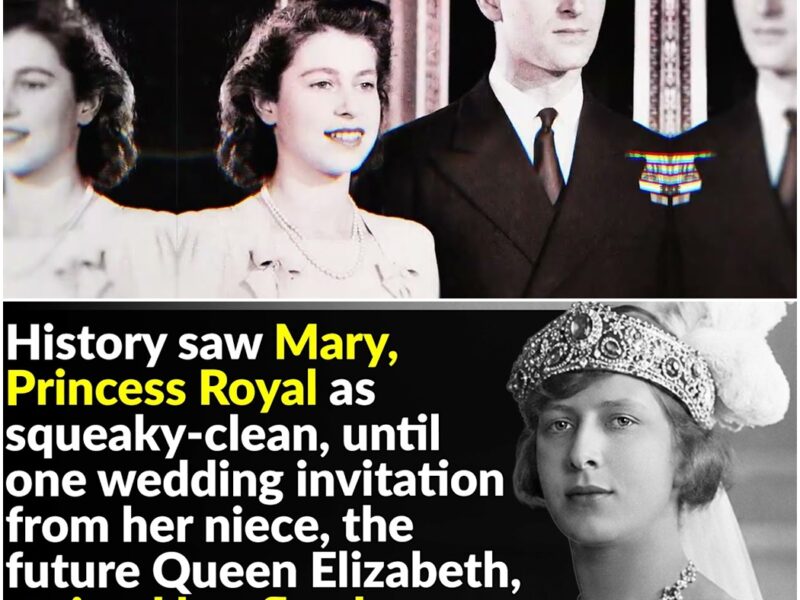
History paints Mary, Princess Royal, as squeaky clean, but one wedding invitation from her niece, the future Queen Elizabeth, triggered a response that stained her flawless record forever. Mary, Princess Royal, was born on April 25th, 1897, in the waning years of the reign of her great-grandmother, Queen Victoria.
A direct descendant of the monarch in power, it set Mary for life from the moment she entered the world. Mary, Princess Royal, was the third child of the Duke and Duchess of York, and would end up being the only daughter they had. With five brothers, the deck was already stacked against her in terms of power.
As was common among royal children at the time, the young Mary received her education at home from various governesses, and while there was traditionally a gender divide in royal education, Mary, as the only girl, ended up sharing a few lessons with her brothers for practical purposes, and lucky for her, she proved to be a gifted student.
Mary, Princess Royal, received tutoring in a variety of languages, and at an impressively young age, she became fluent in German and French. A diligent student who always worked hard, the young princess did not lack for leisure time, either. As a young girl, Mary took up a hobby that remained her passion for the rest of her days.
She took a keen interest in horses and developed great enthusiasm for horse racing. In time, the princess proved a charming young girl who would capture the nation’s attention. Mary’s first state appearance took place on June 22nd, 1911, where the young princess joined the lavish ceremony celebrating the coronation of her parents, King George V and Queen Mary.
The younger Mary made an impression on the British public at the lavish ceremony at Westminster Abbey, and her popularity would only increase with the beginning of shockingly tragic world events. With the outbreak of World War I, Mary, Princess Royal, found her calling. She became widely loved throughout Britain for her charity work in support of servicemen as well as their families.
Her philanthropic work would largely define the remainder of her life, but she started young. Mary was just 17 years old at the outbreak of the conflict, and initially accompanied by her mother, the two would visit hospitals and welfare organizations, contributing to projects that would assist British servicemen and comfort their families.
One project in particular was surprising for a girl her age. One of Mary’s own charitable ideas was to send a Christmas gift to every member of the armed forces. Known as Princess Mary’s Christmas Gift Fund, she launched an appeal that raised over 162,000 pounds, 15 million pounds today, to send brass tins containing various items, tobacco and chocolate, for example, to all servicemen.
The princess’s kindness was not forgotten. The gift boxes were a huge hit with the men of the armed forces. Many sent their tins home to their families to preserve as a keepsake. Decades later, Mary, Princess Royal, would tour Canada, part of the British Empire, and touchingly, Canadian veterans brought their precious tins to show the princess.
But, Mary did not limit her work to men. Mary was also an enthusiastic advocate for the future and independence of young British women. She became a passionate and active promoter of various women and girl-focused organizations, such as the Girl Guides, Land Girls, and the Voluntary Aid Detachment. And, as she came of age, she got her hands dirty with an unusual royal request.
Further displaying her compassionate heart, when Mary turned 21, she asked her father for a unique gift, especially for a royal. She requested permission to train and work as a nurse. The king agreed, and she became the first child of a monarch to train at Great Ormond Street. But, she did not lord her status over anyone.
The school stationed Princess Mary on the Alexandra Ward for her training. She impressed the matron with her work ethic, aptitude, and above all her insistence that she be treated the same as all the other trainees. Such modesty was rare for a royal, but Mary wasn’t like any other princess.
On November 20th, 1918, following the official conclusion of the conflict 9 days previously, Mary became the first royal to visit France. There, she visited wounded infantrymen, and her presence delighted all. But, it wasn’t all work and no play for the princess. While visiting Allied servicemen in Normandy, Mary had time to have a little fun.
After tending to the wounded, the servicemen gave the princess a ride in a Whippet tank, which one reporter present described as a great experience for all involved. Back home, she took on important new responsibilities. Given her steadfast commitment to women’s organizations, Mary received an important position in 1920, when made honorary president of the British Girl Guide Association.
The princess’s dedication was clear. As incredibly, she held and worked in the position for the rest of her life. She also hosted a warm welcome home for the nation’s heroes. In 1921, the princess got another lifelong appointment as the first patron of the Not Forgotten Association, a charity serving ex-servicemen.
That year, Mary organized a Christmas tea party on behalf of the association and invited 600 wounded servicemen to enjoy afternoon tea with her at St. James’s Palace. The event has become an annual staple held every year since. In her work, Mary was particularly ahead of her time in one unique aspect.
Mary’s work with wounded and disabled soldiers occurred in a time long before there was any true understanding of PTSD, but the princess seemed to have an awareness of the proper course of treatment. She passionately advocated for the rehabilitation of wounded and disabled servicemen and for assisting their families in reintegrating the returning fighters to normalcy.
Mary’s kind heart made her a lot of famous friends. Through all of her charity work, the princess made time for leisure, too. Her socializing would echo through the ages. In fact, newsreel footage discovered from the 1920s showed Mary being hosted by the ancestors of none other than Kate Middleton, who would later marry Prince William in 2011.
The princess was a patron of culture, too. The 1920s also saw Mary become a patron of the Leeds Triennial Musical Festival and she would attend many performances there throughout her life. Her son, George, would later become a music critic inspired by some of the festival shows he saw with his mother. But, to get to her kids, we need to backtrack to her wedding.
As part of her royal duty, Mary bore an expectation to marry someone of her social standing, and she happily carried out her duty. On February 28th, 1922, the princess married Viscount Lascelles, the eldest son of the Earl of Harewood. On the surface, though, they were an odd match. Viscount, known as Harry, was 39 when he married the 24-year-old princess, meaning there was an almost 16-year age gap between the couple.
It didn’t help that Harry looked a lot older than his 39 years. Many scoffed at the match, thinking it was impossible that two people so different could have anything in common. They were wrong. Mary and Harry’s companionship turned out to be very strong, and adorably, the two remained deeply fond of each other for their entire marriage.
It’s helped that they had plenty in common. They both enjoyed art, culture, gardening, and horse racing, and shared a passion for rhododendrons. Their wedding attracted much goodwill, too. In 1911, following at Queen Mary’s senior’s coronation, an organization called The Marys of the Empire formed, comprising all the girls women in the empire named Mary or any of its variants.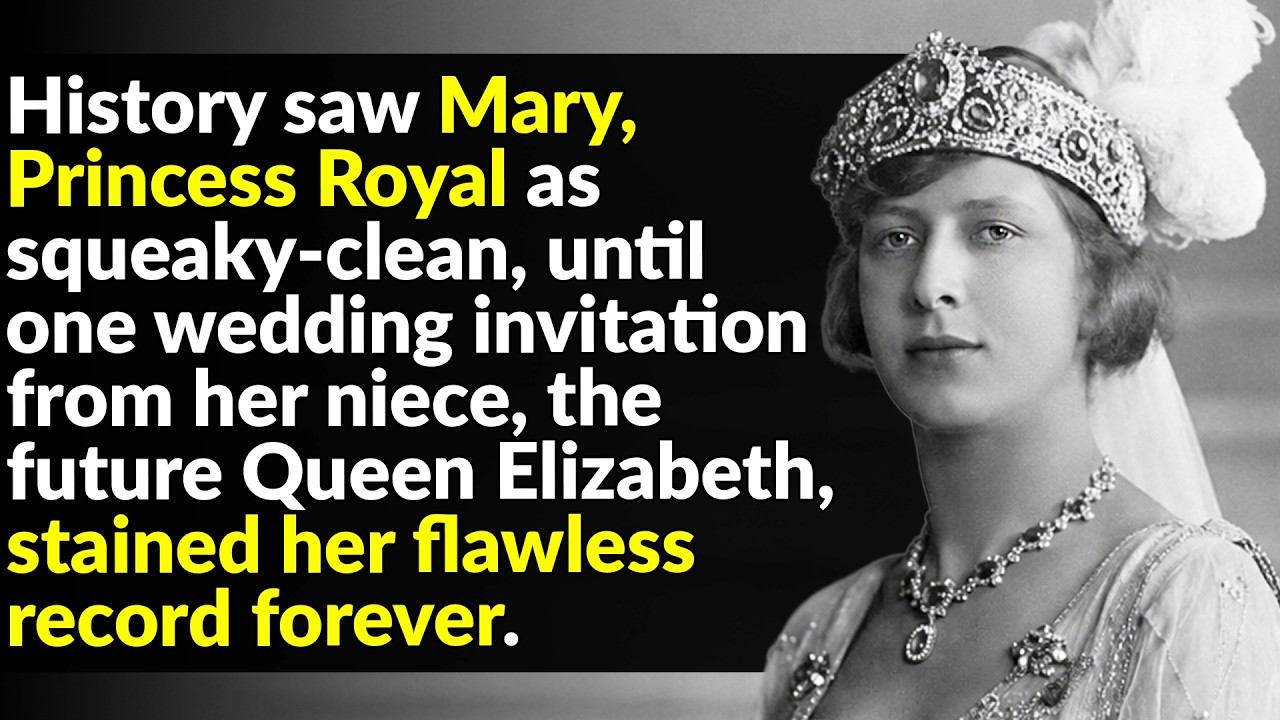
In 1922, further displaying Princess Mary’s goodwill among the British people, the Marys banded together to send the princess a wedding present. Mary’s wedding received press attention, too. Mary and Harry’s wedding, held at Westminster Abbey, attracted a large audience. It was also the first royal wedding ever covered in fashion magazines.
Most notably, with a spread in Vogue. And considering her penchant for modesty, she definitely gave the people something to talk about with her dress. Mary’s wedding dress gained particular attention from the fashionistas of the day. Designed by Messrs. Ravel, the gown was adorned with a trellis work of roses in pearls and crystal beads, featuring emblems of Britain and India.
Vogue described it as a combination of youthful simplicity with royal splendor. After such a lavish wedding, Mary was ready to settle into a quiet family life. Marrying Harry meant Mary had to move to the north of England, where the couple took up residence first in Goldsborough Hall. They had two sons together, and over the next 40-plus years, Mary became beloved among the local people, who saw her as their Yorkshire princess.
She knew how to make a house a home. In 1930, Mary’s father-in-law passed, and Harry and her became the count and countess of Harewood, moving into the estate’s ornate house. Here, Mary developed a passion for interior design, lavishly decorating the property so that it was more akin to a palace.
But, she didn’t hesitate to get a little bit country. In Yorkshire, Mary settled into a quiet, private life. She spent her time decorating and raising her children, but also became an expert in a very local profession, that of cattle breeding. One might have thought her a wealthy, but humble Yorkshire native, if not for her arsenal of titles.
Mary had many titles over her lifetime. She was born Princess Mary of York, then of Wales, and later still Her Royal Highness The Princess Mary, Countess of Harewood. Finally, in 1932, she got a snappy signature moniker. A year after the passing of Mary’s aunt Louise, the princess took on the late woman’s title.
Her father, the king, dubbed her Mary, Princess Royal, a title she bore with pride. But, world events would again rock Mary’s quiet life. With the outbreak of World War II, Mary, Princess Royal, once again heard the patriotic call. Named Chief Controller and Commandant of the Auxiliary Territorial Service, later renamed the Women’s Royal Army Corps, she once again toured the country, visiting units and assisting with welfare organizations.
She even received yet another lofty title. After the conflict had ended, in 1950, the Princess Royal became Air Chief Commandant of a service named in her honor, Princess Mary’s Royal Air Force Nursing Service. Six years later, she received an honorary rank of general in the British Army.
The battle cry for king and country was especially relevant to the Princess Royal. Over the years, Mary Princess Royal had grown a particularly close to her eldest brother, the Prince of Wales. Most of his close family knew him as David. The world from 1936 onwards would know him as King Edward the VIII, but not for long.
Edward the VIII would only reign for a little under a year. In December of 1936, he triggered an abdication crisis when he opted to marry twice divorced American socialite Wallis Simpson. The royal family and British government rejected this scandalous marriage, and David abdicated the throne for love.
Because of this, the disgraced former king did not receive an invitation to the wedding of Princess Elizabeth, the future queen herself. Mary, who remained loyal to David throughout the ordeal, declined to attend her niece’s wedding when she learned of the snubbing of her dear brother.
The Princess Royal could not outright refuse to attend Lizzie’s wedding, so instead she feigned sickness and cited her ill health as the official reason for her non-attendance. But, the Princess Royal had another reason that excused her from public appearances that year. Mary’s beloved husband passed in 1947, and the Princess Royal took it extremely hard.
From that day forward, she refused to make any changes to Harewood that Harry had implemented. She also posed for her annual Christmas card under a painting of her late husband every year for the rest of her life. Mary needed some new projects to distract her from her grief. In 1951, Mary, Princess Royal, took on yet another new position.
The University of Leeds installed her as their new chancellor. The move reflected a broader project that the Princess Royal had undertaken. In the 1930s, the Yorkshire Ladies Council of Education appointed Mary as a patron. This, along with her new position at the University of Leeds, represented big steps in her lifelong advocacy for the education of women and girls, particularly within higher education.
Her work helped pull her out of her grief slump. On March 28th, 1965, while on a walk with her elder son and his children, the Princess Royal had a fatal heart attack on the grounds of her beloved Harewood House estate. She was 67 years old. Leaving behind an enduring legacy of charity and advocacy, Mary, Princess Royal, had lived through quite an interesting time for the royal family.
Over the course of her lifetime, Mary, Princess Royal, lived through the reign of six different British monarchs. It was a family affair, too, as the six comprised her great-grandmother, her grandfather, her father, her two brothers, and her niece. But, one thing set the Princess Royal apart from most of the rest of her family.
Most widely consider her an uncontroversial figure of the Royal Family. Perhaps, this was because of her reserved manner. Though without controversies, the Princess Royal was certainly not without achievements. The sheer number of patronages held by the Princess Royal perfectly encapsulates not only her charitable nature, but her tireless work ethic.
Indeed, she held over 50 patronages, a monumental achievement for a monumental woman. Thanks for watching History Xposé. If you love uncovering the best stories in history, hit like and subscribe to keep exploring with us. If you enjoyed this video, check out the videos on screen for more amazing history content.