Queen Elizabeth II Waited 50 Years to Become Her Own Woman — And Everyone Saw It
On the 30th of March, 2002, a Saturday afternoon, the Queen Mother died peacefully in her sleep at Royal Lodge in Windsor Great Park. She was 101 years old. The announcement came from Buckingham Palace within the hour. By that evening, flowers had begun appearing at the gates of St. James’s Palace. The scale of what followed surprised even those who had anticipated significant public mourning.
The lying in state ran from the 5th of April to the 9th at Westminster Hall. The queue to see her coffin, draped in the royal standard on a catafalque surrounded by candles, began at the entrance to Westminster Hall, ran south along the embankment, crossed Lambeth Bridge, and doubled back along the South Bank of the Thames toward Bermondsey.
At its longest, the queue was 3 mi. At its peak, the waiting time was 5 hours. Blackrod, responsible for managing Westminster Hall, had to briefly suspend entry on certain afternoons to prevent overcrowding in the hall itself. People queued through the night. People queued in the rain. Contemporary accounts put the total at more than 200,000 people, some records suggesting the number reached 224,000, making it the longest lying in state queue since King George VI’s own death in February of 1952. Her funeral was held on the 9th of April at Westminster Abbey. The route from the palace to the Abbey was lined with crowds who had been waiting since before dawn. She was interred, after the service, in the King George VI Memorial Chapel at St. George’s Chapel, Windsor.
Placed beside the husband she had outlived by almost exactly 50 years. The obituaries were extraordinary in their scale and their unanimity. Pico Iyer, writing in Time magazine on the 8th of April, called her the fairy godmother of an entire adoring nation. The woman who had helped restore the majesty of the throne after the abdication of George’s brother Edward the VIII in 1936.
The Sunday Mirror, not normally given to such declarations, called her a symbol of all that Britain wants to stand for. Something safe, sane, stable, and as everlasting as the Tower of London. The London Times had already written back in 1980 that she was probably the most popular royal personage of all time.
In the 1990s, while the rest of the royal family navigated the Princess of Wales and the compressed disasters of Charles and Diana’s separation in 1992, the Windsor Castle fire in the same annus horribilis year, Diana’s death in 1997, the Queen Mother had remained the one fixed point of public affection that criticism couldn’t quite reach.
She was the one they kept. The public love was built on a specific record. During the London Blitz of September 1940, the cabinet had advised the royal family to leave the capital and send the children to Canada. She refused. The children won’t go without me. I won’t leave the king.
And the king will never leave. After Buckingham Palace itself took several direct hits from German bombs, she visited the bombed streets of the East End in expensive clothes and when asked why, explained that if people came to see her, they would wear their best and she should reciprocate in kind. She was later quoted as saying after the palace bombings, I’m glad we’ve been bombed.
It makes me feel I can look the East End in the face. Adolf Hitler reportedly called her the most dangerous woman in Europe because her popularity was a direct impediment to German propaganda about British morale. First Lady Eleanor Roosevelt, who met her in Washington in 1939, called her “Perfect as a queen, gracious, informed, saying the right thing.
” Those words, the wartime ones, the Blitz ones, had been circulating for 60 years by the time of her death. The queue stretching for 3 miles across Lambeth Bridge in the English spring of 2002 was, in significant part, the monument they built. But inside the palace, among the senior courtiers and household staff who had observed the royal family’s private arrangements at close range for decades, another current moved alongside the public grief.
It was never recorded in any official account, never attributed to any named source, never included in any statement from the palace. But those who’d been watching closely enough, who understood the specific architecture of authority that had governed this family since February of 1952, sensed something that would only be confirmed in retrospect by the visible evidence of what came after.
A long-standing pressure, present at every formal occasion and every private family gathering for half a century, had just finally been removed. Queen Elizabeth II, at the age of 75, had just been liberated. For 50 years, she had been the sovereign of the United Kingdom, head of state to 17 Commonwealth nations at its peak, the constitutional anchor of a country that had changed almost beyond recognition since her accession.
She had spoken with 12 British Prime Ministers, from Churchill to Blair. She had navigated Suez, managed the Cold War, held the institution together through the abdication’s aftermath, through her annus horribilis, through Diana. She had done all of this while existing within the gravitational field of a woman who had decided, after a period of genuine grief, that she wasn’t done being at the center of things.
The history books give you the throne. This is about what sat beside it. George VI died on the 6th of February, 1952, in his sleep at Sandringham House in Norfolk. He was 56 years old. Lung cancer, first diagnosed in September of 1951, had progressed despite a surgical resection his doctors had hoped would stabilize it.
His daughter, Princess Elizabeth, was in Kenya when the news arrived. She and Philip had just returned from a night at the Treetops Hotel to their lodge at Sagana. Philip broke the news to the new queen. She flew home. She was 25. Before the accession, Elizabeth and Philip had lived at Clarence House in central London, their married home since 1949, the house where Princess Anne had been born in August of 1950.
The expectation on accession was straightforward. She and Philip would move to Buckingham Palace, and her mother would take Clarence House in their place. A Vanity Fair history of the building records that following the accession, the couple moved to Buckingham Palace, and the Queen Mother, her art collection, and Princess Margaret finally moved into Clarence House in May 1953, just weeks before the coronation.
The coronation of Elizabeth II was on the 2nd of June, 1953. George VI died on the 6th of February, 1952. The Queen Mother moved to Clarence House shortly before the coronation in 1953. That is approximately 15 months. Standard biographical accounts have processed this as an administrative matter, the practical requirements of refurbishing a large house, the demands of transitioning a major household in the aftermath of bereavement, the logistics of grief.
Those factors were no doubt real. What is also factually documented, independent of any interpretation, is that Elizabeth’s entire accession year, the year she managed Churchill’s government, navigated Princess Margaret’s announced wish to marry the divorced Group Captain Peter Townsend, handled the House of Windsor naming controversy, in which she formally overrode her husband’s family preference, and learned, day by day, what it meant to be queen, unfolded in a palace that still housed its previous occupant. The naming controversy is worth noting here, because it illuminates something about how Elizabeth exercised authority when she chose to. On the 9th of April, 1952, she issued a formal declaration that the royal house would remain Windsor, overriding both Philip’s wishes and the advocacy of his uncle, Lord Mountbatten.
Philip’s reported response, “I am the only man in the country not allowed to give his name to his own children,” was pointed and accurate. Elizabeth had authority over her husband’s family name. The first year of her sovereignty established something clearly. She could be decisive when the institution required it.
The calendar for the transition of Buckingham Palace tells a different story. She waited. She managed it with diplomatic patience and without public complaint as she would manage almost everything across the next seven decades. Her first lesson as queen wasn’t delivered in a cabinet meeting or a Commonwealth communique.
It was delivered by the particular patience required when someone who is supposed to vacate a building hasn’t yet done so and the building is yours by constitutional right and the person in question is your mother. William Shawcross researched the Queen Mother’s authorized biography published in 2009 with full access to her personal letters and diaries.
The resulting work more than 1,000 pages is the most complete account of her inner life available. What Shawcross found in her letters from the months following George VI’s death is a portrait of genuine devastation. She wrote in her private correspondence of feeling useless of feeling no longer of any account of not knowing what came next.
These weren’t the composed words of someone already strategizing about their next position. They were the words of a woman who had spent 16 years as the emotional center of a great institution and had now at 51 lost the role entirely. She had been queen consort from December of 1936 when the abdication crisis pushed an unwilling George VI onto a throne neither of them had wanted until February of 1952.
For those 16 years she had been the indispensable complement to a king whose stammer and inherent reserve made the constant social demands of monarchy genuinely painful for him. She charmed the nervous. She converted official occasions into human ones. She was the warmth he couldn’t always generate.
As his health deteriorated across his final years, she had increasingly carried the public weight of the monarchy herself. And then it was over. The king was gone. The new queen was 25 and was her daughter. Shawcross’ portrait of her response is of genuine grief followed by deliberate energetic reconstruction.
She retreated initially to Birkhall, her property in Scotland. Then, in August of 1952, just 6 months after George VI’s death, she acquired the Castle of Mey in Caithness, on the far northern coast of Scotland, from an estate agent’s advertisement she had noticed while driving past a ruined building that had caught her eye.
Purchasing the most remote of her eventual properties within 6 months of the king’s death isn’t the action of someone in permanent withdrawal. It’s an acquisition. The decision of someone who has understood already that life must be rebuilt rather than merely endured. What she built at Clarence House over the following decade is documented by the Royal Collection Trust in specific detail.
She created the morning room in the space that had previously been Philip’s study, installing a Georgian marble chimney piece and a new plaster ceiling with her own crown worked into it. In 1960, she opened out two ground floor rooms to form the garden room, described explicitly as “well suited to entertaining large groups of guests.
” She filled the walls with 20th century British paintings: John Piper, Graham Sutherland, W.S. Sickert, Augustus John, assembling a collection the Royal Collection Trust describes as particularly strong in 20th century British art. She acquired Fabergé, English porcelain, silver pieces with connections to the Bowes-Lyon family.
She had her crown built into the plasterwork of her own ceilings. She was remaking a residence in her own image with the full force of a personality that understood such things mattered. The entertaining operation that followed wasn’t modest. The Royal Collection Trust records that the Queen Mother greatly enjoyed hosting luncheons and evening receptions at Clarence House.
And that a specific protocol had been established for state visits. All foreign heads of state called there for tea in the afternoon of the first day of a state visit. Every visiting head of state, not some, all. Before proceeding to Buckingham Palace for the formal business of the visit, the meetings with the Prime Minister, the state banquet, the constitutional ceremonies, they came to Clarence House for tea.
This was the deliberate construction of a parallel center of gravity adjacent to the official one. Staffed and maintained and ready to receive the world. Across her four or five main residences, Clarence House, Royal Lodge at Windsor, Birkhall in Scotland, and the Castle of Mey in Caithness, she maintained approximately 100 permanent staff in total.
Her civil list income was reported as nearly 1.3 million American dollars annually by the end of her life. She was also, by the time of her death, reportedly carrying personal debts at Coutts Bank that ran into several million pounds. Multiple accounts give conflicting figures, so a precise number can’t be stated with confidence.
Which the Queen is reported to have cleared from her personal funds after the death without public discussion. The spending is instructive. She was spending consistently and persistently at a rate that her income didn’t support. Not from negligence or simple extravagance, but from a constitutionally deep conviction that the life she led was commensurate with who she was.
Pico Iyer’s Time obituary noted that she had been an implacable defender of the royal family against modernity and change, adding that even within the family, her authority was exercised. When the extramarital affairs of the Prince and Princess of Wales became common gossip, both got a dressing down.
In her 90s, she was still issuing corrections. The authority was still operative. It simply had no official position behind it, just the weight of a woman who had been at the center long enough that the center had, in some sense, become her. After Queen Mary died in March of 1953, the Queen Mother became the undisputed senior matriarchal figure of the British royal family by default, and consolidated that position across the following four decades through longevity, social energy, and an instinct for public presence that seemed never to diminish. She continued an active program of public engagements, patronages, visits, official appearances well into her 90s, attending public functions until just months before her death. Opinion polls from the early 1960s onward placed her consistently at or near the top of royal popularity rankings.
In the 1980s, with the rest of the royal family caught in the glare of the Diana years, the Queen Mother remained the undamaged one, the beloved one, the face of the monarchy that criticism couldn’t easily reach. The Independent, in a 1999 profile, described her as possessing legendary charm overlaid on a very tough character with actress-like skills deployed to considerable effect.
The piece noted that she had always managed to con us, not in a damning sense, but in the precise sense of a performer whose performance is so complete that the effort behind it’s invisible. Hugo Vickers, who spent 17 years researching her life and described himself as having observed her in public and private across many years, built a biography that held both things simultaneously.
The genuine warmth and the deliberate construction of a public self that never admitted weakness, exhaustion, or diminishment. She was, as the scholar Mark McGinness wrote in Quadrant in May of 2002, a woman whose influence on the monarchy over six decades was a potent one, unlikely to be matched.
And this, despite being Queen Consort for only 16 of those six decades. One biographer noted that Charles was seen, even within the family, as the son she never had. The Queen Mother as the mother he feels he never had. This is a description of an emotional territory the Queen Mother had staked and held across two generations, not one.
Elizabeth wasn’t the only member of the family who directed warmth toward Clarence House rather than Buckingham Palace. The Queen Mother was the family’s emotional destination for her daughter and for her daughter’s children simultaneously across 50 years of widowhood. That is a specific kind of ambient authority and it’s very difficult to displace.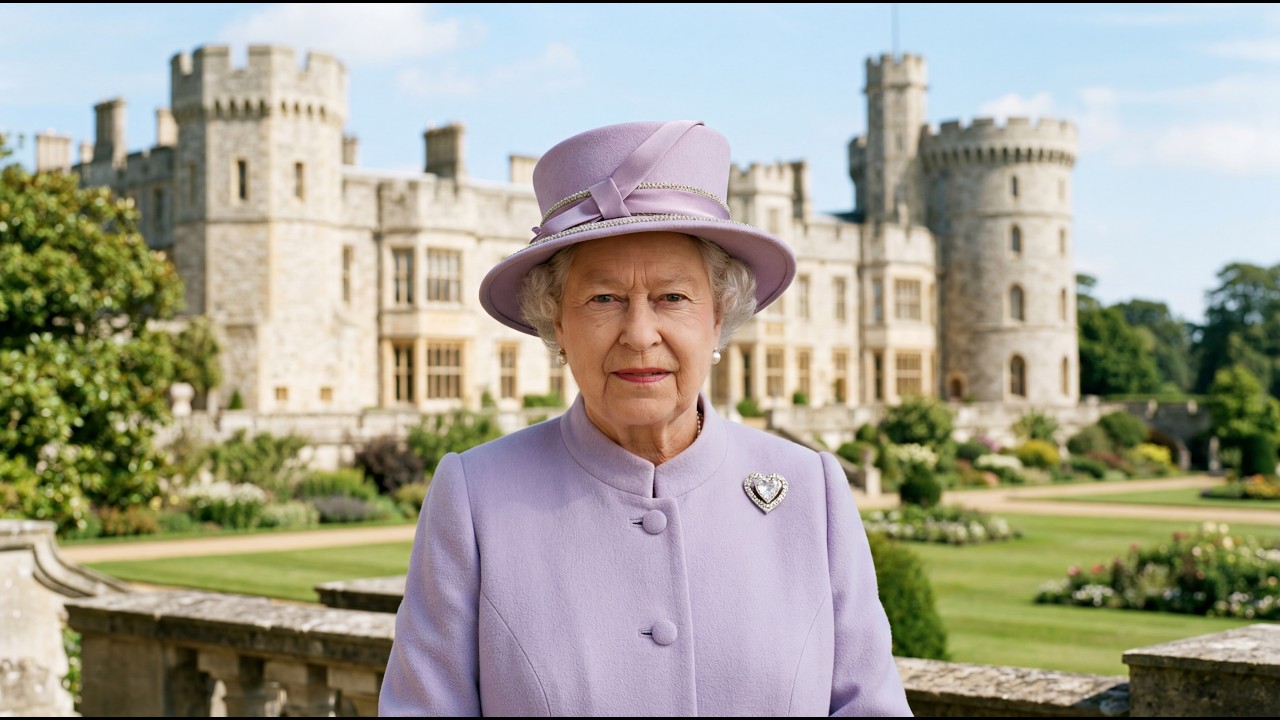
There is a single detail preserved in a published collection of royal anecdotes under the title, “What a thing to say to the Queen?” that compresses the entire 50-year dynamic more efficiently than any extended analysis. On Sunday mornings at Windsor, the Queen would attend church and then call on her mother at Royal Lodge, year after year, every Sunday.
She would always slip in through the back of the house to avoid upstaging her. The sovereign of the United Kingdom, head of state, head of the Church of England, the person whose ascent was constitutionally required for every act of Parliament, whose portrait appeared on every stamp and coin across the Commonwealth, entered her mother’s residence through the servants’ entrance, because arriving through the front might draw attention toward herself and away from the woman who lived there.
No protocol required this. No equerry memoir, no courtier account, no household history suggests anyone told Elizabeth to do this. It was a choice she had arrived at through years of incremental accommodation that had become so habitual, it no longer felt like accommodation. It felt like Sunday mornings.
It felt like the natural shape of things. Elizabeth’s famous reserve, the emotional containment, the public composure that commentators in the first half of her reign described as cool, formal, remote, or simply difficult to read, had multiple documented roots. She was raised in a generation and social class that treated visible emotion as a form of indiscipline.
The institution she served had developed across centuries a culture of restraint baked into its ceremonial forms. Sally Bedell Smith, in her 2012 biography of Elizabeth, described her grandmother Queen Mary as having rigorously suppressed her emotions, exhibiting at most a slight shift of expression.
The Windsor family, across several generations, wasn’t a household that rewarded feeling shown. But the Queen Mother added a specific dynamic to this already restrained atmosphere, and it operated through displacement rather than suppression. When the most emotionally expressive, socially dominant person in your family occupies every room she enters with effortless completeness, the practical result is that there is nowhere obvious for your own warmth to go.
It isn’t pushed aside by instruction, it’s simply and perpetually out-volumed. The Queen Mother was professionally in the warmth business. It was her primary instrument, developed over 60 years into a tool of near-perfect precision. Elizabeth, who had her own wit and her own ease, attested consistently by those who knew her privately, was also the sovereign, required to maintain the measured distance that the institution demanded.
The combination left her, in public, as the formal one. Clarence House had the warmth, Buckingham Palace had the authority. And warmth, as any student of the monarchy must understand, is what generates the loyalty that makes the authority sustainable. For 50 years, the Queen Mother held the warmth. The structural reason her influence lasted as long as it did is worth examining directly, because it wasn’t simply a matter of personality, it was constitutional.
Philip was Elizabeth’s consort. He was, formally, her subject. At public engagements, he walked beside or behind her, never before. When the House of Windsor naming controversy arose in 1952, Elizabeth issued the formal declaration that Windsor would continue, without visible hesitation, overriding both Philip’s preference and Mountbatten’s advocacy.
Philip’s reported response, “I am the only man in the country not allowed to give his name to his own children,” was accurate. Elizabeth outranked him in every official context and demonstrated willingness to assert that authority. In most families, the arrival of a spouse mediates or gradually displaces the authority of a parent.
The new power structure forms around the marriage. The parental generation moves to the periphery. The habits of childhood deference find a different outlet. Philip, as the consort of a female sovereign, couldn’t perform that structural function. He wasn’t a senior. He had considerable private authority within the family, a strong, forceful personality, a shaping presence in daily life that no formal title captured.
But he was constitutionally subordinate in every public context. The academic Sarah Bradford, in a 2023 volume on the Windsor consorts, identifies this as a documented structural feature of the Queen’s reign. New monarchs remained under the influence of their surviving parent even into advanced age.
Precisely because no competing structure of authority existed to redirect that parental gravity. Elizabeth outranked her husband at every official occasion from the moment of her accession. The only figure in her personal world who occupied the position of unchallenged elder, the only person toward whom the habits of deference ran deep, long, and unquestioned was the woman at Clarence House who had her own crown worked into the plasterwork of her ceilings.
For 50 years, the Queen Mother was the sole available authority figure in Elizabeth’s private life, and she behaved accordingly. Not through conscious strategy in Shawcross’s portrait, but through the natural operation of a personality constitutionally incapable of smallness. On the 9th of February, 2002, Princess Margaret died at King Edward the 7th’s Hospital in London.
She was 71 years old. A series of strokes had progressively diminished her over the preceding years. 49 days later, on the 30th of March, the Queen Mother died at Royal Lodge. Newsweek described 2002 as Elizabeth’s darkest year. In the space of 7 weeks, the Queen lost her only sibling and her mother. She was 75.
She was now the sole surviving member of the family of four. George VI, Elizabeth the Queen Consort, Elizabeth the Princess, Margaret Rose. That had been the central social unit of her entire life. The wartime photographs of the four of them together at Windsor or Sandringham, her parents and she and Margaret as girls, were now photographs of the only person in the frame who was still alive.
She attended her sister’s funeral. She attended her mother’s funeral 9 weeks later. She returned to her duties without public commentary on either. What happened in the years that followed is on the record. Robert Hardman, in his biography Queen of Our Times, identifies 2002 as the beginning of a marked upward trajectory in the Queen’s public reception.
A point from which, he notes, the trajectory kept climbing. The Daily Telegraph, reporting in 2013 on a highly regarded biography of the Queen, noted explicitly that she had grown in confidence since the death of her mother and sister in 2002. The word is exact, confidence. Not recovered from grief, not returned to form, grown in in which describes a person who had been operating under constraint and was now incrementally operating without it.
The evidence for what that confidence looked like is dated and publicly documented. On the 27th of July, 2012, a decade after the Queen Mother’s death, Queen Elizabeth appeared in a short film at the opening ceremony of the London Olympic Games, directed by Danny Boyle. The concept had come from Boyle some months earlier.
His expectation, as he later described it, was minimal. Permission to film some exterior footage of Buckingham Palace and use a professional stand-in for a brief sequence involving James Bond. What happened in the subsequent planning discussions with the palace was significantly different from what he had anticipated.
The palace agreed to the Queen’s direct participation. More than that, during the creative discussions, the Queen herself said she wanted a speaking line. She didn’t merely agree to appear, she asked for a part. The resulting sequence opens with Bond, played by Daniel Craig, arriving at Buckingham Palace. He is escorted through its corridors by a liveried footman and brought to the door of the sovereign’s private study.
The door opens. Elizabeth II is at her desk, her actual desk, in her actual study, with her actual corgis visible nearby. Bond is introduced. She looks up from her paperwork, considers him for a moment, and delivers the line she had specifically requested. “Good evening, Mr. Bond.” Five words.
The timing was perfect. The 80,000 person stadium received it with the particular warmth that an audience reserves for the moment when a figure it thought it knew reveals a register it had not expected. Boyle, in subsequent interviews, described her in a single word, “game.” The distinction carries weight.
Dutiful means performing what is expected. Game means you have seen the opportunity and chosen, with evident pleasure, to take it. At 86 years old, the Queen of the United Kingdom looked at a James Bond comedy sketch and decided she wanted a speaking part in it. The Bond sketch was the most dramatic single example, but it wasn’t isolated.
In 2016, at the Invictus Games sporting event for injured service personnel founded by Prince Harry, a video was shown in which Prince Harry presented the Queen with a filmed challenge from President Barack Obama and First Lady Michelle Obama. The response she delivered on camera, deadpan, precisely calibrated, dryly amused, became one of the most shared pieces of royal footage in years.
It read not as performance, but as personality. The specific wit of a person who had always had that instrument and had finally found consistent room to use it in public. At the Platinum Jubilee concert in the mall in 2022, a film depicted the Queen having tea with Paddington Bear at Buckingham Palace.
Sandwiches were produced. She opened her handbag and produced a marmalade sandwich of her own. The audience received it as the warmth reserved for the genuinely unexpected. The moment when a figure you thought you understood reveals a register you hadn’t quite anticipated. Academic scholars subsequently analyzed both the Bond appearance and the Paddington tea as deliberate communicative acts.
Examples of what one published paper described as royal visual humor, in which incongruity and surprise were used to collapse the formal distance between sovereign and subject. Both instances are from the post-2002 years. Neither has a comparable precedent in the pre-2002 public record. Her 2020 broadcast during the COVID-19 lockdown, two national addresses watched by millions in the United Kingdom and around the world were described almost universally as warm.
Not composed, not reassuring in the managed ceremonial sense of an official announcement. Genuinely warm. The quality of a person who has finally arrived at their own voice and is no longer primarily managing the distance between that voice and the audience. She quoted Vera Lynn. She said they would meet again.
She sounded to many millions of viewers like someone being themselves in a way that her earlier decades of public performance had not quite captured. Journalists and biographers who covered her final two decades consistently used a set of words that were absent from their working vocabulary for the first five.
Relaxed. Mischievous. Lighter. One writer covering the Diamond Jubilee in 2012 expressed what amounted to mild surprise that the Queen had shown a sense of humor that those who know her have always insisted was there. Always insisted was there. Known to those close to her, attested in private across decades, but not reliably visible in public until the later years.
Something had moved it from the private register to the public one. None of this comes with a named courtier delivering the direct attribution. This change was caused by the Queen Mother’s death. Elizabeth never provided such a source. The Queen Mother never acknowledged any dynamic that required sourcing.
The code that governed the Windsor family, never complain, never explain, held on both sides of this relationship for 50 years and held in the grief that followed. But observable behavior is evidence. The bond sketches documented by the director who was in the room for the planning conversations. The upward trajectory Robert Hardman identifies from 2002 is in his published biography.
The Daily Telegraph’s 2013 report that she had grown in confidence is in the press archive. The change in journalistic vocabulary, the shift from cool and remote toward warm and funny, and finally herself, is visible in the coverage record across 20 years. The inference is only about the cause. And the most coherent available answer is the simplest.
The woman who had been the dominant emotional presence in Elizabeth’s world for 50 years was gone. The matriarch who had turned Clarence House into a parallel court, who had ensured that every visiting head of state came to her for tea before proceeding to the actual head of state, who had been at or near the top of royal popularity rankings across the decades of Elizabeth’s reign, who had been the warmth in the room at every family occasion for half a century.
That woman was no longer there. For the first time since February of 1952, there was only one queen. The Queen Mother wasn’t a villain in this story. That framing would be both inaccurate and inadequate. What Shawcross documents, working from her private papers, is a woman who felt George VI’s death as a genuine rupture, who wrote of uselessness and irrelevance, who grieved in ways that were real and witnessed with real sympathy by those around her.
The public legacy she built during his reign was genuinely significant. The wartime solidarity, the Blitz resolve, the image of a royal family that stayed in London while London burned. The love the British public had for her wasn’t manufactured. It was earned across decades through an instinct for human connection that was, by every account, authentic.
She was also, as The Independent’s 1999 profile put it, someone possessed of legendary charm overlaid on a very tough character with actress-like skills deployed to considerable and deliberate effect. Hugo Vickers, 17 years of research, observations conducted in public and private across many years, built a biography that attempted to hold both things without collapsing either.
The warmth was real. The warmth was also deployed. The charm was genuine. The charm was also a tool. She was constitutionally incapable of smallness. Built for the center of rooms since 1936, she simply continued being built that way until she was 101 years old and the building stopped. The consequence for Elizabeth was structural.
The warmth that the public came to the monarchy seeking was concentrated at Clarence House for 50 years. The human face of the family, the approachable one, the one who put foreign dignitaries at ease over the tea service before they went to conduct formal business with the head of state, lived at Clarence House.
Every Sunday morning, Elizabeth slipped in through the back. What the arrangement cost her, some ease, some earlier access to a public register that was apparently hers all along, she never gave a name. The cost became visible in what came after. In the woman who asked Danny Boyle for a speaking part in 2012.
In the woman who opened her handbag for Paddington. In the woman whose 2020 broadcasts made people feel genuinely reached rather than merely addressed. In the consistent shift in journalistic language across the last two decades of a 70-year reign. There is a specific arithmetic to this story that resists being made less melancholy than it is.
She became queen at 25. Her mother died when she was 75. The transformation visible in her later reign, the confidence, the lightness, the wit that had apparently always been there and had never quite found its full public outlet, came in the final 20 years of a 70-year reign. 20 years of being herself publicly.
After 50 years of being someone’s daughter first. The final number in this story is also the largest. When Elizabeth died on the 8th of September 2022 at Balmoral Castle, aged 96, more than 250,000 people queued to see her lying in state at Westminster Hall. A number that by most accounts exceeded the number who had queued for her mother two decades before.
She had in the end filled every room. For 50 years, she was the sovereign of the United Kingdom, but she was still a daughter deferring to a matriarch who refused to fade away. It took until she was 75 years old for Elizabeth to finally become the only queen in the room. If this story is worth your time, subscribe. There are more waiting.