Quincy Jones and Michael Jackson Made One Last Album Together. Neither Said Goodbye. D
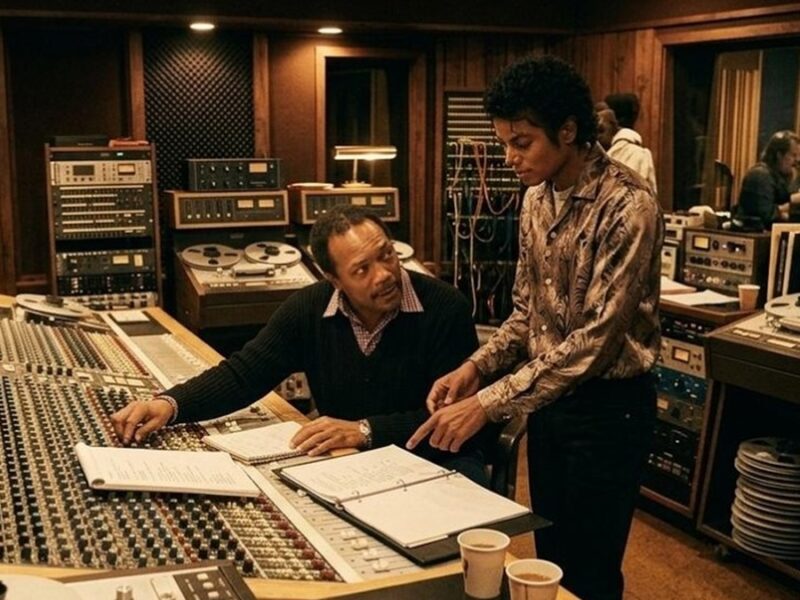
Westlake Recording Studios, Los Angeles, 1986 through 1987. Michael Jackson and Quincy Jones were in the studio together for the third time as the primary artistic partnership behind a Michael Jackson album. The first time had been Off the Wall in 1978. The second had been Thriller in 1982. The third was Bad.
It was going to be the last. Neither of them said this, not in the studio, not in interviews at the time, not in any documented exchange that has emerged in the years since. The sessions proceeded as sessions proceed when they are organized around people who know how to work together with efficiency, with a shared language, with the specific shorthand that develops between a producer and an artist who have already made two albums together and who understand each other’s working methods, preferences, and limits. They were, by any external measure, still the most successful artist-producer partnership in the history of popular music. They had made Thriller. They had made Off the Wall. They had, between 1978 and 1984, defined what the commercial ceiling of pop music looked like and then gone significantly above it. The expectation when they entered
Westlake for the Bad sessions was that they would do it again. What neither of them fully said, then or later, was that the conditions for doing it again were not the same as they had been. The specific challenge of the Bad sessions was not technical. Both Michael Jackson and Quincy Jones were more accomplished, more experienced, and more resourced in 1986 than they had been in 1978 or even 1982.
The studios were better, the technology was better, the musicians available to them were the best in Los Angeles. The budget was not a constraint. The challenge was Thriller. Thriller had sold over 40 million copies. It had won eight Grammy Awards. It had produced seven top 10 singles from a single album, a commercial achievement that had not been done before.
It had redefined what the word best-selling meant in the context of recorded music. The question that everyone in the industry was asking, and that both Michael Jackson and Quincy Jones understood they would have to answer, was “What do you do after that?” The honest answer, the answer that no one in a commercial music context could fully say out loud, was that there was no answer.
There was nothing you could do after Thriller that would be Thriller again. The conditions that had produced Thriller were specific. A particular artist at a particular moment in his development, working with a particular producer who understood that artist’s range, making an album at a specific cultural moment that was prepared to receive something that went beyond its existing categories.
Those conditions could not be recreated. The moment had passed. What Bad could be, what it was, what it turned out to be, was something different. Not the equal of Thriller, but the next thing after it, made by the same two people who had made Thriller, carrying the full weight of that expectation, and producing, despite it, an album that was extraordinary by any measure, except the measure of what had immediately preceded it.
The partnership between Michael Jackson and Quincy Jones had begun in 1978 when Michael Jackson approached Quincy Jones about producing his first adult solo album, the album that became Off the Wall. The approach had not been obvious. Michael Jackson was 20 years old and had spent his professional life in the context of the Jackson 5, of Motown, of a specific commercial machine that had managed his image and his output with care and consistency.
The decision to work with Quincy Jones, a jazz producer and arranger whose work was primarily associated with sophisticated adult music rather than commercial pop, was not the expected choice. It was also exactly right. What Quincy Jones brought to the partnership was a production intelligence that matched Michael Jackson’s musical intelligence at a level that very few producers could have.
Quincy understood arranging, orchestration, rhythm, and the specific relationship between a voice and the music around it in a way that allowed him to create contexts for Michael Jackson’s performing ability that the performing ability could fill completely. He did not limit the context to what the current market expected. He created the context that the music required and the market found its way to it.
Off the Wall had been the proof of the concept. Thriller had been the concept fully realized. The seven Grammy Awards, the 12 Grammy nominations, the record sales, the cultural presence, all of it had confirmed what both of them had understood in 1978 when they began. That together they could make something that neither of them could make separately.
Bad was released in August of 1987. It was the fastest-selling record in history at the time of its release. It produced five consecutive number-one singles in the United States, another record that had not been achieved before. It won two Grammy Awards. By any standard other than Thriller, it was an extraordinary commercial and artistic achievement.
By the standard of Thriller, the industry and the press assessed it differently. The reviews acknowledged what Bad was. They also, inevitably, measured it against what Thriller had been. The gap between the two assessments, Bad as an extraordinary album, Bad as not Thriller, was the specific price of having made Thriller.
And it was a price that both Michael Jackson and Quincy Jones paid in the public reception of the album they had made together. In the years that followed the release of Bad, the professional relationship between Michael Jackson and Quincy Jones did not formally end with an announcement. It simply did not continue.
Michael Jackson’s next album, Dangerous, released in 1991, was produced by Teddy Riley and Bill Bottrell. Quincy Jones was not involved. The collaboration that had defined the most commercially successful period in the history of pop music was over. There was no final session that was understood to be final.
There was no valedictory project or public acknowledgement of what the collaboration had been. The last time Michael Jackson and Quincy Jones worked together on a full album was in a recording studio in Los Angeles in 1986 and 1987. And when it was done, it was done. And neither of them announced what it was that it ended.
The Bad sessions produced more material than the album could contain. Michael Jackson wrote and recorded a large number of songs, more than 30 by some accounts, in the period leading up to and during the Westlake sessions. And the process of selecting the 10 songs that would form the album was one of the extended negotiations of the production.
Quincy Jones had specific views about what the album should be. Michael Jackson had specific views. Those views were not always identical. The tensions that existed in the Bad sessions were not new. They were the specific tensions of two people who had worked together long enough to have a fully developed sense of each other’s preferences, and who had also, in the course of three albums and nearly a decade, developed the kind of professional friction that long collaborations accumulate.
Neither of them was the same person they had been in 1978. Michael Jackson had gone from 20 years old to 28. Quincy Jones had gone from 45 to 54. The industry around them had changed. The music had changed. The conditions of their collaboration had changed. There were songs Michael Jackson wanted to include that Quincy Jones was less certain about.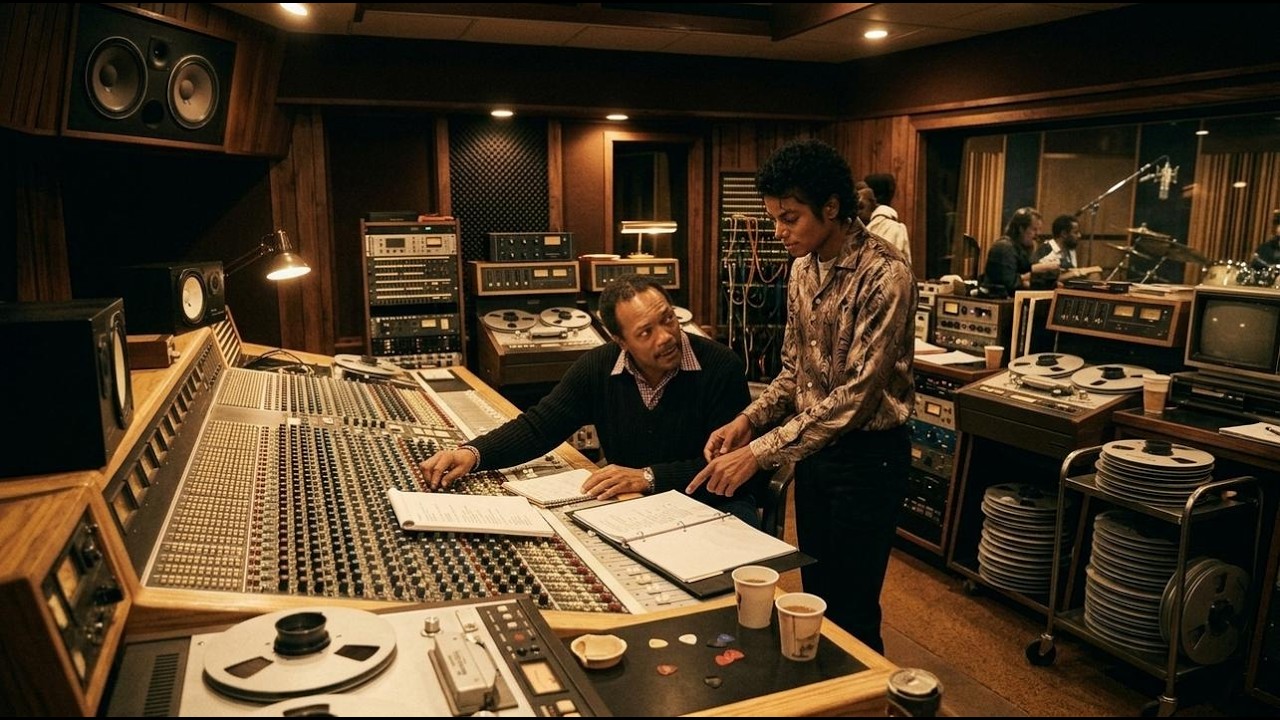
There were production choices Michael wanted that Quincy shaped differently. The process of making Bad was collaborative in the way that all of their processes had been collaborative. Each of them bringing something the other did not have, producing together something that neither could produce alone.
But the collaboration in 1986 operated under different pressures and with different internal dynamics than collaboration of 1978 had. Neither of them said in the studio that this would be the last time. Both of them, by all accounts, understood that the specific conditions of what they had built together were changing.
That understanding did not need to be said. The specific thing that the Bad album preserves, the thing that exists in the recordings that was produced by the specific collaboration between Michael Jackson and Quincy Jones at that moment in both of their careers, is not fully reducible to the commercial performance or the critical reception or the number of number one singles.
What it preserves is the specific quality of two people who understood each other’s work completely working together on something that both of them knew would be compared to an impossible standard and producing it anyway at the highest level they could. Man in the Mirror, which was not written by Michael Jackson or Quincy Jones, but which they produced together and which Michael Jackson performed with a quality of vocal commitment that the song’s lyrical ambition required, is the kind of track that is only possible when a producer understands a vocalist completely and creates around that vocalist a context that allows the full range of what the vocalist can do to be present in the recording. It is a production decision and a performance decision simultaneously and the combination of the two produces
something that is more than either alone. The Way You Make Me Feel, Dirty Diana, Smooth Criminal, each of them is a different demonstration of the same fundamental thing. The specific result of a collaboration in which the producer’s vision and the artist’s ability have been matched so completely that the result does not show the seams.
You cannot hear where Quincy Jones ends and Michael Jackson begins. That is the mark of a collaboration that has been fully realized. What the collaboration between Michael Jackson and Quincy Jones produced across the three albums they made together is not difficult to assess in retrospect. Off the Wall established Michael Jackson as an adult artist.
Thriller defined what the commercial ceiling of pop music was. Bad demonstrated that what they had built together was durable. That it could operate under the specific pressure of being compared to the most successful album in recording history and still produce something that, absent that comparison, would have been recognized immediately as a landmark.
The three albums are a body of work. They are connected by the same producer, the same artist, the same shared language of rhythm and arrangement and vocal performance that developed over the course of nearly a decade of collaboration. They represent one of the most significant artistic partnerships in the history of popular music in any genre.
What is striking in the years since is how little ceremony attended its ending. The partnership ended the way long collaborations sometimes end. Not with a break. Not with a falling out. Not with a dramatic moment that would later be identified as the end. But with a completion. The work was done. The album was finished.
Each of them moved to the next thing. Quincy Jones, in later interviews, spoke about Michael Jackson and the collaboration with the specific quality of someone who understood what it had been and who also understood that it had ended when it needed to. Michael Jackson was, by 1987, ready to work differently, to produce his own work, to bring in new collaborators, to continue to develop in directions that did not require the specific architecture that Quincy Jones had provided.
That is not a criticism. It is the natural movement of an artist who has grown within a collaboration and who has arrived at the point where the collaboration has given everything it can give. The Bad album was completed and delivered. The sessions at Westlake Recording Studios ended.
Quincy Jones and Michael Jackson went their separate ways into the projects that followed. Each of them continuing to work, each of them continuing to produce music that reflected what they had learned and what they had built. They did not make another album together. Quincy Jones has spoken about the collaboration in the years since with a mixture of pride and something more complicated.
The specific quality of someone who built something with another person that neither of them fully understood in the making and that both of them, in retrospect, understood to have been extraordinary. Michael Jackson, in the years after Bad, went on to make Dangerous and History and Invincible, albums that had qualities that were entirely his own, that showed what he was capable of without the specific architecture of the Quincy Jones collaboration, and that continued to demonstrate the range and depth of his musical intelligence. The three albums that he and Quincy Jones made together remain what they are. Off the Wall, Thriller, Bad. A body of work, a collaboration, a specific nine-year period in the history of popular music during which
two people understood each other’s abilities so completely that what they produced together exceeded what either of them had previously believed was possible. The last day of the Bad sessions was a day like the other days in the studio. Work, listening, the specific focused activity of professional music making at the highest level.
Nobody announced that it was the last day. Nobody marked it as a conclusion. It was the last day, nonetheless. Neither of them said goodbye. The music said it for them.