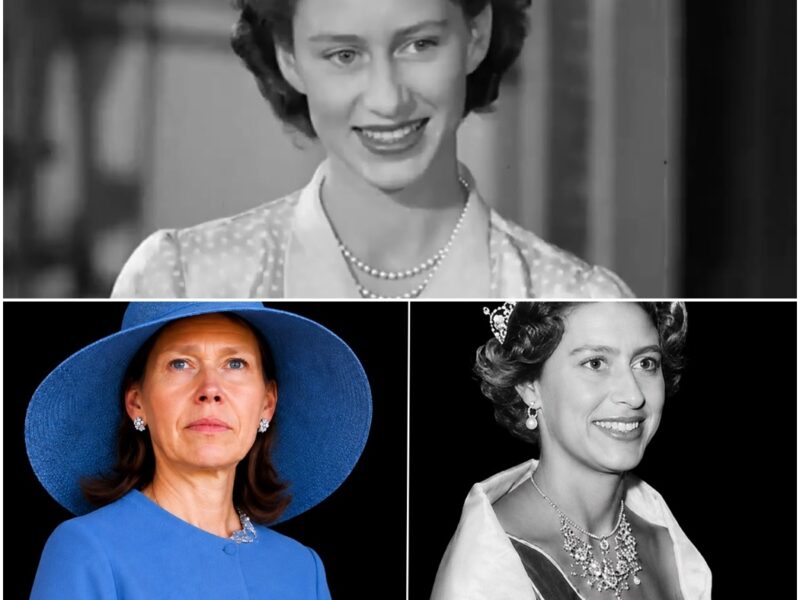
She Was Princess Margaret’s Daughter…But Chose A Completely Different Life D
If you look through the archives, you won’t find a single record of Lady Sarah Chatto speaking out against her mother. No dramatic press releases, no family rift splashed across the tabloids. But look at the adult life she actually built, and the quiet contrast to Princess Margaret is staggering. To understand that contrast, you have to go back decades to a princess whose biggest heartbreak happened years before her daughter was even born, but never really stopped shaping the house her daughter grew up in. Peter Townsend first met Princess Margaret in 1947 on a royal tour of South Africa. He was a decorated RAF pilot, a Battle of Britain veteran, serving as equerry to her father King George VI. His job was simply to help look after the 17-year-old princess for 3 months. They rode together most mornings. By her own account to a confidant years
later, that’s when she really fell for him. He was married at the time, two sons, nothing could happen yet. For years, it didn’t. The relationship sat quietly in the background of palace life, an equerry doing his job, a princess growing up. Then in February 1952, the king died suddenly. Margaret was 21, grieving, and for the first time in her life, genuinely unmoored.
Townsend divorced his wife that same year, and somewhere in the wreckage of that loss, the two of them admitted what they’d apparently been carrying for years. It became public at her sister’s coronation in June 1953. At a party afterward, Margaret reached over and brushed a piece of fluff off Townsend’s uniform.
A gesture so small it might have gone unnoticed, yet it became the first public confirmation of a relationship the palace had hoped would remain private. The British press sat on the story for one day out of some lingering sense of decorum about the coronation itself. After that restraint disappeared completely.
The story most people know goes like this. A queen forced to choose the crown over her sister’s happiness. A princess crushed by a parliament and the church. The real picture based on documents only released decades later is messier than that. Some historians now think the queen actually tried to find her sister a way through.
A plan that would have let Margaret keep her royal income and stay in the country if she gave up her place in the line of succession. Other historians think Margaret’s own hesitation mattered just as much as any institutional pressure. What isn’t in dispute? On Winston Churchill’s advice Townsend was sent away to a diplomatic post in Brussels.
Out of the country, out of the papers. At least for a while. He remained there for more than a year. The romance survived the distance and somehow letters back and forth an occasional visit a kind of long-distance hope that neither of them seemed ready to let go of. Even with an ocean of bureaucracy sitting between them. By 1955 Margaret had turned 25 free technically to choose for herself with no need for her sister’s permission anymore.
In October of that year she released a statement a few sentences calm careful almost too composed for what it actually meant. She had decided not to marry Peter Townsend she said. Mindful of the church’s teachings on marriage and of her duty to the Commonwealth, she asked to be allowed to put the matter behind her.
That is the entire public record of one of the most consequential decisions of her life. Whether she felt she had a real choice by that point is something historians still argue about today. We don’t fully know. We probably never will. What we do know is what came next. Four years later, Margaret married for the first time since Townsend had never made it to the altar.
Her husband was Antony Armstrong Jones, a fashion and portrait photographer with no aristocratic background at all, later made Earl of Snowdon. On paper, it looked like a completely different kind of story. A princess marrying for love this time, choosing an artist over an institution. What the public didn’t know yet was who exactly they were dealing with.
Armstrong Jones had a reputation, even before the engagement, as a man who simply didn’t stop. He’d had a long, serious relationship with the dancer Jacqui Chan, by some accounts the love of his life up to that point. And she was still invited to his wedding. There was an affair with the actress Gina Ward. There were others.
Nobody bothered keeping track of. One friend asked to sum up his approach to women, put it bluntly. If it moved, he’d have it. Margaret herself wasn’t immediately won over. She’d later tell a biographer that she enjoyed his company, but didn’t take much notice of him at first. She assumed, in her words, that he was someone else’s.
She was wrong about that. And the courtship that followed happened almost entirely out of public view. Nobody knew, according to his own biographer, no whispers. Margaret would visit his studio quietly. He’d turn up at the same parties she did, blending into the background while the press chased more eligible men they assumed she was actually interested in.
By October 1959, he was visiting her at Balmoral. By February 1960, the engagement was official and the country was stunned. The wedding in May 1960 was the first royal wedding ever broadcast on television. Millions watched. It was sold to the public as a happy ending. Proof that the girl who’d lost Townsend had found her own version of romance after all, completely on her own terms.
From the outside, it looked like a fairy tale. What almost nobody knew at the time was that 3 weeks into the marriage, a woman named Camilla Fry gave birth to a daughter. Decades later, a DNA test would confirm what had quietly been suspected for years. The child was Armstrong-Jones’s. Inside the marriage from nearly the very first weeks, two strong-willed, restless people were trying to build something real under more public scrutiny than almost any couple in the country had ever faced.
For a while, that didn’t seem to matter. The early years were, by every account, intoxicating. Kensington Palace became the center of London’s social world. Parties packed with actors, photographers, ballet dancers, writers. Being invited, one biographer said, meant you were breathing rarefied air. But intensity and stability are not the same thing.
People close to the couple would later describe affection and tension sitting right next to each other constantly. The same restlessness that made them magnetic to the public made them difficult for each other. And both of them, it turned out, kept on having affairs. His more numerous. Hers more discreet, at least in the early years.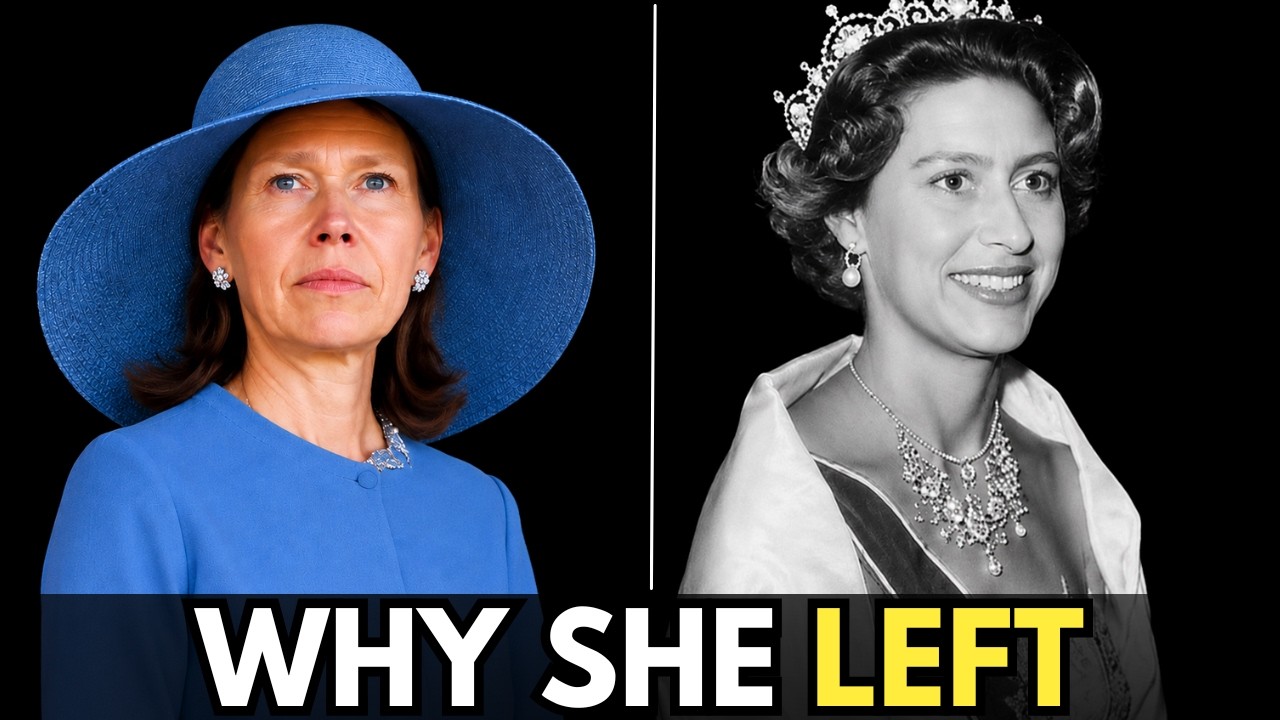
Sarah was born into this environment in 1964, entering the line of succession at number seven. By most accounts, the household was already heavy by then. Margaret was still working through the long aftermath of the Townshend affair, even years on. Her marriage to Snowdon, not yet 5 years old, was already cracking behind the parties and the photographs.
None of that showed up in the christening pictures. It didn’t need to. Children don’t need to read the morning papers to know their parents are unhappy. Growing up in that house, Sarah would have felt the tension long before she was old enough to understand the headlines her parents were making. By the early 1970s, the marriage once sold to the public as a fairy tale was falling apart in full view of the same public that had watched it begin.
The constant infidelity on both sides had stopped feeling like excitement and started feeling like routine. By some accounts, the couple was barely seeing each other by this point. The golden couple years at Kensington Palace had quietly curdled into something closer to two people occupying the same address than Cane Mustique.
A friend had gifted the couple a plot of land on the small Caribbean island as a wedding present. Snowden rarely returned to it. Margaret did, especially as things at home worsened. And it was there, in the early 1970s, that she began a relationship with Roddy Llewellyn, a gardener 17 years her junior.
For a while, it stayed private. Then, photographs surfaced of the two of them embracing on the island, and the affair became impossible to deny. It turned into one of the most heavily covered royal stories of the decade. Tabloids ran with it for years. Editorials picked it apart. Comedians joked about it on television.
What had once been private now belonged to anyone willing to buy a newspaper. The marriage officially ended not because of Llewellyn, though, but because of something closer to home. Snowden reportedly pushed for divorce after his long-time mistress, Lucy Lindsay-Hogg, became pregnant in 1978. By Margaret’s own account, relayed later by a close friend, she was was devastated by the failure of the marriage, and felt there was nothing left she could do to stop what was already in motion.
The real sting of the 1978 divorce is the echo. Decades earlier, the palace had blocked Margaret from marrying the man she actually wanted. Now, she was watching her own marriage collapse, powerless again. But this time, it wasn’t the constitution doing it. It was a choice someone else made for reasons of his own.
Margaret and Snowdon separated in 1976, and officially divorced in 1978. The first divorce of a senior member of the British royal family in roughly 400 years, since Henry VIII’s marriage to Anne of Cleves was annulled in 1540. The monarchy runs, in large part, on the idea that things hold together across generations.
A divorce at that level wasn’t just personal. It was a visible crack in the institution’s whole self-image, and one that, within a generation, would no longer be unusual at all. Margaret’s own nephew and niece would eventually divorce, too. And the people who actually lived through this most directly were never really Margaret and Snowdon.
They were adults. They had money, friends, public sympathy, and the ability to ride out a storm they’d largely created themselves. The people with the least control over any of it were the children who’d grown up inside that marriage. Old enough by 1978 to roughly understand what a public divorce meant, for how strangers would now talk about their childhood.
It would be inaccurate, and honestly irresponsible, to claim we know exactly what that meant for 14-year-old Sarah Armstrong-Jones emotionally. She’s never given a public account of those years. Anyone who tells you otherwise is making it up. What we can say, factually, she spent her early teenage years right when most people are still figuring out what love and family and privacy are even supposed to look like, inside a household that had become, for the better part of a decade, a matter of national interest. And she would spend the rest of her life making very different choices than the ones she’d watched. Margaret’s health declined steadily through her final years after a series of strokes that left her increasingly frail. She died in February 2002 at 71. The Queen Mother died 7 weeks later at 101. Two generations of the same family
gone within the same season. What got left behind wasn’t a clean inheritance. It was a name, a title, decades of public fascination, and a thorough, well-documented public record of exactly what all that attention had cost the people living inside it. What happened next is mostly notable for what didn’t happen.
Sarah never gave the kind of interview that usually follows a family history like that. No memoir. No public reckoning with what her parents went through or what it was like to watch it. Instead, the record of her adult life reads almost like a quiet correction to everything that came before it. She married actor and painter Daniel Chatto in 1994, taking his surname publicly while continuing to work professionally under her birth name.
She trained as a painter at the Camberwell School of Art and later the Royal Academy Schools, winning the Winsor & Newton Prize for emerging artists in 1988 and the Kresge Landscape Prize in 1990. She’s exhibited at London’s Redfern Gallery since 1995. In 2004, she became vice president of the Royal Ballet, an organization her mother had once served as president of.
In 2024, she took over the top role herself. She’s never been a working royal, no official duties on the Crown’s behalf, ever. But she still appears where it counts. Jubilees, funerals, the Christmas service at Sandringham. Without ever becoming tabloid material the way her parents did for the better part of two decades.
It would be a stretch to say exactly why she built her life this way or to wrap it up into some clean lesson learned in childhood. She’s never told us that story. Inventing one for her mhm would undercut the entire point of the privacy she spent decades protecting. What we can actually observe is this the shape of the life itself.
A career built entirely outside the institution. Relationships kept almost completely out of the public record. A position inside her own family that almost no one else has managed to hold. The pressure that shaped her mother’s life never really went away. If anything, it got worse. Tabloids gave way to rolling news.
Rolling news gave way to social media, which turned out to be hungrier than either one. Other members of her family, in her generation and the ones that followed, have had to live through that same pressure in real time. Most of them with far less success keeping anything private. Whatever Margaret’s own role was in giving up Peter Townsend in 1955, and historians still disagree about how much of that decision was truly hers to make.
The marriage that followed in its place ended up costing the institution far more than the romance it was meant to replace ever would have. If duty was supposed to buy stability, it didn’t. It only delayed the disruption, and quietly passed the bill on to the next generation. Lady Sarah Chatto did not rewrite her family’s history.
She simply refused to let it dictate her own. In a family where public life so often overshadowed private happiness, her greatest act of independence may have been choosing a life that rarely needed an audience.