The ‘American’ Truck The US Army Threw Out That Britain Sent To Beat Russian Mines In Ukraine D
Somewhere in the east of Ukraine before first light in the early summer of 2025, the man at the wheel goes by Bobber. It is not the name his mother gave him. In this war, the men who drive at the front are known by the names they choose, and the names they were born with are kept for after.
He’s a driver in the 46 separate airmobile brigade, and he is very good at the one thing that keeps other men alive. He knows the roads. He knows which of them are watched. He knows the difference between a road that is merely dangerous and a road that is already a grave. This morning, the road is full.
Behind him and around him are more men than the vehicle was ever meant to carry. An evacuation, a position that could no longer be held, and a group of soldiers who had to come out of it before the light came up and the drones came with it. You do not count them. You do not think. You drive. You watch the verge for the freshly turned Earth and you listen under the engine for the sound that means a small machine is following you down from the sky.
Here is what he is driving. A truck. An ordinaryl looking high-sided slabfronted truck built in America, bought by Britain and handed to Ukraine. Not a tank. Not one of the famous machines whose names you already know. A truck. And the ground he is crossing is by the measure of the people whose job it is to measure such things.
the most heavily mined country in the world. He gets them out. All of them. The filmed account recorded by a Ukrainian military broadcaster and aired in the early summer of 2025 is plain about what happened and careful about what it does not claim. A large group of soldiers extracted under threat in a single vehicle by a driver who trusted the thing he was sitting in to do something it had no business doing.
to go into that ground and come back out of it with everyone still breathing. Ask him why that truck of all the kit in this war and he will talk about the road and the engine and the feel of it in his hands. He will not give you a clean answer because there isn’t one in the cab. The clean answer is somewhere else.
It is in a competition held in another country by another army more than 15 years ago that this truck lost. This is not a story about one evacuation on one road on one bad morning. This is a story about a verdict, about the strange, quiet journey of a machine that its own country looked at, weighed, and set aside, and that ended up keeping other men’s sons alive on the far side of the world.
It is a story with two armies in it, and two verdicts, and only one of those verdicts was ever truly put to the test. Let us audit the record. Part one, the world view that was wrong. To understand the ground that truck was crossing, you have to understand the mind that prepared it. And that mind is far older than this war.
Begin with what is true. The Russian army did not stumble into the way it fights. It chose it deliberately out of a tradition more than a century deep. And on its own terms, that tradition is not foolish. It is one of the most coherent military ideas of the modern age. The idea is this.
You do not have to be faster than your enemy. You do not have to be clever than him or braver or better led. You only have to make the ground itself your soldier. You make every meter of it cost him. You bleed him slowly into a place of your choosing and then you finish him there. The instrument of that idea is the landmine.
Think for a moment about what a mine actually is. As a piece of military thinking, it is the cheapest weapon on the battlefield and in some ways the crulest. It does not need a soldier to aim it. It does not sleep or tire or lose its nerve. It costs almost nothing to make and almost nothing to lay.
And yet a single one can stop a vehicle worth more than a house. And a field of them can stop an army. It is the great equalizer. It lets a weaker, poorer, more patient force impose a terrible price on a richer, faster one. For an army that has always believed in mass, in depth, and in time as a weapon, the mine is not a tool of last resort.
It is the centerpiece. If you were a Russian engineer preparing those defenses, you were not being stupid. You were applying doctrine that had been proven on the worst battlefields in human history. And to see where that doctrine comes from, we have to go back not to 2022 and not to the tanks rolling toward Kev, but to the summer of 1943 and a great bulge in the line around a Russian city called Kusk.
At Kusk, the Red Army did something that changed the grammar of war. Facing a German armored offensive it knew was coming, it did not try to win the battle of movement. It chose not to. It did the opposite. It dug. For weeks, hundreds of thousands of soldiers and civilians turned the earth into a weapon.
They laid belts of mines dozens of kilome deep. Hundreds of thousands of mines in all, woven together with anti-tank ditches and concealed gun lines and trench after trench, zone behind, zone behind, zone. The defenses were not a line. They were a system layered so that an attacker who broke through the first would bleed against the second and break against the third.
When the German Panzer divisions came, the most powerful armored force assembled to that point in the war, they did not break through. They broke. They wore themselves down against ground that had been turned patiently and scientifically into a machine for destroying tanks. The minefields slowed them. The slowing exposed them. The exposure killed them.
The Soviet army learned a lesson at Kursk that the Russian army has never forgotten and never stopped teaching. The mine is not a nuisance. The mine is an operational weapon. It does not just deny you a piece of ground. It steals your speed, channels you into the place the defender has already chosen and holds you still long enough for the artillery to find you.
Movement is the attacker’s only real advantage. The mine exists to take it away. Now, come forward 80 years in the spring of 2023. Ahead of Ukraine’s long- aaited counteroffensive, the Russian army built the same thing again on a scale the modern world had not seen in generations. A defensive system that ran for hundreds of kilome named in part for the general who oversaw much of its construction, Surovikin.
Western military intelligence assessing it described it as among the most extensive systems of military defensive works seen anywhere in the world for many decades. Concrete dragons teeth in long rows, anti-tank ditches, trench networks, and mines sewn in densities that the intelligence estimates kept revising upward because the reality kept being worse than the forecast.
When the Ukrainian armored columns came, history repeated itself with brutal precision. They drove into minefields far deeper than anyone had told them to expect. They stopped. And the moment they stopped, the artillery and the loitering munitions and the attack helicopters arrived exactly as the doctrine intended.
By one analytic accounting, brigades on one axis of that offensive advanced around 20 km and paid for it with 518 vehicles. Read that again. 20 km. 518 vehicles. The line had done precisely what the line was built to do. And this is the cost the doctrine leaves behind long after the battle has moved on and long after the war itself one day ends.
The United Nations Mine Action Service estimates that more than 20% of Ukraine around 139,000 km is now potentially contaminated by mines and unexloded ordinance. More than 6 million people live in or around that contaminated land. Hold that figure for a moment. a fifth of a European country seeded with things designed to take a leg or a vehicle or a crew and patient enough to wait years for a farmer or a child to find them.
So let us be fair to the model before we take it apart because the honest historian does not mock the thing he is about to refute. The reasoning was not insane. It was not the product of cruelty alone. It was a century of hard one military logic and in the summer of 2023 it worked exactly as designed.
The minefield stopped the offensive. The great counterstroke that was supposed to cut the Russian position in too ground to a halt in the contaminated fields and the map stopped moving. And then the war did not end because the model, for all its brilliance, had answered the wrong question. It knew better than any army on earth how to stop an advance.
It did not know how to stop a truck. It could turn open ground into a wall. What it could not do was reach into the back of a battered four-wheel drive before dawn and pull out the dozen men inside it who were going to fight again tomorrow. It could deny a kilometer. It could not deny a crew.
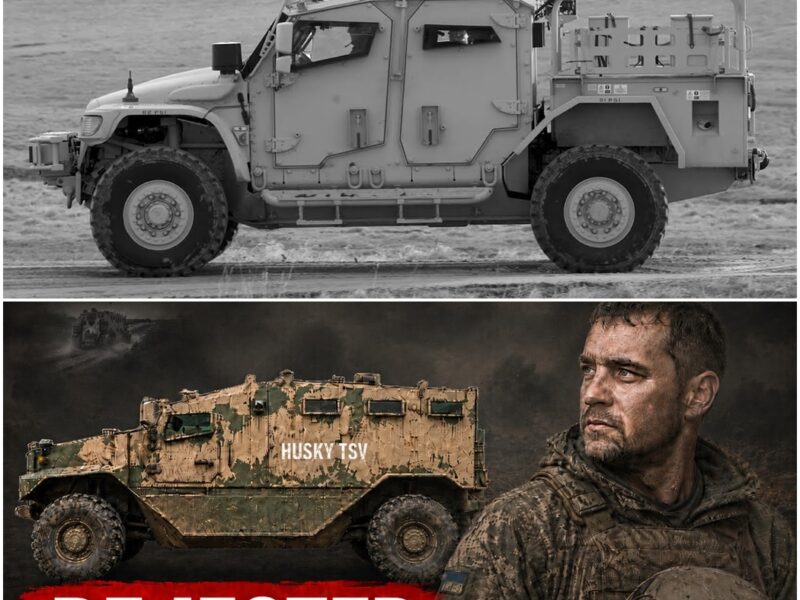
The model worked until, in the ordinary, unglamorous traffic of the war, it met something it had not planned for. Part two, the tool that broke the model. Here is the machine. Its name in British service is the Husky tactical support vehicle. And the first thing the record insists on, the thing the title of this video hangs from is where it was born. It is not British. It is American.
It began life as a commercial and military design called the MXT, the work of engineers at Navastar Defense in the American Midwest with the heavy version assembled at a plant in West Point in the state of Mississippi. It was an American truck drawn up by American hands for an American idea of what a protected vehicle ought to be.
It is not glamorous. It looks at a glance like an industrial flatbed that took a wrong turn and wandered into a war. And that plainness is the entire point because everything about it is bent toward one purpose, which is to put a working load somewhere dangerous and bring the crew back.
Look at the specifics and tie each one to what it actually lets a soldier do. Because a specification sheet on its own is just numbers, and numbers do not save anybody. It carries a protected crew cab with armored doors and a protected weapon station on the roof. So that when the worst happens, the people inside have steel and shaped engineering between them and the blast instead of canvas and luck.
Its hull and its underbelly are built to do the one thing that matters most against a buried bomb, which is to take the force of an explosion from below and push it out and around the crew rather than up into them. It weighs in the region of 14 tons, runs a V8 diesel of around 300 horsepower, and will move at better than 70 mph on a decent road with a range of up to 700 km on a tank of fuel.
That is not a detail for enthusiasts. It means the truck is not a slug. It can keep pace with a convoy, cover real distance, and get out of a place quickly when getting out quickly is the difference. It can haul a substantial load in the back and tow a heavy trailer behind it. And despite its protection, it is still light enough to be flown into a theater of war in the belly of a C130 transport aircraft.
That combination is the heart of why it exists. It fills a gap that had been bleeding soldiers for years. On one side of that gap sat the small armored cars and patrol vehicles that were nimble, but could not carry enough and could not take a serious hit. On the other side sat the great heavy mine resistant trucks.
Magnificent against a blast, but too big, too tall, and too ponderous for some of the broken ground and narrow tracks that the work actually required. The Husky lived in the middle. It could go where the heavy armor could not, and it could survive what the light vehicles could not. Medium-sized, protected, mobile.
The unspectacular answer to an unspectacular but lethal problem, which is how do you keep moving supplies and people through ground that wants to kill them? Now watch it work. Not in Ukraine yet in Helmond in southern Afghanistan more than a decade ago. There is one particular husky that you can go and stand in front of today because it sits retired and honored in the collection of the Imperial War Museum at Duxford.
Its registration is KJ80AB. It served in Afghanistan across two British operational tours from the spring of 2010 through to the autumn of 2012. And in that time, on three separate occasions, it was struck by a buried bomb three times. Read that again slowly. The same single truck hit by three improvised explosive devices on three different days in one of the most heavily mined districts on Earth.
After the first strike, it was recovered, repaired, and sent back out onto the same roads. After the second, the same again. The third was a command wire device watched and detonated by a human hand at the moment the vehicle passed and it caught the husky as it was returning to a place called patrol base Wahed having just handed a checkpoint at a village called Aszmat over to the Afghan local police.
That third explosion finally finished the vehicle as a working machine. It did not finish the people inside it. Across all three blasts on all three days, no one aboard was seriously hurt. The truck absorbed what the truck had been designed to absorb, and three times over, it gave its crew back to their families instead of to a memorial.
And here is the part that matters about who was riding in it. It served with the unglamorous trades, the British engineers, and the logistic troops, units such as the 23rd Engineer Regiment of the Royal Engineers. These are the men and women who clear the routes so that everyone else can use them, who carry the fuel and the ammunition and the water, who recover the vehicles that have been hit.
They do not feature in the recruiting posters. Their work is patient, repetitive, and quietly terrifying because it means going down the same dangerous roads day after day on a predictable schedule. Knowing that someone may have spent the night burying something on the route you have to drive at dawn.
For them, more than for almost anyone, the question of what you’re sitting inside is not academic. It is everything. And here is a detail the honest historian is obliged to include because it comes from an unexpected direction entirely. Even Russian military commentators writing about these vehicles years afterward conceded that the Husky had quickly shown itself superior to the armored Land Rover it had been brought in to replace.
When your adversar’s own analysts go on the record to admit that your equipment works, that is not flattery. That is an enemy paying you the compliment of the truth. Hold that phrase, though, the armored Land Rover it replaced. We will come to that vehicle and to why a country reached all the way across an ocean to buy an American truck rather than build or buy its own.
That is the deeper story and it is coming. But there is one more thread to set down first and it is the thread the whole video hangs from. This American truck, this MXT was offered to the United States military and the United States military did not buy it. The American army looked at the design, weighed it against its rivals in a major competition and chose a different truck instead.
The reason the officer who ran that competition later gave for the choice was just three words long. Three words. Hold on to them. We’re going to need them at the very end of all this because they turn out to be the hinge the entire story swings on. What that truck did in Helmond, surviving three buried bombs and bringing its people out each time was beginning to change how one army thought about its own kit.
But before we go any further, if this deep dive into a single piece of British engineering is holding your attention, take a second and subscribe to the channel. It genuinely cost you nothing, and it is the thing that keeps work like this being made. Now, back to the record. Part three, the deeper system.
The obvious question by now is the one the title quietly dares you to ask. If the United States itself passed this truck over, why on earth did Britain buy it? And the answer turns out not to be about engineering at all. It is about something that happened to the British army, a wound to its conscience that it has never fully recovered from and never should.
To understand it, you first have to meet the vehicle the Husky replaced. It was called the Snatch Land Rover. Underneath it was an ordinary Land Rover fitted with a light protective shell of armor. It was first brought into service back in 1992 for the streets of Northern Ireland. And for that conflict, it was reasonable.
The threat there was a sniper’s bullet, a thrown petrol bomb, a brick, a riot. Against those things, a light armored car that could move quickly through a city was a sensible answer. It was a patrol vehicle designed for a policing kind of war. And within those limits, it did its job. What came next was not that war.
What came next was Iraq and then Afghanistan and the buried bomb. and against a charge of high explosive packed into the ground beneath it. The snatch offered the people inside it almost nothing at all. Its flat floor sat low, its armor was thin, and it had never been shaped to deflect a blast from below.
Because no one designing it for Belfast in the early 1990s, had imagined it parked on top of a hidden mine in Helmond. The soldiers who had to ride in it understood all of this perfectly well, far better than the officials who kept sending them out in it. So, they gave it a name. They called it the mobile coffin.
Over the course of those two wars, 37 British service personnel lost their lives while traveling in snatch Land Rovers. Among them was Corporal Sarah Bryant of the Intelligence Corps, the first British service woman to be killed in Afghanistan, who died on the 17th of June 2008 when her snatch was struck by a roadside bomb east of a town called Lashkaga. She was 26 years old.
I am not going to dwell on how any of those 37 died because that is not what this is for. The record only needs you to understand that they died, that many of them did not have to, and that the institution sending them out had reason to know it. Because this is where the deeper system finally reveals itself, and it is not an industrial system.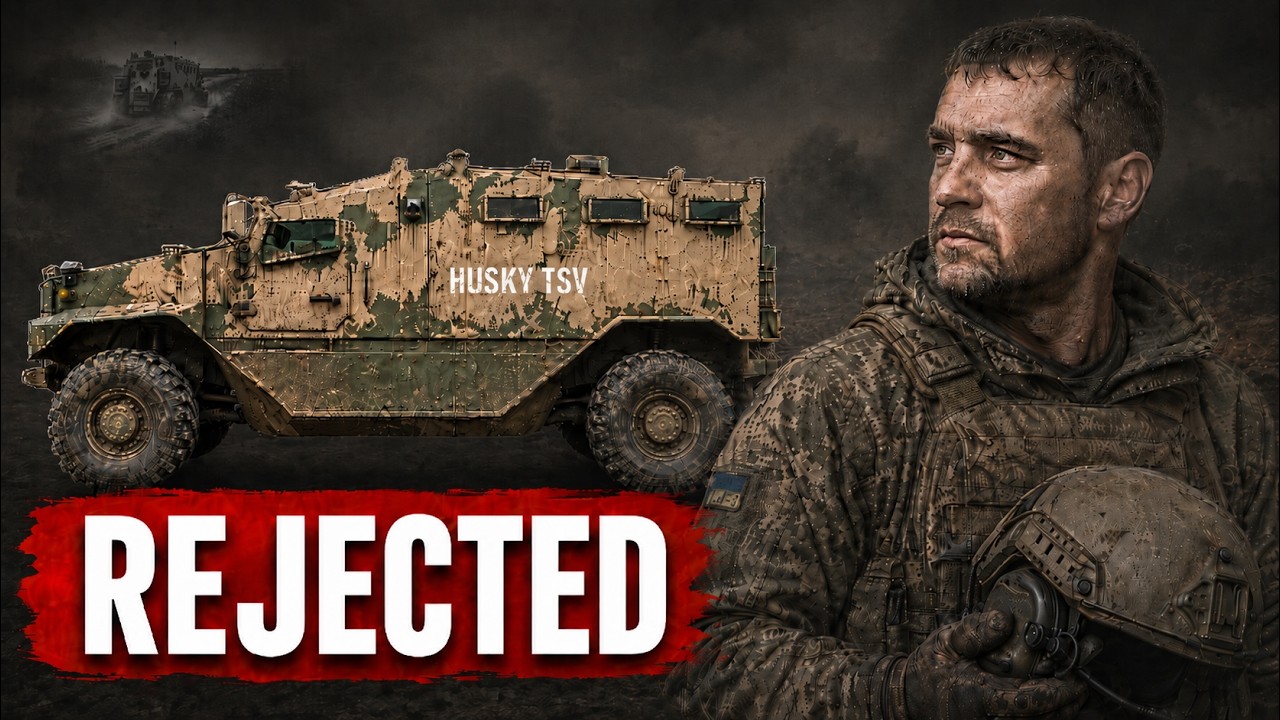
It is a moral one and a legal one. The families would not let it go. And that refusal is the true engine of this story. One mother in particular, Sue Smith, whose son, Private Philip Hewitt, had been killed in a snatch in Iraq in 2005, took the British Ministry of Defense, to court.
The case climbed all the way to the top, and in 2013, the highest court in the United Kingdom, the Supreme Court, ruled that families like hers were entitled to bring their claims. It found that the government’s decisions about what equipment to buy and how to prepare the people using it were not automatically shielded from the law by the old and convenient doctrine of combat immunity.
In plain terms, a government could now be held to account in open court for the protection it had failed to give the soldiers it chose to send into harm’s way. And then in 2016, the long official inquiry into the Iraq war reached its own verdict and concluded that the Ministry of Defense had been aware the snatch was vulnerable and had been too slow to bring in something that could protect its crews.
In time, a British defense secretary stood up and formally apologized to that mother and to others for failures that in his own words could have cost lives that might otherwise have been saved. Now hold that entire sequence together in your head because that and not any factory is the deeper system that produced the husky.
Not a production line, a reckoning, a society and a legal order that decided formally and at the very highest level that the life of the individual soldier sitting in the back of an ordinary vehicle was a thing the state itself had to answer for. And once that becomes true, something fundamental shifts.
Survivability stops being one requirement among many. To be traded away when the budget is tight, it rises to the very top of the list and it stays there. And the old instinct to quietly save a little money on a soldier’s protection becomes something very close to a crime. Out of that reckoning came a wave of better protected vehicles, bought at speed under what the British call urgent operational requirements, the mechanism that lets a government in wartime skip the years of peaceime procurement and buy what its soldiers need now. The whole effort was worth something in the region of £700 million. And inside it sat a family of three protected support vehicles, each sized for a different job. The heavy one, the Wolf Hound, the light one, the Coyote, and the medium one, the one that could reach the ground the heavies could not, the Husky. And here is the money number, the single figure the whole argument turns on. Under a contract worth almost 120 million pounds, the British government had the American firm Navastar build and support its fleet of
Huskys, almost 120 million. The first order placed in the spring of 2009 was for 262 vehicles. A second order the following year added 89 more, bringing the total to 351 trucks delivered into British service by the early part of 2011. Stay with that number because it is easy to let it slide past almost 120 million.
It reads like an accountant’s line on a page and it is, but it is also the literal costed price of a verdict. It is what it costs in pounds and pence to act on the belief that the crew is worth protecting. Britain had learned in the hardest way a country can ever learn anything in coroner’s courts and in newspaper photographs of young faces exactly what the cheaper alternative costs.
and almost 120 million is what it decided. At last, the lesson was worth. So why could the losing side, the army at the far end of all those minefields, not simply look at this truck and copy it? The answer is the most important sentence in this entire story. So listen closely. It is not that Russia lacks engineers or steel or money.
It has all three in abundance. It is that the system which produces a husky cannot be bought or welded or reverse engineered because it does not begin in a factory. It begins with a grieving mother in a courtroom refusing to be told that nothing could have been done. The Russian way of war built on mass non attrition on the slow and deliberate exchange of one thing for another has never started from that place.
As a system it does not treat the single life in the single vehicle as the thing the whole vast enterprise must answer for. That is not a slur against the Russian people who in truth pay for that doctrine more dearly than anyone else alive. It is a description of the machine they are caught inside.
And it is the one component of the Husky that no amount of engineering can ever clone. If you have ever crewed one of these vehicles yourself in Helmond or anywhere else, or if you crew one now, I would value hearing about it in the comments below. And if you have family somewhere in this story on the British side or the Ukrainian side, tell us their name and their unit.
This is how the record stays honest. It is also how it stays human. Part four. The realization too late. Now bring the truck home. Not home to Britain. Home to Ukraine. When the full-scale invasion came in 2022, Britain began sending its huskys east. They went quietly at first. From that summer, and by July, they were already being filmed alongside Ukrainian air assault troops near Kersonen, carrying soldiers forward and bringing the wounded back out.
Then on the 23rd of April 2024, the British government announced what was to that point its largest single package of military equipment for Ukraine worth500 million. Inside it were more than 400 vehicles of various kinds, and of those 160 were protected mobility huskys. Read that line again and let the irony land.
The truck that nobody at home had wanted was now being sent by the hundred to the one war on the planet that would finally and fully test what it had always been for. And in that war, the great Russian model meant the one thing it had never properly planned for. Let us be precise about everything the defenders got right because they got a very great deal right and pretending otherwise would be cheap.
They were right that the minefields would stop the great armored thrust of 2023. They did. They were right that attrition favors the side that is dug in, patient and waiting. It does. They were right about the ground and the concrete and the artillery and the terrible arithmetic of an attacker forced to advance into prepared fire.
What they were wrong about was quieter and much harder to fix. They had assumed at the deepest level of the doctrine that if you only made movement lethal enough, the enemy would eventually stop moving. And the enemy did not stop moving because alongside the famous weapons that fill the news, the tanks and the missiles and the longrange strikes came the unglamorous machinery of survival.
The protected supply trucks, the armored ambulances, the recovery vehicles that drag a wounded machine off a road before it can be finished off. The things that turn a bleeding man into a living one, and a stranded cutff squad into a squad that is back in the line tomorrow. You can grind down an army’s tanks given enough time and enough minds.
What you cannot easily grind down is an army that simply keeps standing back up because day after day it keeps getting its people off the bad roads alive. The Russian command did what any serious enemy does when its first answer stops working. It adapted. The minds were joined by something newer and far more personal. The small attack drone.
The first person view drone flown by a pilot kilometers away, watching through a camera, hunting individual vehicles one at a time, chasing a single truck down a single track and diving onto it. For a light or medium vehicle, this changed everything. Suddenly, the threat was not only buried in the ground beneath you.
It was circling in the air above you, and it could think and choose and follow. The danger to the husky did not stand still, and neither did the people inside the husky. This is where a second Ukrainian unit enters the record. The 38th separate brigade, whose crews took the basic truck and rebuilt it by hand for the war that was actually in front of them.
They enclosed and up armored the open rear cargo bed, the part the crews had always wished was better protected. They welded improvised cages of bar and steel mesh over the whole vehicle, the field expedient that soldiers have come to call cope cages, designed to catch a diving drone and detonate it a crucial arms length away from the real armor underneath.
Think about what that truck now represents. An American design refined by British procurement under the shadow of the snatch and then finished a third time by Ukrainian welding torches in a field against an enemy none of the earlier hands had ever imagined. Three nations, three sets of hands, one truck.
I am not going to stand here and tell you this war is won or that the Russian model has been beaten because that would be a lie and the comments would rightly tear it apart. The war is not over. Its ending has not been written, and no honest narrator pretends to know it. But the specific thing those vast minefields were built to force, a collapse, a breaking, a quiet decision by an exhausted nation to simply stop, has not come.
And one small part of the reason it has not come is sitting in a museum at Duxford with three bomb scars across its hull. And another part of it is driving out of a treeine in the east before dawn with a dozen tired men packed into the back. The model knew brilliantly how to take ground. What it never learned was how to take the will of an army that could keep bringing its crews home. Part five, the verdict.
So, back to the question we began with. On that road before first light, why that truck? Why, of all the machines in this enormous war did a driver called Bobber put his life and the lives of a dozen others into an unglamorous American flatbed to carry them through the most heavily mined country on Earth and back.
Let us resolve it now in the plainest terms the record will allow. Their metric was the kilometer. The British metric was the crew. Russia’s central question was, “How do we stop the advance?” Britain’s central question after the snatch and after that courtroom was, “How do we bring the crew home?” One side counted ground gained and ground denied.
The other side in the end counted the faces in the back of the truck. And now the two verdicts, the ones we have carried with us since the very start. Two armies looked at the very same machine, America measured it against its rivals and set it aside. And America was not wrong to do so, because the truck it chose instead, made by Oshkosh, became an excellent vehicle in its own right.
One that, in one of this story’s small ironies, now also serves on the roads of Ukraine. Britain measured that identical machine against a different question and bought it. Two verdicts. And here is the thing the record forces you to sit with. Only one of those two verdicts was ever actually tested in the single war where this particular truck would be asked again and again to keep men alive and it held.
Now the three words remember I told you to hold on to them when the United States explained why it would not buy this design. The reason its program officer gave was that the rival truck it chose instead had in three words the best survivability. Read that line one more time the best survivability.
The Americans set this truck aside on the question of survival, and the truck they set aside went to the most dangerous ground in the world, and there it earned on that very question of survival the trust of the men who ride in it with their lives. That is not a contradiction, and I’m not going to pretend it is one to score a cheap point.
Both things can be true at the same time. A machine can be the second best answer to one army’s question and the exactly right answer to another army’s war. And it is not a miracle, either. We owe the record that honesty, too, because reverence without honesty is just propaganda with better music. The Husky is a protected support vehicle.
It is not a heavy mine resistant fortress, and it was never sold as one. The open- source loss tracker Orex has visually confirmed at least 21 of them lost in Ukrainian hands. 13 of them destroyed, four damaged, two abandoned, and two captured. And because that count rests only on the losses that someone actually managed to photograph, the true number is certainly higher than 21.
The crews themselves will tell you plainly what it is and what it is not. A serious blast will usually stop it. It will not always save everyone inside. They wish the rear were better protected, which is exactly why they take welding torches to it. The honest claim was never that this truck cannot be broken.
It was not the fastest vehicle in this war. It was not the heaviest. It was not the one its own country chose. It was the one that brought its crew home. That was always the entire point. A blast will stop it. The crew will get out. So remember them. The way this kind of story is supposed to make you remember.
Remember Bobber and the 46th who drove a passed over American truck into ground that eats vehicles and came back out of it with everyone? Remember the 38th welding cages by hand in the dark to keep the drones off their people? Remember the unnamed cruise of the husky called KJ80AB struck three times in Helmond and walking away three times.
And remember on the British side the cost that came before the cure. 37 service personnel lost in the vehicle the Husky was built to replace. Among them Corporal Sarah Bryant of the intelligence corps. The Husky exists at all because their loss forced an entire country to decide in its highest court that the crew was worth the price. Almost 120 million.
The record says it cost. Pause on that one last time. That was not the price of a fleet of trucks. It was the price of a verdict. And the verdict was that a soldier’s life is not a rounding error. And spare a thought finally for the people who actually built the thing scattered across the world and across the years and almost none of them ever meeting.
The engineers in the American Midwest who drew up a truck their own army would go on to pass over. The plant in Mississippi that turned the drawings into steel. The British hands at Malvin who took that steel and made it a husky. The Ukrainian welders in a muddy field who finished it for a war that none of the others had ever pictured.
Not one of them could have known where it would end up. A commercial truck design quietly set aside at home that became on the far side of the world the reason a dozen exhausted men got off a bad road alive before the sun came up. That in the end is the verdict. Not that the machine was perfect because it was not. Only this.
When its own country said no and another country said yes, the country that said yes was simply asking the better question. And the answer to that question is still out there being driven right now tonight down roads that you and I will never see by people whose real names we’re never going to learn.
If this is the kind of story you want more of, the quiet machines and the ordinary people who stake their lives on them, then stay with this channel because the next chapter is already being written in a war that is not finished by crews who will never read their own names in any history book. The very least that the rest of us can do is keep the record and keep it straight.
That is what we are here for. Thank you for sitting with this