The Bowes-Lyons Hid More Than Two Daughters — Here’s the Rest D
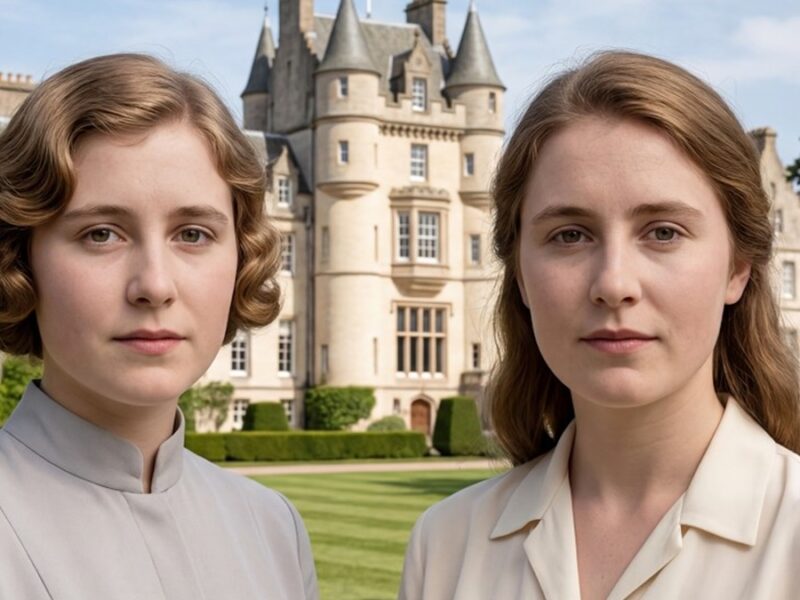
Everyone who has followed this story already knows the names Narissa and Catherine Bao’s Lion, the Queen Mother’s nieces, born with severe learning disabilities, institutionalized in 1941 and listed as dead in Burke’s Parage while they were still alive. That story told elsewhere is shocking enough on its own terms.
Then, 2 days after The Sun ran its April 1987 headline about Catherine, the Los Angeles Times published a follow-up report. Three more relatives of the British royal family had been sent to the same mental institution at the same time, more than 40 years earlier. The paper named them by their full names.
Adonia Elizabeth, Rosemary Jean, and Etheldrida Flavia Feain, cousins of the Queen Mother, daughters of Nerissa and Catherine’s mother’s own sister. According to authorities at the institution, all five women had suffered from severe developmental disabilities. All five had been sent there in 1941. Five women, two branches of the same family, one hospital.
Narissa had already died by then. In January 1986, aged 66, her funeral attended only by hospital staff, her grave marked with a plastic tag bearing a serial number. Rosemary Feain had died in 1972, but Catherine Ba’s lion was still alive at Royal Earleswood, then 60 years old. Adonia and Etheld Feain were alive there too.
Three of the five women were still living inside the institution when the press found them. That number five is what changes the nature of this story. Two women institutionalized and erased is a tragedy that admits of individual explanation. A family overwhelmed a particular era’s attitudes. One brutal decision made in private.
Five women across two separate branches of the same family institutionalized together and quietly removed from the official record. That isn’t an individual crisis. That is a structure. And it operated in a Britain that provided the legal framework, the moral language, and the social silence to make it function for 50 years without anyone outside the family circle needing to ask a single question.
Nerissa Jane Irene Ba’s Lion was born on the 18th of February 1919. The third daughter of the honorable John Herbert Bao’s Lion and his wife Finanella Nay Heppern Stewart Forbes Trafus. John Herbert was the queen mother’s brother which made Nerissa a first cousin of Queen Elizabeth II. Catherine Juliet Bao’s Lion was born on the 4th of July 1926, the fifth daughter of the same parents.
Their father died of pneumonia on the 7th of February 1930, aged 44, leaving Finella to care for four surviving children. Two of those four had severe learning disabilities. Neither Narissa nor Catherine ever learned to speak. The three Feain sisters were daughters of Harriet Heppern Stewart Forbes Trafus, Finella’s elder sister.
Harriet had married Major Henry Neville Feain and of their seven children three had disabilities similar to their bows lion cousins. Adonia Elizabeth Feain was born in 1912, Rosemary Gene in 1914, Etheld Flavia in 1922. In June 1941, all five were admitted to the Royal Earleswood Institution for Mental Defects in Red Hill, Sururi.
Multiple secondary sources consistently report this happened on the same day. A claim that is plausible given what is otherwise documented about the family’s coordination, though no primary hospital register has entered the public record to confirm the exact date. What is certain is that all five arrived that summer and that their presence in the same institution wasn’t coincidence.
Their ages at admission. Narissa was 22, Catherine was 15, Adonia was approximately 29, Rosemary approximately 27, Ethldridita approximately 19. Contemporary reporting classified all five as imbeciles, the legal category established by the 1913 Mental Deficiency Act for people capable of basic self-care, but not of managing their own affairs.
Community Living magazine documented this designation in its account of the five women. Neither Nerissa nor Catherine had any speech. What followed was silence measured in decades. Rosemary Feain died in 1972, 31 years after admission. Narissa Bose Lion died on the 22nd of January 1986, 45 years after admission, aged 66.
When the 1987 reporting arrived, Catherine Idana and Etheldrida were still resident at Royal Earleswood. The hospital wouldn’t close until 1997. Catherine lived there for 56 years before moving through successive Suri care homes until her death on the 23rd of February 2014, aged 87. Etheldrid Feain died in 1996.
Idenia Fain died around 2001. Five women, more than 200 combined years in institutional care. The connection between the Bose Lion and Feain branches runs not through the famous Bose Lion paternal line through Claude the Earl of Strathmore through Glamis Castle but through the maternal side through a woman named Lady Jane Macdonald.
Lady Jane Macdonald born in 1863 married Charles Heburn Stewart Forbes Trafus the 21st Baron Clinton. Together they had at least two daughters who matter here. Finella born in 1889 and Harriet born in 1887. Finanella married John Herbert Bose Lion and had Nerissa and Catherine. Harriet married Major Henry Neville Feain and had Idia, Rosemary and Etheldrida.
Lady Jane Macdonald was the maternal grandmother of all five institutionalized women. Researchers who examined the family’s history in 1987 concluded that the genetic disorder running through both branches originated not in the Bose lion paternal line but in the Hburn Stewart Forbes Trafusis family Lady Jane’s descendants a genetic expert publicly assessed all five women following the exposure and determined that the condition didn’t affect the queen or her direct heirs.
The pattern of disability appears to have passed through Lady Jane’s daughters to the next generation, manifesting in two separate households under two separate family names, but rooted in the same source. What turned this genetic misfortune into a family policy was the figure at the apex of both branches, Lord Clinton himself.
According to reporting that emerged in 1987, Charles Hepburn Stewart Forbes Trafus, the 21st Baron Clinton, had paid funds to Royal Earleswood Hospital for the care of all five granddaughters. One grandfather funding the institutionalization of five granddaughters from two separate household branches at the same institution. If the 1941 committals had been independent parental decisions arrived at separately by coincidence, there would be no reason for a single grandparent to be writing payments across both families. His financial involvement points toward a coordinated family arrangement organized at the grandparental level, not a series of separate private despairs. Finanella Bose Lion and Harriet Feain were sisters who had spent years managing daughters with severe disabilities.
Their father was 78 in 1941 and appears to have organized or at minimum funded the removal of his grandchildren from family life. When Lord Clinton died in 1957, modest contributions to the hospital continued through other family arrangements. The Bose Lion household sent 125 per year to Earleswood as a contribution to extras, not to the core cost of care, which had passed to the National Health Service in 1948.
None of this places the decision at the Queen Mother’s door. The evidence does not support that, and it would be wrong to claim it. By her family’s own account, she was told that Nerissa and Catherine had died, and she believed it. In 1982, the hospital’s league of friends wrote to tell her that her nieces were still alive.
She sent a check for sweets and toys. She didn’t visit. She didn’t correct the false entry in Burke’s parage. The queen mother inherited an eraser and chose across the years available to her not to end it. The original decisions belonged to an earlier generation of the family apparently coordinated by Lord Clinton.
Royal Earleswood Hospital in Red Hill Suri wasn’t in 1941 a dungeon. That point matters because the horror of this story comes not from what the institution did but from what it was. A place of permanent removal where families could deliver the people they found inconvenient and then stop thinking about them.
The hospital had been established in 1847 as a charitable project. Opened on its current Suriri site in June 1855. the first purpose-built asylum in the British Isles dedicated specifically to people with learning disabilities. Before Earlwood existed, people with learning disabilities were housed in general asylums alongside the mentally ill, in workhouses, or in prisons.
Prince Albert laid the foundation stone in June 1853. Queen Victoria granted the royal charter in 1862. The founding impulse was reformist. By 1941, the institution had been renamed twice in line with shifting legislative language. Since June 1926, it had been called the Royal Earleswood Institution for Mental Defects.
The title aligned with the categories created by the 1913 Mental Deficiency Act. The five women arrived under that name and lived out decades beneath it. Longstay institutional life in practice meant wards of up to 40 residents managed by two nurses. Former staff who worked there in the midentth century described the regime to Channel 4’s 2011 documentary as regimented and devoid of fun. The daily reality was custodial.
bathing, feeding, medication, routine. There is no record of formal education or structured communication support for any of the five women. They lived there because the institution for the purposes of their families was the end of the story. The hospital joined the National Health Service in 1948, which transferred the cost of their care from the families who had placed them there to the British taxpayer.
It closed on the 31st of March 1997 and the Victorian buildings were subsequently converted into private apartments in a gated development now called Royal Earleswood Park. To understand how five women could be placed in an asylum, quietly forgotten, and remain unagnowledged for 50 years without triggering public scandal.
You have to understand what Britain had spent the first half of the 20th century believing about disability and heredity. The 1913 Mental Deficiency Act created four legal categories of mental incapacity. Idiots, imbeciles, feeble-minded persons, and moral imbeciles. Each category required the condition to have been present from birth or from early childhood.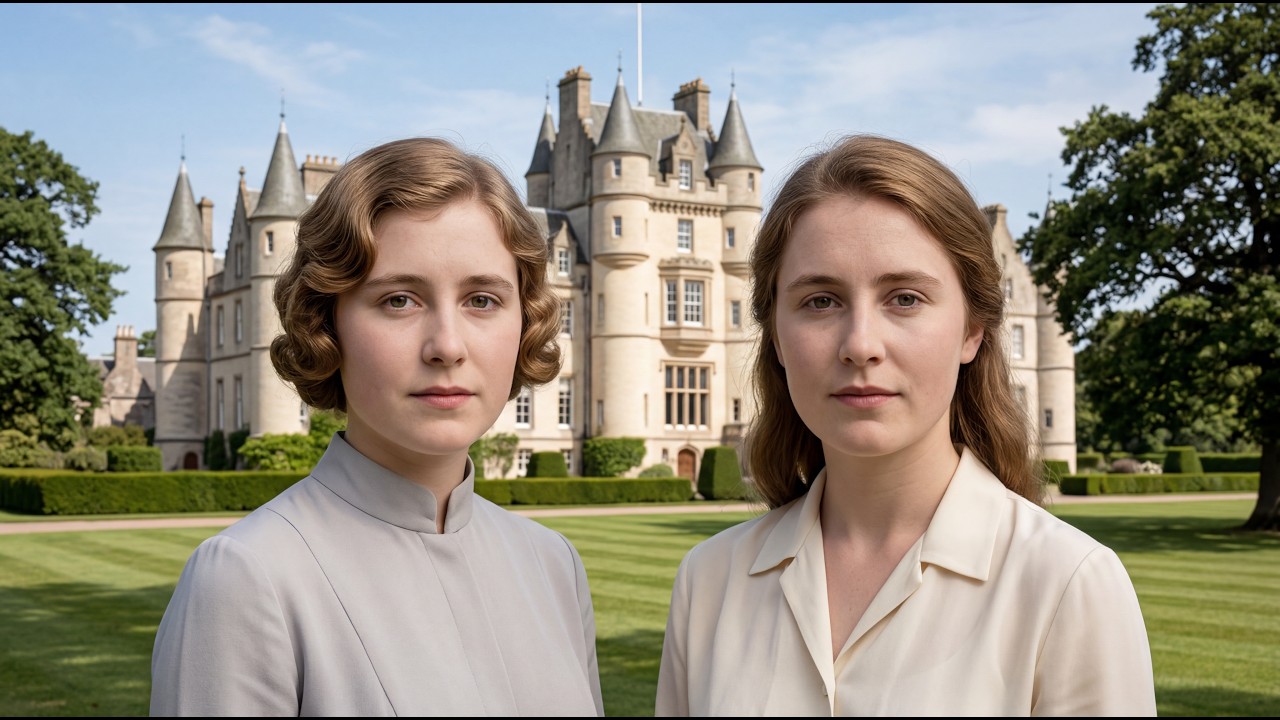
The act authorized indefinite institutionalization and segregation by sex, creating the legal framework under which places like Royal Earleswood could hold residence for life without any requirement of ongoing review. The legislation didn’t emerge from nowhere. Behind it stood two decades of eugenic thinking that had achieved genuine mainstream respectability in British intellectual life.
The Eugenics Education Society had been founded in 1907. The concept itself had been named in 1883 by Francis Galton. By the early 20th century, the belief that hereditary feeble-mindedness represented a contamination of the national genetic stock wasn’t considered extreme. It was considered scientific, prudent, and modern.
For upper class and aristocratic families, the specific fear was hereditary taint. The idea that disability visible in one generation signaled corruption running through the bloodline itself. Concealing disabled relatives from the public record was framed not as cruelty, but as responsible management. Families like the Bose, Lions, and Fains weren’t acting against the grain of their society.
They were acting on its explicit instructions, operating within a framework that told them what they were doing was the sensible thing. By 1941, the British eugenics movement was in reputational decline. Nazi Germany’s racial programs had made the word uncomfortable even among former adherence. But the decline of the word didn’t mean the immediate collapse of the associated practices.
The institutional habit, the social reflex to treat disabled relatives as a problem to be removed rather than a person to be supported, remained operative well into the post-war decades. MENCAP, the charity eventually founded to challenge this reflex, later acknowledged that its own early guidance to families of people with learning disabilities had been, in the words of its secretary general, to put them away and forget about them.
That phrase describes more honestly than any 1987 press statement what happened to the five women. This is the context. It isn’t the excuse. Narissa lived 45 years in an institution. Catherine lived 56. Understanding the cultural framework that made this possible does not reduce what was done to them.
It reveals the architecture that enabled it and the scale of what had to change before any of this could be called a scandal. The 1963 edition of Burk’s Puridge listed Nerissa Bose Lion as having died in 1940. It listed Katherine Bose Lion as having died in 1961. Both women were alive and resident at Royal Earleswood when the addition was published.
Harold Brooks Baker, the publication’s director at the time of the 1987 exposure, confirmed that Nerissa has been listed as dead in every edition of Burke’s Puridge since 1963. He described himself as stunned. Burks, he explained, accepted family supplied information without independent verification. It was the systems operating principle to take aristocratic families at their word.
And someone had given Burks very specific words, not a blank space, not a missing entry, specific dates, 1940 and 1961, for deaths that had not occurred. United Response, a disability organization that subsequently documented this history, states that Finanella Bose Lion, wrote on official forms about Purigages that Nerissa and Catherine had already passed away.
The official family response in 1987 attributed the error to Finella Bean, a very vague person who often didn’t fill out the forms that Burke’s Puridge sent her, either properly or completely. Vague people leave forms blank. The 1963 entry contained specific dates. An important distinction. There is no equivalent evidence that the Fain sisters were similarly falsified in Burks or comparable genealogical records.
Adonia, Rosemary, and Etheldrida appear in genealogical sources under their parents without the same kind of false death date tampering. The deliberate manipulation of the official documentary record was a Bose Lion family action not replicated in the Fain branch. But documentary eraser is only one form of disappearance.
Visits to the hospital effectively ceased by the early 1960s. A general manager at the East Suri Health Authority stated in 1987 that both Bose Lion sisters had received family visits up until the early 1960s. when one of their closest relatives died and then few visitors after that.
Nursing staff were direct about what this looked like from inside the ward. The impression I had was that they’d been forgotten. Another my understanding is that Catherine had no regular visitors. Finanella Bose Lion died in 1966. Harriet Feain had died in 1958. After the generation with direct living memory of the five women as daughters had gone, no senior family member appears to have maintained the relationship.
Neither the Bose Lion family nor the Fain family sent birthday cards or Christmas gifts. According to nursing staff, the women received no money of their own. The hospital received 125 per year from the Bose Lion family as a contribution to extras. a sum that had nothing to do with the actual cost of care.
Now born by the National Health Service, Narissa Bose Lion died on the 22nd of January 1986. She was 66. Her funeral was attended only by the staff who had cared for her through 45 years of institutional life. At Redstone Cemetery near the hospital, her grave was marked by a plastic tag bearing the inscription M1125 Bose Lion.
Not a carved headstone, not a family plot, a serial number on a tag. That is the physical form the eraser took at its end point. After the 1987 exposure, an anonymous donor paid for a proper headstone. Her nieces and nephew subsequently contributed to the arrangement. These acts of restoration happened in the year after the press made the grave findable, not in the year after Nerissa died.
On the 6th of April, 1987, the son ran its front page headline. Queen’s cousin locked in mad house. The immediate subject was Catherine Bose Lion, then 60 years old, still resident at Royal Earleswood. A reporter had posed as a relative and gained access to the hospital. The Burks periage entry listing her as having died in 1961 had been the route in a reference book claiming a woman was dead wasn’t expecting anyone to visit her.
2 days later on the 8th of April, the Los Angeles Times published the follow-up that widened the story to its full scale. Three other sisters, Adonia Elizabeth Rosemary Jean and Etheldrida Flavia Feain had been placed at Royal Earleswood on the same day in 1941, the report stated, citing authorities at the institution.
Rosemary Feain had died in 1972. Narissa Bose Lion had died the previous year. The other three still lived at the hospital. For the first time, all five women were named together in the public record. Buckingham Palace issued one sentence. We have no comment about it at all. It’s a matter for the Bose Lion family.
Lady Elizabeth Anson, niece of Nissa and Catherine, spoke for the family. There had been no attempt at a cover up. The Burke’s purage errors were Finella’s fault. She was a very vague person who hadn’t filled forms out properly. Lord Clinton’s grandson similarly rejected the coverup framing. His great aunt had been elderly and vague.
The forms either wrong or never completed. Brooks Baker made the mechanism transparent. Any information given to us by the royal family is accepted. Even if we had evidence to the contrary, we would put in any information given to us by any member of the royal family. Specific dates of death had been provided. Specific dates had been printed.
The system had no reason to check because it had never expected the need. Hundreds of bouquets of flowers arrived at Royal Earlswood for Catherine from strangers across Britain. The image that ran in the newspapers, an elderly woman, frail and uncertain, provoked public reaction that no official statement could fully manage.
The 2011 Channel 4 documentary, The Queen’s Hidden Cousins, added nursing testimony to the record. staff remembered Narissa and Catherine watching royal events on the ward television, rising from their chairs, saluting the screen. “I remember pondering with my colleague,” said nurse O’ell Braithweight. “How if things had been different, they would surely have been guests at the wedding.
” The Guardians reviewer noted that this tale of the lost members of the royal family had nothing new. The broad outlines had been public for 24 years. What remained unanswered, the review noted, was the one question the documentary never tried to address. Why, after managing the women at home until Narissa was 22 and Catherine was 15, had the family decided to institutionalize them at all? Neither the 2011 documentary nor any subsequent investigation has answered it.
What the record does show is this. In 1986, the year Nerissa Bose’s lion died at Royal Earlswood, her funeral attended only by hospital staff, her grave marked with a plastic serial number tag, the Queen Mother became a patron of MENCAP, the national charity for people with learning disabilities.
MENCAP existed to advocate publicly for people exactly like the five women her own family had placed in an institution, and over the course of a generation ceased to acknowledge as living. She appeared at mencap events. She was photographed with warmth beside the charity’s banner. She represented the cause.
In 1982, when the hospital wrote to tell her that her nieces were alive, she had sent a check for sweets and toys. She didn’t visit. She didn’t correct the false Burks entry that said Narissa had died in 1940. A woman who was at that moment still alive in a ward in Suriri. The divergence between the public role and the private fact isn’t a paradox that resolves cleanly.
It’s simply the shape of what happened. And it’s most clearly understood as a product of the same social order that had made the original silence possible. A world in which the appropriate response to disabled relatives was to manage them as a category, whether through charity appearances or through hospital wards, rather than to reckon with them as individual people.
The silence surrounding the five women wasn’t extraordinary. That is the most important thing to understand about it. Britain had spent the early 20th century constructing the legal and institutional infrastructure for exactly this kind of disappearance. The 1913 mental deficiency act provided the classification.
The eugenics movement provided the cultural logic. Longstay institutions provided the physical mechanism. and a society that treated institutionalization as responsible family management provided the silence that made it permanent. The Bose Lion and Fain families were in this respect operating entirely within the norms of their era.
Hundreds of thousands of families across Britain made comparable decisions over the same decades. What made this particular case eventually visible was the accident of royal connection. The Burke’s puridge entries, the aristocratic paper trail, a journalist who found a grave marked not with a name in stone but with a plastic serial number tag.
Narissa died in January 1986. Rosemary Feain had died in 1972. By April 1987, two of the five were beyond any reckoning. The three still living at Royal Earleswood received no more family visits after the scandal than they had received before it. Flowers arrived from strangers. Headstones were eventually organized.
The machinery of institutional deference reasserted itself, and nothing materially changed for the women still alive. What the story of the five women finally reveals isn’t a family of singular villains. It reveals a system that worked. It worked for 50 years across two family branches through one set of grandparents in one Suri hospital.
It worked because an entire society agreed that disabled women from respectable families were better managed as absences than acknowledged as people. And because the official record had a mechanism for making that management look like settled fact. Nissa Bose Lion, Catherine Bose Lion, Edonia Feain, Rosemary Feain, Etheld Feain, five women born into one of the grandest families in Britain who carried that family’s name into a silence that was designed to last forever. It very nearly did.
If stories like this are worth your time, subscribing to the channel is how we keep making