The ‘Boxy’ British Land Rover That The British Army Could Not Replace For Twenty Years D
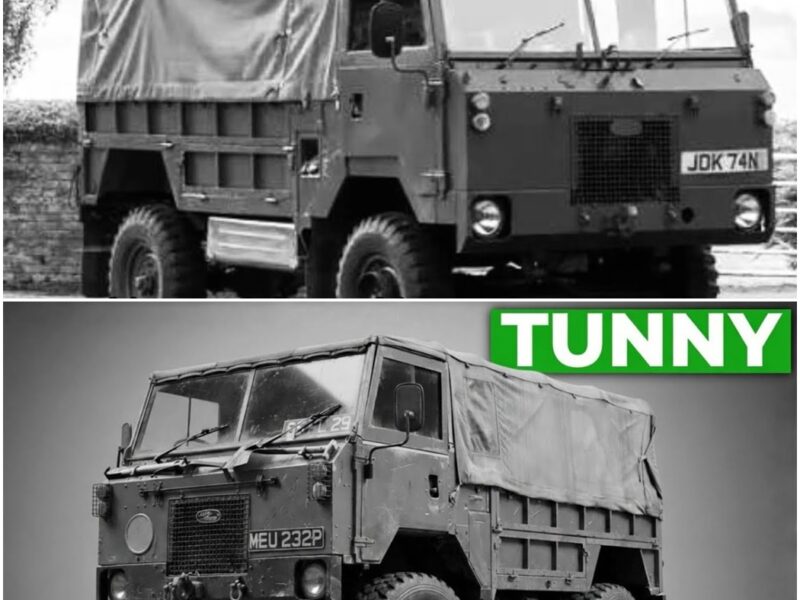
1972, Lode Lane, Solihull. A strange machine crawls out of the Land Rover factory, tall, blunt, unapologetically square. The cab is shoved forward over the engine. The wheels sit wide, almost exaggerated, like something sketched by a child. Beneath the bench seat, a Rover V8 rumbles, so close it feels like it belongs to the driver as much as the vehicle.
At first glance, it looks wrong. Too boxy. Too tall. Too crude. Engineers question it. Drivers complain about the cramped cab, sharp edges, the constant bruises. Officers wonder why the army needs something so awkward when the standard Land Rover has done the job for decades. And yet, this ungainly machine is about to outlast them all.
It’s called the Land Rover 101 Forward Control, the only Land Rover ever built purely for war. Its story begins not with a vehicle, but with a problem. In 1965, the British Army commits to a new 105 mm artillery piece, the L118 Light Gun. Powerful, mobile, and heavy. Too heavy for the vehicles that came before.
The old Land Rover simply couldn’t haul it, not with a full crew and supplies. So, the brief was clear and brutal. Build something that can tow a gun across any terrain. Carry eight men. Fit inside an aircraft. And hang beneath a helicopter. No compromises. The design team starts from scratch. Legend has it, the wheelbase, 101 inches, comes from lining up four soldiers shoulder to shoulder on a workshop floor, with a spare wheel wedged between them.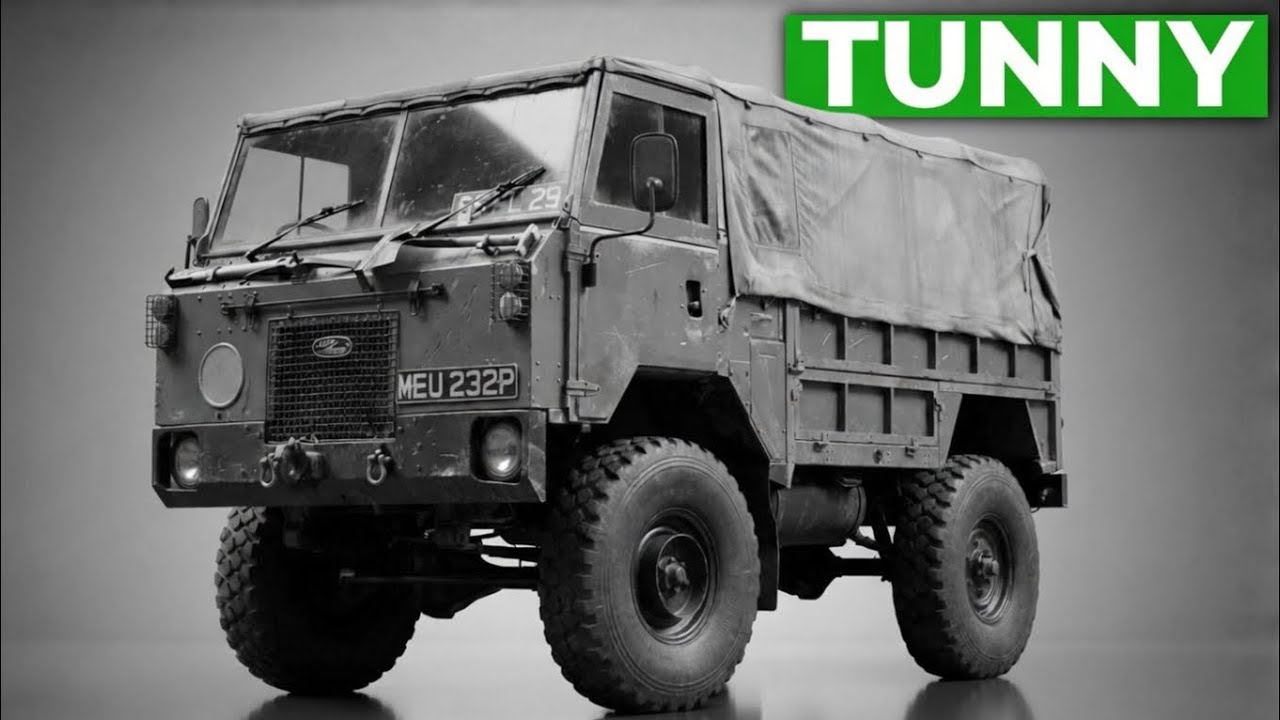
Crude? Maybe. Effective? Absolutely. Early prototypes struggle. Underpowered. Unstable. Nearly written off. Then comes the turning point, a 3.5 L V8, permanent four-wheel drive, and just enough brute force to make the concept work. Not elegantly. Not efficiently. But reliably. Very reliably. By 1972, it enters production.
A decade later, war finally comes. The Falklands, 1982. The 101 is shipped halfway across the world, built to tow artillery into battle. But the terrain has other ideas. Peat bogs swallow wheels whole. Roads barely exist. The guns move by helicopter instead. So, the 101 adapts. It becomes an ambulance.
A missile tractor. A lifeline at the San Carlos beachhead. Not the role it was designed for, but one it performs without hesitation. That becomes its pattern. In the Gulf War, it guards British forces in the desert. In Bosnia, it carries the wounded through mine-laced roads. In Iraq, it supports operations in silence.
All while surviving two failed attempts to replace it. Because on paper, better vehicles exist. The Unimog is stronger. The Humvee is safer. Others are more efficient. But none of them fit Britain’s doctrine, air portable, helicopter lifted, ready for anywhere. The 101 does. It pays for that flexibility with a thirsty engine and a high center of gravity.
It’s flawed. Deeply flawed. But it works. By the late 1990s, it’s finally retired. Almost. Hundreds survive. Some still run in the Falklands on the same ground that once stopped them cold. Soldiers had a nickname for it, the one ton. They drove it hard. They cursed it often. And they trusted it completely.
Because in the end, the Land Rover 101 wasn’t built to be perfect. It was built to do a job, no matter the terrain, the mission, or the odds. And that’s exactly what it did.